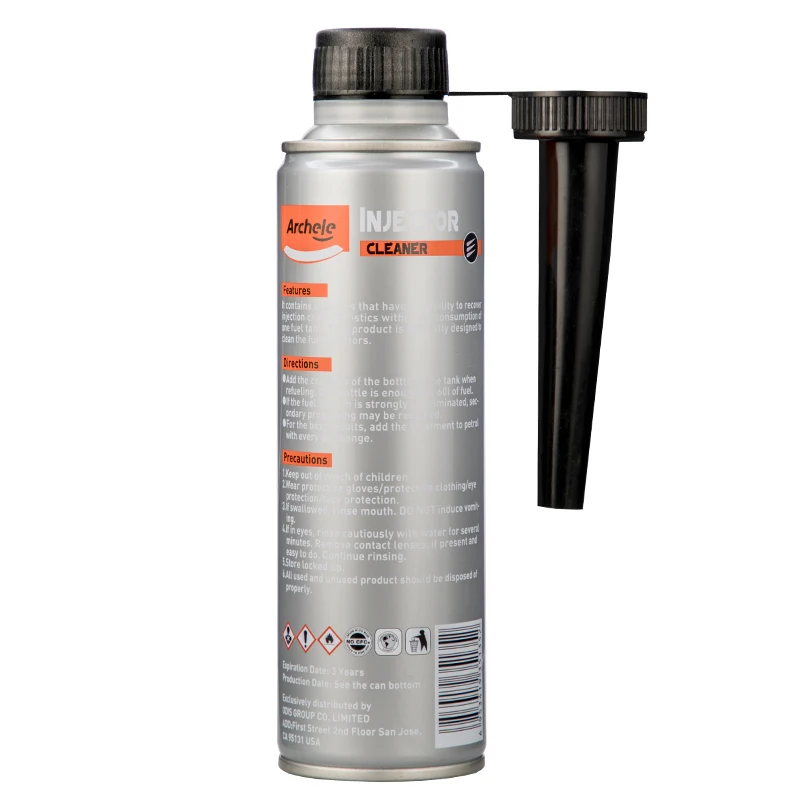

Fuel injector cleaner does not have one universal expiry period. The answer depends on the exact product, the manufacturer’s shelf-life guidance, the container condition and how it was stored. A date code may identify manufacture or filling rather than expiration.
Do not assume that an unreadable code means the contents remain suitable indefinitely. A useful example is Chevron’s July 2026 product data for Techron D Concentrate, which states a shelf life of 36 months from the indicated filling date. That is a product-specific example, not a rule for all Techron products or every injector cleaner.
Identify your bottle before applying any number. The practical decision is whether you can establish what the product is, whether it remains within the maker’s guidance and whether its storage history supports use. If you cannot, ask the manufacturer using the label and batch information.
An uncertain old bottle is not a reason to experiment on a vehicle that is already running poorly. This guide concerns the product in its container. The storage life of fuel after treatment is a separate claim.
Do not treat a statement that a stabilizer protects stored fuel for a period as the shelf life of an unopened cleaner. Those time periods describe different conditions.
Credit: shockabsorberpro.com
Read the date in the right context
Look for wording such as manufacture date, filling date, use-by date or shelf life. A date printed on a seam may be part of a batch code rather than a plain calendar date. Photograph the complete marking instead of transcribing only the digits that resemble a year. Include the front and back labels when asking for help.
The starting point matters. A shelf life measured from filling is not restarted when you buy the product or first open it. Conversely, a separate opened-container instruction may introduce another condition after the seal is broken. Use the definitions supplied for that formulation rather than choosing the interpretation that keeps it usable longest.
Product and market identification matter too. Similar trade names can be used for different formulations or container sizes. An online data sheet may describe a different region or a revised product. Match the full name and product number, and have the manufacturer resolve uncertainty about an older version.
A purchase receipt can help establish ownership history, but it does not prove the manufacturing date. A bottle may have spent time in distribution before sale. Likewise, a recent online listing does not date the physical bottle you received. Use the actual code and packaging rather than assuming that newly purchased means newly produced.
Avoid decoding batch numbers with an unverified formula copied from another brand. Manufacturers do not all use the same system. A sequence that looks like a date may identify a plant, batch or production line. Ask for confirmation if the maker has not published a decoding method for that product.
For an opened container, note when it was opened and whether it was resealed promptly. Describe any transfer to another container. These details may change the manufacturer’s advice even when the filling date is known.
Do not hide uncertain storage conditions to obtain a simple yes-or-no answer. Keep the response with the product if you intend to retain it. A short note naming the product, batch and advice date is more useful than remembering that “the company said cleaners last years.” The advice needs to remain tied to the bottle it actually concerned.
Inspect the container without inventing a chemical test
- Check the cap, seal and container for leakage or damage. Confirm that the label still identifies the product and its directions. A compromised container deserves caution even when a printed date appears acceptable. Do not pour an unidentified liquid into the tank because it was found beside other automotive products. Visible particles, separation or a change from the manufacturer’s described appearance can justify asking for advice.
- They do not allow an owner to identify the chemistry or certify the remaining performance. Conversely, a liquid that looks clear is not automatically within specification. Appearance is one observation, not a complete shelf-life test. Do not smell the contents deliberately, heat a sample or test flammability. Those actions do not establish suitability and can create an exposure or ignition hazard.
Keep the product in its intended container and follow its handling instructions. If the label is missing, treat identification as unresolved rather than relying on color or odor. The absence of an expiry date is also not a performance guarantee. Some manufacturers express storage guidance in a data sheet or through technical support.
Others may give a different policy for a particular product. Ask the relevant maker instead of applying the shelf life of motor oil, brake fluid or another automotive chemical. If the product has been transferred to a food or drink bottle, do not keep using that arrangement. Misidentification is a serious practical problem even apart from chemical condition.
Contact the manufacturer or local disposal service for appropriate handling advice. Do not offer an uncertain bottle to someone else as usable cleaner. For a bottle that fails these basic identification and condition checks, replacing the product is usually a simpler decision than trying to prove it acceptable through home experiments. That does not diagnose any vehicle fault; it simply avoids introducing an unknown material while preserving the original evidence if a problem already exists.
Storage history matters alongside the date
Follow the storage conditions on the product label and safety data sheet. Keep the container closed, correctly identified and away from children. Avoid placing it near heat or ignition sources. Do not assume that an arbitrary garage temperature limit applies to every formulation; use the actual product’s guidance.
Consider where the bottle has spent its time. A sealed container kept under the specified conditions has a different history from one left open, damaged or repeatedly exposed to unsuitable heat. Tell technical support about those conditions. A shelf-life figure generally should not be interpreted as approval regardless of how the product was handled.
- Keep the original container when possible. It preserves the compatibility of the packaging, the product identity and the instructions. A generic container may obscure all three. If a product has already been transferred, disclose the material and condition of the replacement container when seeking advice rather than assuming nothing changed.
- Do not mix old and new product to make the old portion usable. Mixing obscures the batch history and can combine different formulations. It also makes the total age and condition harder to describe. Use each product according to its own verified guidance rather than creating a new mixture without instructions.
- Buy a quantity that fits foreseeable use. A large package may have a lower unit price but can leave more product stored for longer. Consider the vehicle’s actual additive guidance before buying in bulk. A normally running car does not acquire a need for repeated treatment merely because a large bottle is on the shelf.
If you are storing fuel, identify whether the chosen product is actually intended for stabilization. A cleaner and a stabilizer are not interchangeable just because both are added to a tank. The treated-fuel claim may also depend on fuel condition and storage circumstances. Do not use it as proof that already degraded or contaminated fuel has been restored.
- For disposal, follow local collection requirements and the product’s instructions. Do not pour unwanted cleaner into a drain, onto the ground or into a tank simply to empty the container. Keep the label available for the collection provider. The proper disposal route depends on your location and the identified material.
Storage records do not need to be elaborate. Marking the opening date and retaining the label can prevent uncertainty later. The important information is the actual product, batch, opening status and storage history. Those details allow a meaningful manufacturer response instead of a generic guess.
What to do if an old cleaner is already in the tank
Record the exact product and approximate amount added, the fuel type and the amount of fuel present. State whether the engine has run and whether any symptom appeared. Contact the product maker or a qualified repairer for advice based on those facts. Do not add another chemical to counteract the first without appropriate instructions.
If the vehicle is leaking fuel, running severely rough or showing a serious warning, arrange assessment rather than continuing to drive as an experiment. A symptom following an additive is a useful timeline, but it does not automatically prove the additive caused it. Preserve the container and any service records so the investigation can distinguish observation from assumption.
For future purchases, resolve shelf life before treatment. Use the maker’s guidance for that precise formulation, interpret the date correctly and account for the container’s condition. This gives a defensible decision about the bottle without pretending that a generic expiry rule or a visual inspection can certify every fuel injector cleaner. When contacting support, include both the product name and the batch photograph in the same message. That reduces the chance that advice for a similarly named formulation will be mistaken for guidance about your bottle.


Automotive reference information. Confirm specifications in the manual for your exact vehicle. Original replacement guides link to their research sources. About us