
Sometimes, yes: a Honda and an Acura can specify the same engine-oil filter part number. That does not mean every filter sold under either brand fits every vehicle. The dependable comparison is the complete service reference supported for each car’s actual engine and model year. If both current application records identify the same genuine service part, a different sales channel or brand heading is not, by itself, a reason to expect a different filter. If the references differ, have the relationship confirmed instead of assuming that a familiar blue canister makes them interchangeable.
This question is especially useful when an Acura owner has easier access to a Honda parts department, or a household maintains cars from both brands. Shared stocking may be practical, but establish each vehicle’s requirement independently before buying a multipack. One correct match does not validate every other car in the driveway.
The evidence below includes manufacturer service documents that name the same filter, plus a different Honda filter reference that limits the idea of a universal part. The historical examples demonstrate documented parts sharing. They do not replace a current catalogue check for the vehicle being serviced today.

Credit: www.ebay.com
A documented filter number shared by Honda and Acura applications
American Honda’s October 9, 2013 bulletin 13-078 lists oil filter 15400-PLM-A02 in its repair parts information. Its stated vehicle scope is the 2008–2012 Accord V6 with automatic transmission, subject to the bulletin’s eligibility check. This is a dated manufacturer record for a particular repair context, not a claim about every Accord engine or every model year.
The same reference appears in Acura bulletin 17-010, dated October 18, 2017. That document concerns eligible 2016 MDX vehicles in a transmission-warmer product update and includes 15400-PLM-A02 in the relevant repair parts list. The two documents therefore provide direct evidence of the same oil-filter identity being specified in Honda and Acura service contexts.
Notice what makes this comparison meaningful: the entire part number agrees, the documents identify the component as an oil filter, and each has a defined application. The conclusion comes from matching documented identities. It does not depend on assuming that an Accord and an MDX have the same engine, oil capacity or maintenance procedure.
Do not use those bulletins to diagnose a fault or decide that your vehicle qualifies for a repair programme. They are professional service documents with their own applicability conditions. Here they serve only as historical parts evidence. A current parts department should confirm the orderable service reference, including any documented replacement number, for your particular vehicle.
A seller’s phrase such as “Honda/Acura oil filter” is less precise than this evidence. It may describe a product with broad coverage, but it should still lead to specific supported applications. Ask for the full reference rather than accepting the two brand names as the complete compatibility information. Keep that reference on the invoice.
Check a Civic, Accord or CR-V by its own application
For a Civic, Accord or CR-V, begin with the model year, engine, market and vehicle identification. Do the corresponding check separately for the Acura you are comparing. Avoid treating a current Civic result as automatic proof for an older Accord, a different CR-V powertrain or an Acura with a similar engine description.
The Honda DreamShop provides vehicle-based shopping. Acura’s official store page also identifies DreamShop as its genuine-parts channel and directs buyers to their preferred dealership. Follow these official routes or contact the appropriate parts department. Select the actual vehicle before treating a search result as an application match.
Keep two separate records while comparing: one for the Honda and one for the Acura. For each, record the current recommended filter, any qualifying note and who confirmed it. If both resolve to the same reference, you have a useful shared-parts result. If one is unresolved, combining the records would hide that uncertainty.
If the catalogue and an old receipt show different numbers, ask whether the newer result is a documented service replacement, a different application or simply a different item. Copy every character, including the suffix. A small-looking number change should not be dismissed as cosmetic without supporting information. Equally, different numbers should not be declared incompatible merely because their lettering differs.
An owner’s manual and a parts catalogue have complementary roles. For example, Honda’s 2025 Civic Sedan Hybrid oil-and-filter instructions explain the maintenance task and installation precautions without presenting a retail filter number. That does not leave the car without a specified replacement; it means the ordering identity must be obtained through the relevant parts information.
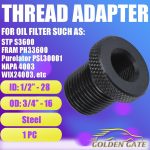
Give the parts department any information a standard vehicle selection might miss, such as a replacement engine, aftermarket filter adapter or changed housing. A VIN identifies the original vehicle configuration, so explain modifications separately. Photographs can help clarify the arrangement, but avoid dismantling an unfamiliar oil system solely to settle a shopping question.
For a two-car household, compare the results before calculating whether a shared bulk order saves money. Verify what the package actually contains and how many individual filters are supplied. A filter-and-washer bundle and a single filter can use different sales descriptions even when one component is common to both vehicles.
Why the Honda or Acura name is not a universal fit rule
Honda’s own parts records include oil-filter identities other than the shared example above. The Honda Heritage Works NSX continuing-parts list, dated to the end of June 2026, shows original reference 15400-PL2-004 against current reference 15400-PL2-306 for its listed oil-filter cartridge. This Japanese heritage-parts document is a concrete reason to avoid reducing all Honda applications to 15400-PLM-A02.
Preserve the scope of that example. It concerns the NSX parts in the cited heritage list; it is not a complete Acura NSX catalogue or an instruction for every NSX generation and market. A different recorded service reference tells you to investigate the correct application. It does not authorize experimenting with either number on an unidentified car.
Powertrain type also matters. A hybrid is not the same thing as a battery-electric vehicle. The cited Civic Sedan Hybrid manual explicitly requires engine-oil and filter maintenance. By contrast, Honda Canada’s Prologue information describes an all-electric vehicle and explains that EVs do not need scheduled engine-oil changes, while other maintenance remains necessary. Begin by identifying the actual system you are servicing.
Avoid drawing fit conclusions from the size of the engine alone. A larger engine does not automatically mean the physically largest available canister is the correct filter, and two engines of similar displacement need not share every lubrication-system component. The application record supplies information that a displacement comparison cannot establish.
Nor does a filter’s ability to engage the mounting thread finish the check. Its sealing interface, available space and application requirements still matter. Our explanation of oil-filter interchangeability covers why a successful physical attachment is insufficient evidence. Do not make a new filter fit by forcing it onto an uncertain mount.
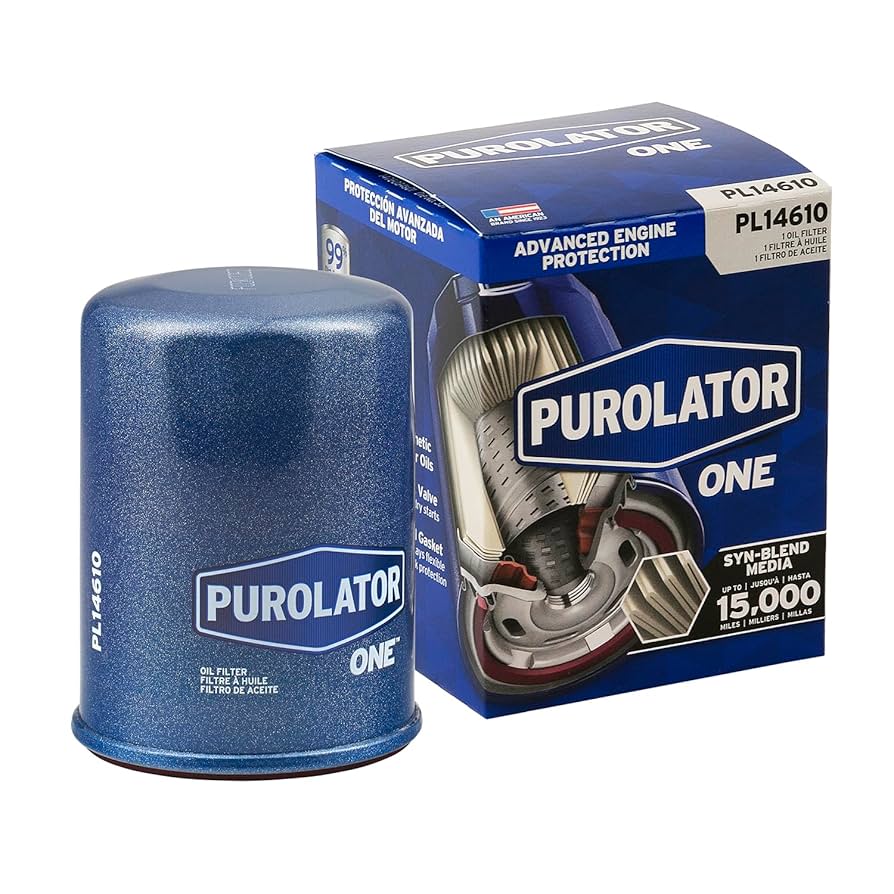
The brand printed on an online listing may describe the seller’s vehicle category rather than a unique filter design. On the other hand, similar package artwork cannot establish that two contents are identical. Compare the confirmed service identity, the supplied component and the actual application instead of choosing whichever interpretation of the label is convenient.
A product advertised as suitable for both brands may also be an aftermarket alternative, rather than the genuine part named in a Honda service document. Use that product manufacturer’s own application information. An aftermarket match for one confirmed Honda reference does not automatically make every other cross-listed item suitable for every Acura.
If the evidence remains contradictory, keep the vehicle match unresolved and ask for written clarification before installation. Being able to return an unopened uncertain filter is preferable to trying to resolve catalogue disagreements after oil has been drained and the car must be put back into service.
What a shared part number does not tell you
The purpose of the filter remains straightforward. Honda Canada’s oil-filter explanation describes trapping particles generated during engine operation and identifies genuine filters as made to the manufacturer’s original-equipment specifications. That supports selecting the specified service part; it does not supply a public comparative micron test for every Honda-branded and Acura-branded package.
Do not infer that an Acura listing must provide finer filtration simply because the vehicle is sold through a premium brand. Likewise, a higher advertised price is not proof of a different internal specification. A claim of better filtration needs relevant product and test evidence, rather than an assumption based on the badge or retail markup.
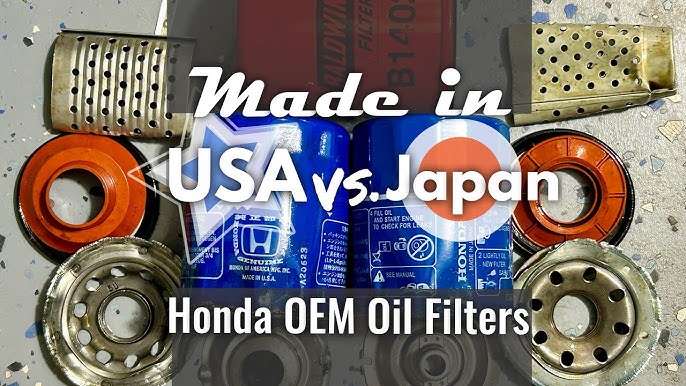
Supplier names discussed in forums can become outdated, and a cut-open filter from one date does not identify every product sold later. This comparison does not claim that all filters come from one factory or retain identical construction indefinitely. For a current purchase, traceable genuine-part identity and confirmed application are more useful than an unsupported manufacturing story.
Sharing a filter also does not mean sharing the oil-change interval. Acura Canada’s maintenance guidance describes vehicle-specific schedules and Maintenance Minder information for its applicable models. Follow the requirements for the car being serviced. Do not copy a second vehicle’s reminder, annual mileage pattern or owner’s chosen service interval because both use one filter number.
Installation remains vehicle-specific as well. The cited Civic Hybrid instructions require the power system to be off before changing oil or the filter, address checking for a retained old gasket, and direct the installer to follow the filter’s instructions. These details are reasons to consult the actual procedure; they are not a complete oil-change method for every Honda and Acura.
A shared filter does not establish shared oil capacity, drain-plug torque, access arrangements or oil grade. Keep those service details with each vehicle’s maintenance record. A filter that appears correct cannot compensate for using the wrong filling quantity or overlooking a leak. Seek qualified service when the applicable procedure or safe access is uncertain.
Before fitting a stored spare, check its identity and condition as well as its intended application. Keep it in its protective packaging until needed, and resolve visible damage or contamination with the supplier. Our guide to oil-filter dating and use decisions explains why a date marking requires interpretation rather than an invented universal expiration period.
Credit: www.youtube.com
A practical decision before buying from either brand
You can consider the Honda and Acura filter the same service part when current information for both identified vehicles supports the same complete genuine reference. If the references differ, obtain a documented explanation of the relationship. If only a sales title, canister colour or thread comparison agrees, the application check is incomplete.
At collection or delivery, compare the item with the confirmed order. Query an unexpected substitute before opening or installing it, and retain the application confirmation with the receipt. For shared household stock, label the approved vehicles so that a later change of car or engine does not turn yesterday’s valid match into today’s assumption.
The useful answer is therefore conditional: documented Honda–Acura parts sharing exists, but the decision belongs to the specific vehicles and current service references. Establish that evidence first, then choose the convenient legitimate supplier and follow each car’s own maintenance requirements.


Automotive reference information. Confirm specifications in the manual for your exact vehicle. Original replacement guides link to their research sources. About us