
No, motorcycle oil filters are not universal. One filter can be approved by its manufacturer for several motorcycles, sometimes across different brands, but that application list has boundaries. Choose by the complete bike identity and the oil circuit being serviced. A similar-looking canister, a matching thread or the same engine capacity is not enough. There can even be two different oil filters on one motorcycle. Before buying, establish the model year, exact version and whether the listing refers to the engine or another lubricated assembly. This guide uses manufacturer catalogues and motorcycle manuals to explain how those distinctions affect a purchase. It does not claim that every alternative has been physically installed or laboratory tested. The examples demonstrate why broad compatibility claims need checking; they are not a substitute for looking up the particular machine in front of you.
Several compatible applications do not create a universal part. The Hiflofiltro HF204 catalogue lists applications across Honda, Kawasaki, Yamaha and other manufacturers. It also identifies specific original-equipment reference numbers. That is useful evidence for the models actually included. It does not authorize fitting the filter to every motorcycle made by those brands. Think of the catalogue as a defined set: a bike belongs in it only when its details match the listing, including any year range or qualification. A seller’s shorter headline might omit those qualifications. Open the application information rather than relying on a marketplace title such as “Honda Yamaha Kawasaki filter.” If buying for two motorcycles, look up each independently. A shared result can simplify stocking, but the second bike still needs its own evidence. Keep the complete product number, including any suffix, with that evidence instead of remembering only the general shape or brand.
A familiar model name can span different filter applications. Hiflofiltro lists the Kawasaki ZX900 E1/E2, identified as the ZX-9R for 2000–2001, under HF303. Its HF204 list instead includes the ZX900 F1/F2 Ninja ZX-9R for 2002–2003. The practical lesson is to retain the generation code and year when ordering. It would be misleading to reduce these entries to “the ZX-9R takes one filter” or to infer that every Kawasaki 900 uses the same part. The catalogue difference alone does not tell us which internal engineering feature caused the change; inventing a bypass-pressure explanation would add unsupported detail. When a retailer gives a different result, provide the complete model identification and ask which manufacturer application supports it. Resolve that disagreement before installation. A recollection from servicing an earlier example of the same named motorcycle is a useful starting clue, not final confirmation.

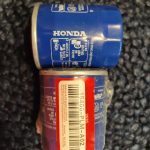
Credit: www.amazon.com
Check the circuit, housing and exact application
One motorcycle may have separate engine and clutch filters. Honda’s Japanese NC750X FAQ for the 2025 8BL-RH23 model distinguishes the standard model’s engine-oil filter from the DCT version’s engine and clutch oil filters. That statement is expressly scoped to the identified Japanese model and frame-number range. Separately, Hiflofiltro’s 2021–2025 NC750 XD DCT engine-filter entry specifies HF204, while its HF117 catalogue lists a transmission-filter application for the corresponding NC750 XD-M/N/P/R/S DCT years. These are separate catalogue tasks rather than interchangeable choices for one opening. Confirm the terminology in the motorcycle’s own service information: an aftermarket supplier may call an item a transmission filter where the manual refers to a clutch filter. A kit containing two differently shaped filters may therefore be intentional. Before assuming that a supplier sent an extra part, compare the named circuits and the exact maintenance work scheduled for the bike.
A cartridge inside a housing is not the same assembly as a spin-on can. The Royal Enfield Himalayan 450 UK owner’s manual describes removing a filter cover with an O-ring and spring, discarding the filter and fitting a new one. This establishes a covered replacement element for that application. It does not resemble a rule that every motorcycle accepts an external threaded canister. For a housing element, compatibility includes how the element seats and how its ends engage with the intended components. The cover, retained spring and seals are part of the service arrangement, even when a shop calls the replacement item simply an oil filter. Do not force the cover down to accommodate an element that seems slightly different. Nor should a cartridge from another motorcycle be considered interchangeable merely because it can be pushed into the cavity. Identify the specified replacement and check the assembly instructions before the engine is opened.
Dimensions are useful checks, not an application approval. K&N’s KN-204-1 specification page lists a spin-on construction, M20 × 1.5 thread, anti-drainback valve and bypass valve, as well as its outside dimensions. Those are attributes of that particular product, not universal motorcycle specifications. A shared thread describes only one interface. Seal contact, installed clearance and the intended oil-system requirements still matter. The product page also provides a vehicle lookup, which is the appropriate next step when considering that filter. Do not build a compatibility decision by choosing whichever can has the most familiar dimensions. Our oil-filter thread guide explains that limited role in more detail. A dimension mismatch can reveal a wrong delivery; a dimension match alone cannot prove that an unlisted application is supported. The same reasoning applies when someone suggests using a car filter on a motorcycle: obtain explicit application evidence rather than treating a successful screw-on trial as validation.
Catalogue evidence needs the right starting information. Use the motorcycle’s identification and the engine actually installed, especially on a used or modified machine. The registration year may be a clue, but it should not silently replace the manufacturer’s model-year and variant information. Honda’s owner-manual selector separates model and year so owners can retrieve the applicable instructions. Keep that manual alongside the parts lookup. If a motorcycle has an aftermarket filter relocation kit, describe the kit and its adapter to the supplier; the stock mounting arrangement may no longer tell the whole story. A useful enquiry includes the exact bike, market version, original part reference if established, and the proposed replacement number. A photograph can clarify a label or housing but cannot supply an undocumented internal specification. If neither supplier nor manufacturer can establish the application, choose a documented option instead of treating uncertainty as evidence that the part is probably close enough.
Resolve cross-reference and packaging differences before draining oil. A cross-reference can help locate another manufacturer’s product, but begin with a verified original part rather than blindly copying whatever a previous owner fitted. Read application notes on the replacement manufacturer’s own listing. A superseded number needs a documented replacement path; similar digits are not a supersession notice. Check the delivered label against the order, and inspect the package for damage or evidence that parts have been mixed. A photographed filter with the correct label is still not proof that every seal required for the job is included. Lay out the specified consumables in advance and compare kit contents with the procedure. Finish names and performance suffixes also deserve attention: a colour option may be listed for the same application, while a different product family needs its own confirmation. This is a purchasing check, not a reason to assume that the most expensive version offers a measurable advantage on your bike.

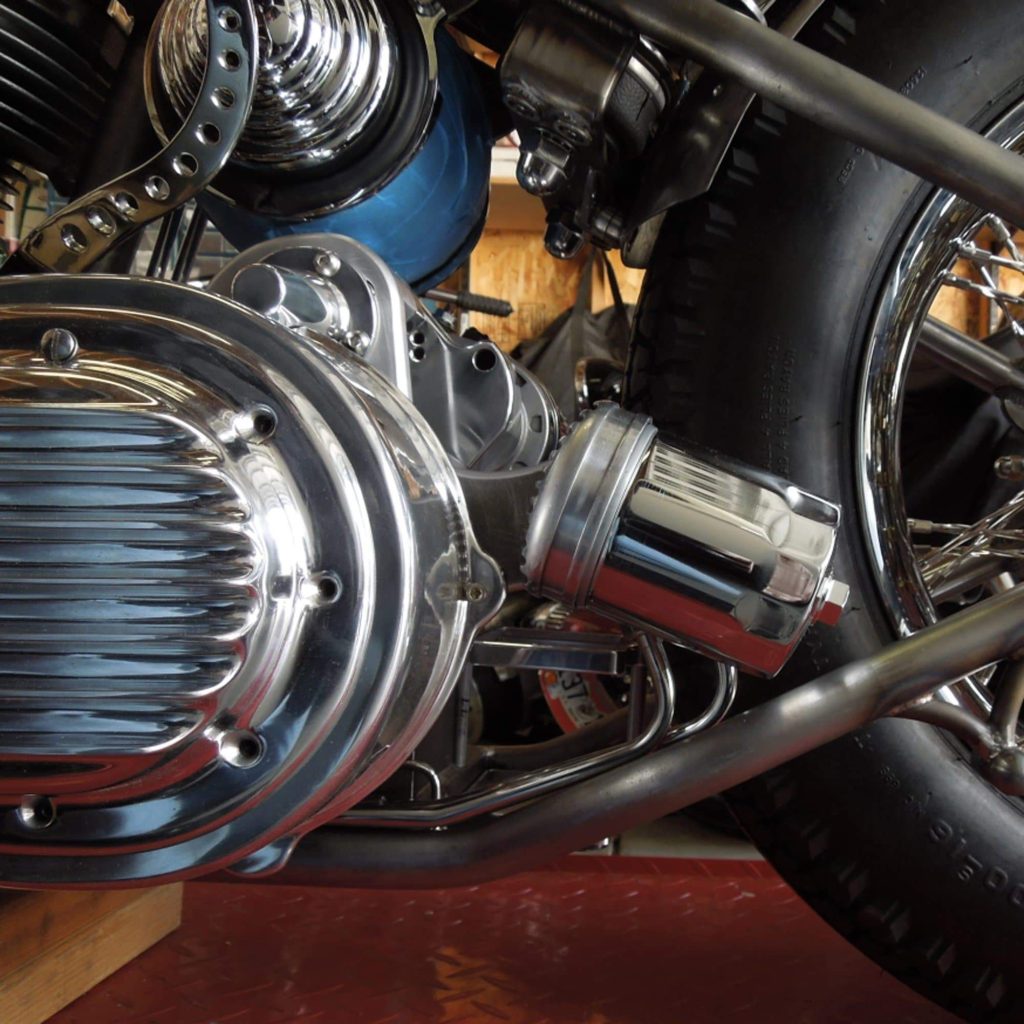
Credit: thunderparts.en.made-in-china.com
Confirm installation instructions as well as the part number
Correct fit does not make installation methods interchangeable. The 2019 Honda NC750X/XA/XD manual gives separate instructions for the DCT clutch filter and the engine filter, including clutch-element orientation, its spring and cover seal. These details belong to that manual’s application and should not be copied as a universal procedure for a newer bike or another brand. Likewise, a removal feature on a spin-on filter does not establish the installation tightening method. Read the instructions for the motorcycle and the supplied product before using a wrench. Confirm the sealing surface is prepared as specified and that an old seal has not been left behind where a new one must seat. Stop if the assembly will not engage normally, if the supplied part differs from the verified listing, or if a required retained component is missing. Extra force is not a reliable way to resolve a mismatch.
Finish with verification and a usable service record. Follow the motorcycle’s prescribed refill, level-check and post-service inspection procedure. The amount needed after changing one filter may be stated differently from the amount for another service operation; do not choose a capacity from an unrelated model. Investigate leakage or an abnormal oil-pressure indication instead of riding to test whether it improves. Save the replacement number, circuit serviced, date and application evidence so a future order can be checked efficiently. If buying a different brand next time, repeat the lookup rather than assuming all cross-referenced products share every detail. Our general oil-filter interchange guide covers that broader decision. For motorcycles, the answer remains precise: a manufacturer can document a filter for multiple named applications, but there is no single oil filter that fits every bike, every model year and every oil circuit. Match the evidence to the machine before the price, appearance or convenience decides the purchase. Save the lookup date too: a later manufacturer catalogue can revise an application or replace a product number, so an old screenshot deserves rechecking.


Automotive reference information. Confirm specifications in the manual for your exact vehicle. Original replacement guides link to their research sources. About us