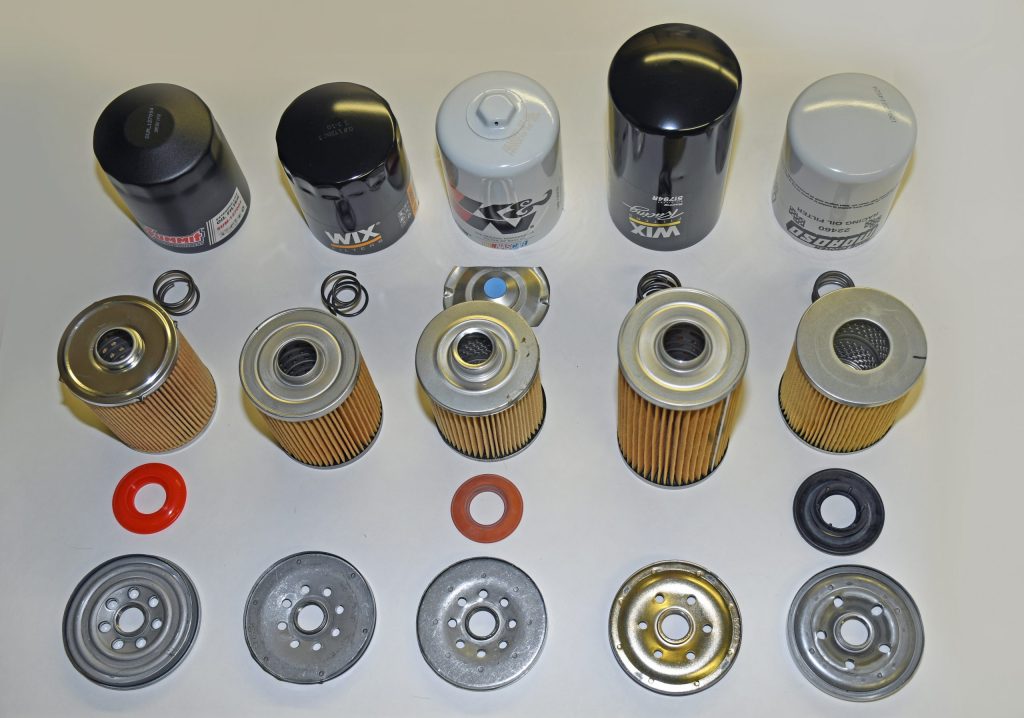

No. Oil filters use different mounting threads, and a matching-looking opening is not enough to identify one. For a spin-on assembly, the thread specification includes more than its approximate diameter: pitch and thread designation matter too. Confirm the filter application before fitting it, and stop if engagement is abnormal. A filter that catches the first thread has not thereby proved that it is the correct replacement or that it will seal and function properly.
Two real filter specifications show the difference
The official catalog lists MANN-FILTER W 610/3 with an M20x1.5 connection, while MANN-FILTER W 712/52 has a 3/4-16 UNF connection. These are different thread specifications within the same manufacturer’s range. They are examples, not a list of all oil-filter threads and not a replacement recommendation for your vehicle. The brand name on the box cannot tell you which connection the individual part uses.
Which thread are you asking about?
Identify the component before searching. The mounting connection of a spin-on filter is a different item from the thread on a retained cartridge-housing cap. An oil drain plug is another separate connection. A service-tool size stamped on a cap also does not identify the filter’s mounting thread. When asking a parts department for help, describe the assembly and provide its complete part number or a clear photograph of the relevant location.
How to read metric and inch-based designations
The Swagelok thread-identification guide distinguishes thread diameter, pitch and standard, and explains that metric pitch is a distance between neighboring threads while inch-based descriptions use threads per inch. Its purpose is identifying fluid-system connections, not approving oil-filter applications. That terminology helps decode a catalog entry without treating every number as a diameter.
- M20x1.5: M identifies the metric thread form; 20 denotes the nominal diameter in millimeters, and 1.5 the pitch in millimeters. Keep both numbers when relaying the specification.
- 3/4-16 UNF: 3/4 is the nominal diameter in inches, 16 is the number of threads per inch and UNF identifies the Unified Fine series. Omitting the pitch or series removes information needed to distinguish the connection.
Converting the units shows why a near match remains different. Three quarters of an inch is 19.05 mm, and 16 threads per inch corresponds to 25.4 divided by 16, or 1.5875 mm between threads. Neither equals the complete M20x1.5 specification. These calculations explain the notation; they do not establish an acceptable tolerance for mixing parts. Rounding both descriptions to something like “about 20 mm” hides the very difference you need to resolve.
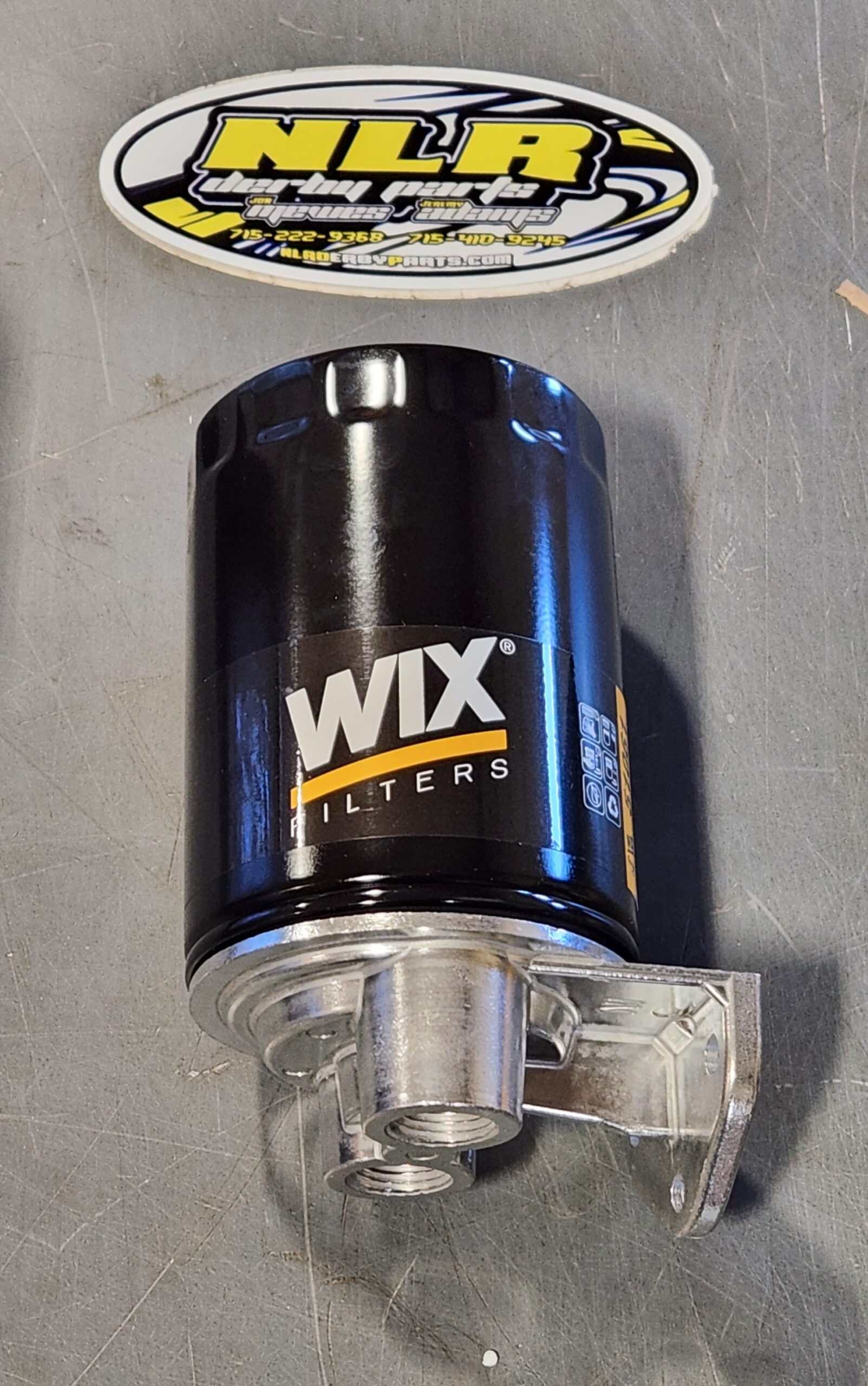
Credit: nlrderbyparts.com
Identify an uncertain thread without using the engine as a gauge
Look first for the manufacturer’s specification for the filter and installed housing. If markings are missing or conflicting, a technician can use appropriate measuring and identification tools to investigate. A caliper gives diameter information, while a pitch gauge checks spacing; one cannot substitute for the other. The Swagelok guide also notes that measured dimensions can differ from nominal values because of tolerances. Do not treat a quick ruler measurement as a complete thread identification or try progressively tighter filters to find one that grips.
A dimensional search identifies candidates, not approval
WIX’s size and dimension lookup expressly distinguishes reference selection by features from its vehicle application listing. That is a useful boundary when a search returns many filters with the same thread. Those results answer which products share a listed characteristic; they do not say that the products are interchangeable on your engine. For the complete application-verification process, see when oil filters can be valid alternatives. Keep the thread finding as one piece of that decision.
What abnormal engagement can tell you
A filter that tilts, catches or becomes unexpectedly difficult to turn needs investigation before installation continues. The cause may be an incorrect specification, poor alignment, damaged threads or obstruction. Do not diagnose the exact cause from resistance alone. Adding force removes useful feedback and can turn a selection or alignment problem into damage to a component that remains on the engine.
- It catches briefly, then binds: stop and compare the complete part number and thread specification. Initial contact does not demonstrate correct engagement along the connection. Do not use a wrench to pull a doubtful filter into place.
- It sits at an angle: check whether the approach is obstructed and whether the filter is aligned with the mounting connection. A matching catalog number cannot make an angled approach correct. Have an inaccessible or damaged mounting area assessed.
- It turns but will not reach the expected seating position: investigate the assembly, seal and mounting arrangement. More turning is not evidence that the filter is nearly installed correctly. Use the procedure’s specified contact and seating references rather than counting turns from memory.
Separate access, condition and specification problems
A genuine application-listed filter can still be difficult to install if something else has changed. MAHLE’s June 2023 bulletin about OC 248 filters in converted campers describes added oil-cooler equipment obstructing access, sometimes leading to angled installation and jammed threads. The connection may be the correct type while the approach is wrong. The example supports checking the surroundings, not changing to an unlisted thread or improvising an adapter. Work through these questions before retrying:
- Identity: does the marking on the delivered filter match the ordered part and the confirmed application? Include suffixes; do not rely only on a similar carton.
- Condition: are the visible threads clean and undamaged, and is the mounting component sound? Do not assume a new item cannot have a manufacturing or handling problem.
- Access: can the specified assembly approach the connection straight, using the proper service access? Identify any added equipment or moved component that prevents it.
- Procedure: do the instructions describe the actual filter and housing in front of you? If the arrangement differs, pause and obtain the applicable information rather than adapting the procedure by guesswork.
Baldwin’s pre-use quality checklist calls for cleanly formed spin-on threads without debris. Inspecting those visible features is sensible, but it is not a precision acceptance test of the whole connection. If a mounting thread looks damaged, seek repair guidance for that engine. Do not chase or cut threads in the assembled lubrication system as an improvised way to fit a questionable replacement, and do not leave metal debris near open oil passages.
Credit: inboardonline.com
A thread match leaves other requirements unanswered
Even a correctly identified connection only addresses attachment. MAHLE’s explanation of oil-filter construction notes that similar-looking spin-on filters can differ in their valve arrangements, filter media and pressure-related characteristics. Those are separate from the thread. Three checks therefore remain necessary after the nominal thread appears to match:
- Sealing: the specified gasket or seal must contact the correct surface as designed. A filter that threads on cannot compensate for an incompatible or displaced sealing ring.
- Space: the assembly needs the appropriate clearance and service access. Our guide to oil-filter dimensions separates those physical measurements from the connection itself.
- Function: the complete filter must be approved for the installed application. Matching the thread gives no independent evidence about its bypass requirements, filtration capability or permitted service interval.
Questions about oil-filter threads
Does the vehicle’s country of origin identify the thread?
Do not use a country or brand shortcut to select the connection. The relevant evidence is the engine and housing specification, together with the exact replacement listing. A manufacturer may use different components across model families or production changes. The two catalog examples above already show why knowing one filter from a brand does not establish the thread on another. Read the actual specification instead of assuming all metric or all inch-based connections for a category of cars.
Can thread tape or an adapter fix a mismatch?
Thread tape is not a remedy for incompatible mechanical engagement, and a generic adapter is not a substitute for a verified oil-system design. Use sealing materials only where the relevant procedure specifies them. If a documented conversion is installed, identify its exact adapter and filter requirements and check its instructions. Do not apply plumbing practices to the filter mounting connection merely because both assemblies have threads.
What if the old filter came off with a threaded component?
A separate mounting piece moving with the old filter changes the job. Identify what moved and consult the engine or housing service procedure before transferring it into a new filter. The fact that a piece can be screwed back in does not establish its correct seating, retention or tightening requirement. Keep the parts available for inspection and describe the event to the technician, including whether any leakage or damaged threads were observed.
Does a leak-free startup prove the thread choice was correct?
No. A brief absence of leakage cannot establish the intended mechanical engagement or the filter’s internal suitability. Complete the prescribed post-service checks, but do not use engine operation as the approval test for a doubtful connection. If a filter was forced on, sits abnormally or has uncertain fitment, obtain professional guidance before operating the vehicle. Follow the vehicle’s immediate response to any active oil leak or oil-pressure warning.
Keep the complete designation with the application record
The answer is specific: oil-filter mounting threads differ, both diameter and pitch matter, and correct engagement does not prove full compatibility. Retain the verified part number, application notes and any documented housing modification. If an installation does not match the instructions, investigate before applying force. This article interprets published specifications and manufacturer guidance; it does not claim to have gauged your mounting connection or tested an unlisted substitution.


Automotive reference information. Confirm specifications in the manual for your exact vehicle. Original replacement guides link to their research sources. About us