
OEM oil filters are not automatically better than every aftermarket option, and an aftermarket filter is not automatically an upgrade. A correctly identified automaker-branded replacement offers a clear application reference. A documented aftermarket replacement can also be suitable. Compare the actual parts, their supported use and the evidence behind performance claims. Category labels alone cannot establish filtration efficiency, installation accuracy or the longest safe service interval. The sensible choice is the one whose application and requirements you can verify and meet.
Clarify what the seller means by OEM
In everyday shopping, OEM often means a replacement sold under the vehicle maker’s parts brand. It does not necessarily mean the car company physically manufactured every component. “Original-equipment supplier,” “genuine replacement” and “OE quality” describe different kinds of claims, so ask which one a listing makes. For this comparison, an OEM choice means the vehicle-branded replacement confirmed for the application. A supplier name on another box does not prove that its internal construction is identical to the vehicle-branded part.
Aftermarket describes a purchasing category, not one design
The independent aftermarket includes many filter manufacturers, product families and applications. MANN-FILTER’s OE-quality explanation describes its participation in original-equipment supply and aftermarket products, and includes oil filter HU7035y among its examples. That illustrates why “aftermarket” cannot be treated as a synonym for an unknown or inherently inferior product. It remains the manufacturer’s description of its offering, not a laboratory comparison proving every aftermarket oil filter equals every OEM filter. Confirm the particular replacement rather than generalizing from a company’s other contracts or products.
Where the vehicle-branded route can be useful
An OEM purchase is often a practical way to reduce research effort when the dealer can confirm the current part for the VIN. That convenience is valuable on a first service, an unfamiliar engine or an application with revised parts. It is still a verification process, not an immunity from ordering mistakes.
- A clear reference point: Honda Canada says its genuine oil filters are designed and made to its original-equipment specifications. For the Canadian vehicles covered by that page, this provides a manufacturer-stated benchmark. It does not eliminate the need to select the correct part for the engine.
- Access to current application information: A parts department can check an updated number and required service consumables together. Ask for the exact number on the estimate or invoice. A vague entry such as “genuine filter” is less useful if you later need to verify what was installed.
- A simpler decision when data are missing: If an alternative has no reliable application listing or its seller cannot resolve conflicting information, the confirmed vehicle-branded option is a reasonable choice. That is a decision about evidence and convenience, not proof that all alternatives perform worse.
Do not turn that preference into a promise of perfect fit under all circumstances. Modified engines, swapped housings, damaged mounting surfaces or an incorrect part picked from the shelf still need attention. Check the delivered item and follow the installation instructions even when the invoice carries the vehicle maker’s logo.
When an aftermarket alternative deserves consideration
A suitable independent replacement can offer availability, a useful product feature or a different total price. Those benefits need to be assessed for the actual vehicle. Price and advertising terms vary, so there is no reliable rule that every OEM part costs more or every aftermarket filter provides better value.
- Documented coverage: Look for your exact year, model and engine in the filter manufacturer’s application catalogue. Treat a universal seller description or an unexplained cross-reference as incomplete evidence until the application is confirmed.
- Relevant product information: A manufacturer may supply technical data or application notes that help compare alternatives. Use those documents, preserving their limitations, rather than counting favourable customer reviews as a measurement of filtration performance.
- Credible support: The supplier should be able to identify the product, explain its intended service and resolve a discrepancy. A small saving is less useful if the delivered filter has no traceable part number or the seller cannot explain what it fits.
Application information can change. FRAM’s January 2019 GM bulletin says PH12060 replaces PH10060 on selected applications, while PH10060 remains appropriate for others, and directs readers to the current catalogue. That historical example does not establish today’s fit for a particular GM vehicle. It demonstrates why neither a remembered part number nor a blanket “fits GM” label is enough. Our interchange guide develops the separate compatibility decision.
Compare the same evidence on both sides
Use the following comparison as a purchasing worksheet. A blank field is missing information, not evidence that the competing filter wins. Both options must first be correctly listed for the vehicle before optional features become relevant.
| Decision | Vehicle-branded replacement | Independent aftermarket replacement |
|---|---|---|
| Application | Confirm current VIN-specific part | Confirm exact manufacturer catalogue entry |
| Performance | Seek part-specific data when comparing | Keep test method and claim qualifications |
| Cost | Compare complete delivered service supplies | Include required seals and delivery costs |
| Support | Keep part number and service invoice | Keep supplier, product number and terms |
A quality-system declaration and a filtration test answer different questions. MANN-FILTER’s quality declaration describes manufacturing controls and IATF 16949-certified production plants. That is relevant process information, but it is not a measured efficiency curve for two specific competing filters. Avoid converting a company-level certification into a claimed percentage advantage for one part.

Credit: www.youtube.com
Define what better would mean for your comparison
If better means particle removal, compare efficiency at the same stated particle size under comparable testing. If it means supported service duration, read the application and interval conditions. If it means an easier purchase with less uncertainty, confirmed availability and supplier support may decide the choice. These criteria should not be collapsed into one unsupported ranking.
- ISO 4548-12:2017 describes a multipass lubricating-oil filter test covering removal characteristics, contaminant capacity and differential pressure. Naming that standard does not itself provide a result. Ask which part and sample were tested and retain the report’s conditions.
- The WIX technical FAQ explains that a micron rating needs efficiency context, and that media area and restriction influence flow. Do not select solely by the smallest advertised particle size or assume one visible material makes a complete filter superior.
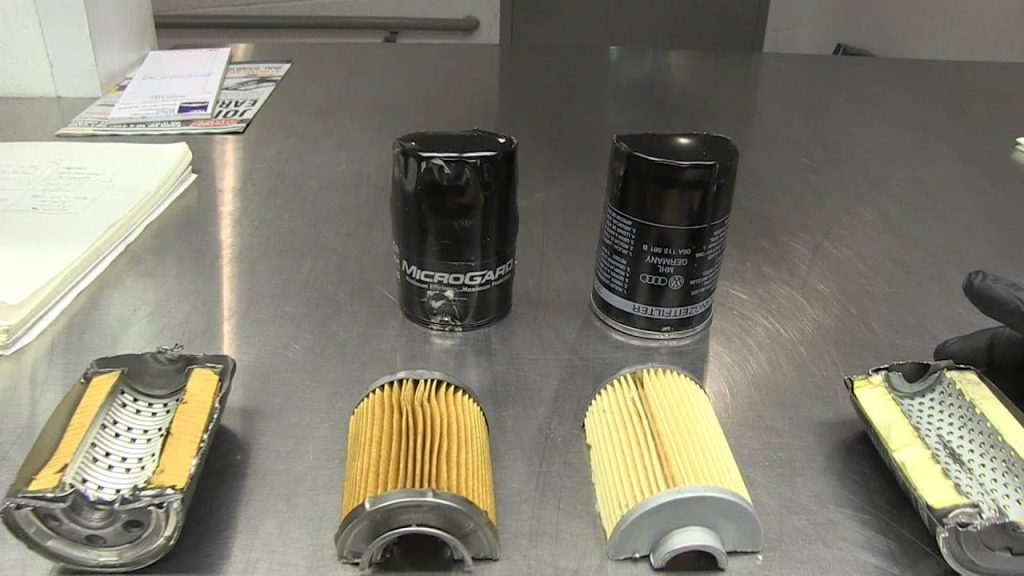
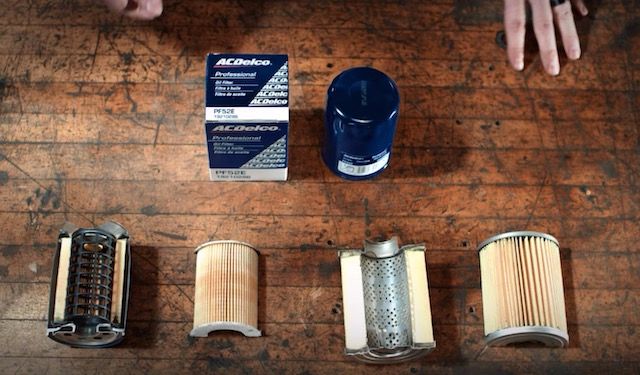
- A cut-open demonstration can show visible components, but appearance alone cannot establish service life, leakage resistance or an efficiency curve. Likewise, an owner’s trouble-free experience is not a controlled comparison proving the other category would have failed.
Do not claim two products are identical because their cans look alike or their companies share a parent organization. Different product specifications can exist within one supplier’s range. Conversely, a changed colour or package does not independently prove worse performance. The relevant evidence belongs to the specific product and application.
Check warranty terms without repeating common myths
For U.S. consumers, the Federal Trade Commission’s auto-warranty guidance says using an aftermarket part does not by itself void the vehicle warranty. Damage caused by a defective part or incorrect installation can be treated differently, and the manufacturer or dealer must establish the causal connection before denying coverage on that basis. Free supplied parts or services can carry specified-use conditions. These are U.S. rules; do not assume they describe every country or every separately purchased service contract.
- Read the actual vehicle warranty and any separate service contract. A sales comment that “only our filter keeps coverage” is not a substitute for the applicable written terms and local consumer rules.
- Retain the itemized invoice, product number, date, distance and completed maintenance details. Records make it possible to distinguish an application question from an installation or missed-service problem.
- If a dispute arises, request the reason and supporting evidence in writing. Keep the filter and relevant records available for assessment where appropriate; do not treat a general internet warranty summary as a decision on an individual claim.
The filter manufacturer’s own warranty is a separate document from the vehicle warranty. Check what it covers, how a claim is submitted and which records it requires. A long coverage headline is not a substitute for correct fit, and a low purchase price does not explain who would help resolve a product problem.
Credit: www.gmpartscenter.net
Fit the filter choice into the maintenance plan
Whichever purchasing route you choose, use the specified oil and the appropriate vehicle service schedule. FRAM’s synthetic-oil guidance explicitly prioritizes vehicle-maker interval and filter requirements over the maximum mileage advertised on a package. A premium product does not automatically authorize extra mileage, and a new filter cannot repair an unrelated engine fault.
Installation matters to the result. Check the supplied seals, prepare the mounting surfaces as directed and use the required tightening procedure. Complete the level and leak checks. If something does not fit or an abnormal warning appears, investigate rather than assuming the category label guarantees a safe outcome. Our filter replacement-interval guide explains the separate timing decision.
Choose the supported part, then maintain it correctly
Choose a confirmed OEM replacement when you value the straightforward application reference or cannot verify an alternative. Consider an aftermarket part when its manufacturer documents the exact application and its service requirements suit your plan. Neither choice needs a claim that an entire category is universally superior.
Compare the complete purchase: filter, required seals, delivery, availability and the support behind it. A small price difference may be less important than resolving uncertain fit before the engine is opened. Do not pay extra for an alleged performance advantage unless the evidence actually addresses the products you are comparing.
This guide supplies a decision method, not a tested league table. No physical filtration trials or universal longevity advantage are claimed. A defensible purchase has a known application, clear product identity, appropriate service conditions and a record you can use at the next oil change.


Automotive reference information. Confirm specifications in the manual for your exact vehicle. Original replacement guides link to their research sources. About us