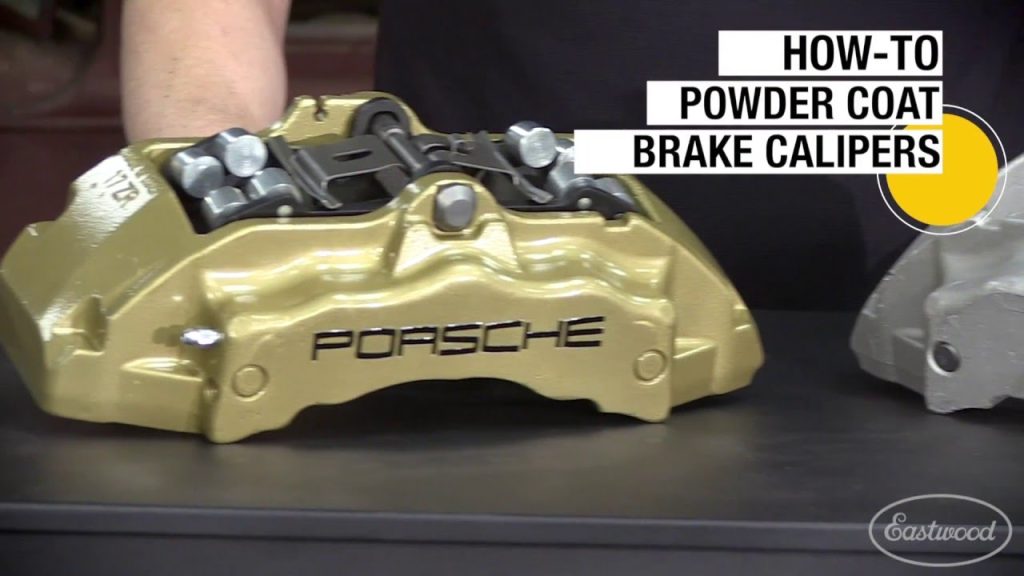

Powder coating can change a caliper's appearance, but that does not make it an approved treatment for the caliper on your car. Brembo discourages third-party repainting, and its official partner Race Technologies specifically advises against powder coating.
The answer therefore begins with the manufacturer and exact caliper, not an oven temperature or a colour choice. If the manufacturer prohibits the process, choose an approved replacement or retain the existing finish rather than looking for a generic workaround.
This article explains the questions behind that decision.
It does not provide a home-baking recipe, promise a performance improvement or assume that a freshly coated used caliper is mechanically sound.
What powder coating changes—and what it cannot prove
Powder coating is a finishing process in which a coating is applied and cured according to the coating system's requirements. A brake caliper, however, is an assembly with hydraulic seals, accurately fitted surfaces, moving components and vehicle-specific mounting features.
The visible exterior is only one part of that assembly. A smooth finish cannot establish the condition of a hidden piston surface, an internal fluid passage or a damaged mounting thread.
Nor does a coating certificate establish correct brake fitment for a different vehicle. Separate the proposed cosmetic work from any inspection, rebuilding and replacement work in the quotation.
Otherwise, a low finishing price can appear to cover a complete brake refurbishment when it covers only the outside. Ask what evidence will show that the finished component remains serviceable for its original application.
A photograph of the final colour is useful for appearance approval, but it cannot answer that engineering question.
Read the caliper manufacturer’s restrictions first
Brembo’s explanation of repainting risks identifies problems with component history, unsuitable applications and incorrect handling during refinishing. It also warns that oven treatment without appropriate handling of the hydraulic assembly can damage piston seals.
Race Technologies’ Brembo guidance explicitly discourages powder coating and limits which parts may be removed during the repainting process it describes. Those are product-specific restrictions, not permission to dismantle every caliper and bake the bare casting.
In particular, the existence of a removable-looking body joint does not establish that separating it is an authorized service operation.
Ask the caliper manufacturer whether refinishing is permitted, which process is allowed and who can perform it.
Obtain an answer for the actual part number rather than for the brand in general.
If a refinisher's proposed method conflicts with that answer, the conflict remains unresolved even if the shop has attractive examples.
Do not reinterpret an aftermarket paint supplier's temperature claim as approval from the brake component manufacturer.
When permission or service information is absent, an approved finished replacement gives a clearer route than experimenting on an essential brake component.
Separate cosmetic goals from repair decisions
First decide what problem you are trying to solve: an unwanted colour, superficial finish damage, corrosion, leakage or a dragging brake. Only the first two are primarily appearance questions. Leakage, damaged protective boots, poor piston movement and compromised mounting features need diagnosis before any finishing discussion. A caliper that repeatedly overheats may have a hydraulic or mechanical problem elsewhere, so changing its exterior will not establish the cause. Ask the repairer to document the condition of both the assembly and its associated pads, disc, hose and guides where fitted. If replacement is required, compare the complete installed cost of an approved caliper with the complete cost of removal, permitted refurbishment, refinishing, refitting and testing. Include the time during which the vehicle cannot be used. A cosmetic quote that excludes fluid work and reassembly can look deceptively inexpensive beside a ready-to-fit part.
Keep those scope differences visible rather than comparing only the colour-coating price. Consider two different vehicles arriving at a finishing shop. One has a functioning caliper with a disliked colour, while the other has uneven pad wear and an unreadable part number. Offering the same coating package to both misses the second vehicle's unresolved mechanical and identification problems. The first owner needs a decision about permitted cosmetic work; the second needs diagnosis and a parts decision before appearance can be considered. Keep those stages separate on the invoice, including any decision that the component should be replaced rather than refinished. This distinction is especially important when buying refurbished parts remotely, where glossy photographs cannot show movement, sealing performance or the origin of the core.
Evaluate the promised benefits realistically
- Colour choice and a uniform exterior are legitimate preferences, but neither demonstrates shorter stopping distance or a longer service life. A supplier may advertise a durable coating without having tested your particular caliper and use case. Ask what the durability claim covers, how it was established and whether damage from brake fluid, cleaning products or road debris is excluded. A warranty on colour adhesion may be separate from any warranty on mechanical operation.
- Confirm who handles a problem if the finish interferes with identification markings, service access or an agreed inspection. Think about the vehicle's intended use as well: a decorative finish chosen for appearance should not be presented as a thermal upgrade for repeated track braking. A brake system needs a coherent specification, and its suitability cannot be inferred from a coating's marketing label. If the actual goal is an upgrade, investigate a complete application-approved brake package rather than repainting an unrelated donor caliper.
- Our guide to caliper compatibility explains why visual similarity and mounting-hole spacing are insufficient evidence. If the goal is simply to tidy the vehicle, retaining a sound factory finish may avoid unnecessary disassembly. Make the decision before parts are stripped, since reversing the appearance process is not always a simple matter. When comparing sellers, ask whether the advertised photographs show the exact item being supplied or an example of a finish.
- Request the part number and the vehicle application independently of the colour description. Confirm whether the listing includes a bracket, parking-brake actuator or other components needed for your installation, and whether the item is new, remanufactured or merely repainted. A seller who cannot distinguish those categories has not given enough information for a sound brake purchase.
- A return policy is useful, but it does not replace establishing compatibility before the vehicle is dismantled. Retain copies of the listing and agreed scope so that the supplied item can be checked on arrival. Keep colour approval separate from acceptance of the installed brakes, with each decision documented by the person responsible for that part of the work.
Questions to settle before authorizing any work
- Ask the shop to identify the exact caliper and provide the manufacturer's permitted scope in writing. Ask whether it is proposing a cosmetic service, an approved rebuild or replacement, because those are different jobs with different evidence requirements. Ask who takes responsibility for hydraulic integrity after the component is returned.
- Request a list of parts to be renewed and the source of those parts, without assuming that a generic seal kit fits. Brembo’s repair-kit information shows that repair components exist for supported applications; it does not make every caliper rebuildable or authorize any finishing process. Ask how the supplier verifies compatibility and whether a service instruction exists for that exact assembly.
- Request a description of inspection and final functional checks rather than a claim that the work is safe because the finish looks good. Confirm that the brake installation will follow its own approved procedure, including any required fluid work and parking-brake setup. Brembo’s fitting instructions are an example of the detailed application and installation considerations involved when a caliper is replaced.
- If the caliper is already coated and its history is unknown, do not assume either that it is defective or that it is safe. Record the part markings, available invoices and the coating supplier, then have a qualified brake specialist assess the component. A fresh finish can hide evidence that would otherwise help establish its history, which makes documentation more valuable.
- If the work was performed after the caliper developed a fault, ask for the original diagnosis and what corrected it. A leak, soft pedal, severe pulling, smoke or an unusually hot wheel after the job needs immediate attention; stop using the vehicle when braking is compromised and arrange recovery rather than continuing to test it on the road.
Credit: www.reddit.com
Do not attempt to compensate for a suspect caliper by changing pad material or adding more pedal effort. For someone who has not yet started, the safest purchasing sequence is identification, manufacturer guidance, mechanical inspection and then the cosmetic decision.
Compare like-for-like written quotations that include refitting and verification, and retain the removed component's identification until the job is complete. Reject a proposal that begins with a universal oven setting but cannot identify the caliper's service limits.
Also reject a promised lifespan increase without evidence tied to the finished assembly. The practical answer to whether you can powder coat brake calipers is therefore conditional: physical capability is not approval.
Where the applicable manufacturer advises against it, follow that guidance and select an approved alternative. Preserving reliable braking matters more than obtaining a finish that conceals an unresolved mechanical or compatibility question.


Automotive reference information. Confirm specifications in the manual for your exact vehicle. Original replacement guides link to their research sources. About us