
A brake caliper converts hydraulic pressure into force that presses the brake pads against a rotating disc. The friction between the pads and disc slows the wheel, while the tire’s contact with the road is part of what slows the vehicle. Calipers must also release correctly when braking demand ends. A brake that applies force but continues dragging is not working properly.
Understanding those two jobs—application and release—helps explain why a caliper inspection involves more than checking whether its piston can move. The precise construction varies, particularly between fixed and floating designs and calipers that incorporate a parking brake. This guide explains the components and diagnostic implications, not a universal dismantling or piston-retraction procedure.
The caliper is one part of the braking system
The disc, pads, caliper, hydraulic supply and mounting arrangement work together. The caliper supports or acts on the pads according to its design; the friction material on the pads is what contacts the disc. The bracket and fasteners locate the assembly so those forces are carried into the vehicle structure. Treating these parts as interchangeable names makes repair discussions confusing. Ask whether a recommendation concerns the caliper body, piston, guide hardware, bracket or pads.
A worn pad does not automatically mean the caliper has failed. Equally, installing new pads does not correct a piston or guide that prevents proper movement. The inspection should identify the condition of each relevant component and how it affects operation. Uneven wear can be useful evidence, but it is not a complete diagnosis on its own. A workshop must consider pad fit, guide movement, piston condition and other applicable causes.
Caliper appearance also tells only part of the story. A freshly painted body can conceal age or prior repair, while a dull finish does not by itself establish functional failure. Leaks, structural condition, movement and the vehicle’s symptoms matter more than color. Do not judge suitability by whether a caliper looks sporty or has more pistons. The part must match the braking system for which it is intended.

Credit: haynes.com
What happens when the brakes apply and release
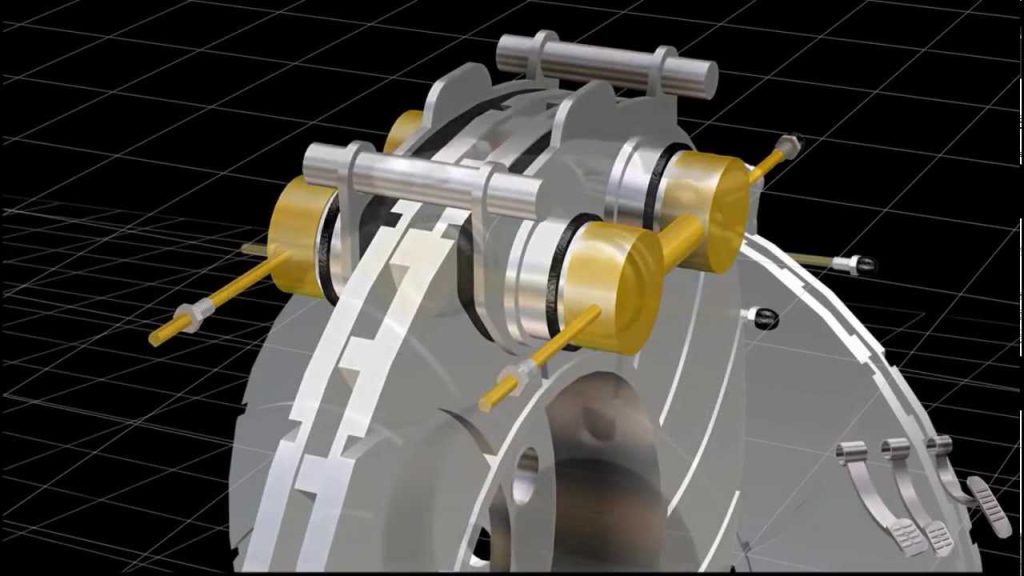
Brembo’s caliper overview distinguishes fixed and floating designs. A floating caliper has piston force on one side and moves on guides so the opposite pad is also applied. A fixed caliper uses opposed pistons in a body mounted rigidly in its intended position. These arrangements achieve pad clamping differently. Neither name means that the pads or hydraulic components can be installed without regard to the vehicle’s specifications. In a floating design, guide movement is part of normal function.
If a guide cannot move as intended, the assembly may not apply or release evenly. HELLA’s guide-pin information links guide condition with braking behavior and wear. That is why guides and protective boots are inspected during relevant service rather than treating the piston as the only moving part. The correct maintenance method and lubricant requirements depend on the design. Hydraulic pressure acts on piston area to create force. The complete braking result also depends on the rest of the system, including pad characteristics and disc geometry.
- Counting pistons alone does not calculate stopping performance. A different caliper can change fluid displacement and other relationships even if mounting holes appear close to the original. A conversion therefore requires a properly engineered, compatible system rather than a visual fit test. The piston seal contains brake fluid and contributes to the small release movement in a conventional disc-caliper arrangement. The dust boot protects vulnerable areas from contamination. These are different functions.
- A damaged dust boot may allow conditions that later impair movement even when there is no obvious fluid leak at that moment. A hydraulic leak is a separate defect requiring immediate attention. Replacing a visible boot without assessing the underlying condition may not be an adequate repair. The caliper does not normally pull the pads far away from the disc after every stop. Its operating clearances are small and depend on the system design. That is why a casual wheel-spin observation needs context.
-
Some contact can occur without establishing a seized brake, while substantial drag or heat requires investigation. There is no universal number of free wheel revolutions that diagnoses every vehicle. As pads wear, the operating position of the pistons changes to accommodate the thinner friction material. During pad replacement, the pistons must be returned using the correct procedure to make room for new pads. This is a service operation, not an instruction to force every piston inward with the same clamp. Integrated parking-brake mechanisms and electronic systems can require different preparation or movement.
- Identify the caliper before choosing a tool. Some rear calipers incorporate a parking-brake mechanism. Others use a separate arrangement. HELLA describes a caliper with an integrated handbrake mechanism, demonstrating why rear service can involve more than hydraulic piston movement. An electronic parking-brake switch in the cabin does not by itself identify every detail at the wheel. The vehicle procedure determines whether maintenance mode, a particular retraction method or another setup step is required.
- A sticking brake can arise from mechanical resistance or a hydraulic condition that prevents release. A seized piston is one possibility, but it is not the only one. Guides, pad fit, hose condition or another part of the hydraulic circuit may need assessment. Replacing a caliper without finding the actual cause can leave the symptom unchanged. See the sticking-caliper diagnostic guide for the evidence needed before replacement. Air in the hydraulic system raises a different question from a seized mechanism.
-
A soft or abnormal pedal must be diagnosed and corrected, but it should not automatically be described as a caliper mechanically locking up. The system may need bleeding under the correct procedure after it has been opened. That procedure can vary with the vehicle and its control systems. A firm pedal alone also does not prove that every wheel brake releases correctly. Heat is an expected result of braking, but a brake that remains applied can generate unwanted heat. Do not touch a suspect wheel or disc to compare temperatures by hand.
- Smoke, severe pulling, a locked wheel or changed braking ability warrants stopping safely and arranging assessment. Do not repeatedly drive to reproduce a dragging condition. The inspection should determine both the cause and whether heat has affected other parts. The caliper’s mounting hardware carries important loads and is application-specific. A slide-pin fastener, bracket bolt and hose connection have different jobs. Their wrench sizes are not torque specifications.
- Do not substitute a hardware-store bolt merely because its thread appears to fit. Correct parts, tightening requirements and any renewal instructions are essential to the integrity of the assembly. Maintenance should keep contaminants away from friction surfaces. Grease used at an approved guide location must not be transferred to pad friction material or the disc. More lubricant is not a substitute for correct fit, and unsuitable products can affect rubber parts.
Follow the specified location, material compatibility and quantity. A brake that looks neatly greased may still have been serviced incorrectly if the wrong surfaces were coated. When reviewing a repair estimate, ask which part failed and what evidence demonstrates it. A recommendation for caliper replacement should identify leakage, damage, impaired operation or another supported reason. If pads and discs are also included, ask about their measured condition and any contamination or heat effects.
This keeps the repair scope understandable without assuming all nearby components must always be replaced together. Verification after brake work must cover safe application, release and the requirements of the vehicle procedure. The technician should check for leaks and correct assembly before returning the vehicle to normal use. A warning light reset or a wheel that turns on a lift is not the entire verification. If a parking-brake function was disturbed, it also needs the required completion checks.
The final record should explain what was repaired and tested. Consider two examples of how this knowledge helps. New pads fitted around a binding guide may still wear unevenly because the caliper cannot move as intended. A replacement caliper installed while an unresolved hydraulic restriction remains may continue to drag. In both cases, understanding the caliper as part of a system leads to a better question than asking whether the new part is expensive enough.
The useful question is whether the actual application-and-release problem was identified and corrected. Calipers are therefore neither simple pad holders nor universal performance accessories. Their hydraulic, mechanical and mounting features must operate together in the correct application. If the vehicle’s braking behavior changes, use that understanding to describe the symptoms and assess the repair explanation. Leave vehicle-specific disassembly, torque values and electronic service steps to the correct service information and competent brake work. When explaining a symptom to a workshop, describe the behavior rather than naming a part you have not tested. “The vehicle pulls after braking” or “one wheel becomes unusually hot” gives the technician useful starting information. “The caliper piston is seized” is a conclusion that requires evidence. This distinction keeps the inspection open to other causes and makes the eventual repair explanation easier to assess.


Automotive reference information. Confirm specifications in the manual for your exact vehicle. Original replacement guides link to their research sources. About us