
A sticking brake caliper is one possible cause of a dragging brake, uneven pad wear or an unusually hot wheel. Those observations identify a braking problem, not necessarily a defective caliper. A restricted hose, binding pad or parking-brake fault can produce similar symptoms.
If braking changes suddenly, the car pulls strongly, or you notice smoke or a burning smell from a wheel, stop somewhere safe and arrange assistance. Do not keep driving to see whether the brake frees itself, and do not touch a rotor or wheel to assess its temperature.
This guide helps you describe suspected brake drag and understand the inspection it needs. A wheel that is already locked or will not release requires recovery and a workshop assessment; it is not a reason to attempt a longer road test.
Separate the observation from the suspected part
What you can record without dismantling anything
Write down which corner seems affected, when the symptom first appeared and whether it followed brake work. Note whether it happens immediately, only after several stops, or after using the parking brake. That sequence is more useful than a guess based on the caliper's appearance.
Surface rust is not a diagnosis
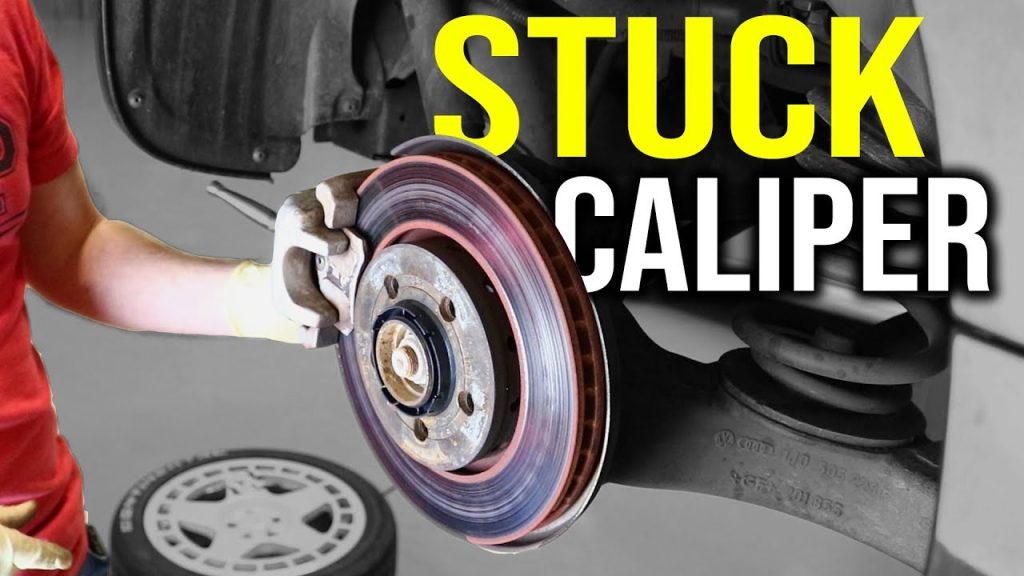
Rust on an exposed casting does not establish that the piston or sliding mechanism is stuck. The important question is whether the moving parts release correctly. A clean-looking caliper can still have a problem that is not visible from outside the wheel.
Uneven pad wear needs interpretation
A technician can compare inner and outer pad thickness, taper and wear on the opposite side. Those patterns help direct inspection of guides, pad abutments and pistons. The worn pad alone cannot distinguish mechanical binding from hydraulic pressure that remains applied.
Driving symptoms: useful clues, limited proof
Pulling during braking
A pull can reflect unequal braking, but tires, alignment and road conditions also matter. Record whether it occurs only with the brake applied or continues after release. Do not use the direction of the pull as a universal rule for choosing which caliper to replace.
Resistance after releasing the pedal
A car that feels reluctant to roll may have brake drag, but the observation also depends on slope, drivetrain and parking-brake operation. Avoid improvised push tests on an unsecured vehicle. The workshop should establish which wheel is resisting rotation under controlled conditions.
What wheel temperature can tell you
A temperature difference can support a finding of unequal friction. It does not identify the failed component, and a single reading cannot be interpreted without knowing the recent braking and driving conditions.
Temperature assessment belongs within the inspection, rather than being a reason to deliberately heat a suspect brake.
Use measurements, not a hand on the wheel
A professional may compare wheel-end temperatures without contact, accounting for measurement location and surface differences. There is no universal temperature in this article that separates a good caliper from a bad one. An overheated assembly also needs checks for consequential damage.
Smoke and odor are stop signals
A hot smell can come from several sources. Smoke, a strong burning odor or a change in stopping performance should end the test, not trigger another lap. Tell the recovery service about the affected wheel and allow it to cool without pouring water onto the brake.

Credit: www.repairsmith.com
Mechanical binding versus retained pressure
The central diagnostic split is whether a component is physically binding or hydraulic pressure is keeping the brake applied. Replacing a caliper without resolving that distinction can leave the original fault in place.
Ask for the finding that supports the proposed repair, not just a list of symptoms that a caliper could cause.
Guides, pad supports and piston movement
The inspection should cover the relevant moving surfaces and protective boots for that caliper design. Lubricant choice and service procedure must follow the application; indiscriminately adding grease is not a repair for a damaged or corroded assembly.
Some rear calipers incorporate a parking-brake mechanism or electronic actuator. Their release and service procedures differ. A seized-caliper diagnosis should account for that equipment before force is applied to a piston.
A hose can imitate a caliper fault
Wagner: brake-system inspection checklist explains that a restricted hose can obstruct fluid movement. A pressure-release response is a clue that the fault may be hydraulic; it must be interpreted with the rest of the circuit.
Our brake hose diagnostic guide covers that narrower question. Opening a hydraulic circuit is workshop work requiring the correct subsequent bleeding and safety checks, not an owner test suggested here.
What a useful workshop assessment should establish
Request a diagnosis that names the affected corner, the observed drag, and the component that fails to move or release correctly. Ask whether the fault was reproduced before disassembly, especially if the problem is intermittent.
A photo of damaged hardware or a documented measurement is easier to evaluate than “these usually fail.” If the shop could not reproduce the complaint, that uncertainty should remain visible in the estimate.
Questions before approving parts
Ask whether pads and discs were inspected for heat damage, whether the opposite side was compared, and whether the parking brake and hydraulic supply were considered. Replacement scope should follow the condition found and the manufacturer's requirements.
Also ask what the final verification includes. A successful repair must restore release as well as braking, without leaks or warnings. Clearing a warning lamp alone is not evidence that mechanical drag has gone.
If the symptom returns after replacement
Bring the earlier invoice and describe what changed. A new caliper does not rule out a hose, pad-fit, parking-brake or upstream hydraulic fault. Repeating the same replacement without a fresh diagnosis can miss the cause.
Record the time and operating conditions of the recurrence. Do not recreate a dangerous overheating event solely to provide evidence; the workshop can choose a controlled investigation.
Common questions about suspected caliper sticking
Can uneven brake dust prove a caliper is sticking?
No. Dust distribution is an observation worth reporting, but pad material, use and wear also affect it. It is not a substitute for inspecting release and comparing the brake assemblies.
Does a sticking caliper always make noise?
No. The absence of squealing or grinding does not establish that the brake releases properly. Describe drag, heat or changed braking even if the car is quiet.
Can I wait until the next scheduled service?
A change in brake behavior deserves prompt assessment. If there is overheating, smoke, severe pulling or reduced braking, stop using the vehicle and arrange recovery rather than scheduling continued driving around it.
The repair decision
Treat symptoms as a starting point. The strongest case for replacement identifies the failed mechanism, rules out the relevant alternatives and includes verification that the wheel releases after repair. That is more useful than diagnosing a caliper from heat or rust alone.


Automotive reference information. Confirm specifications in the manual for your exact vehicle. Original replacement guides link to their research sources. About us