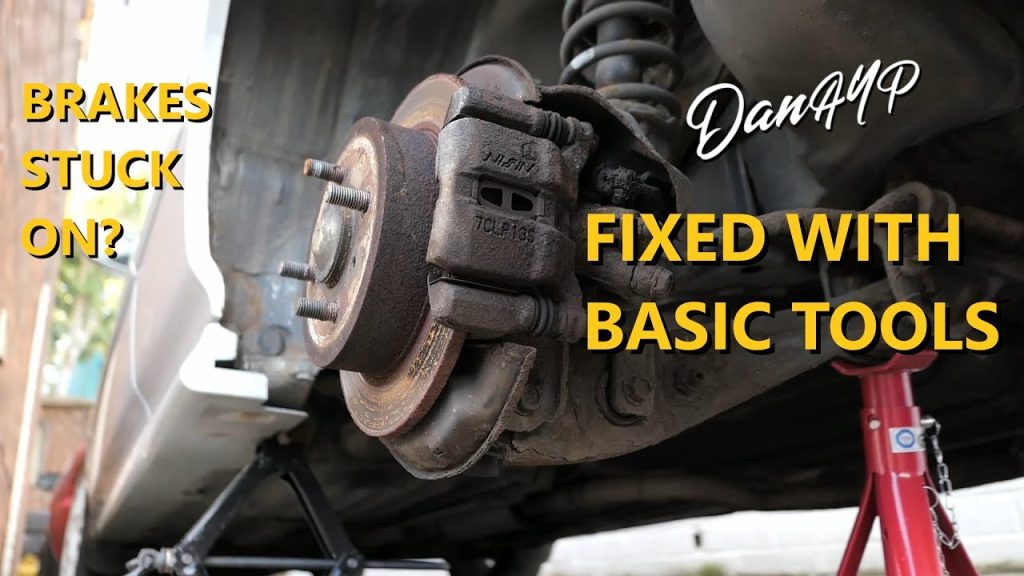

Fix a sticking brake caliper by identifying what prevents the brake from releasing, then repairing that fault and checking the damage it caused. A new caliper is not the answer when the pad is trapped in its carrier, and new grease cannot restore a damaged hydraulic seal. The practical decision is which repair restores normal movement and safe braking on this particular vehicle.
This guide explains how to evaluate a repair recommendation rather than providing a universal disassembly procedure. If a wheel is smoking, braking is reduced, the pedal changes suddenly or the vehicle pulls strongly, stop safely and arrange recovery.
Do not drive to see whether the brake frees itself. For the observations that should come before a repair estimate, see our sticking-caliper symptoms guide.
Start with a confirmed repair target
Ask the workshop to identify the affected corner and the mechanism that remains applied after pedal release. The phrase seized caliper can describe several different problems, so it is not a sufficiently precise repair authorization by itself. Useful findings include a guide pin that will not move normally, a pad that cannot move in its correct carrier, a damaged piston assembly or hydraulic pressure remaining at the brake. A report should connect the observed defect to the complaint. For example, unusual pad wear alone supports further inspection but does not establish which component needs replacing. Request photographs and measured wear where available, particularly if more than one part is being recommended.
Which observations change the repair plan?
Tell the technician whether the problem began after brake work, after storage or during ordinary use. Record which wheel appeared affected without touching hot components.
Note whether it occurred before any pedal application or only after several stops. Report a changed pedal feel separately from noise or vibration.
- Mention parking-brake use and any dashboard messages.
Supply the invoice for recent work because it can identify parts, lubricants and procedures that need checking.
- These details help a workshop reproduce the original complaint under controlled conditions without asking you to repeat an unsafe road test.
They also prevent a repair from being judged solely by how the car feels after it has cooled.
Credit: www.ebay.com
Match the repair to the mechanism
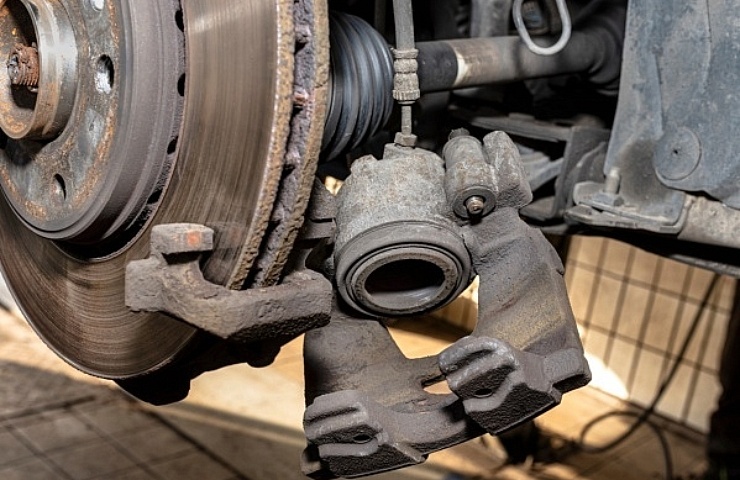
Guide hardware and pad movement
A floating caliper depends on movement of its guide arrangement as well as its piston. HELLA’s guide-pin guidance identifies damaged guide components and unsuitable lubrication as service concerns. A serviceable assembly with contamination may need the prescribed cleaning and lubrication, whereas damaged parts need replacement.
That distinction matters: freeing a pin once does not show that its surface or protective sleeve can remain reliable. Pad fit is another separate inspection point. The workshop should check correct pads, clips, carrier condition and permitted movement rather than grinding replacement pads until they appear to fit.
Piston faults and retained pressure
A hydraulic piston problem calls for a different decision from a guide-hardware fault. Depending on the design, condition and manufacturer provisions, the choice may be a suitable repair or a complete replacement assembly. Hydraulic diagnosis must also establish whether the brake is being held on by pressure from elsewhere in the system.
Wagner’s inspection checklist distinguishes external hardware binding from caliper or hose concerns. Opening a hydraulic circuit is a workshop diagnostic operation, not a roadside release method. A brake that temporarily frees after pressure is relieved still needs its cause repaired and the system restored and verified before use.
Choose a complete repair, not temporary movement
A successful repair removes the cause and addresses consequential damage. If an overheated pad or disc fails its inspection limits, replacing only the sticking component leaves that damage in service. Conversely, an estimate for every component should explain the condition that makes each replacement necessary.
Ask which items failed inspection, which are required installation parts and which are preventive recommendations. This separates evidence from preference without assuming that the least expensive repair is safe. The expected result is consistent braking and release under the conditions that previously caused trouble, supported by checks rather than a reassuring first pedal press.
Confirm the workshop has the correct information
- The repair needs the vehicle identification, brake option, actual caliper type and current service procedure. Rear brakes may incorporate a mechanical parking-brake mechanism or an electronic actuator with special service requirements. A generic piston tool is not proof that the procedure is suitable. Required capabilities can include safe lifting equipment, suitable hydraulic service equipment, calibrated fastening tools and vehicle-compatible diagnostics. Brembo’s replacement instructions emphasize correct application and qualified installation. Ask whether parts and service information have been matched before the vehicle is dismantled, especially if it has optional or previously modified brakes.
A repair plan you can check against the invoice
- First, the workshop records the complaint and checks that further testing can be performed safely. Next, it identifies the brake hardware and looks for recent work or damage that could explain the timing.
- It inspects the affected brake alongside the opposite side for context. It separates pad and guide movement from piston or hydraulic concerns.
- It documents the component that failed the appropriate check.
- It then chooses the manufacturer-supported repair for that failure.
- The estimate should include required seals, fasteners or hardware rather than assuming old items are reusable.
- Heat-affected friction components need their own assessment.
- Any opened hydraulic connection requires the specified restoration and bleeding process.
- Parking-brake functions must be returned to their correct operating state where relevant.
- Static leakage, pedal and release checks precede any controlled road verification.
- The technician finally confirms that the original symptom has not returned under an appropriate verification procedure.
- This is a planning sequence, not a replacement for the vehicle’s service instructions.
- Its value is that every major charge should fit a documented stage rather than appearing as an unexplained collection of parts.
Avoid repairs that conceal the evidence
Repeatedly forcing a piston back can obscure the original failure without repairing it. Spraying a general-purpose product around the brake can also contaminate surfaces or complicate diagnosis. Do not accept hammering, loosening a hydraulic fitting or disconnecting a parking-brake component as a way to make the vehicle usable until the real repair is convenient.
Those actions may change the symptom while leaving braking unsafe. A proper repair should survive the required checks without relying on an intentionally disabled component, missing hardware or unusually loose fastening.
Do not overlook the surrounding system
A caliper works within a hydraulic circuit and a mechanical installation. Replacing it does not correct a damaged hose, an incorrectly fitted pad or an unrelated wheel-end fault. If the brake still drags after replacement, stop the trial-and-error sequence and reopen diagnosis.
The useful question is what changed and what did not change after the repair. Our guide to recurring sticking causes explains how the timing and distribution of the fault help organize that investigation without treating a symptom as proof of a particular part failure.
Specify lubricant by component
An invoice that says brake grease is incomplete if lubricant compatibility is central to the repair. The required product and location depend on the guide design, rubber materials and service instructions. Friction faces must remain free of grease.
More lubricant is not automatically better, and an externally clean assembly is not proof that an unsuitable product has been removed from affected rubber parts. Ask whether contaminated or swollen components were replaced where required. For location-specific distinctions, see our caliper lubrication guide.
Keep vehicle specifications in control
There is no single tightening torque, bleeding order or piston-retraction method for every caliper. Similar-looking assemblies can differ in fasteners, service modes and installation requirements. An online chart cannot override the instructions for the actual application.
If a technician finds an unexpected design, missing identifier or modified bracket, identifying it comes before improvising. Request clarification when a repair relies on a universal rule instead of a matched procedure. That is particularly important when an estimate includes electronic parking-brake work, hydraulic disconnection or replacement of safety-critical mounting hardware.
What should be checked before collection?
Ask what confirmed that the brake releases and what was checked for leaks or abnormal pedal behavior. If the complaint was intermittent, ask whether verification addressed the original circumstances as far as safely practical. The workshop should explain any remaining uncertainty instead of promising that a short test proves every future operating condition.
Review advisories separately from completed work. Keep the itemized record, including part numbers and any measured pad or disc condition. If a similar smell, strong pull or pedal change returns, stop using the vehicle and contact the repairer rather than attempting another diagnostic drive.
Maintenance and follow-up that have a clear purpose
Follow the vehicle’s brake inspection and fluid-service requirements. Report abnormal braking promptly rather than waiting for the next scheduled visit.
Keep records of previous caliper or hose work. Mention long storage or unusual operating conditions when arranging inspection.
- Do not assume a recently replaced component makes a new complaint harmless. Ask for clarification if the same wheel needs repeated work.
- Retain photographs of documented damage if a warranty discussion is likely.
- Avoid adding sprays or greases between inspections.
- Keep the parking brake maintained according to the vehicle instructions.
- Treat a repair warranty and a successful safety check as different things.
Seek a second qualified opinion if an estimate cannot connect the proposed work to a finding.
Preventive care cannot guarantee that a caliper will never stick, but it can make emerging defects easier to catch and later diagnosis more accurate.
The final decision should be based on a confirmed fault, an application-correct repair and verification of the whole affected brake.
That provides a much stronger basis for returning the car to service than simply getting a wheel to turn once.


Automotive reference information. Confirm specifications in the manual for your exact vehicle. Original replacement guides link to their research sources. About us