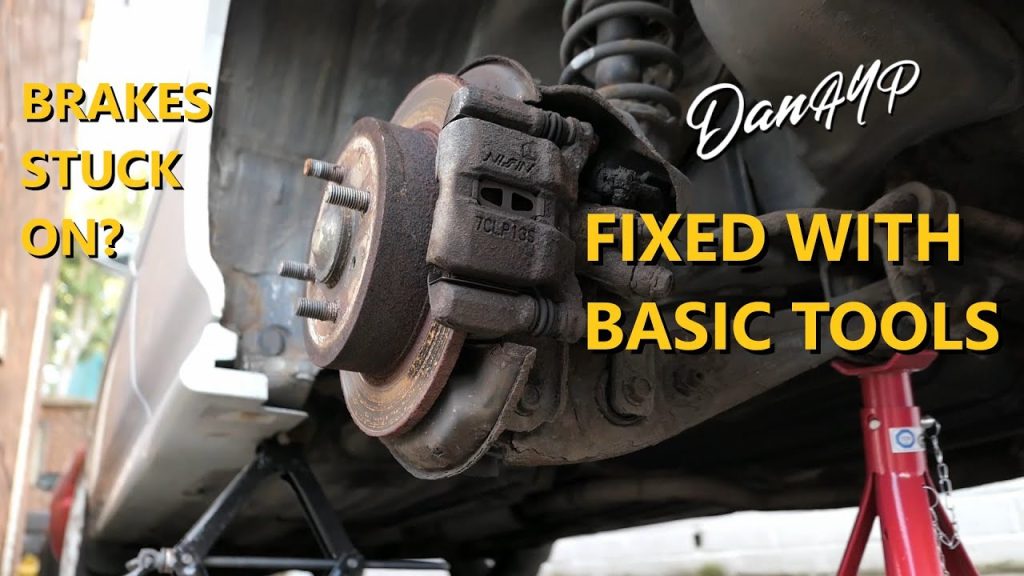

If a brake caliper piston seems stuck, stop trying to force it and identify why it will not move. The cause may be an incorrect reset method, an unreleased parking mechanism, retained hydraulic pressure or internal damage. Each calls for a different response. A larger clamp, penetrating oil under the boot or repeated pedal pressure can turn an uncertain fault into a damaged assembly without establishing what was wrong.
If the problem was discovered because the brake is dragging, smoking, leaking or affecting braking, stop using the vehicle and arrange assessment or suitable recovery. Let hot parts cool naturally and keep clear of them. This guide helps separate a service-method problem from a piston needing repair or replacement. It does not authorize driving with a sticking brake or provide a universal piston-extraction procedure.
First distinguish a seized piston from a reset problem
A piston resisting a tool is an observation, not a diagnosis. Ask whether the brake had a release problem before service or whether resistance appeared only while making space for new pads. That history changes the starting point.
A previously normal rear brake may be resisting an unsuitable push-only method, while a wheel that was already overheating needs the entire release path examined. Do not erase that distinction by describing both conditions as simply seized. Record what happened before any attempt to move the piston.
Understand what the piston is being asked to do
During braking, hydraulic pressure moves the piston to apply pad force. During service, resetting the piston creates space for the replacement friction components. Those are different operating circumstances, and some rear mechanisms add another requirement. A piston that has not been prepared for its service procedure should not be judged by how easily an arbitrary clamp moves it. HELLA’s piston-reset guidance warns that unsuitable levering tools and pliers can damage the housing, piston or dust protection. Correct identification comes before tool pressure.
Use symptoms without overstating what they prove
- Drag, unequal pad wear and abnormal heat can justify investigating the caliper, but they do not isolate the piston by themselves. Pads can bind in their supports, a floating housing can fail to slide or a parking mechanism can remain applied. A hose can also interfere with pressure release.
Wagner’s brake-system inspection guidance includes hose-restriction checks in that diagnostic picture. Record which wheel was affected, whether the condition followed braking or parking and whether recent work preceded it. Avoid another drive merely to reproduce a severe symptom.
Know the consequences of forcing movement
- The question is not just whether the piston can be made to travel inward. Excessive or misdirected force may damage a boot, surface or mechanism while leaving the original cause unresolved. A piston that moves once after force is not necessarily capable of repeating normal application and release without leakage.
Nor does a cooler wheel after waiting prove the fault has gone away. Keep the distinction between obtaining movement and confirming serviceability throughout the repair decision. Temporary movement is evidence to interpret, not permission to return the car to traffic.
Prepare a diagnosis rather than an improvised rescue
Gather the correct information and supported tools
Identify the exact caliper and vehicle brake option, then obtain its service procedure. Determine whether it uses straight retraction, a wind-back mechanism or an electronically controlled service operation. HELLA’s integrated handbrake-caliper information demonstrates why rear mechanisms cannot all be treated alike.
- A generic tool assortment does not establish the correct rotation direction, adapter or electronic sequence. Check tool coverage before dismantling further. If the required service equipment is unavailable, leaving the job safely stopped is better than improvising a motor command or forcing the screw mechanism.
Secure the vehicle and prevent unintended operation
Work only with the vehicle securely supported at its specified lifting points. Do not rely on a jack alone.
- Releasing a parking brake changes the vehicle's restraint, so provide the required alternative restraint. Keep hands clear of areas where a piston or actuator might move.
- Do not operate the pedal with an unrestrained caliper or missing pads. Follow the vehicle's precautions for automatic parking-brake operation and electronic wake-up.
- Never apply a flame to the housing or use cooling water as a way to shock the piston loose.
- A hot or damaged brake needs controlled assessment.
Inspect before changing the evidence
Look for a displaced boot, visible fluid, unusual corrosion and damage caused by earlier tool contact. Note whether the piston appears cocked or extended beyond its intended position.
- Do not peel a boot away casually or add chemicals before recording the condition.
- Observe the guide and pad-support areas as well.
- Distinguish old staining from fresh unexplained fluid, but do not dismiss wetness because a cleaner was recently used.
- Record what is known and what remains uncertain.
A workshop can use those observations to plan targeted tests instead of replacing whichever part looks worst.
Choose the next step from the evidence
The next action depends on the identified branch: correct an uncompleted service setup, diagnose retained pressure, or assess internal mechanical damage. These branches may require different equipment and can coexist. Our piston-reset identification guide focuses on choosing the correct normal service method. Continue here when that method is established but the piston remains abnormal, or when a brake was already sticking during use.
When the service setup is the problem
If the vehicle instructions require a service mode or a specific mechanical adjustment, complete that prescribed preparation before assessing retraction. Do not treat a dashboard parking-brake release as proof that every service step is complete. Verify the correct adapter contact and alignment, and stop if the tool slips, the boot twists or movement is abnormal.
Never bypass a required procedure by powering a motor directly from a battery. If a supported reset still fails, move to diagnosis rather than increasing leverage until something gives.
Why lubricant under the boot is not a reliable fix
General-purpose oil, penetrating spray and guide-pin grease are not interchangeable with materials approved for hydraulic assembly. Spraying under a boot does not tell you whether the piston surface, seal or bore is serviceable. It can introduce incompatible material while hiding evidence of leakage.
Supported rebuilds may specify an assembly lubricant for a defined location, but that is part of a disassembled, inspected repair. It is not approval for an external rescue treatment. Cleaning the visible housing likewise cannot restore an internal sealing surface damaged by corrosion.
When pressure release needs professional testing
A brake held by retained hydraulic pressure can resemble a mechanically stuck piston. Distinguishing them requires controlled diagnosis of the circuit and the caliper. Loosening a fitting or bleeder is not a roadside cure and can introduce air or create a leak.
Do not drive with a bleeder loose or repeatedly vent the system to keep a wheel turning. Have the repairer determine where pressure is retained and why. A restricted hose is one possibility, not the guaranteed explanation whenever a brake releases during a pressure-related test.
When internal damage requires a repair decision
If the correct method and system checks leave the piston mechanically abnormal, assess whether the manufacturer supports rebuilding that exact assembly. Brembo’s repair-kit information describes application-specific components rather than a universal kit for every fault. Housing condition, piston surface, sealing areas and parking mechanism all matter.
Do not remove pistons using uncontrolled compressed air or place fingers in their potential path. Extraction and rebuilding require the prescribed restraints, tools and inspection criteria. If the repair is unsupported or critical damage is present, select the correct replacement instead.
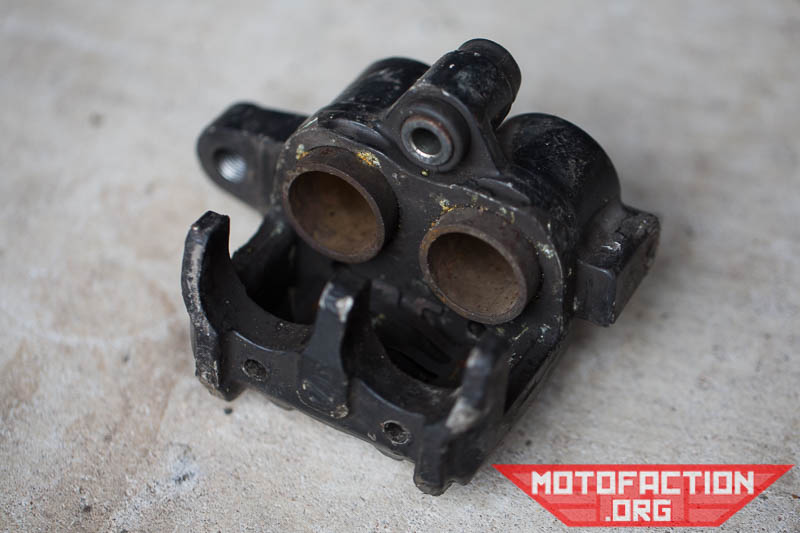
Credit: motofaction.org
Confirm the result beyond a single movement
A repair must address the initiating fault and any damage caused by dragging or overheating. Pads, discs, hoses and fluid may need assessment separately from the piston. Brembo’s caliper replacement instructions include system checks as part of replacement; installing a housing is not the endpoint.
Required bleeding, leak checks and parking-system initialization must be complete before functional testing. A firm pedal alone does not demonstrate that a formerly sticking wheel now releases correctly. Equally, free wheel movement does not certify hydraulic sealing under application.
Reduce repeat problems through targeted maintenance
Protective boots and guide components should be inspected during the applicable brake-service schedule. Address damage before dirt and moisture can continue reaching protected areas. Use the specified brake fluid and follow the vehicle's replacement requirements rather than adding an aftermarket fluid treatment. Avoid repeatedly cleaning away evidence of a developing leak. If the same wheel develops trouble after repair, review the original diagnosis and related circuit rather than assuming another piston has randomly failed. Repeated failure deserves an explanation tied to the findings.
Keep a useful service record
Record the symptoms, the caliper identification, the method used to verify the fault and the parts renewed. Include whether the hydraulic circuit was opened and which bleeding or electronic procedures were completed. Retain the service instructions associated with the replacement part. This record helps distinguish a new complaint from an unresolved original problem. There is no universal piston exercise interval or mileage at which every caliper becomes seized. Follow condition evidence and the vehicle's maintenance requirements instead of inventing a schedule from a single online example.
Know when specialist help changes the outcome
Professional help is particularly valuable when the piston will not respond to the verified method, the parking mechanism has faults or the hydraulic cause is uncertain. Ask the workshop to explain whether the problem is mechanical resistance, retained pressure or a service setup error. Ask what damage makes replacement preferable to rebuilding. An estimate should identify related friction-component damage separately. Our sticking-caliper repair planning guide expands on selecting the repair after the failed function has been identified.
Common decisions when a piston will not move
Can a stuck piston free itself after driving? Do not rely on that possibility or drive an impaired brake to test it.
Can a bigger clamp solve the problem? It may add force without correcting the method or cause.
Does a torn boot prove the hydraulic seal has failed?
No, but it requires inspection and a supported service decision.
Does a dry exterior prove the piston is healthy?
No, because release and sealing are separate questions.
Can one successful retraction clear the vehicle for use?
No; the full repair and verification still matter.
Can every caliper be rebuilt?
Only a supported repair with suitable parts and acceptable component condition should be considered.
The safe objective is a brake that applies, seals and releases correctly, not a piston forced back far enough to install pads.


Automotive reference information. Confirm specifications in the manual for your exact vehicle. Original replacement guides link to their research sources. About us