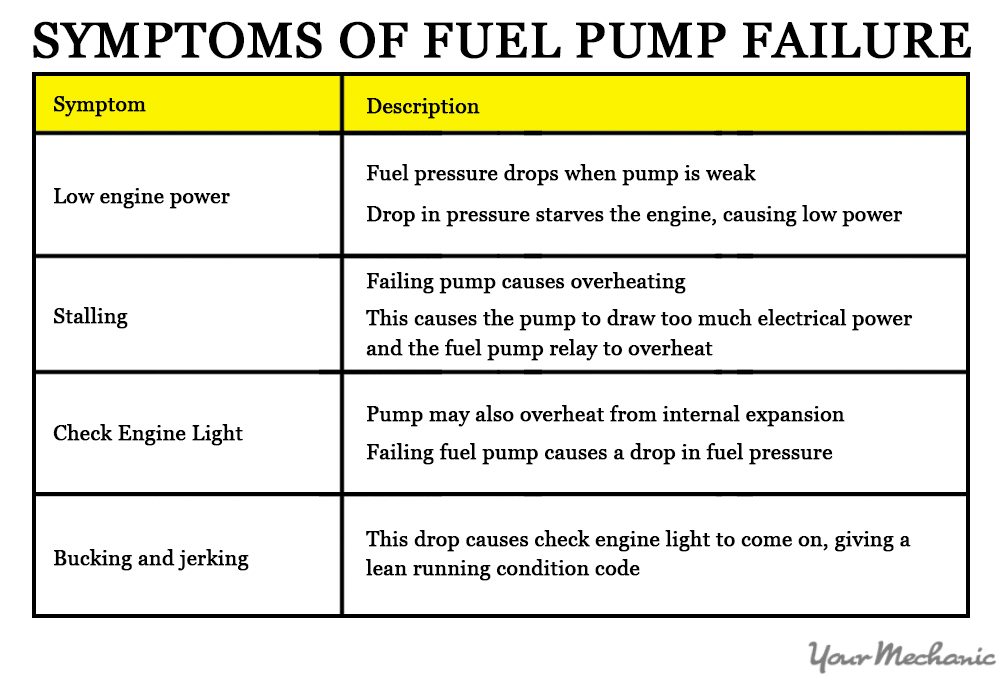

Hard starting, stalling or loss of power can be consistent with a fuel-delivery problem, but they do not prove the pump is bad. Confirmation requires checking delivery against the vehicle's specification and establishing that the pump has the electrical supply and control it needs.
Begin with the symptom, not a replacement part. Record whether the engine cranks normally, whether the fault occurs cold or hot, and whether it appears only under load. A no-crank problem is a different starting point from an engine that turns but will not run.
Some engines have a low-pressure supply pump and a separate high-pressure stage. A problem on one side can affect the other. The diagnosis and estimate should identify which pump or circuit is being tested rather than using “fuel pump” as a single universal component.

Credit: www.startmycar.co.za
What observations help narrow the investigation?
A long crank after parking, hesitation under load or an intermittent stall can guide the test conditions. Note any warning lights and recent fuel-system work. Do not erase codes before recording them, because the stored operating context may help reproduce an intermittent fault.
If there is visible fuel leakage or a strong fuel smell, stop using the vehicle and arrange assessment. Do not run it for listening tests, loosen a pipe to check delivery or repeatedly crank it to see whether a leak clears.
Sound is only a clue. Hearing a pump briefly operate does not prove adequate pressure or volume; hearing nothing does not prove failure because command strategy and background noise vary. Avoid choosing a replacement from a key-on listening test alone.
Pressure has meaning only with the specified operating condition. A reading taken at idle cannot automatically answer a complaint that occurs under load. Ask what pressure was requested or specified and what was actually measured, using equipment rated for the system.
Electrical supply also matters. A pump can underperform because of its wiring, ground or control circuit. The separate fuel-pump multimeter guide explains what voltage measurements can establish and why they cannot prove fuel delivery.
Codes can point toward a circuit or pressure discrepancy without identifying the failed part. Delphi: fuel-injection diagnostic tests treats fuel-system diagnosis as a set of checks. A pressure-related code should be investigated in context rather than translated directly into “replace the pump.”
Intermittent failures may need more than a single pressure reading. Delphi: fuel pump scope testing explains how current-waveform analysis can reveal behavior missed by conventional checks. That is a specialist method with application-specific interpretation, not a claim that every fluctuation proves a defective motor.
Before approving the repair, request the failed test, its specification, the supply/control findings and the reason other relevant restrictions or leaks were excluded. A quoted part number should match the diagnosed stage and vehicle application.

Credit: www.youtube.com
What a completed diagnosis should give you
A useful report connects the complaint to evidence: for example, the fault occurred under a documented condition, delivery fell outside the required range, and the supply circuit was assessed. This is an example of the record to request, not a universal fuel-pressure threshold.
The final check should revisit the original complaint and confirm correct operation without leakage or unresolved warnings. A successful start immediately after installing a pump is encouraging, but it is not enough to resolve a fault that previously appeared only after a hot restart or under load.


Automotive reference information. Confirm specifications in the manual for your exact vehicle. Original replacement guides link to their research sources. About us