
The cost to replace a ball joint depends on the vehicle, the exact joint and whether it is serviced separately or as part of a control arm. A useful estimate also identifies diagnosis, labor, required hardware and alignment-related work.
There is no defensible single price for every car, market and repair scope. This guide explains how to obtain and compare a complete written quote without confusing a low advertised part price with the installed repair total.
Ask for the corner and position first: front-left lower, for example, rather than simply ball joint. If a joint has been confirmed unsafe, discuss recovery instead of driving between shops to collect quotations.
What the quote is actually buying
A replacement quote should describe the defect being corrected and the service operation needed to correct it. A joint can be available individually, integrated into a larger assembly or supplied through several product options. Those differences change both the parts bill and the work required.
The objective is to restore the specified suspension connection and verify the repair, rather than purchase the greatest number of new parts. Request a clear distinction between required work, associated damage and optional preventive work.
Identify the vehicle and suspension configuration
Provide the year, model, VIN where appropriate and relevant suspension options. Tell the shop about aftermarket arms, lifts or other modifications. A catalog match for an unmodified model may not describe the hardware now fitted.
Upper and lower joints can require different parts and procedures on the same vehicle. An estimate based only on an engine size or registration year may need revision after inspection. Ask whether the quoted part number has been matched to the installed application and whether the quotation remains provisional until that check is complete.
Separate an observed symptom from a confirmed fault
A clunk, wandering complaint or unusual tire wear can prompt inspection, but none sets the repair price or proves a ball joint is the failed component. The workshop should explain how it identified the joint and what service limit or condition supports replacement. MOOG’s inspection bulletin warns that an incorrect inspection method can lead to unnecessary replacement.
That supports asking for the procedure and findings rather than demanding a generic wheel-shake demonstration. A diagnostic charge can be worthwhile when it prevents paying for the wrong repair.

Credit: blog.openbay.com
Ask for the finding behind the estimate
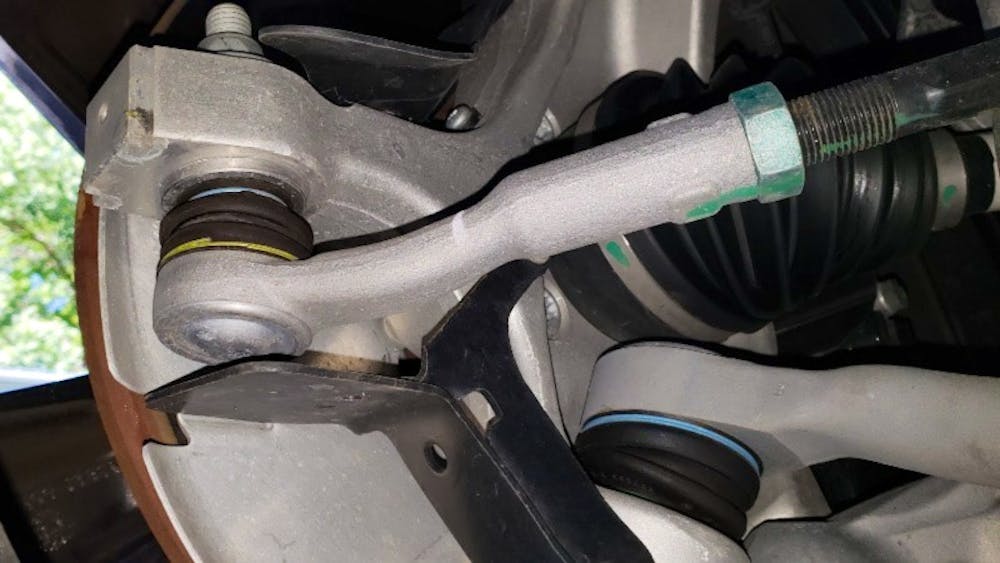
Request the affected location, inspection result and any evidence of boot or mounting damage. A photograph may document condition, while a measured finding needs its applicable test method and limit. Neither should be presented without context. Keep the report with the quote so another shop can understand the proposed scope.
When noise diagnosis appears as a separate charge
Some shops charge for a chassis inspection before quoting a repair. Others credit some or all of that charge if you authorize the resulting work. Ask about this policy beforehand.
A diagnostic fee should identify what assessment it covers, particularly when the complaint is intermittent or involves several possible sources. If the shop finds a different fault, the estimate should change to reflect that finding. Paying to replace a suspected joint without confirming the cause can leave you with the original noise and a second bill.
Tire wear and alignment are separate decisions
New ball joints cannot restore tread that has already worn away. Tire condition needs its own assessment, and alignment work should be specified according to the repair and vehicle requirements. Ask whether the quote includes an alignment check, adjustments if possible, or a separate alignment service.
A damaged or seized adjustment mechanism can introduce additional work, but it should be documented. Avoid treating every tire-wear pattern as proof that the joint caused it, or every alignment recommendation as an unexplained extra.
Build the total from clearly named items
Compare the complete scope: diagnostic fee, joint or arm assembly, required nuts and retainers, labor, alignment-related work, taxes and disclosed shop charges. Include any recovery or transport you will actually need. The useful arithmetic is the sum of included items, not a national average copied from a different vehicle.
Ask which figures are fixed and which depend on inspection. Keep a written authorization limit for additional work. FTC auto-repair guidance recommends understanding estimates and repair authorization; its consumer advice is for the United States, while local rules may differ.
Understand labor without confusing it with elapsed time
Ask whether labor is quoted as a fixed operation or billed by time and rate. A quoted labor allowance is not necessarily the number of hours your car will occupy the shop. Parts delivery, scheduling and alignment availability can extend the collection time.
Corrosion or damaged fasteners may require a revised estimate rather than fitting neatly into the original allowance. Request the reason for any added labor and how authorization will be obtained. Two shops can have different rates and equipment, so compare the task included as well as the hourly number.
Compare individual joints with complete arms fairly
An individual joint may cost less to purchase but require pressing, specialized adapters or additional removal work. A complete arm can include other components, but its suitability and value depend on the application and condition of what it replaces. Ask what comes in each option and whether the original arm remains serviceable.
A larger assembly should not be sold as necessary simply because it is convenient, nor should a separate joint be chosen where the manufacturer does not support that repair. The right comparison is installed scope, not box price alone.
What can legitimately change an initial quote?
A damaged mounting bore, worn mating component, broken retainer or corrosion discovered during disassembly can alter the repair. MOOG’s K500422 instructions specifically require attention to the mating steering knuckle for that application; they are not a universal procedure. Ask the shop to document additional defects and explain why the original plan is no longer adequate.
An unexpected finding can justify more work, but it does not remove the need to communicate the revised scope. Request photographs or retained parts where practical, and agree how the vehicle will be secured if you decline further work.
Choose the scope before choosing the lowest total
One quote may replace one confirmed faulty joint, while another includes both sides, arms and alignment. These are different offers. Ask each shop to identify required and optional items before comparing the final amount. Our guide to replacing ball joints in pairs explains how condition and applicable instructions affect that decision.
Include the real costs of doing it yourself
A home repair budget needs more than parts. Consider the correct service information, support equipment, separator or press adapters, fastening tools, replacement hardware and a plan for final checks. A tool rental may carry a deposit and may not include the adapter your vehicle requires.
An immobilized car can also create transport and recovery costs if the repair stops midway. These considerations do not mean every owner must use a shop; they make the comparison honest. See our DIY decision guide before treating labor savings as money already saved.
Parts choice includes support and installation responsibility
Compare exact part numbers and their intended application, rather than assuming every original-equipment or aftermarket part offers the same package. Ask whether the shop supplies the part, installs customer-supplied parts or limits its workmanship responsibility when it does so. Obtain the written parts and labor warranty terms separately.
A replacement-part warranty may not pay for diagnosis, removal, alignment or installation. Availability also matters: a suitable part obtainable today can produce a different schedule from a special-order assembly. Keep brand preference separate from a documented compatibility requirement.
Questions that make competing estimates easier to compare
What should I send when requesting a quote? Supply the vehicle details, joint location if confirmed, inspection report and any suspension modifications. Ask whether the figure is a preliminary estimate or a quote based on physical inspection.
Does replacing two joints double the bill? Not necessarily, because parts, access and related operations vary; ask for the actual incremental work.
Does the cheapest joint create the cheapest repair? Not always, since installation labor and required associated parts can change the total.
Is alignment automatically included? Do not assume so; have the quote state its scope.
Can the final bill exceed the estimate? The answer depends on the authorization arrangement and local requirements, so establish a contact and spending limit before work starts.
Are shop supplies and taxes included? Ask explicitly so you compare like totals.
What happens if the joint cannot be removed as planned? Discuss the escalation and approval process rather than authorizing unlimited additional work.
Is the opposite joint being replaced because it failed inspection or as a recommendation? Both should be clearly labeled.
What warranty covers a repeat failure? Obtain the actual written terms and claim route instead of relying on a verbal lifetime promise.
Can I postpone an unsafe repair to obtain a better price? A confirmed unsafe suspension condition needs a transport and repair plan, not a guessed safe driving distance.
Before accepting, read the estimate once as a scope document: what is wrong, what will be installed, what verifies completion and what you will pay. That approach helps you choose a complete repair while avoiding both unnecessary additions and a low headline price that omits essential work.


Automotive reference information. Confirm specifications in the manual for your exact vehicle. Original replacement guides link to their research sources. About us