
Deposits are one cause, not the complete explanation
Fuel injectors can develop delivery, electrical, sealing or mechanical problems. Deposits may restrict performance, but not every failed injector is dirty and not every rough-running engine has a failed injector.
The cause matters because it determines whether cleaning, circuit repair, seal replacement or another intervention is appropriate. Start by identifying what function has failed.
Then ask what finding supports the explanation. Avoid diagnosing the cause from mileage alone.
An older injector can work correctly. A recently installed injector can have an installation or compatibility problem.
Several affected cylinders can point toward a shared system issue. One affected cylinder still needs ignition and mechanical checks.
A symptom is the reason to investigate, not a substitute for that investigation. Delphi’s fuel-injection diagnostic guidance identifies several fault categories and distinguishes different testing approaches.
That supports separating an electrical failure from restricted delivery or leakage.
The same treatment cannot be assumed to correct all of them.
A repair plan should name the category found on the actual vehicle rather than use “bad injector” as an explanation for everything.
Maintenance reduces some risks, not every failure
Follow the vehicle’s specified fuel requirements and service schedule. Replace serviceable filters when required and use the correct procedure. Avoid introducing dirt during fuel-system work.
Address abnormal symptoms instead of covering them with repeated additives. These actions do not guarantee lifetime injector operation, but they reduce avoidable errors and preserve useful diagnostic information.
A fuel-treatment interval on a bottle is not automatically part of the vehicle’s maintenance schedule. Check the manufacturer’s guidance before adding a product.
Do not assume that more frequent chemical treatment protects against wiring damage or wear. Preventive action should match the failure mechanism it is intended to address.
Fuel contamination can widen the repair
Water, debris or an unsuitable fuel can create concerns beyond one injector. The system must be assessed according to the contamination found and the engine’s requirements.
A tank sample or other appropriate evidence is more useful than blaming the last filling station without investigation. Keep receipts and the symptom timeline if a contamination event is suspected.
Do not run the engine merely to consume questionable fuel. Do not add an improvised chemical mixture to make the problem disappear.
If contamination is confirmed, ask how it entered and which parts of the system are affected. Replacing an injector without addressing the source can expose the new part to the same condition.
Conversely, the presence of one failed injector does not prove that the entire fuel system needs replacement.
The scope should follow the findings and manufacturer instructions.

Credit: www.gbreman.com
Four different kinds of injector failure
Restricted or uneven delivery
A delivery problem concerns how much fuel reaches the engine under specified conditions and, where relevant, how it is distributed. A clicking injector can still deliver incorrectly. Testing needs a suitable method and reference for the component.
| An electrical response alone cannot establish that the delivered quantity is correct. Compare the result with the supply conditions before concluding that the restriction is inside the injector. |
Electrical or control faults
A damaged circuit can prevent correct injector operation even if its internal fuel passages are clear. Connector condition, wiring and control must be considered. Delphi describes multiple electrical checks for common-rail injectors, illustrating why a single generic resistance threshold is inadequate.
Use the method supported for the injector technology. Do not apply battery voltage directly to an unfamiliar injector as a test.
Wear, damage and failure to seal
An injector may fail to close or seal correctly, or an external sealing component may leak. These conditions are different from a simple restriction. A strong fuel smell or visible leakage requires prompt attention.
Do not continue driving to see whether cleaner fixes it. The diagnostic process must identify the leak location and assess whether further operation is safe. Wear cannot be reversed simply by calling it a deposit.
A damaged component may require replacement or supported specialist service. Ask how the repaired or replacement injector will be checked afterward. A new part still needs correct installation and verification.
Installation can create an apparent repeat failure
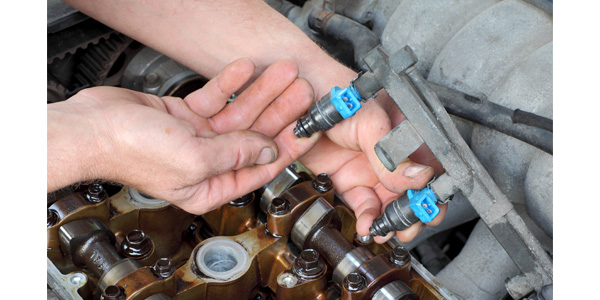
An incorrect seal, unsuitable part or damaged connection can produce symptoms after replacement. Verify the engine and part identification, not just physical fit.
Follow requirements for seals, fasteners, pipes and setup. Keep open connections clean during the work.
If a complaint begins immediately after service, checking what was disturbed is a sensible early step. For defined GM applications, bulletin 18-NA-137 discusses damaged or displaced injector seals.
The document is application-specific, but it illustrates why a fuel odor should not automatically be labeled an internal injector failure. The correct repair depends on where the fault actually lies.
What the timing of symptoms can tell you
Write down when the problem began. Note recent fuel purchases.
Include recent repairs. Record whether the engine was cold or warm.
Save warning codes. Describe whether the complaint affects starting or driving.
State whether it is constant or intermittent. List any additive already used.
Keep observations separate from assumptions about the cause.
A problem after refueling may justify investigating fuel quality, but timing alone does not prove contamination.
A problem after repair may justify inspecting installation, but it does not prove the new part is defective.
A warm-only complaint may require testing under those conditions.
These patterns guide the next test rather than settle the diagnosis.
Credit: www.gbreman.com
System problems that resemble injector failure
Incorrect supply conditions
Injectors depend on appropriate fuel supply. A pump, restriction or pressure-control problem can affect delivery without every injector being faulty. Test the shared system where the diagnostic procedure calls for it.
| Do not replace several injectors solely because multiple cylinders are affected. Establishing supply conditions helps distinguish a common cause from separate component failures. |
Ignition and mechanical condition
On a gasoline engine, poor ignition can produce a misfire even when the injector delivers correctly. Mechanical problems can also reduce a cylinder’s contribution.
A cylinder number in a fault code identifies where investigation may be needed, not which part to buy. Appropriate checks of these competing causes can prevent an unnecessary injector replacement.
Air leaks and measurement errors
An intake leak or incorrect sensor information can affect mixture control. Those conditions may be mistaken for an injector problem if only the symptom is considered.
Scan data needs to be interpreted with operating conditions and applicable specifications. A single unusual fuel-trim value does not directly measure injector flow.
Choose a test that can distinguish the competing explanations rather than repeatedly clearing the warning light.
Why additives do not cover every cause
A product marketed for deposits should be evaluated within that intended use. It cannot repair a broken connector, restore a damaged seal or establish correct fuel pressure. A temporary improvement also does not prove which fault was present.
If the complaint persists, further doses can delay diagnosis while adding another variable. Record any treatment used and stop treating an unresolved fault as a shopping comparison between brands.
Fuel type matters too. GM’s diesel additive bulletin addresses concerns specific to covered diesel systems, including inappropriate additive approaches.
It is not permission to use one chemical remedy across gasoline and diesel engines. Follow the actual vehicle requirements and product compatibility.
How to reduce the chance of a repeat repair
Ask the repairer to state the confirmed failure mechanism. Request the supporting test result. Identify whether a shared cause remains. Confirm the replacement part specification.
Include required installation components. Complete any required setup. Verify the original complaint afterward. Keep the invoice and measurements.
Return promptly if the same symptom remains rather than assuming another bottle is needed. If a specialist services an injector, ask what was done and what final test it passed. Cleaning, electrical checking and delivery checking are different services. A receipt should make the scope understandable.
If the injector was replaced, keep the part identification and warranty terms. These records make a future repeat complaint easier to investigate without starting from guesses. Ask whether the injector failed electrically, leaked or delivered outside specification. Ask whether the result was measured or inferred from symptoms.
Ask what other causes were checked. Ask why the proposed number of injectors needs replacement. Ask whether contamination or installation contributed. Ask how the repair will be verified.
For a suspected restriction, read the guide to injector tests and their limits. For excessive delivery, read the stuck-open injector warning signs. Keeping the failure categories separate makes the next decision clearer. The best explanation is the one supported by the vehicle’s findings, not the one that makes every injector problem sound like dirty fuel. An informative failure record contains both a function and a cause when the cause is known. “Injector delivery outside the applicable test limit” describes a measured problem. “Deposits caused it” is an additional conclusion that needs support. Sometimes the failed function can be established while the original cause remains uncertain. A repairer should be able to say so. Inventing a fuel-quality explanation to make the story feel complete can lead to unnecessary work or misplaced blame. Documenting that uncertainty is more useful than presenting an unsupported cause as a fact.


Automotive reference information. Confirm specifications in the manual for your exact vehicle. Original replacement guides link to their research sources. About us