
An injector that does not close properly can deliver fuel when it should not, but there is no single symptom that proves it is stuck open. Rough running, difficult starting, fuel odor and a cylinder misfire can all have other causes. The first decision is whether the vehicle can be operated safely; the second is which test can establish where the extra fuel is coming from.
Do not continue cranking or driving if there is visible fuel leakage, a strong persistent raw-fuel smell, suspected fuel accumulation in a cylinder or other signs of a serious fueling fault. Have the vehicle assessed and recovered when necessary. A tank additive is not a reliable way to make a suspected leaking injector safe.
This guide concerns warning signs and diagnostic reasoning. It does not give a universal test procedure for pressurized gasoline or diesel injection systems.
What “stuck open” should mean in a diagnosis
The phrase is often used loosely for several different faults. An injector may fail to seal mechanically, receive an inappropriate electrical command, or have an external leak at a connection or seal. Excess fuel can also arise from a pressure-control problem or another input affecting fuel delivery. These conditions need different repairs. Ask whether “stuck open” is a measured finding or simply a description of rich running. A useful diagnosis identifies the cylinder or component, the test conditions and the evidence that rules out competing explanations. Without that detail, the phrase can send a repair in the wrong direction.
Loss of power or unusually heavy running
An engine receiving an unsuitable amount of fuel may run poorly rather than make more power. Hesitation or weak acceleration can therefore be consistent with a fueling problem, but they do not locate one injector. Ignition faults, restricted airflow, incorrect pressure and mechanical problems can produce similar complaints.
Record whether the symptom is constant, appears under load or follows a hot restart. Do not deliberately load a severely misfiring engine to make the symptom easier to reproduce. A workshop can choose safer tests after considering the initial findings and the vehicle’s diagnostic information.
Rough idle and difficult restarting
A leaking injector may be considered when starting behavior or idle quality suggests an abnormal mixture in one or more cylinders. Timing matters: note whether the problem occurs after an overnight stop, after a short hot soak or immediately after refueling. These patterns guide investigation but do not identify the cause by themselves.
A hot-restart complaint, for example, can involve other fuel-system or evaporative-system faults. Avoid repeatedly clearing learned values or codes before diagnosis. Doing so can remove useful context and make an intermittent condition harder to compare with the original report.
Raw-fuel odor requires caution
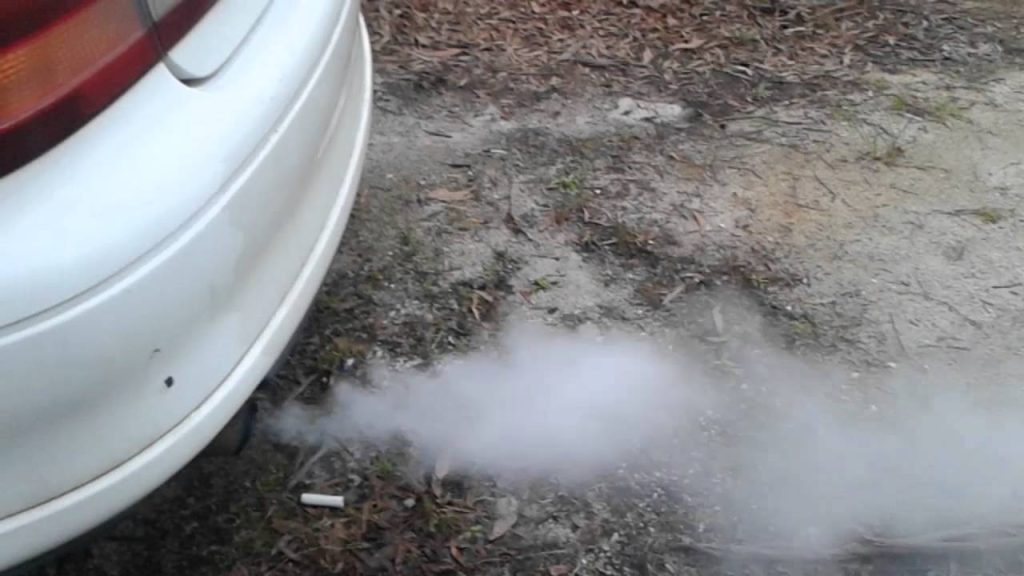
Fuel odor can accompany unburned fuel, but it can also come from an external leak or an evaporative-system problem. Do not lean over the engine or crawl underneath a running vehicle to locate it by smell. If the odor is strong or persistent, stop in a safe place, switch off and arrange assessment.
Keep ignition sources away from any suspected leak. Visible wet fuel is a separate and immediate concern even if the engine runs smoothly. The absence of visible wetness does not prove that the system is sound, because an internal leak can occur where the driver cannot see it.
Wet or fouled spark plugs are clues
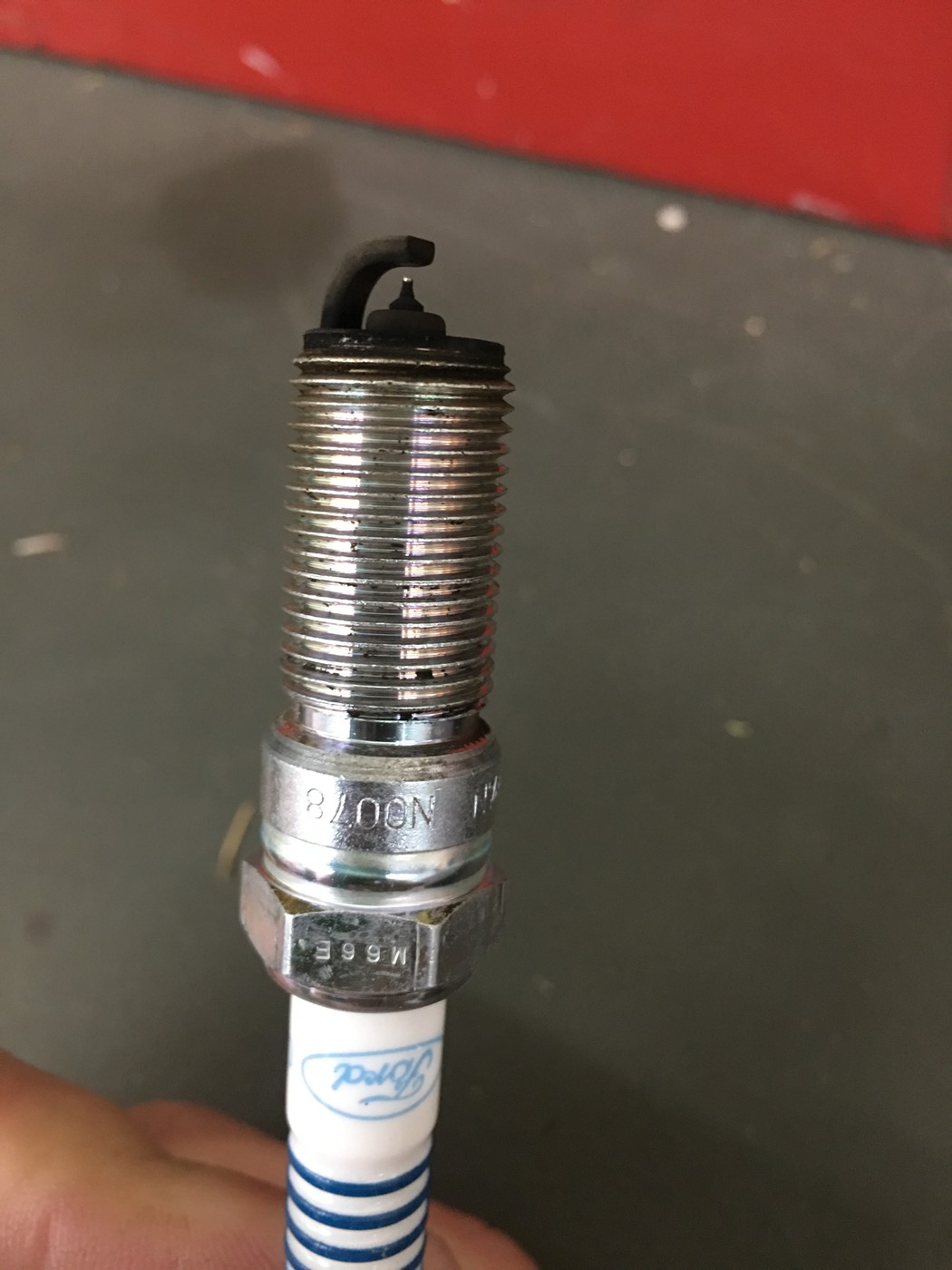
On a gasoline engine, a technician may find a plug wet with fuel or fouled during investigation. That observation needs to be interpreted with the operating history. Repeated unsuccessful starts or a lack of ignition can also leave fuel on a plug.
A plug does not identify whether the injector was mechanically open, commanded incorrectly or functioning normally while the cylinder failed to ignite. The inspection should therefore be paired with appropriate ignition, mechanical and fuel-system checks. Do not remove components from a hot or pressurized system simply to look for confirmation of an internet diagnosis.
Misfire codes do not name the failed part
A cylinder-specific misfire code indicates a detected combustion problem at that cylinder under the monitored conditions. It is not a verdict that the injector has failed. An injector-circuit code also needs circuit diagnosis rather than automatic replacement.
A wiring fault or control issue can be relevant, and a mechanically leaking injector may not produce a neatly matching electrical code. Pico Technology’s MPI injector test information illustrates the use of electrical evidence in a defined injector system. Such evidence concerns operation of that system; it does not by itself measure every aspect of fuel delivery or sealing.
Credit: www.ecoboostperformanceforum.com
How a workshop narrows the cause
The investigation should begin with the exact engine and injection type, the symptom history, fault records and a safe inspection. It may then involve application-specific pressure checks, electrical measurements, cylinder contribution information or controlled injector testing. No one test belongs on every engine. A pressure drop after shutdown can be useful evidence, but a drop alone does not necessarily identify which component allowed it.
The technician must interpret the result in the context of the system’s valves, regulators and specified test procedure. Electrical checks can help distinguish command or circuit problems from a mechanical leak. Delphi’s common-rail electrical testing guidance describes several kinds of electrical assessment rather than a single universal meter reading. Even a passing electrical result does not prove an injector seals or flows correctly.
Conversely, applying the wrong test to an unfamiliar injector can create damage. Ask what the chosen test establishes and what remains untested. The workshop should also consider whether excess fuel has affected oil, plugs, the exhaust system or a cylinder. A changed oil level or suspected fuel dilution requires assessment; smell alone is not a reliable measurement of oil condition.
Replacing an injector without checking relevant consequences may leave a separate problem unresolved. Do not restart an engine suspected of containing liquid fuel in a cylinder merely because a new part has been fitted. The technician must establish that further operation is safe.
What to do before a repair is confirmed
Write down the chronology while it is fresh. Include recent fueling, repairs, warning lights, difficult starts and any occasion when the engine ran unusually roughly. Keep fuel receipts if the symptom began after a suspected contamination event.
Note any additive already used, including the exact product and approximate amount. These details can help distinguish an injector failure from a broader fuel-quality problem. Avoid experiments that introduce new variables.
Do not add several cleaners, use a larger dose to force a result, unplug injectors while the engine is running or apply battery voltage directly to an injector. Do not loosen a high-pressure line to see whether fuel comes out. Those actions are not necessary for a driver to document the complaint and can add risk or damage.
If the car must be moved, ask the repairer whether recovery is required rather than assuming a short journey is harmless. Request an estimate that separates diagnosis from the proposed repair. Ask whether the injector is leaking internally, whether a seal leaks externally, or whether the issue lies in control or supply.
Ask why one injector or multiple injectors are being recommended. A contamination finding may change the scope, while a verified isolated fault may support a narrower repair. Neither approach should be selected solely because it sounds more thorough or cheaper.
For gasoline direct injection, Delphi discusses service issues specific to GDi systems. That is a reminder to use the correct system procedure, not a reason to transfer a GDi remedy to every diesel or port-injected engine. The repair plan should include the relevant seals, fitting requirements and post-repair verification.
| Any required electronic setup should be stated explicitly. A generic promise to replace the injector and clear the light leaves important questions unanswered. |
When the symptoms can be considered resolved
A useful completion record explains the confirmed fault, the repair and the checks performed afterward. It should address the original starting or running complaint under appropriate conditions, not merely state that the car started once.
If the initial problem included fuel odor, the source of that odor should have been identified and the repaired system checked for leakage. If another consequence was found, the record should explain how it was handled.
Do not judge the outcome only by whether a code was erased. Some faults require particular conditions before they return, and a short idle test may not recreate those conditions.
Equally, a lingering unrelated code does not automatically mean the injector repair failed. Compare the result with the documented complaint and diagnostic findings.
See the repair-planning guide for a confirmed stuck-open injector for the next decision stage. Recognizing a warning sign is valuable, but establishing the cause is what makes the repair defensible. A helpful symptom description might be “difficult restart after a short warm stop, followed by uneven idle,” rather than “injector stuck open.” The first records what happened without assuming the explanation. Add whether fuel odor was present and whether warning lights appeared. That detail lets the technician decide which checks are appropriate while keeping other causes in view. Do not reproduce the symptom again if doing so may be unsafe.


Automotive reference information. Confirm specifications in the manual for your exact vehicle. Original replacement guides link to their research sources. About us