
STP fuel injector cleaner is marketed for injector deposits, but that does not mean it can repair every problem described as a dirty injector. Whether it helps a particular car depends on the exact product, the vehicle’s guidance and whether treatable deposits are actually contributing to the complaint.
This is an evidence-based buying and troubleshooting guide, not a report of a BestCarsNews laboratory test. We have not measured a horsepower gain, fuel-economy improvement or injector-flow change from STP.
The useful question is narrower than whether the brand “works”: what outcome is supported for the product you have, and what evidence would show that outcome on your vehicle? A bottle should not replace diagnosis when there is a warning light, persistent misfire, fuel leak or serious starting problem.
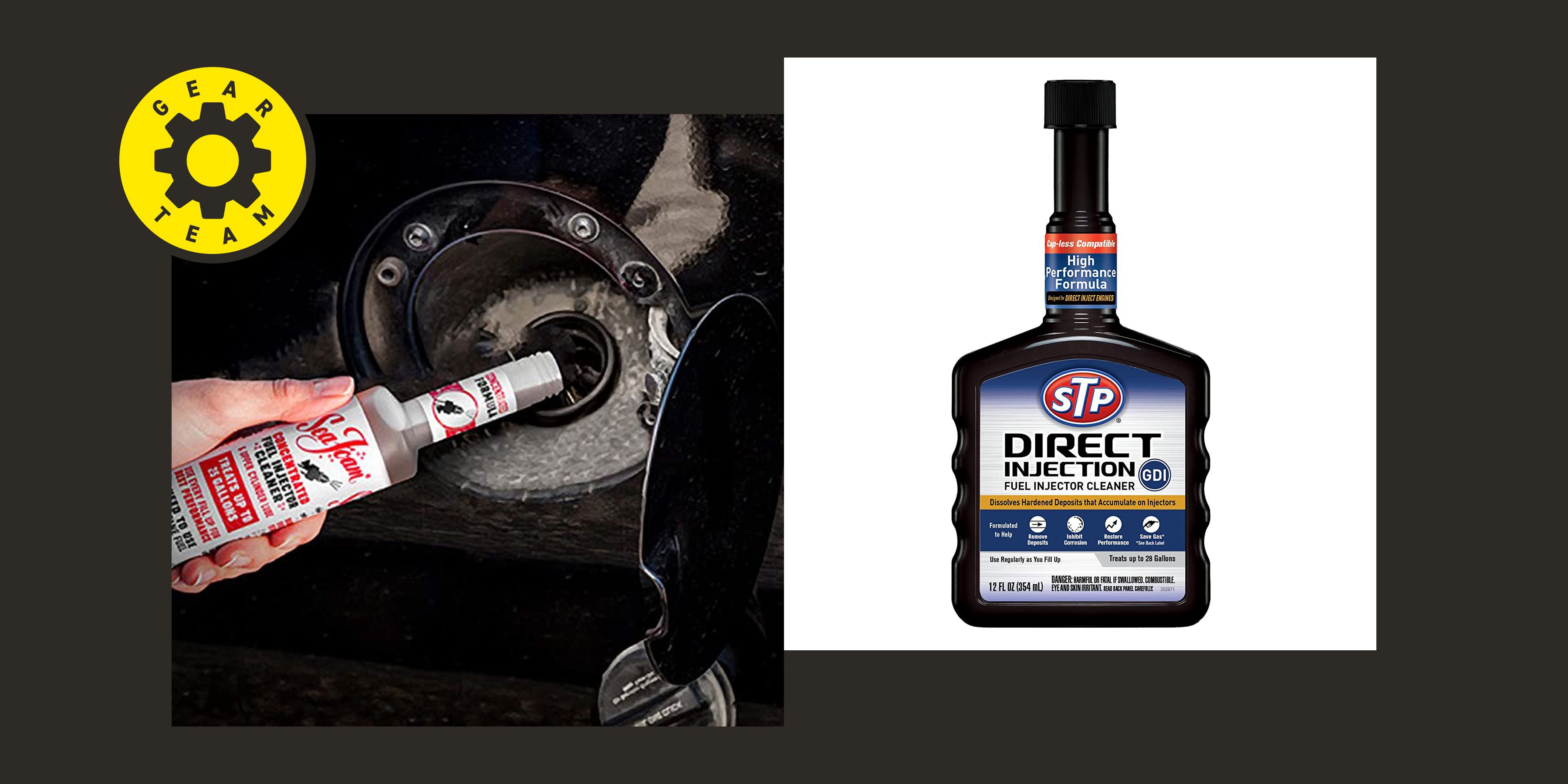
Credit: www.autoweek.com
Does your car have a deposit problem?
A rough idle or hesitation can make injector cleaning sound attractive, but those symptoms do not identify deposits. Ignition faults, air leaks, fuel-pressure problems and mechanical issues can produce similar behavior. An injector can also have an electrical or sealing fault that detergent cannot repair.
Treat the symptom as a starting point for investigation rather than as a product recommendation. Distinguish routine maintenance from repair. A vehicle running normally presents a different decision from one with a flashing warning light or a strong fuel smell.
For routine use, consult the manufacturer’s fuel and additive guidance. For an active fault, preserve codes and symptom history before experimenting.
A treatment interval printed on a bottle is the additive maker’s recommendation, not automatically a scheduled service requirement for your engine. Also identify the injection system.
An in-tank treatment travels with fuel, so its reach is limited by the fuel path. It cannot be assumed to clean every surface in the air intake.
Claims about injectors should not be expanded into claims about an upstream throttle body or every direct-injection intake valve. The location of the deposit matters just as much as the name on the bottle.
What STP actually says
STP’s US Super Concentrated Fuel Injector Cleaner page presents the product as a gasoline injector-cleaning treatment and describes deposit-related benefits. Those are manufacturer claims. They establish the intended use and the maker’s position, but they are not independent proof of the result on your car.
Read the current label for the exact bottle, since package sizes and regional products differ. The US page and STP’s UK Petrol Injector Cleaner page should not be treated as one interchangeable instruction sheet. A similar brand and purpose do not guarantee the same concentration, bottle size or treatment volume.
Match a claim to the named product and market before relying on it. An online review of a different STP formulation may tell you little about the bottle available locally.
When a claim mentions performance restoration, ask what condition existed before treatment. Restoring a loss associated with deposits is different from adding power to an already healthy engine.
Without a defined baseline and a measured result, a general performance statement is difficult to translate into an expected benefit. Do not convert it into a promised percentage increase or a guaranteed repair.
What would count as convincing evidence?
For an individual vehicle, useful evidence starts with identifying the suspected problem and choosing an appropriate way to measure it. A controlled injector assessment can answer a more specific question than a driver’s impression after refueling. A before-and-after comparison also needs comparable conditions. If the car received plugs, a filter and a cleaner at the same visit, the result cannot fairly be attributed to the cleaner alone.
Fuel-economy comparisons are particularly easy to misread. A change in route, traffic, weather, idling or fill technique can change a tank average. One favorable tank does not establish a chemical effect.
Equally, no obvious seat-of-the-pants change does not prove that no deposit-control effect occurred. Choose the outcome being evaluated and acknowledge what the observation cannot show. Independent standardized testing would be stronger evidence for a broad performance claim than a collection of testimonials.
In this article, we do not have a product-specific independent test that quantifies the benefit for your engine. That limit should remain visible when deciding whether a low-cost maintenance treatment is worth trying. It should not be replaced with invented ratings or a claim that all users experience the same improvement.
Use the label without creating a new variable
If the vehicle permits the treatment and there is no fault requiring immediate diagnosis, follow the exact product directions. Use the specified fuel type and treatment volume.
Do not combine several products because each makes a different cleaning claim. Do not assume a stronger concentration gives a faster or more complete result.
| A half-tank decision should be based on the actual label rather than on a general rule for every additive. Record the product, amount and fuel quantity. |
That makes it possible to explain what was used if a later concern develops. Keep the package or a clear label photograph.
- If an incorrect product or substantial dosing error occurs, contact the manufacturer or repairer with those facts instead of adding another chemical to compensate. Do not deliberately run the tank empty as a way to intensify treatment.
- For practical directions, use our STP application guide.
- This article focuses on evaluating the result, so it does not repeat one dosing figure as though it applied to all STP bottles.
Product selection and product effectiveness are related questions, but getting the dose right does not establish that deposits caused the original complaint.
When a cleaner is the wrong next step
Do not use a bottle as a reason to keep driving with visible fuel leakage, a strong persistent raw-fuel smell or suspected uncontrolled fueling. A stuck-open injector or damaged seal needs a repair decision. A tank detergent cannot renew a seal, fix wiring or restore damaged mechanical parts.
Severe misfiring or unpredictable stalling also warrants diagnosis rather than a promise to wait until the treated tank is finished. A warning light that goes out temporarily is not proof of repair. Fault monitoring depends on operating conditions, and some problems are intermittent.
Clearing codes while adding the cleaner makes the result even harder to interpret. Preserve the initial information and compare the complaint after any justified work. If the symptom remains, stop escalating additive doses and investigate the cause.
Vehicle guidance can also make routine cleaning inappropriate. American Honda’s injector-cleaning position statement is an example of a manufacturer addressing the need for such service in its own vehicles.
It should not be generalized to every make, but it shows why an aftermarket maintenance suggestion must be checked against the vehicle maker’s advice. An owner’s manual or applicable service instruction carries more relevance to that engine than a universal sales pitch.
How to judge a result fairly
Write down the original complaint before treatment, including when it happens and how often. Then avoid making several unrelated changes at once if the vehicle is otherwise safe to operate. If improvement occurs, describe it accurately as an observation.
Do not turn “the idle felt smoother this week” into “the injectors were proven clean.” If objective testing was performed, retain the readings and the test conditions so the comparison has meaning.
Fuel choice and maintenance still matter
- Fuel detergency and octane are different properties. Buying premium solely because it costs more is not the same as selecting fuel with a documented deposit-control standard.
- TOP TIER publishes performance standards for its fuel program. That is a separate subject from proving the effectiveness of a particular aftermarket additive.
- Use the octane and fuel specification required by the vehicle. Maintain the engine according to its schedule and address faults when they arise.
- A bottle does not replace a required filter service or correct an intake leak.
- Keep maintenance records rather than relying on a repeating additive purchase as proof that the entire fuel system is maintained.
- The most useful preventive action depends on the vehicle, fuel quality and operating history.
Can regular STP use prevent every injector problem?
No product claim should be read as protection against every injector failure. Deposit control is only one part of injector condition.
Electrical damage, wear, incorrect installation and contamination events involve other mechanisms. Even if a product is suitable for regular use, that does not remove the need to investigate a new symptom.
Nor does it justify shortening the interval or increasing the dose beyond the instructions. For a healthy vehicle whose maker permits the treatment, the decision can be based on the exact label, cost and a realistic expectation of maintenance rather than repair.
For a symptomatic vehicle, the decision should begin with evidence of the fault.
Ask a workshop what finding supports cleaning and how success will be checked.
An answer tied to measurements and the actual system is more useful than a blanket statement that all high-mileage engines need a bottle.
STP’s intended deposit-related use and the outcome on your particular engine remain two separate questions. A useful personal record separates observation from explanation: “idle felt steadier after this fill” is supportable if that is what you noticed. “The cleaner repaired all injectors” requires evidence that the observation does not supply. That distinction prevents an honest experience becoming an exaggerated recommendation.


Automotive reference information. Confirm specifications in the manual for your exact vehicle. Original replacement guides link to their research sources. About us