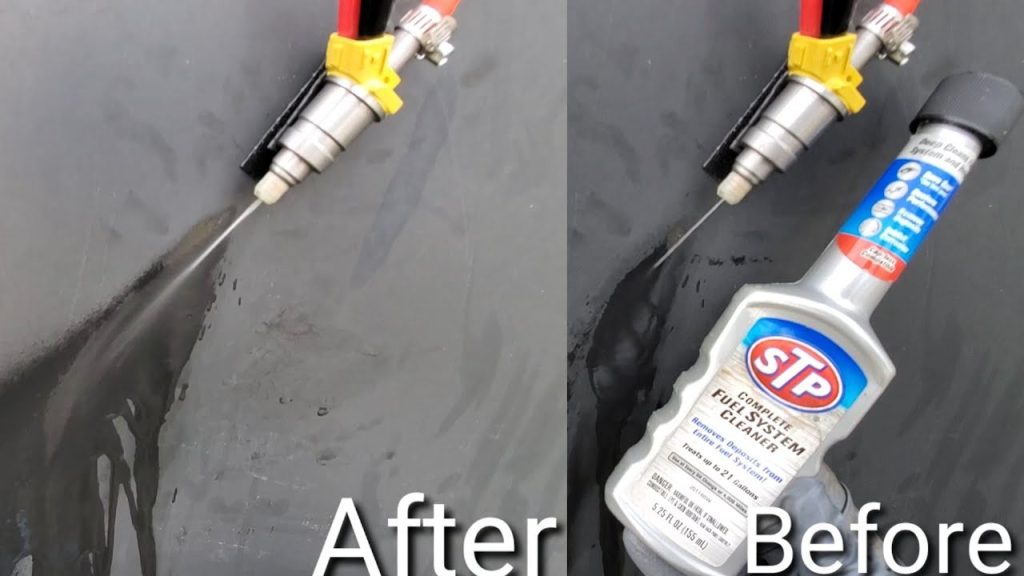

Use STP fuel injector cleaner according to the directions on the exact container, after confirming that the treatment is appropriate for your vehicle and fuel. STP sells several products and market versions. A dose copied from a similarly named bottle can be wrong for the one you own. Identify the full name, size and stated application before opening it. For the US Super Concentrated Fuel Injector Cleaner reviewed here, STP lists a 5.25-fluid-ounce bottle for up to 15 US gallons and a 12-fluid-ounce bottle for up to 21 US gallons of gasoline. Its directions permit adding the contents before or after fueling.
These are product-specific examples, not instructions for every STP cleaner, diesel treatment or regional package. Read your physical label as well as the current product information. If they differ, ask STP which instructions apply to the formulation and package you have. Do not resolve a discrepancy by choosing the strongest dose. This article explains how to make the use decision; it does not diagnose an engine fault from a cleaner’s marketing claims.
Identify the product before choosing a dose
Start with the complete front-label name. Fuel Injector Cleaner, Fuel System Cleaner, Gas Treatment and an oil-system product are not interchangeable descriptions. Also check whether the product is for gasoline or diesel. The fact that two bottles share a brand does not establish the same contents or use. The package size matters independently of the product family.
A small bottle intended for a stated fuel quantity is not equivalent to a large container. The correct instruction is not simply “add one STP bottle.” It is the instruction for the identified bottle and treatment capacity. Market versions matter too. The UK Petrol Injector Cleaner page describes a full-tank application for 50–60 litres and gives its own use interval.
Do not combine that interval or volume with the US product’s container sizes. Regional wording should remain tied to the product it describes. Photograph both sides of the container if you are asking a workshop or manufacturer for advice. Include any product code and the market where it was bought. That helps avoid a conversation in which both people say “STP injector cleaner” while referring to different products.
Keep the original label available until questions are resolved. Do not infer the right application from the color of the bottle or the display shelf. Products can be repackaged and stocked beside unrelated treatments. If the contents have been transferred to an unmarked container, identification is not established. Do not put an unknown liquid into the fuel system.
Also distinguish a product-use question from a repair question. If you are simply asking how to follow a compatible label, the container can answer much of it. If you are asking why the engine misfires, the bottle cannot supply the diagnosis. Our STP effectiveness guide explains that separate decision.
Check the vehicle and the intended fuel quantity
Consult the fuel and additive guidance for the actual vehicle. A broad compatibility statement from a product maker does not erase a vehicle-specific restriction. If a dealer recommends a treatment, ask whether it is optional, scheduled or part of a supported diagnostic procedure. These are different reasons for the same purchase. Manufacturer positions can be specific.
American Honda’s 2019 statement on additives and service procedures advises against routine fuel-injection cleaning/flushing under normal conditions. That statement should be checked against current information for a particular Honda; it illustrates why no all-vehicle cleaning schedule is appropriate. Do not treat a bottle’s usage interval as a mandatory vehicle maintenance requirement. Next, determine what fuel volume the label intends to treat. A half-full gauge does not identify one universal quantity.
The nominal tank capacity and fuel already present matter. If you plan to refuel, account for the final treated volume as directed rather than only the gallons dispensed at the pump. Use consistent units. US gallons and Imperial gallons are not the same. Fluid ounces measure volume rather than mass.
Where the label provides litres, follow that version directly instead of mixing conversions from another product page. If the amount is unclear, obtain clarification rather than inventing precision from the gauge. Our half-tank dosing guide explains the quantity issue in more detail. The key is to follow the product’s dosing model: a specified bottle application is different from a ratio intended for measured dispensing. Do not assume every bottle should be divided or every partly filled tank should receive the whole contents.
Check why treatment is being considered. A normally running engine and a severely malfunctioning engine are different situations. Visible fuel leakage, repeated stalling or severe misfire deserves assessment rather than a plan to keep driving until a treated tank is empty. Optional cleaning should not delay a necessary diagnosis.
Add it through the correct filler using the label method
Locate the fuel filler and confirm the product belongs in that fuel. Never add a tank cleaner to engine oil, coolant, brake fluid or diesel exhaust fluid. Similar caps or unfamiliar filler arrangements are reasons to check the manual, not to guess. If the wrong opening has already been used, stop and obtain vehicle-specific advice before starting. Shut the engine off and follow ordinary fueling precautions. Keep ignition sources away and avoid spills. Follow the product’s handling and exposure instructions.
Do not leave an open bottle where children can reach it. Dispose of the container according to the label and local arrangements. For the cited US product, STP allows addition before or after fueling and states capless-system compatibility. That does not mean every container should be forced through every filler mechanism. Follow the vehicle’s instructions for adding from a bottle and use its specified adapter where required. Do not improvise a tool that could damage the filler. Use only the amount and method established for your actual package.
Do not combine cleaners, octane boosters and other treatments without compatibility guidance. Do not add household alcohol or transmission fluid to make a supposedly stronger mixture. Those additions are outside the instruction being followed. If the bottle is part of a bulk-use arrangement, keep measuring equipment clean and clearly identified for the task. Do not use food or drink containers. Reseal remaining product and retain the label.
For a single-use bottle, do not infer that a second bottle will double the benefit. Treatment capacity is a use specification, not a scale of guaranteed repair effectiveness. Record the product, amount and date, together with the approximate fuel quantity. If a symptom later needs assessment, provide that record to the technician. The information preserves the sequence without assuming that the treatment caused or cured the condition. A precise history is more useful than saying that “some additive” was used.
After treatment, separate observations from proof
A product’s claimed deposit-removal purpose does not establish that deposits caused your complaint. A smoother idle, a different dashboard fuel-economy estimate or a cleared warning lamp can have other explanations. Do not treat any one of those observations as a calibrated injector test. Record what changed and under what conditions. If a workshop recommended treatment for a symptom, agree on the follow-up.
Ask what would count as a useful improvement and what investigation comes next if it does not occur. Avoid an indefinite sequence of bottles without reassessment. Repeatedly changing products can add expense while leaving the original cause unknown. If the engine develops a serious warning, fuel leak or severe running problem, stop the experiment and arrange assessment. Do not continue to meet an arbitrary mileage target.

Credit: www.amazon.com
A label’s suggested use frequency is not permission to operate an unsafe vehicle. Follow the vehicle’s warning instructions and describe the treatment history accurately. If too much or the wrong product was added, keep the container and estimate the quantities honestly. State whether the engine has run.
Contact STP or a qualified repairer for advice based on the actual mixture and vehicle. Do not invent a universal dilution remedy or try to neutralize the product with another chemical. For routine use, keep the vehicle’s scheduled maintenance separate from optional treatment. An additive does not replace a required service item or repair a damaged electrical circuit.
Our replacement decision guide explains the evidence needed when a component defect is suspected. Correct STP use begins with the exact bottle and ends with realistic expectations. Match the product to the vehicle, follow its specific fuel-volume instruction and preserve a simple record. If the real problem is an unresolved engine fault, use that record to support diagnosis rather than treating the brand name as the answer. For a shared vehicle, leave a simple maintenance note after treatment: product name, bottle size, date and approximate fuel quantity. This helps prevent another driver adding a second bottle because they did not know the first had been used. It also gives a workshop useful information if a complaint develops later. Do not write merely “fuel cleaner” when several formulations are sold under the same brand. If the package has been discarded, a photograph of the complete label is more useful than a photograph of only its front-facing name. Keep the record with the vehicle’s maintenance information.


Automotive reference information. Confirm specifications in the manual for your exact vehicle. Original replacement guides link to their research sources. About us