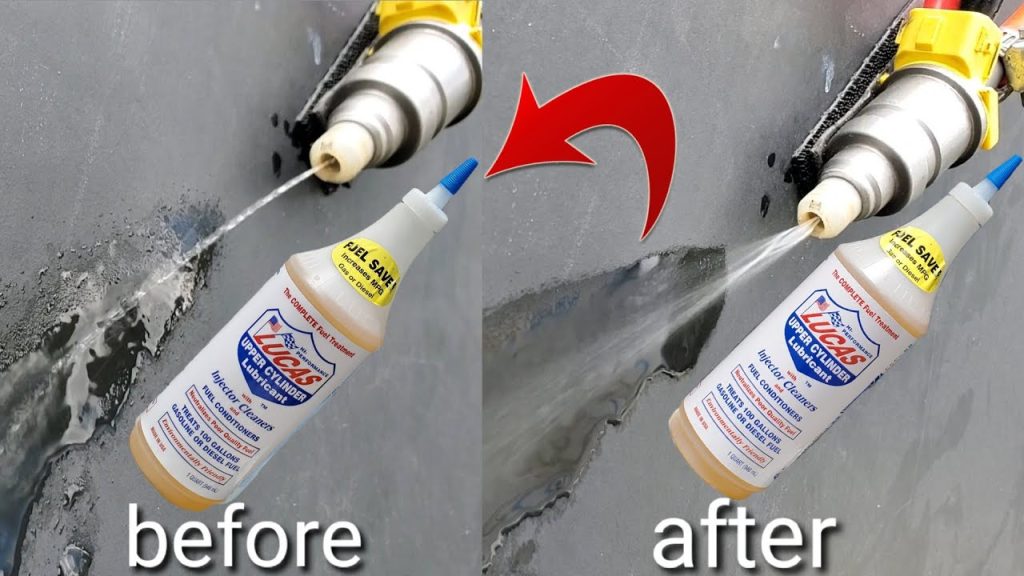

Lucas sells more than one fuel-treatment product, so “does Lucas injector cleaner work?” is not a precise question until the bottle and intended outcome are identified. A deposit-control claim is different from a promise to repair an electrical fault, stop a leak or restore every rough-running engine.
The sensible expectation is limited to the exact product’s intended use, compatibility and evidence. BestCarsNews has not conducted a controlled Lucas injector-flow or fuel-economy test.
This guide compares the manufacturer’s stated applications and explains how to evaluate a result without turning a testimonial into proof.
If the vehicle has a fuel leak, persistent strong fuel odor, severe misfire or unsafe stalling, diagnosis takes priority over trying a treatment.
Identify Fuel Treatment or Deep Clean first
Lucas Fuel Treatment and Lucas Deep Clean Fuel System Cleaner are distinct products with separate directions. The Deep Clean page describes a gasoline treatment, while the Fuel Treatment page lists its own supported applications.
Do not transfer the dose or compatibility statement from one to the other. Similar packaging colors or the same brand name are not enough to establish equivalence.
Read the current bottle and confirm the market in which it was supplied. A review of an older or different formulation is not automatically evidence about your purchase.
Why deposits are only one possible problem
Injectors meter fuel through components that must operate and seal correctly. Deposits may be relevant to some performance complaints.
Electrical faults are a separate possibility. Wear can also affect a component.
- Fuel contamination can involve more than ordinary deposits. A damaged seal may cause an external leak.
- None of those possibilities is established by mileage alone. A rough idle does not identify which one applies.
- A cylinder misfire does not prove the injector is dirty. A diagnostic code also needs interpretation within its system.
- Before evaluating a cleaner, determine whether the desired outcome is routine deposit control or correction of a specific measured fault.
That distinction affects the evidence you should expect.
- For maintenance, the vehicle’s guidance and product instructions are central.
- For repair, the question is what test links the symptom to a condition the treatment can address.
- A general claim about a cleaner cannot answer that vehicle-specific question.
- It is possible for a product to be suitable for its labeled use while being irrelevant to the problem on your car.
What a manufacturer claim establishes
Lucas describes cleaning and performance-related benefits for its fuel products. Those statements identify the company’s intended use and claimed benefits. They are not a measurement of the outcome on your engine.
Read performance restoration language in the context of the condition being addressed. Removing a deposit-related restriction, if achieved, is different from creating additional power beyond a healthy engine’s normal performance. Do not convert broad wording into a guaranteed percentage improvement.
A useful claim would identify the test method, baseline, engine or injector type and outcome measured. Without that detail, it cannot support a precise forecast of fuel savings or horsepower.
This article therefore does not give a star rating based on invented laboratory results. It also does not claim that every user will notice a change.
Credit: www.reddit.com
Correct use comes before evaluating effectiveness
Check that the vehicle manufacturer permits the additive and that the bottle is intended for the fuel and system. Follow the actual treatment-volume instructions.
The products’ different directions are a reason to read the package rather than copy a number from a discussion about “Lucas” generally. Use the proper filling method for the vehicle, including any capless-filler instructions.
- Avoid spills and keep the product away from ignition sources. Do not double the dose because the engine is older or the tank is partly empty.
- Do not combine different cleaners to create a stronger treatment. A larger concentration does not make a wrong diagnosis correct.
- If you have already added the wrong amount or product, preserve the label and contact the manufacturer or a repairer with the details. Guessing at a second chemical to offset the first makes the situation harder to assess.
- For the practical Fuel Treatment application question, see our Lucas dosing and use guide. Here, the important distinction is that following directions establishes appropriate use, not proof of effectiveness.
- A correct dose can still produce no meaningful change when deposits are not causing the complaint.
That outcome should lead back to diagnosis rather than repeated stronger treatments.
How to compare Lucas with another product
Compare like with like: fuel type, intended system, dose, treatment volume and documented claims. Bottle price alone can be misleading when bottles treat different quantities of fuel. A lower cost per treated tank still does not establish better deposit removal. Look for applicable test evidence rather than a longer list of promotional adjectives.
| If no comparable independent evidence is available, state that limitation instead of declaring a universal winner. Also separate fuel quality from aftermarket treatment. TOP TIER publishes a fuel-performance standard that concerns participating fuels and defined requirements. |
That is not a ranking of Lucas against other bottled additives. Octane, detergency and a repair for a failed injector are different topics. Paying more for one does not automatically accomplish the others.
Why testimonials can be persuasive but inconclusive
| A driver may honestly report smoother running after a treatment. The observation is still not a controlled test. Refueling changes the fuel in the tank, and driving conditions may change at the same time. |
- A recent repair, warmer weather or a different route can influence the experience. An intermittent fault may temporarily disappear regardless of the product.
- Treat the report as an individual experience rather than proof of a general effect. Negative reports also need context.
- A cleaner cannot fairly be judged as a failed repair for a broken wire when it was never designed to fix wiring. Conversely, a marketing claim should not be defended by assuming every disappointing result came from user error.
The sound approach is to identify the product, the problem, the method and the outcome. Missing information should remain missing rather than being filled with a convenient explanation.
Common expectations to avoid
Do not expect a tank additive to repair a cracked part, restore a damaged electrical circuit or guarantee that an injector will close. Do not assume it cleans every intake surface simply because it travels through the fuel system. Do not treat a temporary warning-light change as proof of a completed repair.
These expectations extend beyond what a deposit treatment can establish. Avoid unsupported claims that one correctly used bottle will inevitably damage every engine, too.
Compatibility depends on the exact product and vehicle guidance. If symptoms begin after use, record the timing, dose and fuel purchase, then have the actual problem assessed.
Timing is useful evidence but does not alone prove causation. A technician may need to consider fuel quality, existing faults and other work performed around the same time.
If there is a strong fuel smell or visible leakage, do not continue driving to finish the treated tank. If the engine misfires severely or stalls unpredictably, arrange diagnosis.
Do not use the product’s cleaning interval as a waiting period for an unsafe condition. Maintenance directions do not override the need to respond to an active fault.
A practical way to assess value
Define the goal before purchase. If the engine runs normally, consult its maintenance and additive guidance.
If there is a symptom, document it before changing anything. Save codes and the conditions in which they appeared.
Identify any recent repairs. Record the exact Lucas product if you use it.
Note the amount and fuel quantity. Avoid changing several variables at once when evaluating a nonurgent maintenance decision.
Compare observations under similar conditions. Do not deliberately provoke a dangerous fault to create a test.
If the symptom persists, stop treating it as an additive-selection problem. Obtain the appropriate diagnostic evidence.
Keep invoices and measurements so later decisions can build on facts. For fuel economy, a single tank is especially weak evidence because filling variation and driving conditions can dominate the result.
Several comparable records are more informative, although they still do not isolate every variable. For a claimed injector repair, controlled testing of the relevant function is stronger than an economy estimate.
Ask a workshop what result would count as success before paying for a cleaning service. That question makes it easier to distinguish a measured repair from routine maintenance.
The reasonable conclusion is neither that every Lucas product repairs every injector nor that all deposit-control treatment is meaningless. Use the named product only within its directions and the vehicle’s requirements.
Expect no guaranteed result for an undiagnosed complaint.
Where a fault has been confirmed, select the remedy from that evidence and verify it afterward.
That approach protects both the repair budget and the quality of the conclusion you draw from the treatment. When comparing costs, include only the treatment volume supported by the exact label. A large bottle may cover several uses, but that does not justify storing an unmarked decanted portion or estimating doses casually. Keep the original container and closure, follow storage directions and keep it away from children. A small saving is not useful if product identity or dosing becomes uncertain.


Automotive reference information. Confirm specifications in the manual for your exact vehicle. Original replacement guides link to their research sources. About us