
There is no verified, single Honda-wide oil-filter micron rating established by the manufacturer sources reviewed for this guide. In particular, they do not justify saying that every Honda oil filter is a “20-micron filter.” The answer needs an exact part number, an efficiency at a stated particle size and the test method behind it. If those details are unavailable, the responsible answer is that the numerical rating has not been verified for that product. This is an evidence limitation, not proof that Honda has never measured filtration performance or that its filters are unsuitable. For routine maintenance, select a documented replacement for your vehicle and follow Honda’s service instructions. For a technical comparison, request the missing performance data instead of converting a general marketing description into a laboratory specification. That distinction keeps a purchase decision useful even when a public product page does not disclose everything an engineer might want to know.
What Honda’s public descriptions actually establish. Honda Malaysia’s genuine oil-filter page describes filtration at the micron level and discusses the filter construction, but the reviewed text does not pair a numerical particle size with a capture-efficiency percentage and test standard. Honda Japan’s HAMP oil-filter page similarly describes removing micron-level contamination and directs detailed enquiries to Honda Parts. Neither statement is equivalent to a specific, universal cutoff. Preserve the distinction between those product descriptions and a measured rating for a named part. A filter sold for a Honda by another manufacturer is also a different product from a Honda-branded filter, even when both are listed for the same vehicle. Do not transfer one company’s published number to another company’s product through an application cross-reference. The shared application tells you where the supplier intends a product to be used; it does not say that its media and measured efficiency are identical.
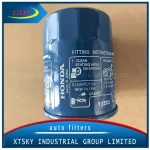
Start by identifying the item being discussed. Write down the complete filter number from a reliable listing or the unused product, including any suffix. Record whether the question concerns a Honda-branded automotive filter, an aftermarket replacement, a motorcycle filter or another Honda engine application. “The Honda filter” can hide those differences. Then keep the vehicle year, engine and market alongside the number. If someone supplies a rating without identifying the tested part, ask for that identity before comparing it with your purchase. If an old test used a discontinued version, its result should remain attached to that version and sample rather than silently becoming a specification for everything sold under the brand today. Photographs of packaging can help establish what was tested, but the picture of a canister does not reveal capture efficiency. Supplier names and manufacturing-country claims are likewise not substitutes for a performance report.

Credit: www.amazon.com
A meaningful micron claim also needs efficiency and a test
Particle size alone leaves the central question unanswered. A micron is a micrometre, one millionth of a metre. It describes a size; it does not state how many particles at that size a filter captures. The WIX technical FAQ says that beta ratios from multipass testing should be used to assess removal of a particular particle size. A claim that a filter catches some particles of a given size is different from a claim that it removes nearly all particles meeting that test threshold. Do not imagine an oil-filter rating as a rigid kitchen sieve with one perfectly uniform hole size. The meaningful comparison is the documented removal performance under the specified test. When a listing provides only “microns,” mark efficiency as missing. That is more accurate than supplying an assumed percentage simply because another brand uses the word in a different way.
Beta ratios make the efficiency relationship explicit. Donaldson’s explanation of beta ratings relates the upstream and downstream particle counts for a stated size. For an illustrative calculation, if the upstream count is 10,000 and the downstream count is 100 at the same stated threshold, the ratio is 100 and the corresponding removal efficiency is 99%. This arithmetic example is not a Honda test result. A ratio of 20 corresponds to 95%, so those two ratios would represent different performance at that same threshold. Keep the threshold attached:99% at one particle size cannot be ranked against 95% at a different size by looking only at the percentages. A clear note should retain both the size and efficiency together, along with how they were measured. Avoid abbreviating a full result into “fine filtration” or a solitary number that loses the conditions making the comparison meaningful.
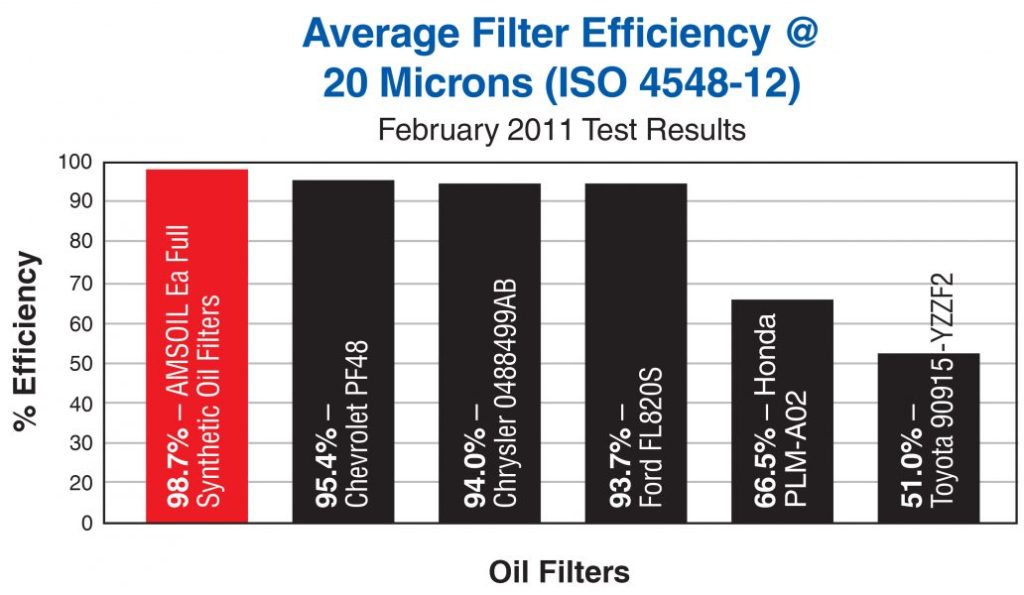
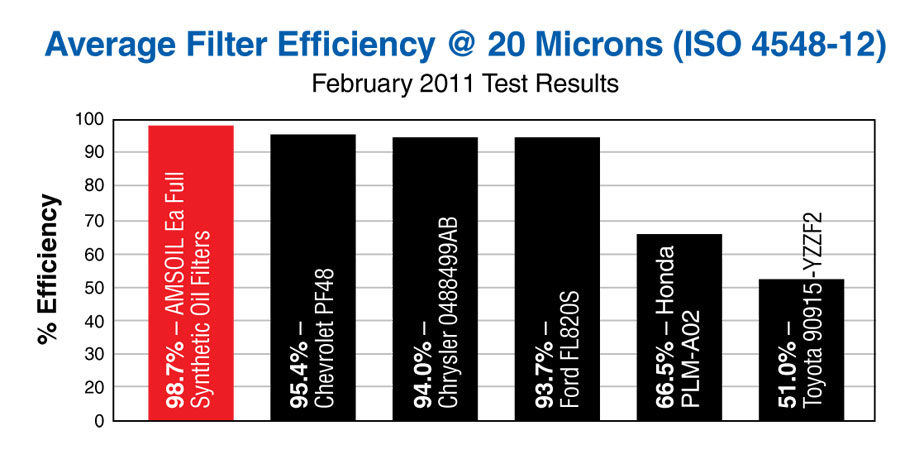
The test standard identifies what was evaluated. ISO 4548-12:2017 describes a multipass test for full-flow lubricating-oil filters, using continuous contaminant injection and particle counting. Its published scope includes removal characteristics, contaminant capacity and differential pressure, and is limited to steady-state conditions rather than fluctuating flow. That is useful context for reading a reported result. It is not evidence that a particular Honda filter was tested to that standard, nor permission to invent its result. Ask whether the claim names the test edition, sample and operating conditions. Two reports may both sound rigorous while measuring different things. A laboratory result describes the tested conditions; it does not independently promise a certain engine lifespan or a fuel-economy improvement. Keep a filtration-efficiency comparison separate from claims about real-world durability unless those claims have their own appropriate evidence.
Read the small print behind an aftermarket percentage. On FRAM’s XG7317 product page, the advertised 99%+ filtration statement has a footnote citing average efficiency tests of XG8A, XG3387A and XG4967 under ISO 4548-12 for particles greater than 20 microns. The named tested parts and the family-level presentation are material details. This does not create a Honda OEM rating, and it should not be rewritten as a published individual test report for XG7317. When saving a claim, save its footnote too. Ask whether a result belongs to the exact part, a representative sample of a product line, or a general media description. Each may provide useful information, but they answer different questions. A comparison becomes misleading when one side uses an exact-part result and the other is presented with the qualifications removed. This example explains evidence handling; it is not a recommendation that the product fits every Honda.
Nominal and absolute labels still need their definitions. The WIX Industrial FAQ distinguishes nominal capture claims from an absolute-rating convention and relates its explanation to beta efficiency. Treat that as the manufacturer’s technical context, not a reason to impose one percentage on every unqualified advertisement. Ask the supplier what its label means and which test supports it. Also keep efficiency separate from capacity and restriction. Capturing a high percentage at a given size does not tell you how much contaminant a filter holds before reaching a test endpoint. The WIX FAQ notes that media amount and restriction influence flow. Therefore, “choose the lowest micron number” is an incomplete buying rule. Application compatibility, operating requirements and the manufacturer’s supported service conditions remain relevant. Our oil-filter interchange guide explains why a similar exterior or matching mounting connection cannot establish all of those requirements.
Credit: www.syntheticoils.us
How to make a decision when a Honda rating is unpublished
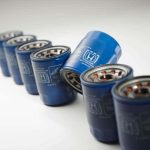
Request a specification that answers the actual question. A useful enquiry states the full filter number and asks for capture efficiency at specified particle sizes, the test standard and whether the result applies to that exact part or to a product family. Ask for a dated technical document or report rather than a repeated retail headline. Keep an explicit “not supplied” entry for any missing field. If a comparison chart says 20 microns for one filter and 99% for another, it is missing enough information that no technical winner can be selected from those cells alone. Equally, the absence of a public numerical rating does not show that an approved original-equipment part performs badly. Use available documentation within its limits. For an ordinary service, a correctly identified, supported replacement and proper installation are actionable decisions even when a detailed efficiency curve is not available to the customer. A cut-open comparison can document visible construction, but it is not a particle-counting test. Counting pleats or showing the media colour cannot supply an efficiency curve, and an unmeasured visual impression should remain separate from a numerical filtration claim.
Do not use the micron question to invent a service interval. The 2025 Honda Civic Hatchback Hybrid Maintenance Minder instructions distinguish maintenance items, including engine oil and filter replacement, and identify the displayed percentage as remaining engine-oil life. They do not describe that percentage as a direct measurement of how full the oil filter is. Follow the service instructions for your exact Honda and market, including applicable time limits, rather than resetting the maintenance plan around a marketing efficiency figure. Our guide to what an oil filter does covers the separate maintenance role. The defensible answer to the original question is therefore part-specific: obtain a documented size-and-efficiency result if one is available; otherwise say the numerical rating remains unverified. No universal 20-micron Honda specification, identical aftermarket equivalence or laboratory-tested ranking is claimed here. Keeping the unknowns visible is more useful than supplying a precise-looking number that the evidence cannot support.


Automotive reference information. Confirm specifications in the manual for your exact vehicle. Original replacement guides link to their research sources. About us