
Yes: the filter has a specific maintenance job
An engine oil filter matters because it removes particles from circulating lubricant, within the capabilities of the specified filter system. Correct selection, installation and replacement all contribute to that job. This does not mean the most expensive filter is automatically the best choice, or that fitting a different brand will produce measurable horsepower. Start with the filter required for your engine, complete the prescribed service and judge extra claims by the evidence behind them. These are separate decisions, and treating them separately makes maintenance easier to assess.
Clean oil at filling does not end the contamination problem
Donaldson’s explanation of lube filtration identifies several sources of contamination, including wear debris, combustion-related material and dirt introduced during handling. A fresh oil fill therefore does not make filtration redundant for the rest of the service period. The filter manages particles as oil circulates; it is not a device that turns used oil back into its original formulation or repairs the engine producing the debris. If you want the flow-path explanation, our guide to how oil filters work covers the components. Here the question is what that role should change about your maintenance decisions.
Filter quality is a collection of requirements
FRAM’s explanation of filter performance metrics distinguishes contaminant-holding capacity from capture efficiency and flow-related performance. A bare micron figure does not communicate capture efficiency by itself. This matters when comparing advertisements: a large number on one package and a small number on another may describe entirely different properties. Ask what was measured, at which particle size and under which method. A capacity claim concerns retained contamination, not the amount of engine oil inside the can. None of those figures independently establishes that the product belongs on your vehicle.
Four questions make a filter claim more useful
- Does the claim belong to this exact part? A result from one filter in a product family may not describe every size in that family. Read footnotes and obtain the tested part reference before making a numerical comparison. A brand-wide slogan is weaker selection evidence than application-specific documentation.
- Are the test conditions comparable? The public scope of ISO4548-12:2017 describes a multi-pass test that evaluates particle removal, contaminant capacity and differential pressure under steady conditions. It explicitly excludes fluctuating flow. Such a test provides defined laboratory evidence; its existence does not establish a universal engine-life improvement, an on-road fuel saving or approval for every engine.
- Is the complete application supported? Filter suitability includes the installed engine and housing, not just the maker’s reputation. Read how to verify an oil-filter alternative when changing references. A product can have impressive published performance and still be unsuitable for the mounting arrangement or lubrication system in front of you.
- What does the service claim actually permit? An advertised distance is not automatically permission to override the vehicle’s oil-change requirements. Check qualifications, operating conditions and the applicable maintenance instructions. Keep the oil specification, filter application and service schedule together when deciding what to buy; avoid using one attractive number as a substitute for all three.
Symptoms deserve a response, not a filter diagnosis by guess
A vehicle does not need to show a symptom before scheduled filter maintenance becomes worthwhile. Conversely, a warning or leak does not identify the filter as the cause. Separate the observation from the diagnosis so you can respond promptly without repeatedly replacing parts that may not be responsible. Useful distinctions include:
- A low-oil-pressure warning: follow the vehicle’s stop-engine instructions. Chevrolet’s owner guidance tells drivers receiving its low-pressure alert to stop safely, avoid restarting and seek service. Do not keep driving while trying to decide which filter brand might cure it.
- A fresh oil spot: establish where the fluid is coming from and arrange the appropriate inspection. A spot beneath the vehicle is not proof that the filter media failed. Location, timing after service and the oil level are information for diagnosis, not a reason to tighten random components.
- An unfamiliar sound after maintenance: report when it began and what work was done. Do not use a quieter restart as the acceptance test for a suspected lubrication problem. The symptom requires assessment in the context of the engine and service procedure.
- A change in appearance: oil color or an externally clean can is not a measurement of the filter’s remaining capacity. Avoid making an extended-service decision from a photograph, a finger test or the assumption that a filter with no visible leak must still satisfy every requirement.
When contacting the workshop, give the date and mileage of the service, the installed filter reference, the oil specification and the exact dashboard message. Distinguish an observed leak from a guess about its source. That record lets the technician investigate a changed condition without treating “bad filter” as an already established diagnosis. If the vehicle has an urgent warning, collecting documentation must not delay the required safe stop.
A maintenance reminder is not proof the work was completed
Use the oil-and-filter requirements for your specific vehicle rather than a universal mileage rule. The 2025 Ford Kuga manual, CG3992en provides a useful example: its oil-life reset instructions say the reset follows replacement of both the oil and filter. The display can be reset by a control sequence, so a fresh percentage alone does not prove that physical service happened. For a newly acquired vehicle with uncertain history, seek the invoice or maintenance record and agree the next service with the workshop. Do not infer a new filter solely from an extinguished reminder.
Judge a service by the completed job
Whether you perform maintenance yourself or pay a workshop, the filter purchase is only one part of the outcome. A suitable product can be compromised by incorrect assembly or an incomplete final check. Use the vehicle’s procedure for the work itself; the following sequence is a record of decisions to confirm, not a universal removal and installation tutorial.
- Confirm the job scope. Establish whether the scheduled operation includes an oil-and-filter change and whether other inspections are due. If the quote says only “oil service,” ask what that includes before assuming a replacement filter is listed.
- Identify the supplies. Record the complete filter reference and oil specification. A receipt describing only “premium filter” does not let a future technician verify what was installed. Retain application qualifications when the engine or housing has been modified.
- Inspect the replacement. Check the delivered assembly and required seals for damage or missing pieces before installation. A dent, damaged sealing feature or uncertain component deserves resolution before the engine relies on it. A recognized label does not cancel a visible defect.
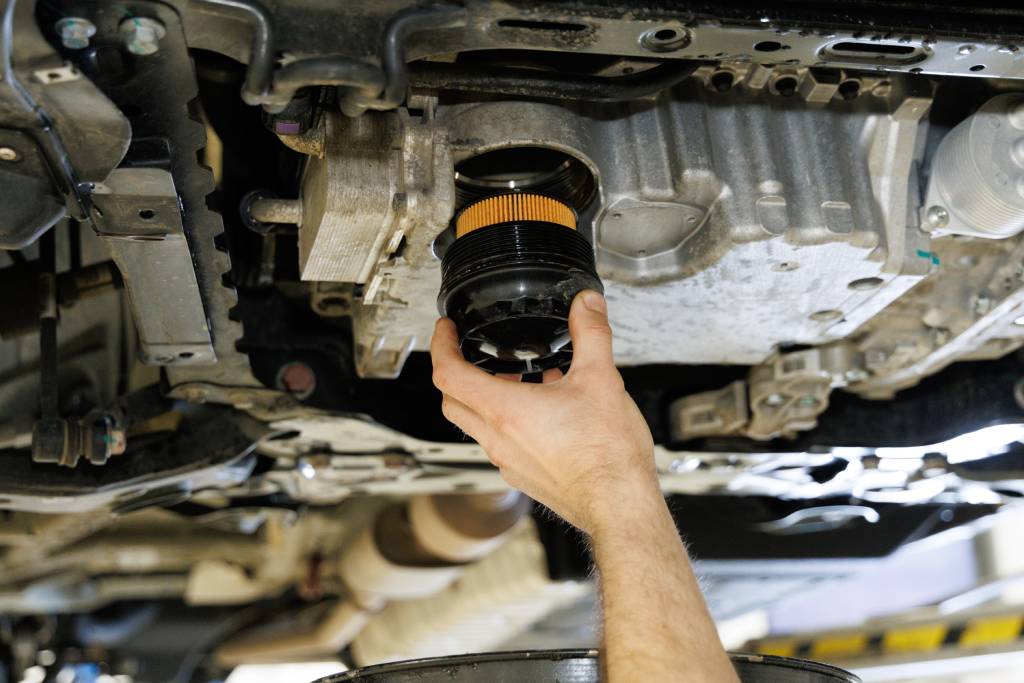
- Follow the actual fitting procedure. The correct seal location, preparation and tightening method depend on the assembly. Do not transfer a spin-on routine to a cartridge cap by habit, and do not treat extra force as additional protection against leaks.
- Complete the specified checks. Confirm the final oil level and examine the serviced area for leakage using the procedure for that vehicle. Address an abnormal result before calling the work complete. A newly fitted part does not remove the need to verify the whole service.
- Close the record accurately. Record date, mileage, parts and the completed work, then deal with the service reminder as instructed. Keep any unresolved concern explicit. A clear record is more useful than a reassuring label with no indication of what was actually done.

Credit: forums.pelicanparts.com
Installation quality can matter after the first startup
MAHLE’s September 2022 installation bulletin describes how a removal tool used to tighten certain spin-on filters can damage their protective coating. Subsequent corrosion can progress to an oil leak, particularly with environmental exposure. The bulletin distinguishes these spin-on instructions from cartridge-housing work, where a tool is used on the retained cap. This is a concrete reason to follow the supplied installation method: an initially dry exterior does not prove the assembly escaped installation damage. It is not a recommendation to apply one tightening rule to every filter design.

Credit: www.reddit.com
Practical questions about whether oil filters matter
Will a costly filter make the engine last a stated number of years?
No such prediction follows from price alone. Engine condition, service history, operating conditions and many other factors are outside a filter purchase. A technically supported performance difference may be worth considering, but it is not a warranty that a particular engine will reach a promised age or distance. Compare documented suitability and useful product evidence first. If a seller claims a lifespan increase, ask for the relevant vehicle testing and its limitations rather than treating the package price as proof.
Can I keep an old filter when adding fresh oil?
Adding oil to restore the specified level and completing a scheduled oil service are different tasks. A top-up does not reset the filter’s service history or erase the need for the prescribed oil-and-filter change. If someone proposes leaving the old filter during scheduled work, check whether the applicable maintenance instructions actually permit that arrangement. Do not create a two-service interval merely because the retained can looks sound or removing it is inconvenient.
Can a new filter solve contamination caused by an engine fault?
A replacement does not explain why contamination is present. Unusual debris, suspected coolant mixing or another abnormal finding needs diagnosis and the relevant repair procedure. Repeatedly fitting fresh filters can conceal a continuing problem if the underlying cause remains. Preserve the service observations and ask the repairer what follow-up is required. This is different from routine replacement at the scheduled interval, where the aim is to maintain the designed system rather than investigate a known fault.
Should I expect better fuel economy after a filter change?
Do not budget for a fuel-economy gain simply because the oil filter was changed. This article’s cited filtration and maintenance evidence does not establish a universal percentage improvement. A before-and-after tank comparison also mixes route, weather, traffic and other variables with the service. Keep the claim proportionate: replacing the correct filter when required completes maintenance. Diagnosing unusual consumption is a separate job and should not begin with an unsupported promise that an upgraded filter will fix it.
The meaningful choice is a supported, completed service
Oil filters matter as working parts of the lubrication system. Give their selection and replacement the attention that role requires: identify the right application, follow the maintenance instructions, install the assembly correctly and retain a useful service record. Evaluate optional performance claims on their own evidence. This guide interprets manufacturer publications and a public test-method scope; it does not report a comparative filter test, endorse a brand ranking or calculate a guaranteed improvement for your engine.


Automotive reference information. Confirm specifications in the manual for your exact vehicle. Original replacement guides link to their research sources. About us