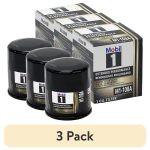
An engine oil filter traps particles as oil passes through its filtering material. The oil pump provides the flow; the filter does not pump oil or make worn oil new again. In a typical full-flow system, oil is directed through the filter before reaching the engine's lubricated parts. The system also needs a way to maintain oil supply when passing through the filter becomes too restrictive. Understanding that flow path explains why the correct filter involves more than the size of the metal can. The media, seals and valves must work with the engine's lubrication system. This guide separates those functions, explains what performance numbers mean and shows which conclusions you cannot draw from the filter's outside appearance.
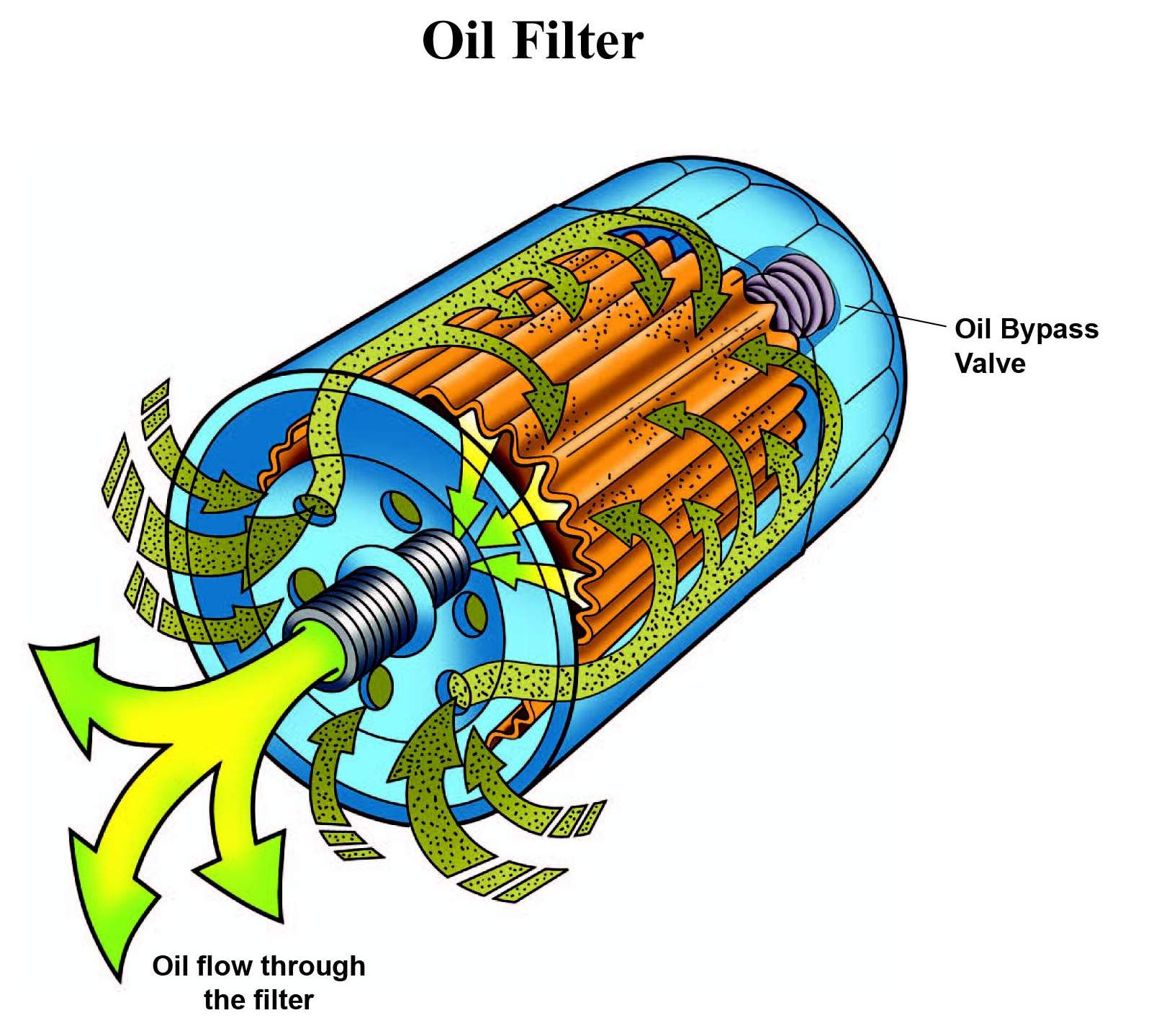
Start with a common spin-on filter, the complete metal can replaced during service. Mobil's explanation of a typical spin-on design describes oil entering through smaller openings around the base, passing through the filtering element and returning through the central opening. Inside such a filter, the media separates the incoming contaminated oil from the outgoing filtered oil. A supporting structure keeps the element in position under flow. That is a description of a common arrangement, not a direction-of-flow rule for every engine, cartridge or remote filter system. If you are studying a specific engine, follow its lubrication diagram. The useful question is where the dirty and clean sides connect, rather than which way the outside of the can happens to point.
A cartridge filter performs the same broad particle-removal job while the vehicle retains a reusable housing and cap. The replacement element must locate and seal correctly within that assembly. A spin-on can and a cartridge therefore differ in what is removed during service, not in whether filtration matters. MAHLE notes that apparently similar filters can differ internally, including their valves, media and connections. The housing arrangement is one reason you cannot substitute a visually similar part without application confirmation. For a filter-selection decision, use our oil-filter interchangeability guide. Here, keep the mechanism in mind: oil needs a controlled route through suitable media, with the clean and dirty paths separated. A poorly seated element can defeat that arrangement even when the cap appears to fit.
Credit: www.autolexicon.net
Follow the oil through media, valves and the engine
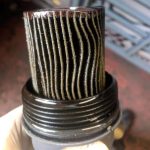
Filter media is the material that captures and retains particles. It may use cellulose, synthetic fibers or a combination suited to the application. Pleating packages a useful area of material inside a limited space, but counting visible pleats does not tell you the whole performance story. Donaldson describes three competing requirements: capture efficiency, contaminant-holding capacity and resistance to flow. Improving one specification without considering the others can be misleading. A filter that catches a high proportion of a certain particle size still has to pass the required flow and hold contamination over its intended service period. Conversely, a large capacity claim does not state how effectively the filter removes a particular size. When looking at a cut-open filter, remember that an attractive layout is a construction observation, not a measured efficiency test.
The filter bypass valve provides an alternative route around the media when the pressure difference across the filtering path reaches its opening condition. Cold, viscous oil or heavily loaded media can make flow through that path more difficult. The valve may be in the filter or in the engine's housing, depending on the design. It protects oil supply; it does not improve particle removal while oil is taking the bypass route. This is why “full-flow” should not be interpreted as a promise that every drop always crosses the media under every operating condition. WIX's collapsed-filter bulletin distinguishes this filter bypass from the system pressure-regulating valve. The latter manages lubrication-system pressure rather than simply providing a route around filter media. A dashboard pressure reading and the pressure difference across a filter are also different measurements, so one should not be substituted for the other when interpreting a bypass setting.
An anti-drainback valve has a different job again. Where the application calls for it, it helps retain oil in the filter when the engine is stopped. FRAM's technical FAQ discusses drainage through some filter mountings and the role of this valve. Do not confuse it with a device that sets operating oil pressure or with the bypass valve that can open a route around the media. It is also not proof that an engine can never experience a delayed pressure rise. The relevant valve arrangement depends on the engine and filter position; adding an extra feature to an unsuitable filter does not make it suitable. A sensible way to remember the distinction is to ask three questions: what captures particles, what allows an alternative route if restriction becomes excessive, and what helps limit drainback after shutdown? Those questions refer to separate functions even when several are packaged in one can.
The phrase “bypass filter” creates another common misunderstanding. A separate secondary bypass-filtration circuit sends a portion of the oil through additional filtration, rather than routing oil around the primary media for protection against excessive restriction. Donaldson's filtration-strategy explanation describes full-flow and secondary bypass arrangements as different system designs. In a secondary loop, the engine's main flow is not forced through that additional restrictive path. This is not the same thing as the bypass valve inside an ordinary full-flow filter. If a product description mentions bypass, first determine whether it describes a valve, a secondary filter or a combined assembly. You cannot decide from the word alone. An aftermarket secondary system also is not automatically an approved oil-change-interval extension for every passenger vehicle. Its suitability, plumbing, maintenance and effect on the original system need to be evaluated for that application.
Efficiency figures need a particle size and a test basis. A claim of “99 percent efficiency” without those details is incomplete because capture can differ by particle size. Donaldson explains the beta ratio as the upstream particle count divided by the downstream count at the stated size. For a simple numerical illustration, if a test counts 1,000 relevant particles before the filter and 10 afterward, beta is 100 and the calculated efficiency is 99 percent. This arithmetic explains the rating; it does not describe a particular filter we tested. The size designation and measurement method still matter. Comparing a result at one particle size with another result at a different size is not a controlled comparison. Likewise, do not transplant a hydraulic-filter rating into a passenger-car buying decision without an appropriate application and test context. Ask for the product's actual published data instead of treating a smaller micron number as the complete answer.

Credit: paisleyautocare.co.uk
Use the mechanism to make better maintenance decisions
A filter's capacity is not a countdown you can read from its paint, and engine-oil color alone does not measure how much capacity remains. Service schedules account for the engine and operating conditions rather than asking owners to guess from the outside of a sealed can. WIX's oil-and-filter interval bulletin discusses capacity and efficiency separately and directs attention to engine-manufacturer service requirements. Use the current schedule for the exact vehicle and the specified filter application. A premium product description does not cancel the vehicle's time, mileage, monitor or severe-use instructions. Our guide to oil-change time limits explains how to reconcile those separate requirements. If a removed element is damaged or unusual debris is found, preserve the evidence and have the cause investigated. Replacing the part without understanding a system fault may leave the reason for the damage unresolved.
Filtration also has limits. Removing particles is different from restoring a lubricant's chemical condition or repairing an engine defect. Do not expect a new filter to correct fuel entering the oil, a coolant leak, an incorrect lubricant specification or a continuing loss of pressure. Chevrolet's oil-maintenance guidance treats a stop-engine low-pressure message as a reason to stop safely, avoid restarting and obtain service. That response should not be delayed by assuming the filter is merely old. For readers dealing with a warning now, our oil-warning guide separates the immediate action from subsequent diagnosis. A filter can be one component of a lubrication fault, but a symptom does not identify the cause by itself. The condition of the oil, pump, pickup, housing, passages and other engine parts can require investigation by a qualified technician.
When reading a filter advertisement or discussing a service, use a short set of precise questions. Is the part listed for the exact engine and housing? Does the efficiency claim state particle size and test conditions? Is the stated interval compatible with the vehicle's requirements? Does “bypass” mean a protective valve or a secondary filtration circuit? Are any observations supported by measurements, or are they simply comments about visible construction? These questions make the mechanism useful without turning a routine oil change into a laboratory exercise. In normal service, the objective is suitable, correctly installed filtration and the specified lubricant at the correct level. The pump supplies flow, the media captures particles, the relevant valves manage specific operating situations, and the maintenance schedule determines when the system needs service. No one feature replaces the others.


Automotive reference information. Confirm specifications in the manual for your exact vehicle. Original replacement guides link to their research sources. About us