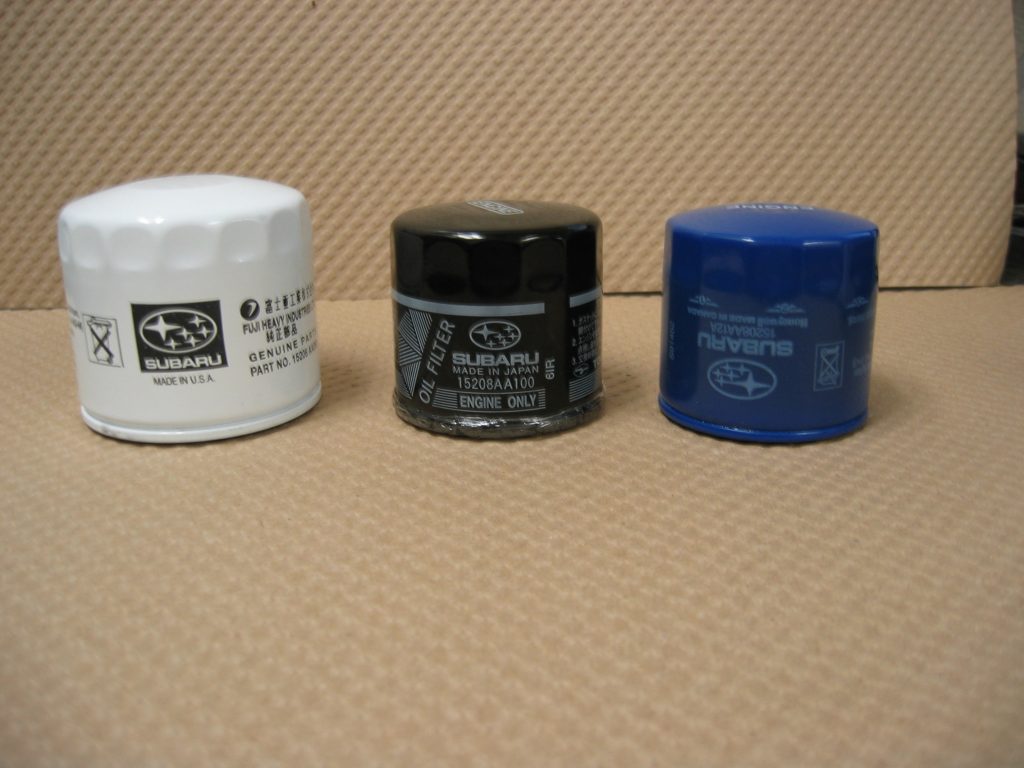

No. Subaru oil filters are not all the same, and neither the Subaru name nor a black or blue canister establishes compatibility. Different engine applications use different part references, while supply changes can alter the appearance of an approved replacement. The reliable decision is a current application check for your particular vehicle, followed by the installation instructions for the supplied filter. Historical manuals and bulletins explain why numbers and appearances differ; they should not be turned into a universal shopping list.
Identify the vehicle before comparing filters
Subaru’s official parts guidance describes parts selected for the vehicle’s year, model and trim. Have the VIN available when asking a retailer to confirm an engine-oil filter, along with the installed engine if it has been changed. “An Outback filter” or “a boxer-engine filter” leaves out information that can decide the application. Keep WRX and WRX STI distinctions, engine capacity, turbocharging and market specification visible in your enquiry rather than letting a shop headline shorten the description.
A documented example of different Subaru filter numbers
The 2010 Legacy manual hosted by Subaru Canada provides a useful historical example. Its maintenance table lists 15208AA100 and 15208AA12A for the covered 2.5-litre models, and 15208AA031 for the covered 3.6-litre models. It also distinguishes their installation rotation instructions. Those entries demonstrate that Subaru used multiple filters within one manual. They do not establish today’s replacement number for every Legacy or prove that a newer filter should be tightened by an older table. Use current application and service information for the actual purchase.
Why a change from blue to black needs context
Subaru bulletin 02-191-22R documents supply-related changes. The March 25 2024 revision identifies 15208AA20A among the new filters; the September 17 2024 revision instead identifies 15208AA21A alongside 15208AA100. The later document describes black, round-seal new filters, blue, round-seal original filters and blue, square-cut-seal alternatives. These are dated manufacturer records preserved by NHTSA, not proof that every number in the bulletin fits every Subaru. They show why a photograph or remembered colour cannot replace a current application check.
Three questions that prevent a misleading comparison
Separate the decision into vehicle coverage, product identity and service procedure. Each answers a different concern. A filter can be authentic yet intended for another application; a correctly listed replacement can also require attention to its own sealing and installation details.
- Is the application established? Ask which exact vehicle entry supports the proposed number. If the retailer says that a number has been replaced, request the current replacement reference associated with your vehicle rather than a broad assurance that all Subaru filters work alike.
- Is the supplied product identified? Match the number on the package and filter with the invoice and lookup. A different colour may have an explanation, but a mixed box or an unreadable label leaves uncertainty that should be resolved while the part is still unused.
- Are the instructions appropriate? Compare the supplied filter’s instructions with the current vehicle service information. Do not transfer a remembered tightening turn, seal treatment or tool choice from a visually similar filter without checking that it applies.
Read catalogue results beyond the search headline
Online parts pages can retain the vehicle you searched for in a heading even when the fitment panel still asks you to select or confirm a vehicle. Read the actual application result, not just the browser title. When two catalogues disagree, give a Subaru parts department the VIN and both exact numbers, then ask for a documented resolution. Avoid constructing a replacement chain from several unrelated retail listings. A chain assembled from assumptions can make the final part look supported even though no source actually approves it for your car.

Credit: www.reddit.com
Performance labels do not create universal fit
An optional performance product still has its own applications and availability. STI Japan’s ST15208ST010 page for the Impreza GK lists specific applied-model periods and includes an April 2026 notice that sales ended because continuing supply became difficult. That current notice matters if an old recommendation presents the filter as an ordinary new-stock option. It does not prove remaining stock is defective, establish universal compatibility or authorize a replacement for every Subaru sold in another market.
The STI applied-model search explains the identifying code used to distinguish vehicle revisions and grades in its catalogue. This is a useful reminder for imported cars: the market’s model and revision information may be more specific than the familiar badge. Keep a Japanese accessory application in its Japanese context unless the supplier can also confirm your vehicle. A product advertised for street and circuit use is not automatically a reason to extend maintenance intervals or change the oil grade.
Evaluate a genuine or aftermarket purchase on evidence
- Genuine Subaru option: A current, vehicle-confirmed original-equipment number provides a straightforward purchasing reference. It still needs to be the correct number and installed properly. A brand logo cannot compensate for ordering the wrong application or leaving an old seal on the mounting surface.
- Aftermarket option: Use the filter manufacturer’s application catalogue for your exact Subaru and retain its product number. A cross-reference is useful supporting information, but a broad seller claim or a thread match should not substitute for the manufacturer’s fitment entry.
- Unpublished specifications: Do not attach one assumed bypass-pressure or micron rating to every Subaru filter. If a comparison depends on such a figure, obtain the specification and its relevant test context for the actual products. Our filter-size guide explains why outside measurements also provide only part of a compatibility check.
Keep filter choice separate from service timing
Subaru’s months-or-miles guidance says to follow whichever applicable service trigger arrives first and directs owners to their Warranty & Maintenance Booklet or MySubaru information. Subaru Australia’s schedule page separately groups intervals by model and model year for Australian conditions. These sources are a reason to preserve market context, not to choose the longest interval found online. A filter described as premium or long-life does not by itself rewrite the schedule for your vehicle.
What observations can and cannot establish
- Oil appearance: A visual check cannot establish the filter’s remaining capacity or verify that its internal features match the engine. Record service history and use the prescribed schedule rather than deciding that dark oil proves a particular filter brand has failed.
- A leak after replacement: Check the installation and part identification before assuming all filters of that colour are defective. Stop operation when necessary and have the cause assessed; do not attempt to cure every leak by applying more tightening force.
- An abnormal oil-pressure indication: Treat it according to the owner’s manual and investigate promptly. It is not a diagnostic verdict against the filter alone. Guessing from a warning light can miss other faults and risks continued operation with inadequate lubrication.
Credit: artsautomotive.com
Check whether the service is within your capability
Access and support requirements vary across Subaru engines and vehicles. Obtain the actual oil-and-filter procedure before deciding to work underneath the car or remove covers. Confirm you have the necessary equipment, drain seals and approved replacement filter before opening the system. The dated Canadian manual above demonstrates that even installation instructions differ between listed filters. Our oil-filter function guide covers the role of filtration; it does not replace the vehicle-specific service procedure.
A practical ordering and service verification sequence
- Record the VIN, model year, engine and market, and identify any engine or oil-system modification. If information is uncertain, resolve it with the supplier before ordering. A stock catalogue result may need additional confirmation for a swapped engine or altered filter mounting.
- Obtain the current applicable Subaru number or a manufacturer-listed aftermarket part. Save the application result and date. Distinguish an approved replacement from a number that merely appears in a historical bulletin, forum discussion or generic product description.
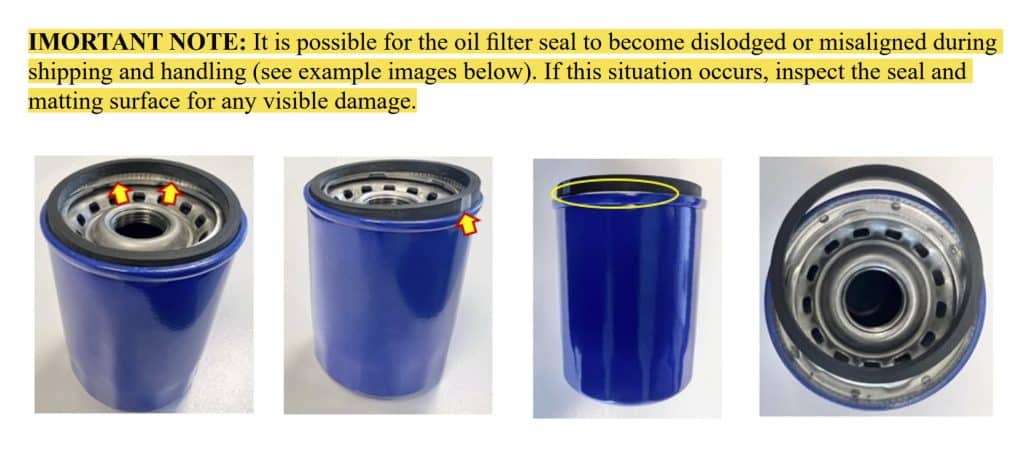
- Inspect the unused delivery and compare its label with the order. Check that seals and other service consumables required by the procedure are available. Do not assume a kit description includes the drain-plug sealing item or every component needed for your engine.
- Follow the correct preparation, removal and installation instructions, including seal handling and tightening. Keep debris out of exposed openings. If the delivered part does not seat as described, pause and verify it instead of forcing the fit or modifying the filter.
- Use the prescribed oil and level-check method, then complete the specified leak and operating checks. A nominal refill quantity is not permission to skip level verification. Unexpected leakage or warnings need a cause established before the car returns to normal use.
- Record both oil and filter replacement and determine the next due service from the vehicle schedule. The 2025 European Outback manual specifically links more frequent oil/filter changes to its defined severe-use conditions, including relevant cold-weather, towing and repeated-short-trip cases. Apply the conditions in your own market’s manual rather than borrowing that list without context.
Choose by application, not a universal Subaru rule
The most useful distinction is between an identified replacement and a familiar-looking object. Subaru documentation demonstrates multiple filter references, changing supply arrangements and application-specific service details. Keep those details attached to their dates and vehicles. Then confirm the current part for your car, inspect the delivered item and follow its installation instructions. That approach accommodates genuine product changes without turning colour, an internet favourite or the shared boxer-engine layout into an unsupported compatibility rule.


Automotive reference information. Confirm specifications in the manual for your exact vehicle. Original replacement guides link to their research sources. About us