
Expensive wiper blades can be worth the extra money when their specific design, fit or serviceability solves a problem you actually have. Price alone does not establish any of those things. A correctly specified affordable blade that clears your windshield reliably can be a better purchase than an expensive incompatible one. Compare complete references, useful features, package quantities and the cost of keeping the system working. The decision becomes much clearer when you separate a measurable feature from a promise that every premium blade lasts longer or stays silent.
Start with the problem the replacement needs to solve
Write down why you are shopping: torn rubber, an incomplete wipe, winter ice buildup, a failed connector or simply a scheduled inspection. A worn edge may justify replacement, while a persistent unwiped area after several different new blades deserves a fit or arm assessment. Buying successively more expensive products without understanding the symptom can leave the underlying problem untouched.
Price tier, construction and material are different labels
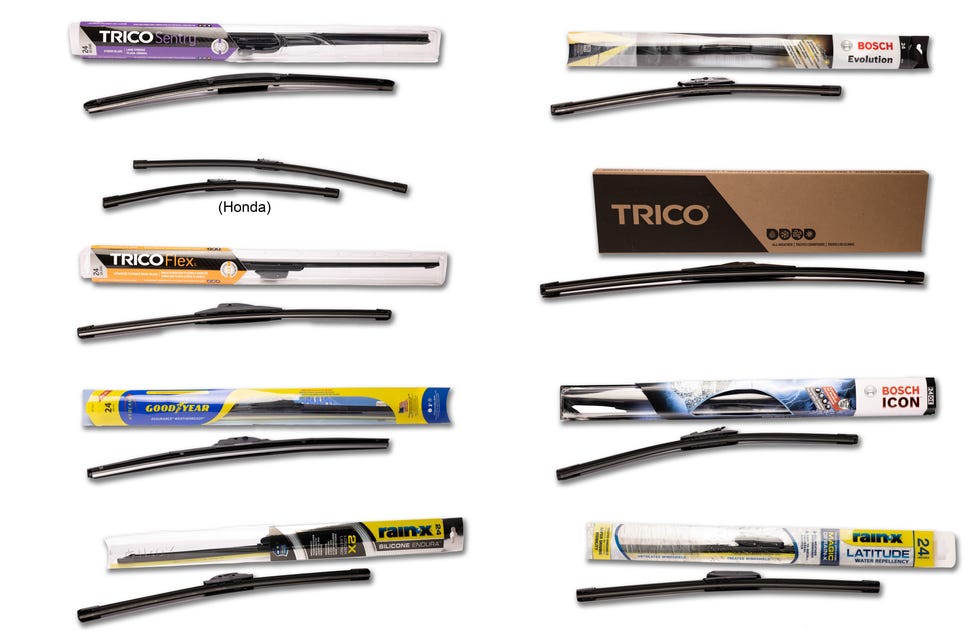
A premium label is a market position, not a separate mechanical design. DENSO’s construction overview distinguishes conventional, flat and hybrid designs and emphasizes vehicle application. A blade can be both a beam design and a premium product; silicone describes the wiping material rather than the entire support structure. Compare the following characteristics separately.
- Structure: conventional linkages, a flexible beam or a hybrid arrangement determine how the wiping edge is supported.
- Compound: the rubber formulation and surface treatment influence how a particular edge behaves; the material name is only part of its specification.
- Connection: the adapter must fit the intended arm and retain the blade securely without improvised modifications.
- Service model: a complete disposable assembly and a refillable assembly can have different future replacement costs.
Conventional construction is not automatically inadequate
An exposed frame can be the specified and effective solution for a particular application. A lower shelf price is not evidence that the blade cannot clear heavy rain. Assess the listed application, actual condition and operation. Avoid turning a price comparison into a rule that all conventional blades are short-lived or unsafe.
A premium compound needs a specific supporting claim
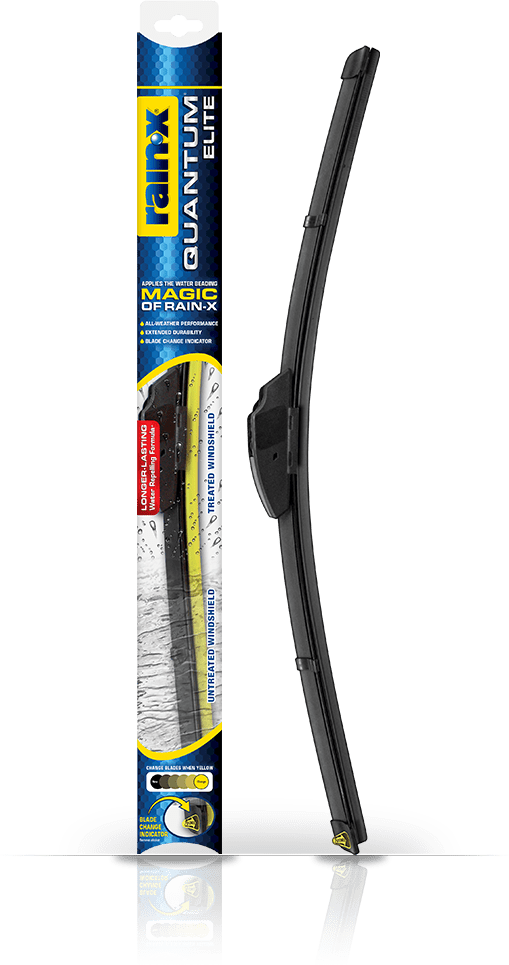
Rain-X’s Silicone Endura information describes silicone rubber with a graphite coating and reports third-party wipe-quality testing to 1.5 million cycles. That is a manufacturer-reported product test, not a road trial conducted here. It does not convert directly into months on your car because usage, debris, exposure and the test conditions affect that comparison.
A beam blade is an engineered assembly
A beam blade is not simply a solid strip of rubber. Its supporting elements are intended to distribute contact along the windshield. The relevant buying question is whether the selected reference follows your glass and connects correctly, not whether the package uses the newest-sounding shape name. Our beam blade explanation covers the construction in more detail.
A hybrid cover should earn its place in the comparison
A hybrid can combine a frame-based support arrangement with a cover. That cover may be part of the product’s aerodynamic or environmental design, but appearance alone cannot establish better wiping on your car. Identify the actual function claimed for the product instead of treating any enclosed black housing as evidence of a higher performance class.
Features that can justify a higher purchase price
Look for a benefit you can connect to your usage. The strongest explanation for spending more names the feature, the conditions where it matters and the evidence supporting it. A long list of superlatives does not answer those questions.
- A listed application and connector that solve a difficult fitment requirement.
- A documented compound or coating feature appropriate for the vehicle.
- A winter enclosure when repeated ice accumulation is the practical problem.
- An available, specified refill that makes later servicing economical.
- Useful installation or support included under clearly stated purchase terms.
Separate weather resistance from a lifetime promise
Product durability claims deserve attention, but read what was compared and how failure was defined. A laboratory exposure or cycle count can support a narrow engineering claim. It cannot tell you the exact replacement date under tree sap, abrasive grit, freezing rain and your own cleaning routine. Keep a damaged blade out of service even if its advertised lifespan sounds longer.
Refillability can change the second purchase
PIAA’s Aero Vogue range is explicitly refillable and uses a silicone wiping element. That gives you a different maintenance option from replacing a complete assembly. PIAA’s refill information also defines compatible products and claw-type requirements for other frames. Price the correct refill and check local availability before counting it as a future saving. A damaged carrier or connector still needs attention.
Buy winter features for winter problems
TRICO Ice combines a flexible beam arrangement with an enclosure intended to protect the blade structure from the elements. This is a concrete feature to evaluate if exposed hardware repeatedly collects ice. It does not eliminate windshield preparation or turn the blade into a scraper. Our winter-blade comparison explains that narrower decision.
Quiet operation depends on more than the receipt
A quiet new blade is desirable, but price does not isolate the cause of chatter. Surface contamination, an incorrect connection or a damaged assembly can complicate the result. If the noise began immediately after replacement, verify the installation before purchasing another upgrade. Do not apply oil to the wiping edge as a shortcut to a quiet demonstration.
Exact fit can matter more than an extra feature
Check the full catalog entry, including blade position and connector. A broad application claim is not a guarantee for every car within a brand. The North American Model 3 handbook, for example, specifies replacement blade characteristics and a matching connection. Its requirements concern that vehicle; they illustrate why a general premium-product recommendation cannot substitute for your own handbook.
Calculate value without inventing a service life
Use total comparable purchase cost, then keep longevity as an explicit uncertainty. This avoids presenting a speculative lifespan as a guaranteed financial saving. It also prevents a single-blade price from appearing cheaper than a complete front set.
- Confirm the number of blades and positions covered by each quoted amount.
- Include required adapters, delivery and any separately charged fitting.
- Write down the service life assumption rather than hiding it inside an annual-cost calculation.
A simple break-even example
Imagine two correctly fitting front sets priced at 30 and 50 units of the same currency. These are hypothetical figures, not current retail quotes. The second set costs five-thirds as much. To match the first on purchase cost per month, it would need to remain acceptably effective five-thirds as long, assuming everything else is equal. That arithmetic does not establish that it will do so.
Installation convenience has value, but identify the offer
Some sellers include fitting under particular conditions. Safelite’s service FAQ says its wipers cost extra but fitting is free during glass repair or replacement. That does not mean every purchase everywhere includes installation. Ask what is included, especially when comparing an online product with a service appointment. Count the convenience only if you would actually use it.
Do not compare a new premium blade with a failed old one
A dramatic improvement after replacement may mostly show that the previous blade was damaged. It does not demonstrate how an equally new, correctly fitted lower-priced product would perform. For a personal purchasing record, note the outgoing condition and installation date. This produces more useful information than assuming the price difference explains the entire improvement.
When spending more has a clear purpose
A justified upgrade should answer a specific need you can describe before seeing the display. The following examples are decision prompts, not a claim that everyone in a broad climate or driving category needs the most expensive option.
- You have repeated winter obstruction of the existing blade structure and a compatible product offers a documented protective design.
- You want a supported refillable assembly, have confirmed the proper inserts and plan to keep the carrier while it remains serviceable.
- Your vehicle needs a particular connection or construction, and the correctly listed option happens to cost more than generic shelf alternatives.
Match the feature to the actual exposure
Separate freezing weather from rainfall alone. An enclosure intended to resist ice buildup answers a different question from a coating intended to encourage water beading. Before paying for either, check the vehicle’s maintenance guidance and whether the feature addresses the conditions that troubled your previous blades.
Account for downtime as well as mileage
Someone who needs the car daily may value reliable availability and easy replacement as much as a claimed lifespan. A locally stocked correct reference can be useful even if its material is less fashionable. Conversely, keeping a proven refill reference on record may simplify later servicing. Neither choice permits delaying replacement after visibility deteriorates.
Check treatment compatibility before treating it as a benefit
PIAA describes Aero Vogue as depositing a water-repellent coating. That is a product characteristic to evaluate, not an automatic advantage for every windshield. Review the car’s glass-care requirements and any existing treatment instructions. A coating feature has little value to you if it conflicts with the maintenance approach specified for your vehicle.
Credit: www.rainx.com
When a lower-priced blade is a sensible choice
A less expensive option can be appropriate when it is correctly specified, comes from a traceable source and performs adequately. Budget should guide comparisons among suitable parts, rather than justify a known fit problem or worn blade.
- The replacement is cataloged for the exact vehicle and position.
- The seller provides identifiable product details and usable support terms.
- The installed blade clears the required area consistently after proper fitting.
Do not reduce the decision to a mild-weather postcode
A generally dry area still has occasional rain, while parked blades remain exposed to their surroundings. Location alone cannot prove that the cheapest product is sufficient or that a premium one is necessary. Judge the application and inspect condition, including periods when the car has barely been driven.
Low mileage is not proof of fresh rubber
Use and age are different observations. A low-mileage vehicle can still have cracked, split or rough wiping edges. Tesla’s cited cleaning guidance, for example, tells owners to inspect such damage and replace affected blades. Use your own vehicle’s inspection and maintenance instructions instead of postponing replacement merely because the odometer has not moved much.
Spend on the current need before optional upgrades
If money is limited, prioritize restoring reliable wiping with a suitable replacement. Do not keep a visibly damaged edge while saving for the top shelf product. Preserve the receipt and package identification, verify fitting promptly, and use the seller’s stated support route if an installation or product defect appears.

Credit: www.youtube.com
A buying checklist that produces a fair comparison
Gather enough information to compare two real candidates. You do not need a spreadsheet of every blade brand; a short note with these items can expose differences that the headline price hides.
- Vehicle details, required positions and complete part references.
- Final quantity-adjusted price and any fitting conditions.
- The specific feature you expect to improve your current result.
- Instructions, warranty terms and a practical way to obtain support.
Verify references before reading star ratings
Reviews for several lengths and adapters may share one product listing. A complaint or compliment from a different application can be informative but does not settle your fitment. Start with the catalog and instructions, then use reviews to identify questions worth asking the seller.
Keep performance observations specific
Record where an unwiped band occurs, whether the problem appears on a clean wet screen and whether it began on installation. Those observations are more useful than “premium did not work.” They help separate fitting, surface condition and edge deterioration without guessing from the brand alone.
Review the purchase after actual use
Retain the date, reference and reason for replacement. When the next set is needed, compare your own history with the amount you paid. Avoid assuming that a manufacturer’s advertised test multiplier exactly predicts your experience. Use the result as personal evidence, with weather and maintenance differences acknowledged.
Ask what an advertised guarantee actually covers
Read the written terms for defects, fitment returns and normal wear. A durability statement on a box is not necessarily a replacement warranty of the same length. Confirm required proof of purchase and who handles a claim. An expensive product with unclear support may offer less practical value than its packaging suggests.
Choose the lowest cost that meets the actual requirement
Pay extra for a relevant, documented feature or useful service, and insist on correct fit at every price. Avoid universal claims that premium blades always last longer or affordable ones only work in light rain. Once the right reference is installed, judge it by secure attachment and dependable wiping, then maintain and replace it according to condition and the applicable instructions. That gives the purchase a clear purpose and a result you can evaluate.


Automotive reference information. Confirm specifications in the manual for your exact vehicle. Original replacement guides link to their research sources. About us