
Brand-new wipers can squeak when the installation, windshield surface or operating conditions are unsuitable, even though the rubber has hardly been used. A wrong application, incomplete connection, remaining shipping protection or contamination can all require different responses. Newness does not rule out damage either. Start by checking what changed during replacement instead of assuming the blades need to wear in. If they scrape, strike another component, come loose or fail to clear the driver’s view, stop using them and resolve the problem before relying on them in rain.

Credit: www.wikihow.com
Reconstruct the first noisy use
Write down whether the sound began on the first sweep, whether both blades made it and whether the windshield was wet. Also note any glass treatment, car wash or washer-fluid change made at the same time. These observations do not diagnose the cause by themselves; they help avoid changing several more things before the original problem is understood. A short observation while safely parked is more useful than repeatedly operating a squeaking blade to see whether it eventually becomes quiet.
The windshield may still carry the old contamination
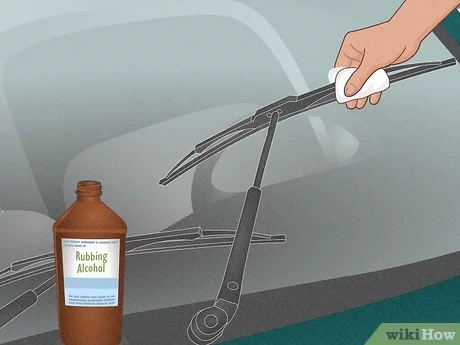
Replacing a blade does not automatically clean its working surface. Rain-X’s maintenance support page identifies road grime, oil, pollen, wax and deteriorated repellent film as potential contributors to squeaking and poor wiping. That explains how a fresh element can encounter the same problem as the old one. A recently washed car is not proof that the glass is free of residue. Record what was applied, and use a cleaning method permitted for the vehicle, glass treatment and blade.
A dry demonstration is different from normal wiping
Do not judge a newly fitted blade by repeatedly sweeping an unwetted windshield. The 2021 Ford Fiesta enGBR manual, covering the production period identified in that document, cautions against dry wiping and requires defrosting before operation. Use your own handbook’s precautions. For a normal installation check, use the specified washer fluid and enough wetting for the prescribed operation. A sound that changes with wetness is a useful observation, not proof that the application and attachment are correct.
A connector can look attached before it is secured
DENSO’s replacement guide distinguishes fixing systems and requires a securely engaged connection. Check the exact vehicle application, side and adapter before reworking the latch. Similar-looking clips may use different installation sequences. An unexpected gap or a connector that will not close should send you back to the instructions or installer. Do not force a different adapter into place, shorten the assembly or bend the arm to make the new part clear another component.
Shipping protection and manufacturing coatings are different
Some replacement blades have a removable protective cover; others have a surface coating that is meant to remain. Genesis bulletin 24-BD-001G, issued in February 2024 warns that incorrect cover removal on its covered applications can partly separate the rubber insert and rail spring, impair wiping and potentially scratch the glass. This is a reason to follow the actual cover-removal instructions, not a universal direction for pulling every protector. Check the insert afterward, and stop if it is displaced or damaged.
A new part can encounter an old system fault
The arm, windshield and mechanism were not renewed just because the blade was. If the same noise existed before replacement, retain that detail when speaking to the installer. A new part may not resolve a damaged arm or another system problem. Conversely, a symptom that appeared only after replacement warrants a careful installation review. Neither sequence proves a particular component is defective, but the timing helps decide which checks should come first.
Work through a controlled installation review
Park safely and obtain the vehicle handbook and the instructions for the exact blade reference. Use the prescribed method to disable wiping and obtain any required service access. Keep hands clear whenever the system operates, and maintain control of a raised spring-loaded arm. Do not leave a bare arm unsupported above the glass. If an installer performed the work, preserve the receipt and ask them to verify it before you alter parts that they need to inspect.
Confirm the part before repeating the fitting procedure
Check the reference on each package against the manufacturer’s application result, including its position and any equipment notes. Confirm the adapter supplied and the one actually used. A correct order can still arrive in the wrong box, and two front blades need not be identical. Our wiper compatibility checklist explains this purchase-stage check. When the part number or fixing is uncertain, resolve that uncertainty before treating cleaning or surface treatment as the repair.
Use the instructions for the actual product family
Rain-X publishes separate installation guides for its blade ranges, rather than one fitting sequence for everything it sells. Open the guide matching the product and arm connection; a video for a familiar brand may still show the wrong mechanism. Confirm removal of any identified transit protector and correct engagement using that guide. A reassuring click is useful only when the product’s procedure identifies it as part of a completed installation, not when another clip has merely moved.
Clean without stripping a deliberate wiping treatment
A dark residue on a cloth is not a reliable instruction to keep scrubbing until the blade looks bare. For example, Rain-X describes a graphite coating on its Silicone Endura wiping element. Do not sand, shave or solvent-strip a new edge as a generic squeak cure. Identify the permitted cleaning method and use a clean cloth so removed dirt is not immediately spread back onto the glass. If the surface history is unclear, ask the product or glass-treatment supplier before escalating the cleaning.
Check whether preparation is required, and whether it is allowed
Some products include a specific preparation process. PIAA’s Super Silicone instructions describe an included prep treatment and activation procedure for that product. They do not establish a universal break-in ritual for unrelated blades. Review the instructions alongside the vehicle’s glass and washer guidance. If the directions appear incompatible, obtain clarification from the manufacturer or installer rather than choosing whichever procedure is more convenient. Do not adopt a generic dry-running duration or add a treatment solely because somebody else’s blades became quieter.
Avoid adding an unverified washer-fluid or coating fix
A product sold to improve rain visibility may still conflict with a particular vehicle’s instructions. The North American Model 3 manual cautions that washer fluids containing water-repellent or bug-wash additives can cause streaking, smearing and squeaking or other noise. That is a scoped manufacturer instruction, not a verdict on every fluid or every car. Check your own handbook before changing fluid, applying a repellent or removing an existing coating in response to a new noise.
What to record if the squeak remains
After the correct part, attachment and approved preparation have been established, document the remaining symptom for the supplier. Keep observations separate from assumptions. “Passenger side squeaks on a wet screen after replacement” describes something useful; “the expensive rubber is defective” is a conclusion that still needs evidence. If you capture a short recording, do it from a safe parked position without holding a phone near moving blades. Include the following details with the service request.
- The exact replacement. Keep the blade manufacturer, product family and full reference for each position, along with purchase and installation dates. Include any supplied adapter identifier and the guide followed. This allows the supplier to review a specific application rather than trying to diagnose every product described online as a premium beam blade.
- The timing and conditions. Say whether the first sweep was already noisy, whether the glass was wet or frozen, and whether the problem appears at one point in travel. Note whether the symptom is a continuous squeal, a reversal chirp or visible jumping. Our chatter guide addresses jumping as a distinct observation.
- The work performed together. List any windshield cleaning, coating, washer refill or arm repair done at the same visit. Keep product names where available. This does not accuse a cleaner or installer of causing the fault; it gives them a usable sequence to assess instead of an incomplete account in which only the blade changed.
- The checks already completed. State what the instructions confirmed about fitment, engagement and preparation. Report damage or a displaced insert honestly, including anything noticed while removing a protective cover. Avoid making another undocumented modification before inspection. A supplier can evaluate the original symptom more effectively when the current configuration is clearly described.
- The requested resolution. Ask whether the issue needs installation correction, a product exchange or inspection of the vehicle’s wiping system. Warranty or return eligibility depends on the actual seller and product terms; a new purchase does not establish automatic approval. Where clearing remains unreliable, arrange a suitable repair before the next journey that requires the wipers.
Credit: www.reddit.com
Do not use elapsed time as the diagnosis
There is no universal number of days in which every new blade should squeak before it becomes acceptable. Complete any documented, compatible preparation, then judge secure attachment and effective clearing. A persistent fault after that deserves investigation. Buying progressively more expensive blades without checking the surface and installation can repeat the same mistake. For an older set that developed noise after normal use, see diagnosing noisy existing wipers, where wear and service history become more central.
The useful starting point for a brand-new squeak is the replacement event: the exact part, the fitting steps, the state of the glass and any associated products. Check those systematically, protect the glass while handling the arm, and escalate unresolved noise or poor clearing with a clear record. This guide interprets manufacturer instructions; it does not claim that we fitted your particular blades or measured their noise. A verified correction is more useful than an unsupported promise that any one cleaner, coating or material will make them silent.


Automotive reference information. Confirm specifications in the manual for your exact vehicle. Original replacement guides link to their research sources. About us