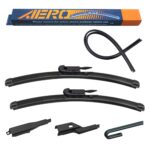
No. A replacement wiper blade must match its vehicle application, position and connection; length alone cannot establish that it fits. Some blades serve several vehicles, and some packages include alternative adapters, but neither fact makes every blade universal. Before buying, identify the exact part listed for the car and the window position you are servicing. If the vehicle uses washer equipment integrated into the assembly, that function belongs in the compatibility check too. The right question is not whether a blade can be attached somehow, but whether its manufacturer supports that installation.
Credit: www.ebay.com
Compatibility begins with the vehicle specification
The North American Model 3 owner manual makes the distinction clear: it specifies blade dimensions and separately requires the replacement connector to match the original, with a further note to use blades identical to the originals. This is an application-specific example, not a parts prescription for every Tesla. It shows why a shopping result containing only a size leaves information missing. Use your vehicle’s own requirements and the blade manufacturer’s current listing together; if they appear to conflict, obtain clarification before fitting the part.
Identify the vehicle before measuring its old blades
Prepare the model year, make, model and original sales market, plus any body style, production-date or equipment distinction requested by the lookup. A registration year or a familiar model badge may not supply all of that information. For an imported vehicle or an unclear production split, an appropriate parts specialist can use the vehicle identification number to narrow the application. Record the driver-side front, passenger-side front and rear separately where fitted. Do not assume that a supplier’s saved vehicle profile is still the one you intend to service.
The installed blade is a useful reference, but it is not infallible: a previous owner may have fitted an incorrect replacement. Its markings, shape and approximate length can help investigate a discrepancy with the catalog. They should not automatically overrule the documented application. Keep the old assembly associated with its position while checking. Our guide to which wiper blade is longer focuses on dimensions and side identification; the broader fitment decision also requires the attachment and any vehicle-specific features to agree.
Three checks that prevent a near-match purchase
A useful fitment check combines three kinds of evidence: the correct working shape and size, the permitted attachment, and preservation of the original functions. These are related, but passing one does not imply passing the others. A blade may click into an arm yet still be the wrong specified length, while a correctly measured blade may have an incompatible connector. Use the following checks before installation rather than discovering the missing detail with a bare arm held above the windshield.
- Position and working geometry. Confirm the part for each position, not just a length that appears somewhere in the catalog. DENSO describes development checks for sweep coverage and geometry, including potential contact between components. This is why extra length cannot automatically be treated as an upgrade. Do not select a nearby size to fill an unwiped corner or fit what happens to be in stock. Ask the supplier to identify a supported substitution, with its application notes, if the originally listed part is unavailable.
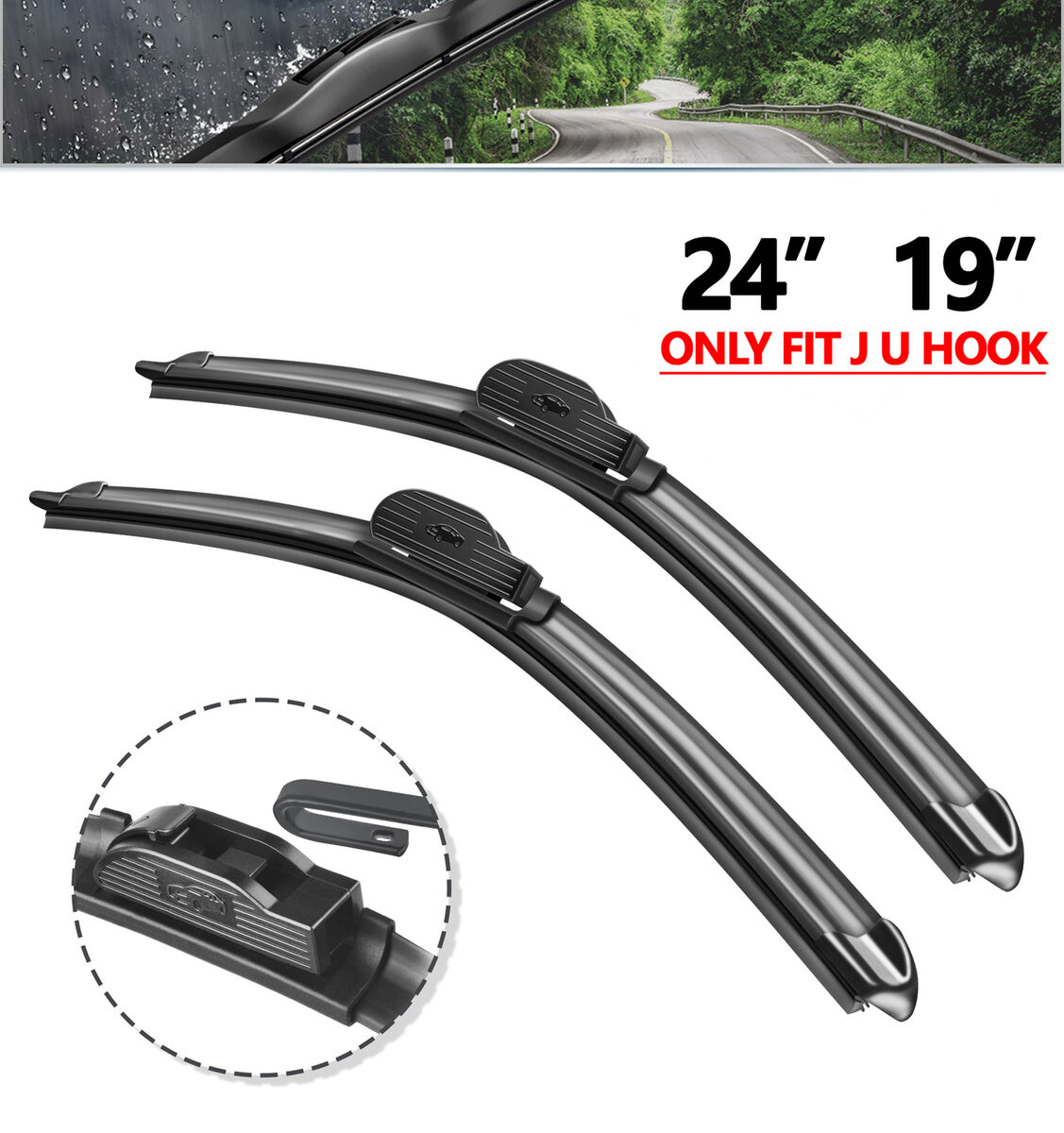
- Arm connection and adapter. Compare the named fixing system with the instructions for the exact replacement. A hook, button or pin connection still needs the correct implementation, dimensions and adapter where specified. Bosch’s OE Specialty information describes special adapters and application-specific replacement sets, illustrating why one generic clip description may be inadequate. Confirm which adapter the package supplies and which one the instructions require. An adapter from another brand or a visually similar blade is not automatically an approved substitute, even if it seems to latch.
- Integrated equipment. Some applications are more than a blade attached to an arm. DENSO’s ClearJet explanation describes washer fluid delivered through the blade, with heating offered on selected versions. Those are product- and vehicle-specific arrangements, not equipment shared by all modern cars. Where such features are fitted, identify the correct connections and replacement before disturbing anything. Do not cap a fluid line, cut a connector or omit a heating connection to make a generic blade fit. A mechanically attached assembly that removes a required function is not an equivalent replacement.
What universal coverage actually means
A range can cover many vehicles through multiple lengths, connectors or included adapters. It does not follow that one item in that range fits every car. For example, TRICO’s Rear line uses universal wording while providing vehicle and arm-type searches and different blade sizes. Read the coverage statement alongside the actual part listing. A percentage of market coverage, where advertised, also leaves applications outside that coverage. Do not treat “fits most vehicles” as confirmation for yours, or let a retailer’s generic image stand in for the fitting instructions inside the specific package.
- Verify the listing itself. Select the complete vehicle details and intended position in the manufacturer’s lookup, then retain the result with the full part number. Check any footnotes before relying on a retailer’s compatibility badge. If two catalogs disagree, capture both references and ask the supplier to explain the difference. The useful answer identifies an application or documented replacement reference; “people usually buy this size” does not resolve the conflict. Avoid opening several packages and trying adapters at random when the discrepancy can be settled first.
- Separate style from fitment. Conventional, beam and hybrid identify construction approaches, not universal attachment standards. A supported alternative style may be available, but it still needs an explicit application listing and the appropriate fixing. The hybrid-blade explanation covers those construction differences. Likewise, rubber chemistry does not establish connector compatibility. You can compare materials, appearance and price after confirming which products are eligible. Reversing that order can leave you with a preferred product that has no approved way to attach to the vehicle.
- Check the actual package. Compare the delivered reference and contents with the order before dismantling the car. Confirm whether you bought one assembly, a paired set or an insert, and retain any side labels. A catalog result can be correct while the wrong package is supplied. If the arm was previously replaced or modified, tell the supplier rather than assuming the original catalog entry explains its present condition. The original vehicle specification and the hardware now installed need to be reconciled before a confident recommendation is possible.
Confirm the replacement without forcing the connection
DENSO’s replacement instructions call for checking the blade and fixing first, using the vehicle’s service position when required and controlling the arm so it cannot strike the glass. Follow the vehicle and product procedure for the specific connection. Do not copy a release method from an unrelated installation video. If the part will not seat correctly, stop: force, trimmed plastic or a bent arm does not turn uncertain compatibility into a supported fit. Keep the instructions available until installation and the prescribed checks are complete.
- Check the result while safely parked. Use the prescribed washer-fluid operation check, keep hands clear and observe the blade’s attachment, clearing and travel. Stop operation if a blade contacts another component, shifts at its connector or moves abnormally. Resolve installation or system faults before driving in conditions that require the wipers. Successful movement alone cannot validate an unlisted part; this check verifies the installation after application selection. It is not a substitute for the documentation that should have guided the purchase.
- Respond to a mismatch with information. Keep the product reference, vehicle details and a clear description of what does not agree: wrong connector, missing adapter, unsuitable position or unexpected equipment. Contact the supplier for a documented correction. If something broke during a fitting attempt, disclose that when seeking help instead of reinstalling a damaged clip. A blade that is securely fitted but still wipes poorly needs a separate condition or system assessment. Buying a different length without diagnosing the symptom can add another fault to the original one.
One blade, a pair or a refill are different purchases
Compatibility does not mean every car requires two identical new blades. Establish which positions need service from the vehicle’s guidance and the condition of the assemblies. Buying a specified front pair may be convenient, but matching package branding is not evidence that the left and right parts are identical. Inspect any fitted rear blade independently. Our front-versus-rear comparison explains why a front set should not be assumed to cover the rear window. Compare the complete required purchase rather than deciding from a single package price.
A rubber refill is a separate compatibility decision within an existing blade assembly. TRICO’s refill catalog distinguishes profiles, rail arrangements and intended blade families, including square and trapezoidal retaining configurations. The same nominal length therefore does not make all inserts interchangeable either. Use a refill only where the assembly and refill manufacturer support the combination, following the specified retention procedure. A worn connector, damaged frame or broken housing remains a problem even after new rubber is installed. Do not improvise a cut-down complete blade as a substitute for an approved refill.

Credit: cacces.en.made-in-china.com
A useful fitment record prevents repeat mistakes
After confirming a successful application, keep the complete part references, assigned positions and relevant fitting notes with the vehicle records. If a later supplier proposes a different reference, ask whether it is a documented replacement rather than assuming either the old or new number is automatically correct. The decision can then be repeated without relying on a vague memory of blade length. Wiper blades are not universally interchangeable: identify the vehicle, confirm each position, match the attachment and preserve any integrated functions. That sequence turns a broad compatibility claim into a checkable purchase and avoids using trial-and-error installation as a substitute for evidence.


Automotive reference information. Confirm specifications in the manual for your exact vehicle. Original replacement guides link to their research sources. About us