
Hybrid wiper blades combine a supporting blade structure with a streamlined outer cover. The name describes the assembly, not the car’s powertrain and not one universal rubber compound. They are an option for compatible applications, but the label alone does not establish better wiping, longer life or easier fitting than every conventional or beam blade. Understanding the structure helps you compare actual products instead of buying a promise attached to a category.
Credit: pmmonline.co.uk
What the word hybrid describes
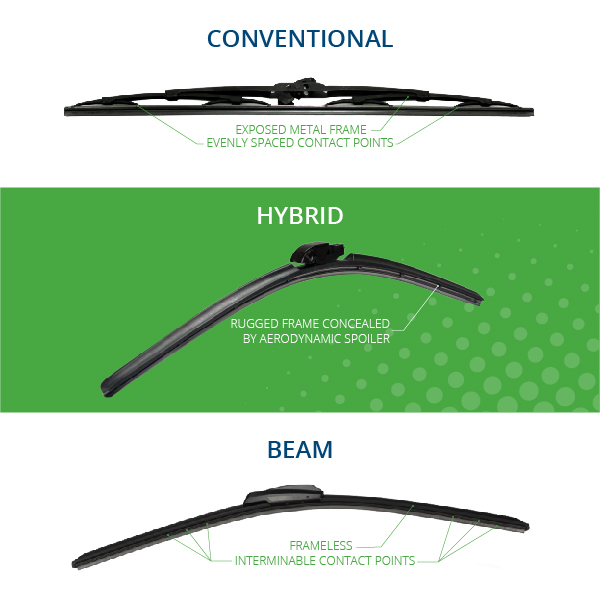
DENSO’s explanation of its hybrid design describes a metal supporting frame enclosed by a smooth outer body. The frame helps distribute load along the wiping edge, while the cover gives the assembly a lower, more aerodynamic profile than an exposed frame. This is one manufacturer’s implementation. It is useful to understand the combination, but you should still read how a different brand constructs the particular blade you are considering.
Beam blades provide a useful comparison
A beam or flat blade does not use the familiar exposed, jointed frame of a conventional blade. Its supporting structure follows the blade along the glass. A hybrid can borrow aspects of that shape or support concept while adding a shell. These names describe engineering approaches; they are not a league table in which every product of one type outranks every product of another.
Conventional frames remain part of the explanation
A conventional assembly uses a visible supporting frame to carry the wiping element. With DENSO’s hybrid approach, a frame remains present but is concealed. Therefore, “looks like a flat blade” does not necessarily mean “has the same internal construction as a flat blade.” Inspect the product description or diagram rather than prying the cover apart to find out what is inside.

Credit: www.amazon.com
Five features to identify on the actual product
Separate construction, attachment and maintenance information when reading the package. A photograph can show a tidy exterior while leaving the connector, rubber formulation and approved application unclear. These five details make the word hybrid useful. If a seller cannot provide them for a specific part, a familiar brand name or an attractive shell is not enough to settle the purchase.
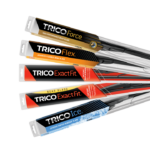
- Supporting structure. TRICO’s hybrid product overview describes both a pivoting polymer shell around a steel beam structure and a hinged-shell design. That variation shows why hybrid should not be interpreted as one identical arrangement across every range. Compare the named product rather than transferring a description from another hybrid.
- Outer cover. The shell can be part of the product’s airflow and protection design. It does not make the blade an ice scraper or an unbreakable assembly. A cracked cover, abnormal movement or a component contacting adjacent trim needs investigation even if the rubber edge still appears intact.
- Wiping material. “Hybrid” does not tell you whether the rubber is silicone-based. PIAA identifies Aero Vogue as a silicone hybrid while distinguishing other constructions in its range. Our silicone-versus-rubber guide examines material claims separately from frame style. Read the actual specification before assuming both products use the same compound.
- Attachment. TRICO ExactFit Hybrid is supplied with a preassembled connector for the relevant application. Other products can use a different fitting arrangement. Having an adapter already attached may simplify the correct installation, but it does not make the assembly suitable for every arm or eliminate the need for a vehicle lookup.
- Service options. Check whether the manufacturer supports an insert replacement or requires a complete assembly. PIAA identifies refill availability for its Aero Vogue range, but that cannot be generalized to every hybrid. An available strip of rubber is not proof that its profile and retention features suit the blade you own.
What the design can offer, and what it cannot prove
An outer profile and supporting structure are meaningful design features. Their benefit still depends on the intended application and the complete product. Without a comparable test on the relevant vehicle and conditions, a category name cannot supply a noise rating, lifespan or stopping-distance improvement. This guide explains manufacturer information; it does not report firsthand comparative driving tests.
Aerodynamic intent is different from a speed guarantee
DENSO’s hybrid product information describes a low-profile body and graphite-coated wiping rubber, alongside a standard U-hook fixing for that range. Its aerodynamic claims explain a design objective. They should not be converted into a promise that any hybrid will eliminate lifting or remain silent at every speed, particularly when the blade is incorrectly fitted or the rest of the wiping system needs attention.
A longer service life needs a defined comparison
If a product advertises improved durability, identify what it was compared with and under which conditions. A claim about one range does not set the replacement interval for all hybrids. Nor does a higher purchase price establish that the next set will last twice as long. Use the vehicle’s service guidance and the blade’s condition instead of a lifespan guessed from the word hybrid.
A cover does not diagnose chatter
Noise after a new installation can be associated with fitment, contamination, blade condition or other system faults. Buying another blade style before checking those possibilities can leave the original problem unresolved. Our wiper-chatter troubleshooting guide explains that distinction. Do not bend an arm or remove an existing glass coating merely because a hybrid product is marketed as quiet.
Winter claims do not authorize wiping a frozen screen
A covered design does not override winter operating precautions. For example, the 2020 Ford Edge US/Canada manual tells owners to defrost the windshield before operating the wipers. Follow the instructions for your own vehicle and free frozen components safely before use. A label such as all-weather is not permission to run blades that are stuck to the glass or push accumulated snow with the mechanism.
Simple fitting is conditional on the correct part
A hybrid may be straightforward to install on its intended arm, but the casing can obscure how a latch works. Do not assume the visible cover is the release mechanism. Read the illustrated guide for that connector before starting. If the instructions are missing or the arm is damaged, getting fitting assistance is preferable to experimenting with clips under spring tension.
Decide whether a hybrid solves your actual need
Start with the reason for replacement. A worn original blade, a broken connector and a desire for a different appearance are three different situations. A compatible hybrid may address the first or third; a damaged arm or mechanism needs its own repair. Keep the diagnosis separate from the shopping preference so a product change does not substitute for fixing the underlying fault.
Replacing the original type
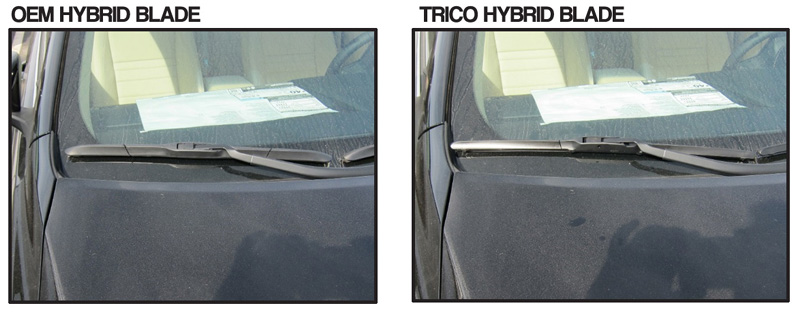
When the car already uses a hybrid assembly, a documented replacement application can preserve the intended arrangement without requiring a search for an “upgrade.” Compare the supplied connector, blade position and instructions. Original-style appearance is useful, but a similar-looking shell from another vehicle remains only a visual resemblance until the manufacturer confirms its application.
Changing from a conventional or beam assembly
Treat a style change as a catalog-supported substitution. Confirm that the specific hybrid is listed for your vehicle and position, including any required adapter. Do not infer compatibility from the old blade’s length alone. Our guide to wiper compatibility covers the broader decision when the proposed replacement differs visibly from the original assembly.
Comparing the cost of eligible options
Once compatibility is established, compare equivalent quantities and included parts. One package may contain a pair, another one blade, and another only an insert. Count any fitting service you need. The cheapest individual package and the most expensive hybrid are not automatically the best values; the useful comparison is between complete, supported options for the same job.
Read the application information before buying
Keep the full product reference beside the vehicle lookup result. Model year, market and any requested body or equipment distinction belong in that record. If a listing is ambiguous, ask the supplier to resolve it before installation. A review from someone with a similar-looking car cannot replace the missing application details.
Check the assigned position
Driver and passenger blades may be different references even within one product family. A front hybrid listing also says nothing by itself about the rear window. Preserve the position labels while unpacking, and check each proposed part against its application. Choosing all blades from one range is less important than confirming that each belongs where you intend to fit it.
Look for useful documentation
A useful product page identifies construction, attachment and fitment resources without requiring you to guess from a promotional picture. Prefer information that names the connector and explains installation over broad claims about premium quality. Retain the instructions and receipt: they help distinguish a fitting question from a possible product defect after the packaging is gone.
Use owner reviews for questions, not specifications
A report of noise or difficult fitting can suggest something to check, but it may concern another arm, installation or windshield condition. Look for the exact product reference and vehicle details before drawing conclusions. Do not turn one driver’s mileage or months of use into a guaranteed replacement interval for your own climate and usage.
Install according to the vehicle and blade guides
DENSO’s current replacement guide separates procedures by fixing system. Have the correct instructions ready, establish any required access position and disable operation as directed. Use the following checkpoints alongside the actual procedure.
Prepare access before releasing the old blade
Identify the release and locking mechanisms before starting. Keep each blade assigned to its side and control the arm: a bare arm falling onto the windshield can damage it. Resolve restricted access through the vehicle procedure rather than forcing movement.
Confirm the connection without modifying it
Verify engagement as instructed. An incomplete latch closure or an unexplained gap warrants a fitment recheck. Cutting the shell or transferring an unrelated adapter defeats the documented installation. Have a damaged arm inspected rather than making the replacement accommodate it.
Check clearing before normal use
Complete the prescribed check with washer fluid while safely parked and keep hands away from moving parts. Observe attachment, movement and clearing. Stop if the assembly strikes another component or behaves abnormally, and resolve the problem before relying on it in rain.
Care for the wiping edge as well as the shell
The outer cover can make a hybrid look intact when its working edge is worn. Inspect the parts that actually contact the glass and use only cleaning methods permitted for the blade and windshield. The correct care depends on the particular product; hybrid construction does not establish a universal solvent, polishing treatment or conditioning routine.
Clean without treating coatings as dirt
Some blades use a deliberately applied surface treatment. Do not sand the edge or scrub until every dark mark disappears as a test of cleanliness. Follow the manufacturer’s instructions and investigate persistent smearing after appropriate cleaning. The aim is to remove contamination without altering the wiping surface or damaging the glass.
Inspect more than appearance
Look for a torn wiping edge, a loose attachment, a damaged cover or abnormal movement. A cosmetic preference for the shell cannot justify keeping an assembly that no longer clears effectively. Record what the symptom is and when it occurs so an installer can evaluate the fault rather than receiving only the description “these hybrids are bad.”
Replace according to condition and guidance
Keep any vehicle or product service recommendation with your maintenance records, and respond sooner to damage or deteriorating visibility. If a refill is expressly supported, inspect the rest of the assembly before selecting that route. Replacing only the rubber will not repair a broken housing or an unreliable connector.
Choose a defined product, not an assumed winner
A hybrid blade combines a supporting structure and an outer body, with details that vary by manufacturer. Its value comes from a suitable application, documented construction and correct service. Choose it when those details meet your needs; do not rely on the category to guarantee silence, winter immunity or extra years of life. A well-understood replacement is a more useful outcome than simply changing the label on the package.


Automotive reference information. Confirm specifications in the manual for your exact vehicle. Original replacement guides link to their research sources. About us