
Fuel injectors may be covered by a vehicle service contract, but the answer depends on the actual contract and the diagnosed cause of failure. The phrase “extended warranty” does not establish coverage on its own. Check the covered components or exclusions, the active term, claim requirements and any limits before authorizing the repair. The US Federal Trade Commission distinguishes manufacturer warranties from separately purchased auto service contracts, which are often marketed as extended warranties.
That distinction matters when deciding whom to contact and which written terms control the claim. This guide uses that US consumer context; arrangements and rights can differ elsewhere. Do not treat a workshop’s initial estimate as approval from the contract administrator.
Ask who authorizes the work and whether diagnosis, dismantling or towing needs prior approval. Keep any approval reference and the scope it covers. Paying first can leave a reimbursement question that should have been resolved before the work began.
Identify the agreement that may apply
Find the complete contract, not only the sales brochure or a summary page. Confirm the vehicle identification, plan name and administrator. Check that the document is the version purchased for your vehicle.
Similar plan names can have different terms or coverage levels. Determine whether you are asking about the original vehicle warranty, a parts warranty from an earlier repair or a separately purchased service contract. More than one may be relevant, but their claim routes can differ.
Do not assume the dealership that sold the car is the party that decides every claim. Check the time and mileage conditions using the contract’s definitions.
Note any waiting period or other condition if the document includes one. Do not invent a universal waiting period from another provider’s website.
The actual agreement must answer the question. If you cannot locate the full terms, request them from the seller or administrator before authorizing a major repair.
A verbal assurance that “the engine is covered” is not a substitute for the section dealing with the component and cause. Keep the response in a form you can refer to later.

Credit: protectmycar.com
Coverage needs a diagnosed failure, not only a symptom
A misfire, rough idle or starting complaint does not establish that an injector has failed. The workshop needs to determine the cause under an appropriate diagnostic process. The administrator may need that finding to decide whether the contract applies.
Ask what evidence is required before the technician proceeds beyond the initial assessment. A faulty injector, a damaged connector, a leaking seal and contaminated fuel can lead to different coverage questions. Do not describe them all as the same repair merely because the estimate mentions fuel injection.
Have the work order identify the actual failed function and the proposed remedy. If the cause remains uncertain, agree on the diagnostic scope and who pays if the repair is not covered.
Avoid assuming that all investigation is automatically included. Equally, do not assume it is excluded without reading the terms.
The answer may depend on the outcome or authorization process. Our injector replacement guide explains the supporting findings to request.
A clear diagnosis helps both the technical decision and the claim discussion. It prevents a coverage dispute from being built around an unverified parts recommendation.
Locate the relevant coverage language
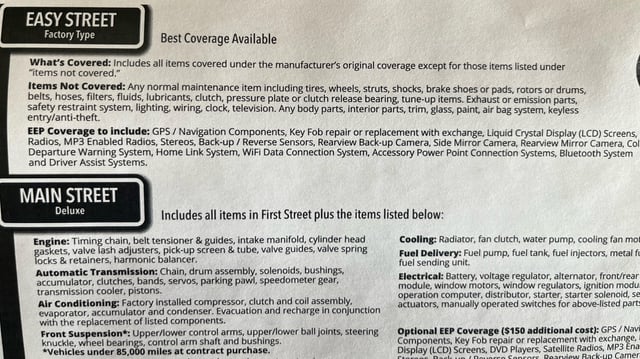
Some agreements list covered components; others describe coverage broadly and then identify exclusions. Read the structure of the actual plan. Look for the fuel system or injection components, but also read the definitions and limitations that apply to those sections. A matching component name may not settle every condition.
Check whether labor, diagnostic work and necessary associated parts are addressed. An injector replacement may involve specified seals or setup work, but that does not establish that every contract pays every related charge. Ask the administrator to identify what is approved on the itemized estimate. Keep any noncovered items visible.
If the wording is unclear, request an explanation tied to the relevant clause. Ask whether the answer concerns the component, the cause, the timing of the failure or the procedure for claiming. These are different grounds and may require different evidence. A vague statement that “fuel issues are excluded” should be clarified before you decide what to do next.
Possible exclusions must be checked, not assumed
A contract may distinguish breakdown repair from routine maintenance. It may address contamination, misuse, modifications or pre-existing conditions. These are examples of terms to look for, not a claim that every plan contains them.
- Read the actual wording and ask how it relates to the diagnosed cause. If contamination is alleged, ask what finding supports it. If maintenance is questioned, ask which required item and period are involved.
- If a modification is relevant, ask which clause and causal explanation the administrator relies on. Keep the conversation tied to evidence rather than broad labels.
- Do not conceal prior symptoms, repairs or additives. Accurate history helps the workshop and avoids inconsistencies in the claim record.
- At the same time, distinguish what you observed from what you merely suspected. Saying “the car hesitated” is different from asserting that a specific injector was known to have failed months earlier.
- Ask for a written explanation if coverage is declined. Save the relevant contract section and any requested evidence.
An initial verbal answer can be incomplete. Understanding the actual basis is necessary before supplying further records or following a dispute process.
Obtain authorization for a defined scope
Before work starts, confirm who must contact the administrator and what approval is required. Ask whether the authorization covers diagnosis only or the full proposed repair. Record the reference number, date, approved amount or scope, and any conditions. If the shop discovers additional work, have the approval updated before assuming it is included. The purpose is to align the workshop’s authorization with the payer’s decision, not to leave both parties relying on different conversations.
Keep maintenance evidence organized
Retain the maintenance schedule applicable to the vehicle and records showing work performed. The FTC notes that service contracts can require compliance with maintenance conditions, making records important. Do not assume an optional cleaning package is mandatory merely because it was offered at a service visit. If the administrator requests records, ask which period and items are needed, provide accurate copies and keep the originals. A clear record is more useful than reconstructing dates from memory during a claim.
Separate the approved repair from your remaining costs
Ask about any deductible and how it is applied under the agreement. Confirm whether payment goes directly to the shop or whether reimbursement is required. Check whether the quoted parts and labor arrangement is accepted. Do not assume that approval of an injector means approval of every line on a larger estimate.
| Also clarify transport, storage or substitute-vehicle costs if they matter to your situation. Those benefits, if any, have their own terms. A repair being covered does not automatically settle all incidental expenses. Obtain the answer before relying on it when planning the vehicle’s downtime. |
Preserve a useful claim record
Keep the original complaint description, diagnostic findings, estimate, authorization and final invoice together. Record the names or departments involved and the dates of decisions. If the scope changes, retain both the earlier and revised versions so the reason is visible. This makes a later question about what was approved easier to answer.
Ask the workshop whether failed parts or inspection evidence need to be retained for the administrator. Arrange that before disposal or a core return. Do not personally dismantle a component to create evidence. Follow the claim process and the repairer’s safe handling arrangements.
If the answer is disputed, clarify the reason first
Request the written decision and the relevant contract wording. Compare the stated reason with the diagnostic finding. Identify any missing record the administrator says would matter.
Supply accurate information rather than changing the description of the fault to fit a coverage category. Follow the agreement’s review or dispute procedure. The FTC’s auto-repair guidance also points consumers toward appropriate consumer-protection resources when repair disputes cannot be resolved.
The available route depends on the issue and location. This article cannot determine the legal outcome of an individual contract dispute. If a dealer made a separate representation at sale, preserve that document or message as well.
Keep it distinct from the administrator’s current decision. Do not rely on a recollection of a broad promise when written records are available. Ask for clarification of any inconsistency.
For the repair itself, do not let a coverage discussion obscure an unsafe vehicle condition. Arrange safe storage or transport where needed while responsibility is clarified. Do not continue driving a leaking or severely malfunctioning vehicle merely because authorization is pending.
Once work is completed, confirm what was paid and what remains your responsibility. Keep the final repair warranty terms, if supplied, with the invoice. Ask how the original complaint was verified afterward.
A coverage approval is a payment decision; it is not technical proof that the repair succeeded. Fuel injector coverage is therefore a document-and-diagnosis question.
The strongest path is an identified fault, the applicable contract language, approval for a defined scope and a complete record. That is more reliable than a universal yes or no based only on the phrase “extended warranty.”


Automotive reference information. Confirm specifications in the manual for your exact vehicle. Original replacement guides link to their research sources. About us