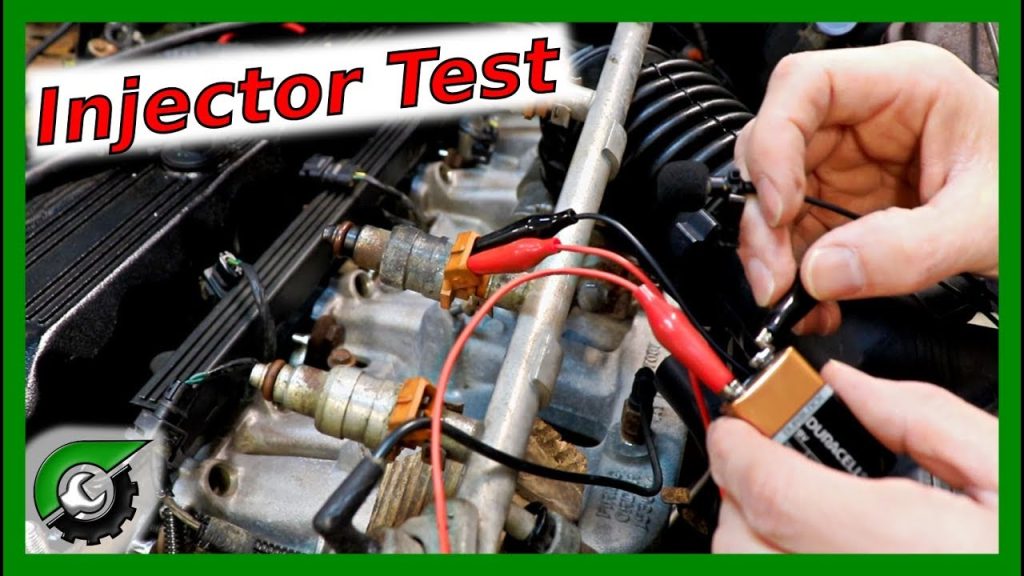

Do not connect an unidentified fuel injector directly to a battery. There is no universal battery voltage, connection time or polarity instruction that is safe for every injector design. A suitable test starts with component identification and the manufacturer’s procedure.
A click, even when produced by an appropriate controlled test, does not prove correct fuel delivery or sealing. Online demonstrations often reduce the task to two wires and a sound. That leaves out driver characteristics, current control, test duration, fuel containment and the condition being investigated.
Some injector systems use electrical strategies quite different from a simple steady battery supply. Applying an improvised signal can damage a component without producing useful diagnostic evidence. This guide explains what a battery-style test can fail to establish and what to request instead.
It does not provide a loose-wire activation recipe. For a starting problem, begin with the vehicle’s symptoms and appropriate diagnostic checks rather than removing injectors merely to make them click. If an injector or nearby component is wet with fuel, avoid electrical experiments and arrange safe assessment.
Do not create sparks around fuel residues. Do not hold a removed injector over an open container while energizing it. A visible spray is not worth the exposure and ignition risk of an uncontrolled setup.
Why a battery is not equivalent to the vehicle’s driver
A vehicle’s injector driver controls an electrical event under defined conditions. Depending on the design, the event can involve controlled current, changing voltage or a specific pulse strategy. A battery connected through loose wires does not reproduce those controls merely because it can supply electrical energy. The difference matters to both component protection and interpretation.
Pico’s GDI testing guide describes a boosted opening phase followed by a different holding strategy in its example. It also warns of hazardous test voltages. The example is sufficient to disprove a universal steady-12-volt rule, but it is not a replacement specification for another injector. Even a conventional solenoid injector needs the correct application information.
A test acceptable for one component is not automatically acceptable for another with a similar connector. Identify the part number, system and approved procedure first. Do not infer electrical suitability from physical resemblance. If an injector has already been tested with an improvised supply, tell the technician exactly what was done.
Include the source, approximate duration and whether fuel or cleaning fluid was present. That history can affect the assessment of the component. Hiding the test makes the next diagnosis less reliable.
A controlled pulser is a tool, not universal permission
| A purpose-built injector pulser can provide defined activation within its supported applications. That is different from holding battery leads against terminals. However, owning the tool does not establish compatibility with every injector. Read its application limits alongside the vehicle or injector manufacturer’s procedure. |
Ask what the test is intended to establish. Electrical movement, comparative delivery and leakage require different conditions and observations. A pulser alone does not supply fuel pressure control, containment or calibrated measurement. A complete test method needs all the relevant elements, not simply an activation device.
Identify the component before selecting any test
Record the vehicle and engine, the injector identification and whether the component is installed or removed. Determine the actuator and fuel-system type from reliable information. Do not assume that every two-pin injector is the same electrical load. If the correct test specifications are unavailable, stop at identification and obtain them. A guess at pulse duration or voltage is not an acceptable substitute for the missing procedure.
Removal is not a harmless preparation step
Injector removal can require making the fuel system safe, protecting openings from contamination and replacing specified installation items. It may also require application-specific tools or setup afterward. Delphi’s common-rail service guidance illustrates why correct handling is part of the repair. Do not dismantle a high-pressure system simply because a video makes the electrical test appear easy. First establish whether removal is necessary for the diagnostic question.
Visible condition provides limited evidence
A damaged connector, obvious physical damage or contamination around a component can guide further investigation. Those observations should be recorded without assuming they describe every internal function. A clean-looking injector can still have a fault, and a dirty exterior does not prove a blocked metering passage. Ask which observation supports the proposed test. Do not clean away evidence before a technician has had an opportunity to inspect a relevant leak or contamination finding.
Do not combine activation with improvised solvent cleaning
An unverified solvent and an improvised electrical supply create two uncertainties at once. The liquid may be unsuitable, and the activation may not match the component. Household rubbing alcohol or another readily available chemical does not become an approved injector-cleaning fluid because a spray is visible. Our rubbing-alcohol guide explains that compatibility problem. Use an authorized procedure with proper containment rather than assembling a home spray demonstration.
What a click does and does not tell you
- A click can be consistent with movement under the conditions of a particular test. It does not quantify fuel delivered. It does not measure atomization.
- It does not establish sealing when closed. It does not show performance across the operating range. The absence of a click also needs context.
- The test signal may be unsuitable, the setup may be wrong or the component may have a fault. An improvised test cannot distinguish those explanations reliably.
- Do not condemn an injector solely because an unidentified battery arrangement produced silence. Pico’s MPI guide evaluates electrical switching with appropriate waveform equipment in its example.
- That illustrates a more specific question than simply listening for a sound. The captured event still needs application-specific interpretation.
- It is not a universal certification of hydraulic performance. If a workshop uses an activation test, ask what its result establishes and what additional checks are necessary.
- A narrow observation can be useful when kept narrow. It becomes misleading when described as proof that the whole injector is good or bad.
Electrical checks and delivery checks answer different questions
Delphi’s common-rail electrical guidance distinguishes resistance, inductance and insulation checks for the supported solenoid injectors. A basic resistance reading is not the entire electrical assessment, and none of those readings directly measures the delivered fuel quantity. Use the correct specification and equipment rather than a generic online resistance range. A suitable delivery or leakage test adds different evidence.
- It needs controlled conditions and interpretation for the actual injector. Ask for a report identifying those conditions and results. “Passed the battery test” is too vague to support a complete repair decision when the original complaint concerns fuel metering or leakage.
Choose the next test from the complaint
| For a circuit-related code, follow the relevant electrical diagnostic path. For a suspected delivery problem, establish the fuel-system conditions and suitable component test. For an external leak, identify the source safely before attempting activation. The complaint determines what evidence is needed. |
An engine that will not start does not prove every injector has failed. Shared supply, control prerequisites and other causes may need investigation. Removing all injectors first can add work without answering the initial question. Our not-opening guide separates absence of command from failure to respond.
If a repair recommendation remains uncertain, ask what result would distinguish the competing explanations. That produces a testable next step. Repeating a click test with a larger battery or a longer contact time does not resolve the missing specification and can introduce damage.

Credit: www.amazon.com
After testing, verify the complete repair
Keep the component identification with the test result. Record the procedure and conditions.
Retain any measured findings. Note whether the injector was removed.
Document required installation work. If the injector is reinstalled, follow the application’s sealing, fastening and setup requirements.
| Do not reuse a specified single-use part because the electrical test seemed simple. Inspect for leaks using the prescribed method. |
Verify the original vehicle complaint afterward. If a replacement is recommended, ask which failed check justifies it.
If the component passes one check but the symptom remains, continue the investigation. Do not treat a successful click as proof that the rest of the fuel system is sound.
The result should advance the diagnosis without overstating it. The practical answer to a battery-test search is to identify the injector and use the approved test method.
An uncontrolled electrical connection offers little dependable evidence and can create a new fault.
A properly scoped electrical or hydraulic test is the route to a repair decision you can actually verify. A report from a seller that says “click tested” should therefore be read literally as a limited claim. Ask whether the supplied component has also been assessed using the tests relevant to its intended application. Check that any report identifies the actual part rather than a sample from the same product listing. If those details are unavailable, do not fill the gap by assuming the sound proves a complete rebuild or calibrated delivery. Product condition, electrical response and hydraulic performance are separate claims that need their own support before purchase or installation. Retain the supplier’s written testing description with the purchase invoice.


Automotive reference information. Confirm specifications in the manual for your exact vehicle. Original replacement guides link to their research sources. About us