A car does not have a universal number of air filters. Engine-intake and cabin-ventilation filters are two common categories, but categories are not a count of replaceable pieces. A vehicle can use more than one element for a single function, have additional battery-cooling filtration, or lack a combustion-engine intake altogether. The reliable answer comes from the equipment and service information for the particular car.
When ordering parts, ask two questions: which air systems need attention, and how many elements does each system require? A receipt saying “cabin filter” might describe one service operation involving a pair of elements. Conversely, a box containing two filters might be a multipack intended for separate services. Neither the number of invoice lines nor the package quantity establishes what belongs in the vehicle. This guide explains how to make a complete filter list without assuming every car follows a two-filter rule.
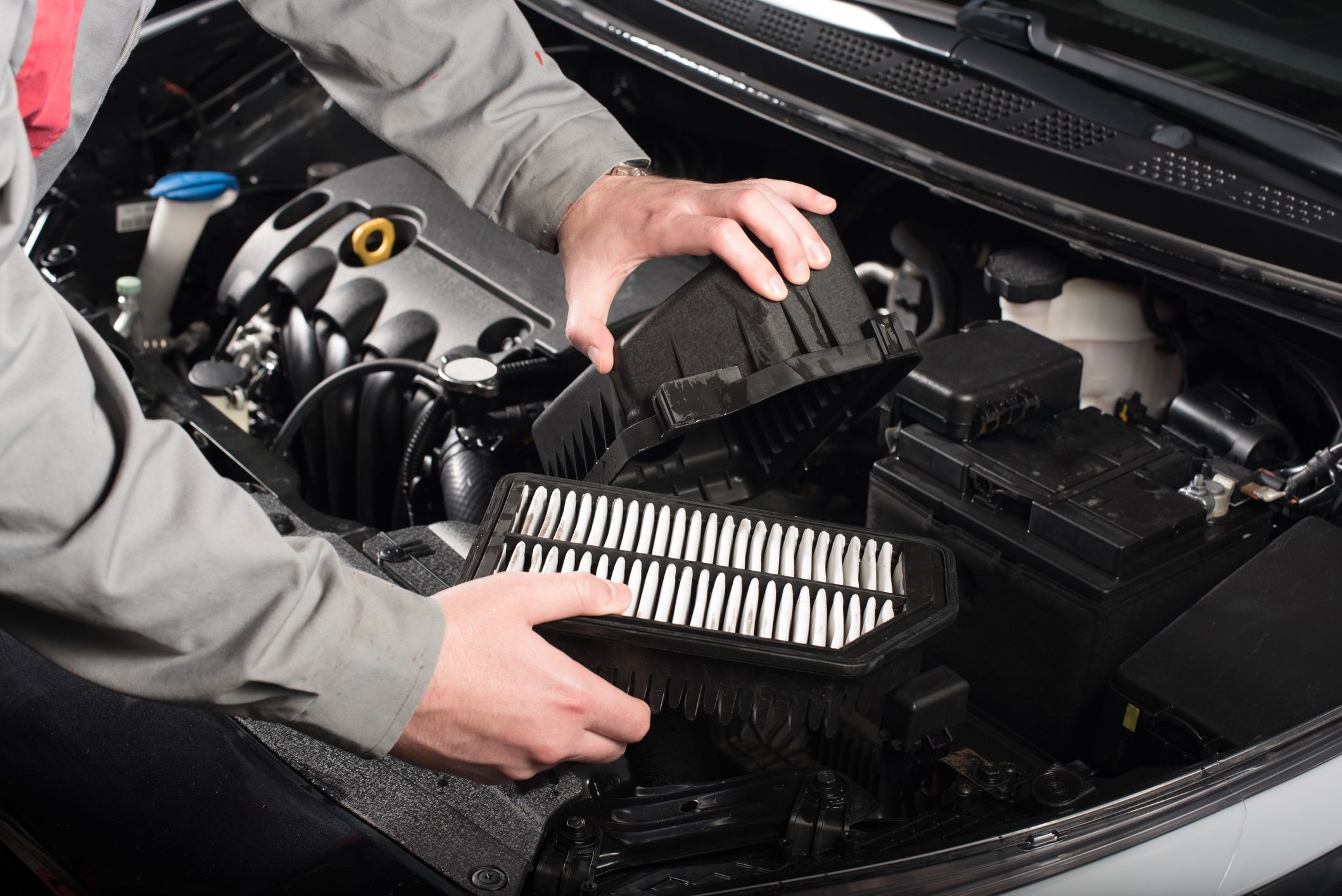
Start with the engine intake if the car has a combustion engine. Its filter belongs in the air path feeding that engine, separate from the passenger ventilation system. The number of cylinders, exhaust outlets or turbochargers is not an adequate parts-ordering method; follow the documented intake arrangement instead. A model badge can also cover several engine options with different equipment.
A useful exception appears in Ford’s 2024 Mustang engine-filter procedure: after describing work on an air-cleaner assembly, it directs the reader to repeat it at the second assembly. That is evidence for the configuration described by that procedure, not a statement that every Mustang from every year uses two engine filters. It shows why an assumed one-engine/one-element relationship can leave a service incomplete.
Before buying, identify the engine and the correct manual section, then check whether the parts listing specifies a quantity per vehicle. If two housings are illustrated, establish whether their elements share a reference or need different parts. Do not infer that the second housing is a spare or that only the visibly dirtier side requires attention. The applicable maintenance instructions should define the work. For a broader explanation of the separate functions, see our guide to what automotive air filters do.
A battery-electric car has no combustion-engine intake filter to add to this list, but it can still have cabin filtration. Bosch’s filter overview includes cabin products for electric and hybrid vehicles. “Electric” therefore does not mean “no air-filter maintenance.” A hybrid still needs attention to its installed combustion-engine equipment as well as the ventilation system; driving some journeys electrically does not identify the parts fitted.
Some vehicles also have filtration associated with battery cooling. For example, Toyota lists G92DH-47070 as a high-voltage battery intake filter. That is a separate function from cleaning engine intake air or treating passenger ventilation air. The listing does not establish that this part fits every Toyota hybrid, or that every electrified car uses a similar replaceable element. Confirm the application and the prescribed inspection, cleaning or replacement task.
Do not dismantle a battery enclosure merely to count filters. Use the manufacturer’s owner-accessible instructions and ask the service department to identify equipment that is not covered there. A battery vent, a screen, a duct and a removable filter are not interchangeable terms. Record the specific component described, its location and its approved maintenance action. An unknown item should remain unconfirmed on the list until reliable vehicle information identifies it.
Credit: www.caranddriver.com
Count elements, housings and service items separately
The cabin-filter count can differ from the number of cabin-filter housings. In Tesla’s 2017–2023 Model 3 instructions, an upper element and a lower element are removed from the HVAC module and replaced together in their respective positions. That documented arrangement uses two physical pieces for the cabin-filter service. It does not mean one is the engine filter, or that the passenger compartment necessarily has two independent ventilation systems.
Use that example to read other manuals carefully: look for upper/lower, left/right, front/rear or primary/secondary labels, and determine whether they identify separate pieces or merely views of one assembly. A numbered diagram can include the cover and fasteners as well as the filtering elements. Counting every callout would produce the wrong shopping quantity.
Likewise, a retailer’s “set” can mean different things. Read the contents instead of relying on the product photograph, which may show several views or optional components. For a two-element application, verify that the pack supplies the required pair and that both positions are covered. For a single-element application, a two-pack may simply provide a future replacement. Keep the quantity required for one completed service distinct from the number supplied in a sales package, and resolve any mismatch before the vehicle is taken apart.
More than one filtering stage can also appear within an assembly. Tesla’s Model Y HEPA procedure describes removal and installation of separate carbon filters and HEPA filters. It applies when the vehicle has that equipment. This is a different service description from simply replacing the interior cabin elements, so the word “air filter” alone is too vague for ordering or comparing estimates.
There is another distinction: layers bonded into one element are not necessarily individual service parts. A combination cabin filter can contain particle-capturing material and an activated-carbon layer while being supplied as one insert. Bosch describes these types separately in its product overview. Counting the layers as filters would confuse the construction of the part with its replacement quantity.
When the documentation describes an assembly, determine what the replacement actually includes: a complete housing, one insert, a matched set, or individual stages. A diagram of a complete assembly is not evidence that the entire assembly must be renewed during every routine service. Ask for the part reference and the maintenance operation together.
Also avoid assuming that more elements automatically mean better protection in every situation. This article is counting documented service parts, not ranking filtration performance. Particle capture, gas treatment, installation sealing and the vehicle’s air path are separate questions. Our explanation of HEPA terminology in cars helps distinguish a filter label from a verified capability.
Build the count from a vehicle-specific lookup rather than a universal shopping list. The MANN-FILTER catalog provides application and product searches that help identify candidate parts. Manufacturer parts systems may also use a VIN, production date or equipment selection. Record the year, model, engine and market accurately; a similarly named overseas version is not automatically the same application.
For each air system, write down the element reference, quantity required, assembly location and source of that information. If the catalog offers several alternatives, establish whether they are different quality options for the same position, choices for different equipment, or parts that all belong on the car. Three search results do not prove that three filters are installed. A superseded number is also not automatically an additional component.
Compare this list with the service estimate. A helpful line item identifies the system and quantity, such as an engine element or a cabin-filter set, rather than only “filter replacement.” If the estimate includes a battery-intake cleaning task, keep it separate from a cabin-element replacement. Different operations may use no new element, one element or several parts. If the workshop uses a package description, ask whether its quantity refers to individual inserts or complete sets. Keep that explanation on the estimate so the delivered components can be checked against the agreed job.
Ask the shop to explain a discrepancy in those terms. An estimate containing several legitimate filter-related items is not inherently excessive, but each should correspond to actual equipment and a supported maintenance need. The useful check is traceability from the vehicle to the part and operation, not whether the total matches a number quoted for an unrelated car.
Make the filter list useful for the next service
Once the equipment is confirmed, keep the list with the maintenance record. Include the source manual or catalog reference and any qualification, such as an optional filtration package. This makes the next purchase easier and helps another repairer distinguish an omitted item from an item the vehicle never had. If an intake or ventilation assembly has been modified, update the record to describe what is installed now.
Schedule the items individually. Knowing that a car contains several air-filter elements does not establish that they all share one replacement interval. An inspection, a prescribed cleaning operation and an element replacement are different tasks. Record the date and mileage of the actual work rather than marking every filter complete after one unrelated replacement. Where a system provides a service reminder, follow its own completion/reset instructions instead of clearing it simply because another filter was changed.
If the replacement quantity still seems uncertain, send the parts supplier the precise application and ask what is required for one complete service of the named system. Include the proposed part numbers and package contents. That is a more answerable question than asking how many filters all cars have, and it avoids purchasing multiple alternatives by mistake.
The result should be a short, specific inventory: each documented air-filter function, its replaceable elements and the corresponding maintenance action. Oil and fuel filters belong in a wider service inventory but do not count as air filters. A complete vehicle-specific list is useful; a universal total of two, three or four is not a dependable substitute for it.


Automotive reference information. Confirm specifications in the manual for your exact vehicle. Original replacement guides link to their research sources. About us