
First define what “not opening” actually means
An injector reported as “not opening” may not be receiving a suitable command, may have an electrical or mechanical fault, or may not be delivering fuel for another reason.
Those are different diagnoses.
- Silence is not proof of a stuck valve.
- No visible fuel is not a safe or complete test.
- A no-start is not proof that all injectors failed.
- Identify the observation first.
Then choose a test that can distinguish the possible causes.
A quiet injector is not automatically stuck
Listening can provide context, but sound is a limited observation.
Access and surrounding engine noise affect what is heard.
| A lack of a click does not identify the missing function. |
Do not place improvised tools near moving components to improve the sound.
Ask whether the electrical event and relevant delivery behavior were assessed under the correct conditions.
Electrical integrity is only one part of operation
An injector actuator can have an electrical defect, but the circuit around it also matters.
Delphi’s common-rail electrical guide distinguishes several checks for supported solenoid injectors.
A single resistance reading does not establish every electrical characteristic.
It also does not measure fuel delivery, so keep the conclusion limited to the function actually tested.
Temperature can help reproduce a fault
A complaint may occur only when cold or after a hot stop.
Record that pattern accurately.
It can guide when a test should be performed.
It does not prove that temperature itself damaged the injector.
| A normal warm test may leave a cold complaint unresolved, so ask whether the relevant condition was captured before accepting a definitive result. |
Fuel history is evidence, not a diagnosis
Note whether the complaint followed refueling or an added treatment.
Preserve receipts and product identification.
Describe quantities honestly if known.
| Do not claim contamination without supporting findings. |
The timeline can justify checking fuel quality, but it does not prove that an injector is physically blocked or that every component needs replacement.
Water concerns require the right system procedure
A water-related warning or confirmed contamination changes the investigation.
Do not try to make the problem disappear with an unapproved solvent.
The vehicle’s procedure determines sampling, draining and related service where applicable.
| Report the warning and fuel history to a qualified repairer rather than opening a pressurized connection yourself. |
An electrical event needs suitable fuel conditions
A commanded injector cannot deliver the intended quantity without the appropriate fuel supply.
The pump, rail and other components have separate roles.
A pump noise is not a pressure measurement.
A pressure reading needs its operating condition and specification.
Establish those conditions before concluding that an injector remained mechanically closed.
Wiring faults can interrupt the response
A connector or harness defect can prevent the expected electrical event from reaching the component.
The fault may be local or shared.
| Use the application’s diagram to identify the path. |
Do not replace the injector merely because a circuit code contains its name; the complete circuit remains part of the diagnostic question.
Leakage is a different failure mode
An injector that leaks internally or a connection that leaks externally is not simply “not opening.”
- Describe the finding accurately because the tests and repairs differ.
Visible fuel outside the system requires prompt safe assessment, without touching suspected spray or running the engine to make the leak easier to see.
Do not begin with an improvised cleaning test
Cleaning is not a universal first step. It cannot restore a missing command.
It cannot repair every electrical defect. It cannot establish the correct fuel pressure.
It cannot certify a damaged component.
Identify the fault category first.
Check the manufacturer’s permitted procedure.
Use suitable equipment.
Keep fuel contained.
Avoid loose battery leads near fuel.
Do not assume a visible spray proves calibrated delivery.
Our battery-test guide explains the limits of a click demonstration.
An uncontrolled activation adds uncertainty rather than resolving the original diagnosis.
Injection design changes the investigation
Bosch’s direct-injection overview describes fuel delivery into the combustion chamber.
Port injection and different diesel systems have their own arrangements.
Identify the engine and injector type before applying a pressure value, electrical test or activation method borrowed from another vehicle.
Credit: www.underhoodservice.com
If all injectors appear inactive, check shared conditions
Confirm that all were assessed with a suitable method.
Record the engine state.
- Check whether injection should be commanded then.
- Consider the shared supply path shown in the diagram.
- Consider required control inputs.
- Preserve scan information.
Several inactive injectors can point toward a common prerequisite, but the pattern alone does not identify a failed relay, sensor or module.
If one injector appears different, compare like conditions
Compare the same type of measurement under the same operating state.
A cold result and a hot result are not automatically equivalent.
| Check the connector and local circuit using the prescribed method. |
Identify the cylinder correctly from service information.
A difference is a lead that needs interpretation, not an automatic instruction to move injectors between cylinders.
A group pattern can reflect shared architecture
Several affected cylinders may share part of a supply or control arrangement.
The actual diagram determines whether that is relevant.
Do not assume a physical bank always corresponds to one electrical branch.
Ask where the common path was verified and where the expected condition was lost before approving a shared component replacement.
A problem after repair needs an accurate timeline
Give the workshop the prior invoice.
State whether the engine ran correctly after the work.
Identify replaced parts where possible.
Mention connectors or systems that were disturbed.
| These facts support checking installation or application issues without automatically blaming the newly fitted injector or assuming that the original diagnosis was correct. |
A problem after refueling needs product identification
Record the station and fuel grade.
Keep the receipt.
List additives separately.
| State when the first symptom occurred. |
A precise sequence is more useful than an assumption that all injectors clogged simultaneously, and it lets a repairer decide whether fuel assessment should precede individual component testing.
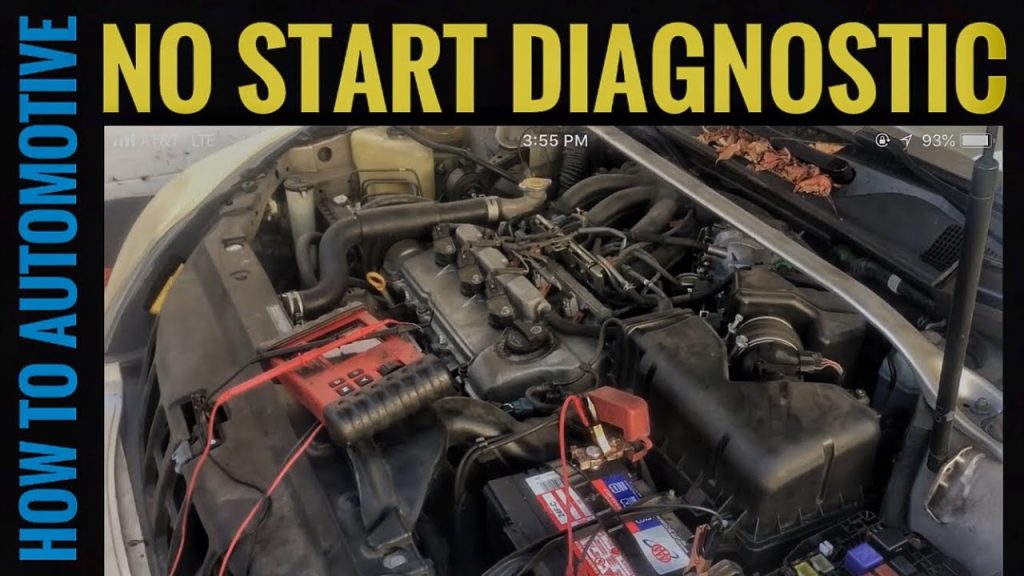
A no-start needs broader assessment
An engine that cranks without starting may lack suitable fuel delivery, control or other conditions required for combustion.
It does not establish that the injector valves are stuck.
Follow the vehicle’s diagnostic path and starting limits.
| Do not repeatedly crank or use starting-fluid experiments to force a result while the cause remains unknown. |
Establish whether a valid command is present
The test must suit the driver design.
A basic meter may miss or average a short event.
An unsupported test lamp can be inappropriate for a sensitive circuit.
Pico’s MPI example uses waveform assessment of switching behavior.
Treat that as an illustration of the question, not a universal connection or voltage specification.
Then assess whether the component responds
If the expected command reaches the injector, the next question concerns its response.
Suitable electrical or hydraulic tests can add evidence depending on the design.
| A requested value on a scan tool is not necessarily a measured response at the component. |
Ask the technician to identify which link in that chain was actually checked.
Response and delivery are not interchangeable
Movement can occur without the correct quantity or pattern of fuel delivery.
- Delivery can be unsuitable because of conditions beyond the injector.
A diagnosis should therefore connect the electrical event, the relevant fuel conditions and the measured result rather than treating any one of them as a complete functional certification.
What a useful test report should contain
Identify the vehicle. Identify the injector or cylinder.
Name the procedure. State the operating condition.
Record the measured result.
Identify the applicable comparison.
State what passed.
State what failed.
Note unresolved conditions.
Explain the proposed repair.
Define the verification afterward.
That structure makes a finding reviewable without requiring the owner to perform the test.
“Did not open” is too vague unless the report explains how that conclusion was reached and what competing explanation was ruled out.
Do not overread an audible click
A click can support a narrow observation of movement during an appropriate test.
It does not measure sealing or delivered quantity.
If the original complaint is poor combustion, ask what additional evidence connects the sound to the actual fuel-delivery requirement instead of treating noise as a pass certificate.
Credit: www.underhoodservice.com
Electrical testing needs the correct specification
Identify the injector design.
Obtain the applicable procedure.
- Use suitable equipment.
- Establish the required circuit state.
- Record the temperature or other conditions when specified.
- Compare with the correct limit.
Our multimeter guide explains why a continuity beep or generic resistance range cannot settle every injector fault.
Comparing injectors has limits
A similar result across a set does not prove that the set meets specification.
A different result does not automatically identify the only defective part.
| Test conditions and part identification must match. |
Do not create damage by swapping components without the prescribed removal and installation procedure.
Use the comparison as evidence within the diagnosis, not as a standalone rule.
A driver diagnosis needs external checks
Missing output does not automatically mean an internally failed controller.
Its supplies, grounds, inputs and connected circuit need the appropriate assessment.
A downstream fault can affect output behavior.
Before a module is recommended, ask which findings distinguish an internal defect from an unmet operating condition or external circuit problem.
Mechanical failure must be demonstrated appropriately
A component can have a mechanical problem even when some electrical checks pass.
That does not justify forcing it with unapproved voltage or chemicals.
Use a supported functional test.
Ask what result identifies the defect.
| The repair decision should explain why the injector itself, rather than its operating conditions, is responsible. |
Read a bench result in its stated conditions
A bench report should correspond to the actual component.
Check identification and the test performed.
Ask what operating points were assessed.
| Ask which comparison was used. |
A generic printout or a photograph of spraying does not supply the same evidence as a documented result tied to the injector and its specification.
Broader contamination can change the repair scope
If testing finds contamination, ask how it affects the rest of the system.
Replacing the most obvious failed injector may not address the source.
Delphi’s service guidance discusses the importance of proper diagnosis and service conditions.
| The scope should follow the documented findings, not an assumption that every contamination concern requires the same set of parts. |
Replacement quantity needs its own justification
One confirmed failure does not automatically prove every injector has failed.
A complete set may nevertheless be supported by the applicable procedure or broader findings.
Ask which explanation applies.
Check fitment and required installation items.
Our replacement guide separates the failed component decision from preventive or system-wide recommendations.
Verify the original complaint after repair
Repeat the relevant test under appropriate conditions.
Check the repair for leaks using the prescribed method.
| Reassess the original running or starting complaint. |
A cleared code or immediate warm restart is not necessarily enough to verify an intermittent or cold-start problem, so retain any remaining limitation in the record.
If the problem returns, compare evidence
Bring the earlier report and invoice.
- Describe whether the timing and severity match the original event.
Do not assume that a replacement injector failed simply because the vehicle again runs poorly; compare the renewed findings with the original diagnosis and determine what remains unresolved.
Keep the next step specific
State what was observed.
Identify the system.
Separate supply from command.
Separate command from response.
Separate response from fuel delivery.
Use the applicable procedure.
Avoid improvised battery or spray tests.
A specific missing function leads to a useful next check, while the vague claim that an injector “will not open” can lead to unnecessary parts and unsafe experiments.


Automotive reference information. Confirm specifications in the manual for your exact vehicle. Original replacement guides link to their research sources. About us