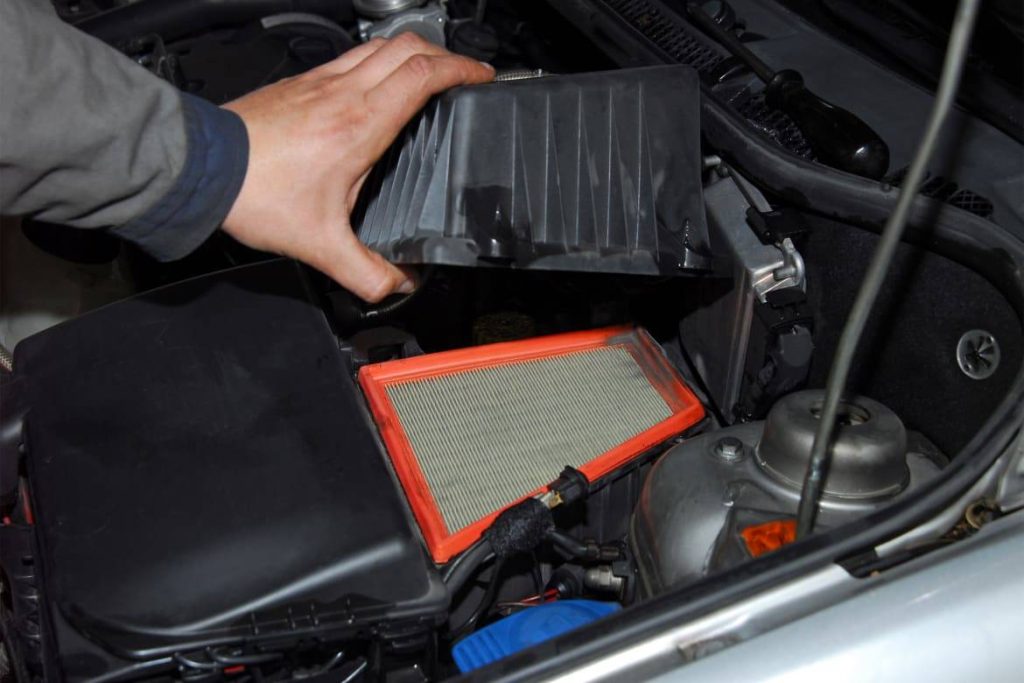

A reusable car air filter can be worthwhile if it is a documented fit, you can service it correctly and you will keep using it long enough to justify the total cost. It is not an automatic fuel-saving or power upgrade. Compare purchase price, cleaning supplies, time, downtime and expected ownership before deciding whether reuse offers an advantage for your situation.
Begin with the particular filter, not the reusable category. Engine-intake and cabin products serve different systems, and washable designs do not all share one treatment method. This comparison mainly concerns replacement engine elements, while the same cost-accounting approach can help evaluate a cabin product. Do not transfer engine-filter oiling or cleaning directions to a passenger-ventilation element.
K&N’s service instructions separate oiled cotton, Dryflow, heavy-duty and cabin media. The required work depends on the product. A decision to reuse therefore includes a decision to follow that element’s maintenance process every time, not merely an intention to rinse it occasionally. Check the instructions before purchasing so an inconvenient service requirement does not become a surprise.
Confirm the replacement application through an appropriate manufacturer listing, such as the MANN-FILTER catalog for its products, or the proposed filter maker’s own application information. A filter that requires altering the original housing belongs in a different comparison from a straightforward replacement element. Do not force a poor fit to preserve a hoped-for saving.
Also establish your present baseline. If the existing disposable element is still within its required service life and in acceptable condition, discarding it early creates an additional purchase decision. Compare the alternatives at a real service opportunity rather than assuming that an immediate switch is free of cost or waste. Record the actual part and maintenance schedule you would otherwise use.
Count all costs over the period you expect to own the car
List the reusable element’s purchase price and any initial supplies separately. Then estimate the supplies used at each service, any paid cleaning labor and any additional replacement parts required by the instructions. On the disposable side, list the correct element and its normal fitting cost. Include taxes and delivery consistently so one option does not look cheaper merely because its quote excludes them.
The number of future service opportunities matters more than an assumed lifetime mileage. Someone selling the car soon may never reach a cost crossover, while another owner may use the element through several supported services. Use the vehicle and product instructions to estimate that schedule; an advertised maximum interval is not a guaranteed interval for every route or operating condition.
Do not count your time twice. If both options require the same removal and refitting work, that common portion can be excluded from a comparison of differences. Cleaning, drying preparation and any specified oiling are additional activities. Decide whether you want a cash-only comparison or one that assigns a value to your time, and label the result accordingly.
A spare element can reduce the inconvenience of waiting for a serviced filter, but purchasing one adds to the upfront cost. If you plan to use a spare, put its price in the calculation. If you do not, consider whether the car can remain out of use until the filter is ready. Never budget on operating with the element removed.
Reuse is a service method, not one material specification
S&B distinguishes its cleanable cotton and dry options and gives different handling advice for them. Those instructions apply to the products described, not every filter marketed as dry. In particular, a permitted maintenance method for one manufacturer’s dry element cannot be assumed suitable for an unrelated paper or synthetic product.
The word washable also does not necessarily mean oiled. K&N’s 19569C instruction sheet identifies a particular reusable Dryflow element that requires no media oil. That heavy-duty example is not a recommendation for a passenger car; it demonstrates why the exact reference controls treatment. Budgeting for the wrong cleaner or oil makes the cost estimate unreliable before service even begins.
For an oiled product, follow its specified cleaning, drying and treatment directions rather than guessing quantities or substituting household fluids. For an unoiled design, do not add oil in an attempt to improve capture. Our guide to K&N oil-substitute claims explains the limitations of improvised treatments and why instructions for different media cannot be mixed.
A disposable element may be the more practical choice when you need a quick, predictable exchange and do not want to manage cleaning materials. Reuse may suit an owner who has an appropriate workspace, follows the product procedure and intends to retain the car. Neither preference establishes a universal filtration winner; it describes how maintenance fits the owner’s routine.
Check what the warranty actually promises
K&N’s current warranty page lists different terms for different product categories. Its lifetime limited section covers specified washable products and includes conditions and exclusions. A prominent lifetime word is therefore not evidence of zero maintenance, transferable coverage or a guaranteed number of future services. Identify the section that actually applies to the proposed item and purchase.
Keep the receipt, product reference and service records where the terms require them. A product warranty and the vehicle’s warranty are separate documents; neither should be reduced to a blanket online assurance. If a concern could affect your decision, obtain a written explanation of the applicable terms from the responsible provider. This comparison does not decide an individual warranty claim.
Include the cost of following the service instructions in the ownership estimate even if the filter itself carries extended coverage. Cleaning materials are still consumed, and careful handling is still necessary. If an element becomes damaged or will not seal correctly, do not continue using it solely because your calculation assumed it would never need replacing.
Plan how another person will recognize the reusable product at the next service. Keep its instructions available and identify it on the maintenance record. This reduces the chance of incompatible treatment or accidental disposal. If you pay a workshop, ask what its service quote includes rather than assuming ordinary air-filter labor includes the reusable product’s complete cleaning process.

Credit: www.amazon.com
Separate operating results from purchase assumptions
DOE/EPA guidance on engine-filter maintenance does not support treating a new filter as a guaranteed MPG improvement on modern fuel-injected vehicles. Leave speculative fuel savings out of the payback calculation. If a seller advertises performance gains, establish whether its evidence concerns the replacement element, a complete intake kit, or a different vehicle configuration.
An improvement after replacing a neglected filter does not isolate the reusable material as the reason. The old part’s condition, its installation and other work performed at the same time all affect that comparison. A useful performance claim identifies what was tested and under which conditions. An owner’s impression of throttle response is not the same evidence as a controlled measurement.
Ask separately about filtration, restriction and capacity rather than treating airflow as a complete score. A test result for one part does not establish every size in a product family. If the necessary comparison is unavailable, keep it unknown. Price, pleat color and reusable construction are not substitutes for the missing data.
For cabin products, engine horsepower and fuel use are the wrong primary comparison. Evaluate the documented filtration features, compatibility, service process and costs of the cabin system instead. A change in smell is not a complete measurement of particle or gas exposure. Keep the claimed benefit tied to the system and pollutant actually tested.
| Potential reason to choose reuse | What still needs checking |
|---|---|
| Fewer replacement elements purchased | A suitable product and enough future service opportunities |
| Repeat servicing of one element | Correct materials, workspace and available drying time |
| A lower calculated ownership cost | Actual prices, labor differences and the limits of product coverage |
The table describes possible reasons to choose reuse, not promised outcomes. Establish the required fit and maintenance method before comparing the arithmetic. A low calculated cost cannot make an unsuitable element acceptable, and an attractive warranty headline cannot replace a service procedure. Those are prerequisites for the comparison, not benefits to assign arbitrary monetary values.
If you frequently encounter dusty conditions, use the applicable inspection and service requirements when estimating costs. Do not automatically conclude that an off-road vehicle should have a washable filter or that a clean-looking element needs no attention. The vehicle’s air-cleaner design and the filter maker’s instructions determine the supported approach.
A worked comparison using clearly assumed prices
Here is an arithmetic example, not current product pricing or a recommended interval. Assume a suitable reusable element costs 90 currency units, with 5 units of supplies for each later service. Assume the suitable disposable alternative costs 20 units each time it is replaced. Both options begin with a new element today. Ignore equal fitting costs and taxes only for this illustration. After n additional service events, reusable cost is 90 + 5n; disposable cost is 20 × (n + 1).
At the start, the reusable route costs 70 units more. Each later event saves 15 units in this simplified model, so it takes five additional services for cumulative disposable purchases to exceed the reusable total. At that point the totals are 120 and 115 units respectively. These are six installed disposable elements versus one reusable element serviced five times, assuming it remains suitable and serviceable throughout.
Replace every assumed input with your own quote and maintenance plan. If paid cleaning makes each reusable service cost as much as a disposable replacement, this example no longer reaches the same crossover. Extra delivery, a spare element or an earlier vehicle sale changes the result too. A crossover in service events cannot be converted to years or miles without a justified schedule.
Weigh the waste claim as carefully as the cost
FTC consumer guidance on green marketing encourages checking what a less-waste claim actually means. Keeping one serviceable element through several uses can reduce the number of elements discarded in that comparison. It does not, by itself, measure total environmental impact across production, cleaning materials, water use, packaging and disposal. No product-specific life-cycle study is claimed here.
Use a narrow, checkable description: how many replacement elements would your chosen maintenance plan avoid, and what supplies would be consumed instead? Do not label the process waste-free, assume every component can be recycled locally, or count disposal avoided over years you do not expect to keep the car. Follow local disposal guidance for the actual used materials.
The following totals belong only to the stated 90/20/5-unit example. Additional services exclude the initial installation. They show how ownership length changes the calculation; they are not prices from a retailer, measured savings or permission to extend a maintenance interval.
| Additional service events | Reusable total, assumed units | Disposable total, assumed units |
|---|---|---|
| 0 | 90 | 20 |
| 4 | 110 | 100 |
| 5 | 115 | 120 |
If your expected ownership stops before the supported cost crossover, reuse may still appeal for another reason, but describe that reason honestly. Convenience, preference and a desire to discard fewer elements are different from verified financial savings. Comparing them separately produces a clearer decision than adding imagined horsepower, fuel economy and environmental credits to make one option win.
Choose the maintenance arrangement you can support
Reusable filters are worth considering when fitment is documented, the prescribed service is practical and the ownership calculation uses realistic inputs. Disposable filters remain a sensible option when predictable replacement better suits the vehicle and owner. Before switching, read the product instructions, compare complete costs and examine the warranty. Our filter-comparison guide separates the technical features from claims that price or appearance alone cannot prove.


Automotive reference information. Confirm specifications in the manual for your exact vehicle. Original replacement guides link to their research sources. About us