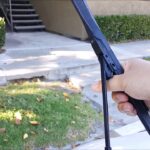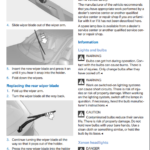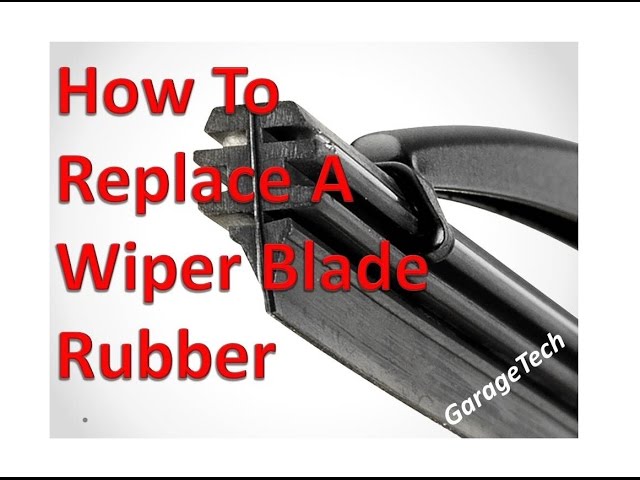

You can replace only the rubber wiping element when the installed blade is designed to accept a refill, a correctly specified insert is available, and the retained assembly remains serviceable. You cannot decide from blade length alone. The holder, locking arrangement and insert profile must work together. A refill is an intended replacement component, not any strip of rubber that can be pushed into the old housing.
Start by identifying the blade actually on the car. An owner’s manual may describe the original equipment, while a previous replacement could have a different design. Read the maker and reference on the current assembly or its purchase record. If you cannot identify it, ask a parts supplier to inspect it before ordering an insert or dismantling its ends.
PIAA explicitly identifies Aero Vogue and Super Silicone as refillable, providing a current example of supported insert replacement. That statement does not make every blade from that brand refillable. Likewise, Rain-X says it does not currently offer refills. A brand-level shopping assumption is therefore less useful than confirmation for the precise blade family and reference you own.
First decide whether the problem is the wiping element
An insert renews the part that contacts the glass. It does not repair a damaged connector, a distorted holder, a worn arm joint or a failing washer system. Look at the complete assembly before focusing on the rubber. Rain-X’s inspection guidance includes loose elements, frame damage and corrosion as reasons for attention, alongside damage to the wiping edge.
A streak is a symptom, not a parts diagnosis. Dirt on the windshield or blade may interfere with wiping even when the insert is intact. For its 2024 MX-5, Mazda describes cleaning contamination before replacing components. Follow the cleaner and maintenance instructions applicable to your own glass and blade. Do not use a universal solvent recipe or attempt to restore a torn edge with oil.
Inspect with the system safely off and use the vehicle’s prescribed access procedure. If the rubber is split or the holder cannot retain it securely, avoid operating it against the glass while deciding what to buy. Where the assembly or arm needs repair, choose a service that addresses that defect. A cheaper insert is not a saving if it leaves the original fault in place.

Credit: bluediamondautoglass.com
Match the insert to the holder, not just the vehicle
Record the vehicle details, fitted position and current blade reference as separate pieces of information. The car identifies the required application; the blade reference identifies the component you intend to retain. If a catalog describes a refill only for the factory blade, confirm that the factory blade is still installed. A different aftermarket assembly may require its own insert or replacement as a unit.
Check length together with profile and width
TRICO’s refill range separates, among other examples, 6 mm square-claw, 7 mm trapezoidal-claw and 8 mm square-claw applications. These are not interchangeable descriptions of one generic strip. Use the supported application and full part specification. Measuring overall length can help detect an obvious ordering error, but it does not establish how the insert engages or stays locked in your holder.
Identify the retaining parts before removal
Some arrangements use a shaped stop, a removable end piece or supporting strips that need careful transfer. Find the actual instructions before releasing anything. Photograph the assembled ends and keep the parts for each position together. If a cap is damaged during removal, do not assume it is cosmetic: ask whether that part contributes to retention and what repair the maker permits.
Treat cut-to-size products as specific systems
TRICO describes selected Break-To-Fit refills with scored rails. That is evidence for a designed adjustment method on those references, not permission to shorten every rubber insert or bend any support rail. Follow the purchased product’s directions and permitted application range. If the available strip requires improvising a lock, splicing material or reshaping the holder, it is not a confirmed replacement for this job.
Use the procedure for the assembly in front of you
The 2026 Mazda CX-50 manual provides separate front and rear rubber replacement procedures. Its front instructions identify a notch through which the replacement is installed, while the rear procedure includes metal plates that must be reused. The distinction matters: even one vehicle can require different methods at different windows. Treat the manual’s illustrations and warnings as part of its procedure, not optional decoration.
Plan where every removed part will go before lifting an arm. Use any required service position and switch settings, allow access without forcing the arm past a hood edge, and keep control of the spring-loaded assembly. Mazda warns against an exposed arm striking the glass. If the manual and fitted blade do not agree, resolve that mismatch before continuing instead of combining steps from unrelated videos.
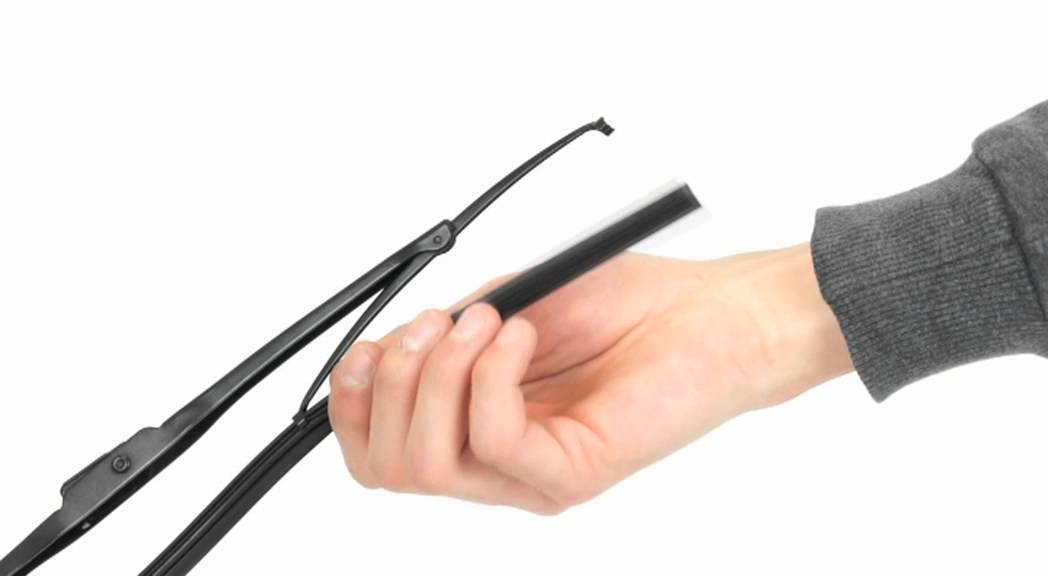
Credit: www.youtube.com
Keep reused supports in their original application
In its MX-5 instructions, Mazda specifically cautions against bending or discarding the stiffeners, exchanging them between driver and passenger blades, or changing their curve orientation. These are application-specific reused components, not scrap packaging. When your instructions require a transfer, finish one identified assembly at a time and retain its orientation. Do not copy this transfer step onto a product whose directions instead supply a complete replacement support.
Check the new insert against the confirmed reference before trying to slide it into place. Follow the specified direction and retention step without forcing the wrong profile through the holder. Stop if it jams, twists or leaves an unexplained loose end. Resistance may indicate an incorrect part or method; pulling harder is not a reliable way to distinguish those possibilities.
Inspect the completed assembly before running it
Verify the required end stops, caps, clips and supports against the product instructions while the parts remain accessible. The element should occupy the intended channels and be retained as specified. Check the attachment to the arm separately from the insert’s attachment to the blade. These are two connections, and completing one does not demonstrate that the other is secure.
DENSO’s replacement guidance calls for a final operating check after fitting. Use the prescribed wet check with hands, tools and loose items clear, observing the sweep from a safe position. Check both parking and clearing performance. Stop if the assembly contacts another part, comes loose or leaves visibility inadequate. Do not turn the first rainy journey into the installation test.
A fresh insert that still skips or streaks calls for reassessment. Check the fit, glass condition and retained components rather than immediately cutting or sanding the new edge. For an existing noise complaint, the wiper noise diagnosis guide separates cleaning, blade condition and arm assessment. A refill cannot compensate for a problem that sits elsewhere in the wiping system.
Compare the complete repair before choosing the cheaper part
Compare a supported refill with a correctly specified complete assembly using the real delivered prices. Include any separately needed retaining parts and fitting service. Do not assume the lower shelf price wins if identification is uncertain or the holder is damaged. Equally, an intact, documented refillable assembly need not be discarded solely because the local display emphasizes complete blades.
Availability may change the practical decision. An insert listed by a manufacturer might require ordering rather than same-day collection. Obtain a delivery estimate for the precise reference and arrange safe transport if the current wipers cannot clear the screen. Do not fit a vaguely similar substitute while waiting. The refill availability guide explains how to distinguish a missing store listing from a discontinued product.
Keep the completed repair record specific: which position received which insert, which blade assembly was retained and when the work was done. Save the instructions or reference number for the next service. This avoids starting over from a bare length measurement and makes it easier to identify a later change to the whole blade. A record also prevents confusing a spare insert with a complete replacement assembly.
Questions to settle before opening a refill package
Ask the supplier to identify the supported blade, the contents of the package and the instructions covering your installation. If it includes two inserts, confirm that both suit the intended positions; a pair need not contain the two different specifications your car requires. The blade package-count guide helps distinguish purchase quantity from fitment. Keep uncertain parts unopened until the seller clarifies its return conditions.
What if the original blade has already been replaced?
Use the installed aftermarket blade’s documentation. An original-equipment insert listed for the vehicle does not automatically belong in the replacement holder. If that holder cannot be identified, a complete catalog-approved assembly may be the clearer repair route. Ask for the reason behind the recommendation so you know whether the limitation is part availability, uncertain identification or damage to the retained component.
Does silicone mean the rubber cannot be replaced?
No. Refillability concerns the assembly and its service parts, while silicone describes a material. PIAA’s named refillable families demonstrate that silicone inserts can be supported. This does not authorize exchanging materials in any other holder. Choose the specified insert rather than assuming a material label establishes dimensional fit, coating compatibility or the correct locking arrangement.

Credit: www.wikihow.com
A refill is appropriate when the whole repair is supported
The decision rests on three findings: the current blade accepts an identified insert, its retained parts are sound, and its manufacturer procedure can be completed correctly. Those findings provide a useful basis for renewing only the wiping element. If one is missing, investigate it or obtain a correctly specified assembly instead. Neither a universal yes nor a universal no describes all wiper designs.
This guide draws on maker documentation rather than a claimed workshop experiment. It does not prescribe one dismantling sequence for every car. Before beginning, have the right part, the instructions and a plan for safely supporting the arm. Once the installation is verified, satisfactory clearing under the prescribed check matters more than whether the invoice calls the purchase a refill, insert or blade rubber.


Automotive reference information. Confirm specifications in the manual for your exact vehicle. Original replacement guides link to their research sources. About us