
Wiper blade refills still exist. What varies is whether the particular blade on your vehicle accepts one and whether your chosen supplier carries it. TRICO maintains a refill range, and PIAA lists replacement inserts in its current catalog. An empty shelf or a search showing only complete blades does not establish that the entire product category has ended.
There is no single industry-wide disappearance date supported by these manufacturer sources. Some product lines offer insert servicing and others do not. Rain-X’s FAQ says it does not offer blade refills at present. That is a useful statement about one maker’s offering; it is not evidence that other makers stopped selling them or that every car requires a whole new assembly.
The practical problem is usually more specific than “Where did refills go?” You may be searching by vehicle when the insert belongs to a particular aftermarket blade, using a different parts name, or asking a store whose selected range excludes it. Resolve those possibilities before accepting a broad claim that refills are obsolete. The answer should identify a part or a documented service limitation.
A refill renews the wiping element while retaining the supported blade structure. It is different from a complete blade, and both are different from the arm attached to the vehicle. Replacing the blade usually leaves that arm in service. This vocabulary matters when asking a seller: a request for “just the wiper” can produce any of several interpretations.
This article checks the continued existence of refill products and shows how to trace one. It does not reconstruct sales volumes, store stocking decisions or consumer preferences from a few listings. Those claims would require different evidence. For the separate installation decision, see the guide to replacing only the rubber in a supported blade.

Credit: www.amazon.com
What the dated and current documents establish
PIAA’s US price sheet effective April 1, 2019 lists silicone refills separately from complete wiper blades. Its current refill category provides a second, present-day reference point. Together they show that refills are not merely a vanished historical item. They do not prove uninterrupted stock for each reference between those dates, and the old sheet’s prices should not be treated as current offers.
The 2026 Mazda CX-50 owner’s manual includes procedures for changing front and rear blade rubbers. That is a recent vehicle-specific example of insert servicing in manufacturer documentation. It does not establish that every Mazda, every replacement blade fitted to that car, or another manufacturer’s product uses the same parts. The supported assembly must still be identified before an order is placed.
A modern-looking blade may still be refillable
PIAA describes Aero Vogue as a hybrid design and explicitly includes it among its refillable families. Its current wiper range description therefore gives a counterexample to the assumption that a covered or modern-looking blade cannot accept an insert. Appearance alone is a poor classification tool. Look for an explicit service statement and the matching replacement reference.
Whole-blade availability does not prove insert discontinuation
A catalog can offer complete assemblies and service inserts simultaneously. The complete item may be easier to find through a vehicle selector because that selector answers which assembly fits the car. An insert search asks a narrower question about the assembly already installed. If only complete blades appear, inspect the maker’s service-parts category or ask support to check the blade reference.
Do not substitute a story about planned obsolescence for that check. A missing listing alone cannot tell you why it is absent. It might reflect a product with no supported refill, a renamed service part, a limited retailer range or a discontinued reference. These are possibilities to investigate, not a claim that any particular supplier is using one of them.
Different names can hide the part you need
Try the terminology used in the relevant manual: refill, rubber insert, blade rubber or wiping element. Keep the blade manufacturer and exact reference in the search. For an original-equipment assembly, a vehicle parts counter may identify a service part using the vehicle details. For an aftermarket assembly, provide its identity too; the vehicle record alone does not reveal what a previous owner installed.
Separate four different availability questions
First ask whether the assembly is designed for insert replacement. Then ask whether the maker lists the required service part. Next confirm whether a supplier can obtain that reference. Finally ask whether it is actually available for your required delivery or collection date. A yes at an earlier stage does not answer the later stages, and a local stock shortage does not reverse the design information.
If a store says “we do not sell those,” ask whether it means that branch, the retailer’s full range or the manufacturer’s current catalog. Those are different scopes. Request the reference it checked and any replacement reference it recommends. A clear answer can save another unsuccessful search; a vague answer should not become an industry fact repeated without qualification.
If an old part number returns no result, ask for an official supersession or discontinuation explanation. A newer-looking number from a marketplace seller is not by itself proof of interchangeability. The relevant manufacturer or knowledgeable parts supplier should be able to connect the proposed service part to the retained assembly. Keep that confirmation with the order details.
Catalog pages are also different from live inventory. The examples here establish advertised products and documented service methods, not stock in your neighborhood. Confirm country, delivery destination and lead time with the actual seller. Do not assume that a product visible on a US manufacturer page is distributed under the same reference in every market.

Credit: www.amazon.com
Why a generic length search often fails
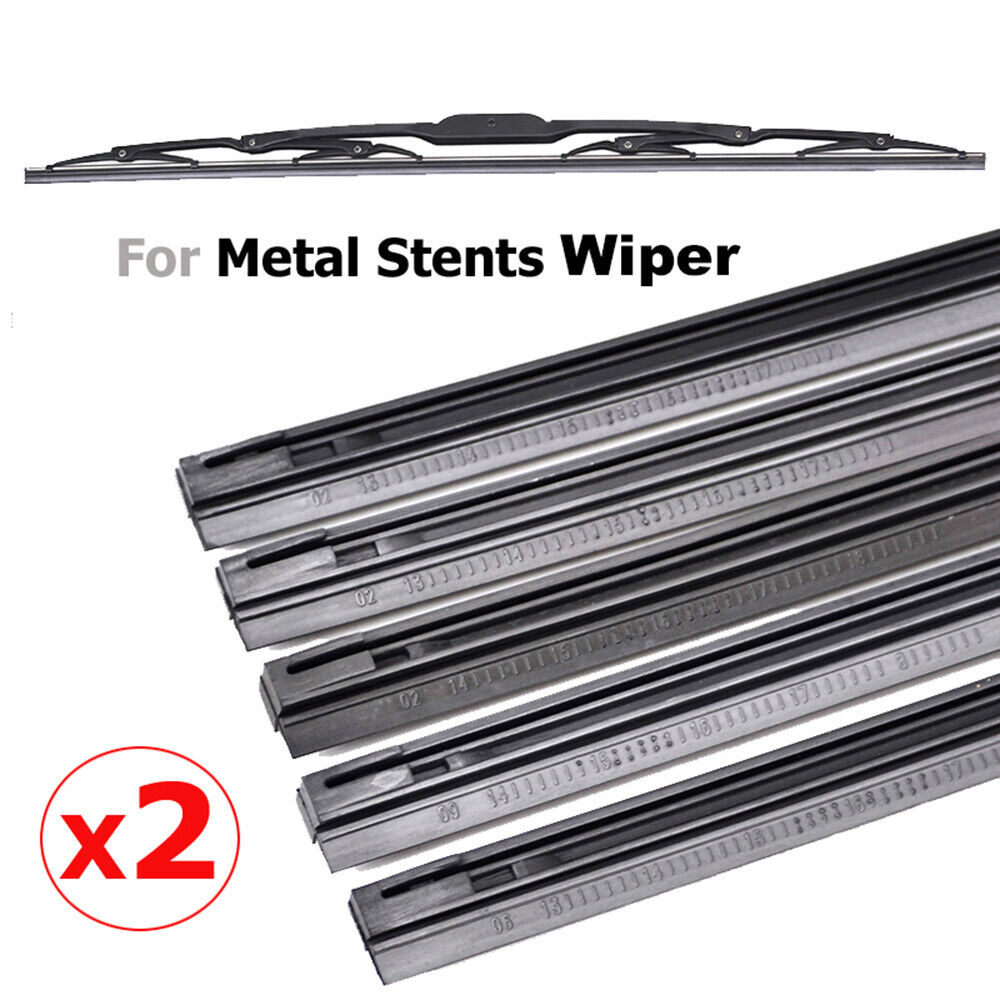
A refill needs to match the holder’s cross-section and retention system as well as its length. TRICO’s page distinguishes square-claw and trapezoidal-claw products, with different widths and supported size ranges. This makes a search such as “22-inch rubber” incomplete. It may return several strips that look comparable in a photograph but have different intended applications.
Before calling a supplier, gather the blade reference, intended window and side, and any original packaging. A clear photograph of the assembled holder may help the supplier identify it, but do not dismantle an unidentified blade simply to obtain a measurement. Ask which additional information is needed. If the answer cannot be established, compare a confirmed complete replacement instead of gambling on a close-looking insert.
Refilling retains parts, but avoid unsupported green claims
A successful refill keeps the serviceable holder in use, so you are not discarding that holder during this particular repair. That observation is narrower than claiming a measured carbon saving or a universally smaller environmental footprint. Manufacturing, delivery, packaging and the condition of reused parts would matter to a full comparison. No lifecycle assessment or waste-reduction percentage is established here.
Dispose of removed material according to the options actually available locally. Do not assume a mixed rubber-and-metal component belongs in household recycling. Ask the local collection service or installer which parts it accepts and whether separation is appropriate. Never keep a damaged assembly working poorly just to avoid replacing it; reliable visibility remains the purpose of the service.
Credit: www.ebay.com
Work out value using the repair you can actually complete
Price comparisons should use current quotes for the correct insert and the correct complete assembly. Add delivery, any required service parts and installation if you will pay for it. The price of a generic refill that does not fit is not a meaningful alternative. Nor does a promotional complete blade show that refilling is always more expensive. Compare the two supported routes for your car.
The condition of the retained holder changes that comparison. If its attachment is damaged or it cannot retain the insert securely, renewing the rubber does not restore the whole assembly. Ask a workshop to identify which component is faulty rather than requesting a refill at any cost. If the holder is sound and its insert is documented, retaining it can remain a reasonable service choice.
When planning a future purchase, ask whether the complete blade has a refill reference and written service instructions. Confirm that the stated refill applies to the size and family you are buying. A seller’s general promise of “replaceable rubber” is less useful than an orderable reference. Save it before the packaging is discarded, while the connection between the two products is clear.
Do not stockpile many inserts based only on today’s price. Your next complete-blade replacement might use a different system, and stored items still need to remain identifiable and in suitable condition. Follow any storage guidance supplied with the product. A legible spare label and a reliable supplier reference are more helpful than several loose strips whose original applications have been forgotten.
A practical search sequence for a missing refill
Start with the fitted assembly’s identity, then consult its maker or the applicable vehicle service-parts information. Search the exact reference and its documented alternatives before broadening to general marketplaces. When a seller offers a substitute, obtain explicit application confirmation. The wiper fitment guide explains why the vehicle, position and connector also matter if the search ends with a complete assembly.
Do not convert a difficult search into an improvised repair. A supported cut-to-size product has its own directions; an arbitrary strip with a homemade stop does not become equivalent merely because it reaches both ends of the holder. If the proper part is unavailable and visibility is compromised, arrange a safe alternative repair or transport instead of driving while experimenting.
What would establish that your refill really ended?
The strongest practical answer is a maker or supplier confirmation tied to the exact reference, including whether a successor exists. Record the date and application. That resolves your purchase decision without claiming all refills have gone away. If the answer is only that a nearby branch cannot order it, describe it that way and decide whether another authorized supply route is worth checking.
For a vehicle that previously had factory inserts, also establish whether the original holders remain. If someone fitted non-refillable replacements, the original insert number may still be sold but no longer serve the parts on your car. That situation can feel like a disappearance even though availability has not changed. The change is in the installed assembly, so the solution starts with identification.
When a complete blade is the chosen repair, follow its actual fitting instructions and the vehicle’s access precautions. DENSO’s fitting guide emphasizes verifying the correct replacement before removing the old part and checking operation afterward. A complete assembly still requires selection and installation; it is not automatically fault-proof because it arrives with new rubber already fitted.
If an order contains multiple pieces, check whether they are inserts or complete blades and which positions they serve. The guide to pairs and package quantities covers that separate purchasing question. Product photos can conceal this distinction, particularly when a long narrow carton resembles the packaging used for several different components.
Refills remain an option for documented applications
The supported conclusion is that refill availability is selective, not that the category has vanished. Current manufacturer listings and a recent vehicle manual show real examples. Your own answer depends on the installed blade, its service parts and the supplier that can deliver them. Keeping those details separate turns a frustrating search into a question that a parts counter can answer precisely.
Use the sources as starting points for identification rather than proof of stock, universal fit or future supply. No manufacturer can be assumed to support every old reference forever. Equally, a store display cannot establish that an entire maintenance practice is extinct. The useful outcome is a safe, correctly specified repair backed by current part information.


Automotive reference information. Confirm specifications in the manual for your exact vehicle. Original replacement guides link to their research sources. About us