
Do not choose a shorter wiper blade simply because it clips onto the arm or is the only size on the shelf. Use a replacement specified for your vehicle and the intended position. Some cataloged replacements are slightly shorter than the original, but that is an application-specific selection by the maker. It does not create a general allowance to subtract an inch from any recommended size.
The distinction is between a documented replacement and an improvised size change. DENSO treats blade size as a vehicle specification, to be checked before purchasing. A loose blade held beside the old one cannot verify the whole application. Length, connection and the way the assembly contacts the glass all need to suit the position where it will work.
If you have already bought a shorter blade, keep it off the vehicle until its application is confirmed. Record its full reference, the vehicle’s year and variant, and which side or window needs replacement. Ask the maker or supplier to resolve the mismatch using those details. An explanation backed by a catalog is more useful than reassurance that the difference “should be fine.”
A shorter cataloged replacement is a specific exception
The 2025 Bosch wiper catalog explicitly identifies certain replacements as slightly shorter than the original. On printed page88, the 2015–2024 Transit-250 entries include that note alongside named driver and passenger references. This is a concrete counterexample to saying that every dimensional difference is automatically wrong. It is also narrow evidence: it does not authorize an unrelated reference or establish an acceptable reduction for another vehicle.
Use the complete application row, including model years, position and any notes, rather than extracting a length and applying it elsewhere. Catalogs can be revised, so confirm the current listing when ordering. If the vehicle instructions and the proposed replacement appear inconsistent, have the supplier or manufacturer clarify the exact application before fitting. Do not resolve the conflict by choosing whichever document permits the part already in your cart.
What you give up by guessing at a smaller size
A shorter wiping element changes the portion of glass it can reach during the arm’s sweep. The importance of that change depends on the actual system geometry and viewing area; there is no universal percentage of visibility lost per inch. A gap near an edge may look minor while parked yet matter to your view in rain. A shop-counter comparison cannot establish satisfactory clearing during use.
Do not assume shorter means cheaper overall, quieter or easier on the motor. Those are separate claims that need evidence for the products and system involved. Nor is a smaller blade an appearance upgrade that can be evaluated apart from its clearing function. If price is the problem, compare lower-priced products that are listed for the application instead of changing the required fit.
Length and attachment answer different questions
A connector that locks onto the arm establishes one mechanical connection, not the correct sweep or contact across the glass. DENSO’s flat-blade information explains the relevance of windshield curvature and application matching. A blade can share a nominal length with another product while differing in the features needed for its intended vehicle. Conversely, a listed replacement may carry a qualified dimensional difference that a ruler alone cannot explain.
For a concrete owner-manual example, Tesla’s North American Model3 guidance specifies different driver and passenger lengths and requires a matching connector. It also cautions against inappropriate replacements. This establishes requirements for that documented application, not for every Tesla or every market. Check the instructions covering your own vehicle rather than borrowing a familiar model’s measurements from an online discussion.

Credit: www.facebook.com
Resolve conflicting measurements before buying
The installed blade is a clue, but it may itself be incorrect. A previous owner or installer could have selected a different reference. Begin with the vehicle manual and a current application lookup, then use the old blade’s markings to understand what is present. Keep driver, passenger and rear positions separate. A rear-window blade should be checked under its own catalog entry, even if a shorter front blade appears to have a similar connector. A position name is part of the specification, not an optional description. The guide to position-specific lengths explains why one side should not be used as the other side’s specification.
When two catalogs disagree, compare the exact vehicle details entered, including market, production period and any stated fitment qualifier. Check whether one result describes a set and the other an individual blade. Read the selected product variation rather than a category heading. If disagreement remains, obtain clarification from a source that can verify the application; do not average the sizes or select the nearest stocked item.
A one-inch difference is not a universal tolerance
No general “one size down” rule is established by the cited makers. A tolerance for one listed application cannot be transferred to another. Similarly, nominal inch and metric descriptions may involve product naming conventions, so compare actual reference numbers rather than demanding that every label conversion be mathematically exact. Ask the supplier which documented replacement is intended, and keep its application note with the purchase.
Do not shorten an existing complete blade to manufacture the desired size. Cutting its rubber, cover or supports can change retention and the assembly the maker intended to supply. An adjustable refill sold with its own instructions is a different product question. The rubber replacement guide explains why insert service depends on the retained holder and supported parts, rather than a general permission to cut blades.
If the correct reference is unavailable locally, ask for another listed product or a realistic delivery date. A supposedly temporary smaller blade still has to work whenever the weather requires it. There is no promised number of safe journeys for an unverified fit. If the existing system cannot provide adequate visibility, arrange repair or alternative transport rather than relying on dry weather to make the substitution acceptable.
Do not use downsizing to hide a wiping fault
If blades collide, hit trim or stop in an unusual place, turn the system off and have the fit and mechanism checked. A smaller part may appear to remove a collision while leaving an incorrect installation or another fault unresolved. Do not alter the arm’s position or bend it as a universal fix. A technician can distinguish a selection problem from a damaged or misadjusted assembly.
If your aim is to stop chatter or streaking, changing length is not a diagnosis. DENSO’s troubleshooting guidance distinguishes contamination, worn or deformed rubber and possible arm alignment issues. Start with the relevant inspection and cleaning procedure, then replace or repair what the findings justify. The noise troubleshooting article develops that process without treating size changes as a cure.
Check the installation after selecting the right part
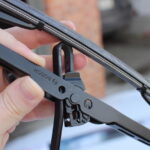
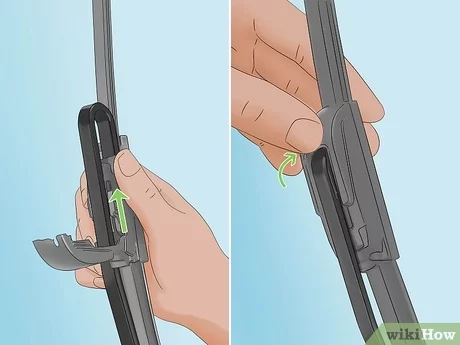
DENSO’s replacement procedure advises verifying the correct new part before removing the old blade. Read the vehicle’s access instructions and the product’s connector directions first. Some systems require a service position, and an exposed spring-loaded arm must remain controlled. Follow the prescribed attachment method without forcing an unsuitable adapter. If a protective shipping strip is present, remove it as directed before operation.
Complete the specified wet operating check with the car stationary and people clear of the moving arms. Observe the entire sweep, parking behavior and clearing result. Stop for contact with another component, insecure attachment or an unacceptably cleared area. This check can reveal an installation problem; it does not turn an unlisted smaller blade into an approved application just because it moves once without striking anything.

Credit: www.reddit.com
Questions that make a supplier recommendation reviewable
A useful supplier answer identifies the exact part, the supported vehicle and position, and any size-related application note. Ask whether the recommendation comes from the blade maker’s current catalog or merely from measuring available stock. If a set contains two different lengths, verify both references. If the seller cannot explain the shorter recommendation, leave it unresolved rather than treating the sale itself as technical confirmation.
Keep a copy of the application information and order details, particularly if the replacement differs visibly from the removed blade. This record helps if a later fitment question arises and prevents a future reorder from relying on memory. Describe any operating problem specifically: which position, what part of the sweep and what remains uncleared. “The smaller one seems wrong” gives the supplier much less to investigate.

Credit: www.crossprivateclient.com
Choose documented fitment over a general size shortcut
The answer is conditional: a manufacturer may list a slightly shorter replacement for a particular application, but an arbitrary smaller blade is not an equivalent choice. Confirm the full reference and its notes, preserve the intended position, and resolve conflicting specifications before installation. A shorter product is acceptable evidence-wise only when the relevant application information supports it; physical attachment alone is insufficient.
This guidance does not calculate a safe reduction, guarantee that a catalog applies to a modified vehicle or replace an unresolved manufacturer fitment question. It offers a repeatable decision process: identify the car and position, verify a supported replacement, install it correctly and check its operation. That process protects the purpose of the wipers without turning a single documented exception into a universal rule.


Automotive reference information. Confirm specifications in the manual for your exact vehicle. Original replacement guides link to their research sources. About us