
GM has published guidance permitting or recommending particular fuel treatments in defined circumstances, but that does not mean every GM vehicle needs the same injector-cleaning service. Gasoline and diesel instructions differ. A tank additive and a workshop cleaning procedure also differ. Start with the owner’s manual and current service information for the actual engine and market.
The useful answer is therefore conditional: identify the vehicle, identify the product, and identify the instruction supporting its use. A bottle carrying a familiar parts brand does not make every application mandatory. Likewise, a dealer offering “fuel service” has not yet explained whether it is scheduled maintenance, an optional treatment or a repair directed by diagnostic findings.
Separate three different recommendations
A gasoline tank treatment is added to fuel under product and vehicle instructions. A diesel treatment needs separate compatibility and application guidance. A workshop injector-cleaning procedure is an operation using a defined method, potentially with equipment and diagnostic prerequisites. Do not group all three under the word “cleaner” when asking whether GM recommends them. This distinction changes what evidence you should request.
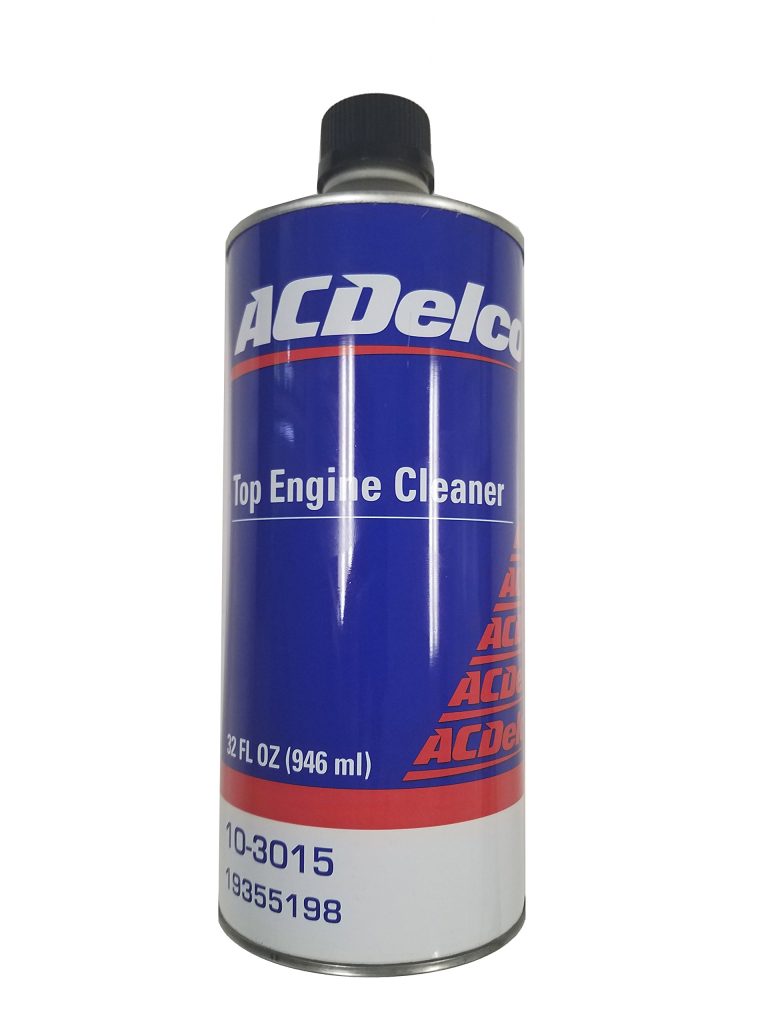
For preventive maintenance, ask for the applicable schedule or current manufacturer guidance. For a driveability complaint, ask what diagnosis supports deposits as the cause. For a specific product, ask for the full name and part number, together with any supersession or regional difference. The same service advisor may offer several of these options.
That does not make their purposes interchangeable. Have the estimate describe the actual work rather than only a package name. If the vehicle is running normally, the explanation should say whether the service is required or optional. If it is running poorly, the explanation should connect the treatment to a finding.
Avoid using another owner’s receipt as a maintenance schedule. A diesel truck and a gasoline sedan can share a manufacturer while requiring different fuel products and procedures. Even similar models can have different powertrains or market instructions. The vehicle identification and the relevant document are better starting points than brand identity alone.
What the published gasoline guidance actually distinguishes
In its June 2022 TechLink discussion, GM separates preventive injector cleaning from a named gasoline tank treatment. It says workshop injector cleaning should follow a published driveability or diagnostic-code procedure rather than be treated as a general preventive operation. The same discussion identifies GM Fuel System Treatment PLUS for gasoline preventive use at oil changes.
That historical publication is evidence of the distinction, not a substitute for checking the current instructions for your vehicle. Ask the dealer to identify the applicable version and any relevant owner-manual conditions. Do not lift one sentence from the article and apply it to every fuel type or every later model.
| If an advisor says a multi-step cleaning package is mandatory because GM recommends a tank treatment, ask them to show how the package matches the instruction. An additive recommendation does not automatically authorize every operation sold under a similar name. The written scope should identify which work is supported and which work is optional. |
Equally, the existence of restrictions on routine injector cleaning does not mean a diagnostic procedure can never call for cleaning. The distinction is the reason and method. A documented fault investigated under the appropriate procedure is a different situation from an unsourced universal mileage upsell.
Diesel guidance cannot be replaced with gasoline advice
GM bulletin 03-06-04-017L, issued in September 2017, covers specified diesel applications. It states that additives are not normally required or recommended for those engines, while describing limited circumstances and suitable product types. It permits a named diesel Fuel System Treatment Plus for deposit-related concerns on a technician’s recommendation. Its vehicle list and revision date are essential qualifications.
Do not use this bulletin as a universal current instruction for every GM diesel. Have applicability and any later revision checked. Do not transfer the gasoline product name, dosing or schedule into a diesel tank because both products include the phrase “Fuel System Treatment.” Similar wording is not chemical or application equivalence. The bulletin also distinguishes how products handle water and cautions against inappropriate formulations.
The practical owner action is to use the specified product and procedure, not to improvise a substitute from alcohol, transmission fluid or another solvent. A water-contamination problem needs the correct service response; a cleaner is not proof that the fuel is now suitable. For a diesel complaint, retain the refueling history and any water-in-fuel warning.
Tell the workshop about products already added. These details help it interpret the condition without guessing at the mixture. Do not add another treatment simply because the first one did not change the symptom.

Credit: m.youtube.com
Does a recommended product prove the injectors are dirty?
No. Product suitability and fault diagnosis are different decisions. A compatible treatment may have an approved use while the vehicle’s rough running has an unrelated cause. A misfire can require ignition, electrical, mechanical or fuel-supply investigation. A cleaner cannot determine which cause is present merely by being poured into the tank.
Ask what supports the deposit diagnosis. A useful explanation identifies the complaint, the relevant checks and why the proposed procedure is appropriate. “These engines need cleaning” is less specific than a documented result tied to your vehicle. If no fault has been investigated, describe the service as preventive or optional rather than as a confirmed repair. Do not use a fuel-economy change as an automatic injector diagnosis.
Driving conditions and measurement method can change consumption. A single dashboard figure is not an injector test. For a broader symptom assessment, see our fuel injector symptom guide. It explains why overlapping symptoms need evidence before parts or repeated treatments are selected.
How to check a dealer’s recommendation
Request the exact document title or bulletin number. Ask which model years, engines and markets it covers. Check whether the proposed service matches the document’s purpose.
- Confirm whether the instruction is current for your vehicle. Keep any footnotes or conditions with the excerpt. Ask for the full product name and current part number.
- Product numbers may change, so have the dealer explain a supersession rather than assuming an old online listing is the only acceptable container. Also ask whether a proposed alternative is authorized for the same use. A retailer’s “all engines” description is not evidence of that equivalence.
- Request an itemized estimate. Separate the additive from diagnostic labor, equipment-based cleaning and any other maintenance.
- Ask what result will be checked afterward. If the work is offered as required maintenance, ask where it appears in the applicable schedule.
- If it is optional, have that stated clearly. Finally, record the reason for your decision.
- You might approve a documented procedure, accept an optional treatment or postpone an unsupported package while requesting clarification. Keeping the reason and source avoids repeating the same uncertainty at the next service visit.
Use the exact instructions, not a stronger home mixture
Once applicability is established, follow the actual product directions. Check the intended fuel, treatment volume and any restrictions. Do not infer the dose from a similarly sized bottle.
- Do not combine several additives because each individually mentions cleaning. The correct destination also matters. A tank treatment belongs only where its directions specify.
- It is not an instruction to pour fluid into a disconnected rail or run an engine from an improvised container. Workshop procedures require their own equipment, safety controls and service information.
- A consumer bottle label does not supply that procedure. If the wrong product was added, retain its container and describe the quantities and vehicle status accurately.
- Tell the repairer whether the engine has been started or driven. Do not try to conceal the event with another additive.
The response depends on the actual mixture and system, not a universal dilution recipe. If a vehicle is leaking fuel, severely misfiring or repeatedly stalling, address that condition before considering optional treatment.
A named approved product does not make an unsafe vehicle safe to operate. Arrange diagnosis and transport as appropriate to the symptoms.
Keep maintenance, repair and product claims distinct
At the next service visit, use three questions. What does this vehicle’s current guidance require?
What problem has actually been found? What exact operation is being proposed?
Those questions keep a broad brand claim from becoming an unsupported maintenance bill. Keep a record of the product and date if a treatment is used.
Retain the diagnosis if a cleaning procedure is intended to correct a fault. Ask whether the original operating condition was checked afterward.
A receipt showing that cleaner was added proves the purchase and service, not that a particular injector has passed a functional test. If symptoms remain, return to diagnosis rather than repeating the treatment automatically.
A circuit fault needs the correct electrical investigation. A leak needs its source identified.
A wider contamination problem needs its own scope. Our injector replacement guide explains how those findings affect a later parts decision.
GM’s published guidance supports a more precise answer than either “always use cleaner” or “GM never allows it.” The correct recommendation depends on fuel type, application, document scope and the reason for treatment. Ask for those details in writing and use them to judge the proposed service.


Automotive reference information. Confirm specifications in the manual for your exact vehicle. Original replacement guides link to their research sources. About us