
What makes ball joint replacement difficult?
Ball-joint replacement difficulty depends on the suspension design, the joint's mounting method, access, corrosion and the equipment available. The same job name can describe a relatively accessible bolt-on component or a repair involving specialized pressing and substantial surrounding disassembly.
There is no useful universal difficulty score or completion time for all vehicles. Identify the exact operation before deciding how long it will take or how demanding it will be.
-
This guide explains the work that changes an estimate and the conditions that turn a straightforward plan into a difficult repair. For the separate question of whether your resources are sufficient, read our DIY readiness guide.
- Begin with serviceability rather than the visible stud. A joint may be pressed into an arm, retained by fasteners or supplied as part of an assembly.
- The supported repair method determines the tools and access needed. A part listing alone does not establish that every original component can be reused.
- Check the vehicle procedure and the instructions for the selected replacement. If the two do not describe the hardware actually installed, resolving that mismatch is part of the work.
-
Modified arms and previous repairs can change the problem substantially. Distinguish releasing the stud from removing the joint housing.
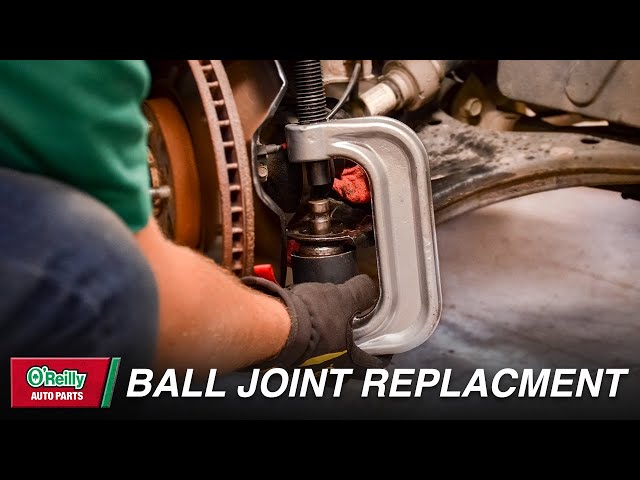
- The tapered connection to a knuckle can require a separator, while a press-fit housing needs a different setup. Completing the first operation does not show that the second will be easy.
- A joint that comes free from the knuckle may still be difficult to remove from its arm. Likewise, a removable arm can be awkward to position in the correct service tool.
- Ask which operations the time estimate includes instead of assuming that the whole repair is represented by one dramatic release in a video. Access can be the main difficulty even when the joint itself is ordinary.
-
Nearby brakes, driveshaft components, sensors or structural parts may limit tool placement. Their removal and safe support add work.
- The tool must reach the specified contact surfaces without loading an unintended component. Clearance sufficient to place a tool is not necessarily clearance sufficient to operate it squarely.
- Read the full procedure before deciding that an in-place repair is possible. Extra disassembly may be the correct route rather than a sign that a technician is taking an unnecessary detour.
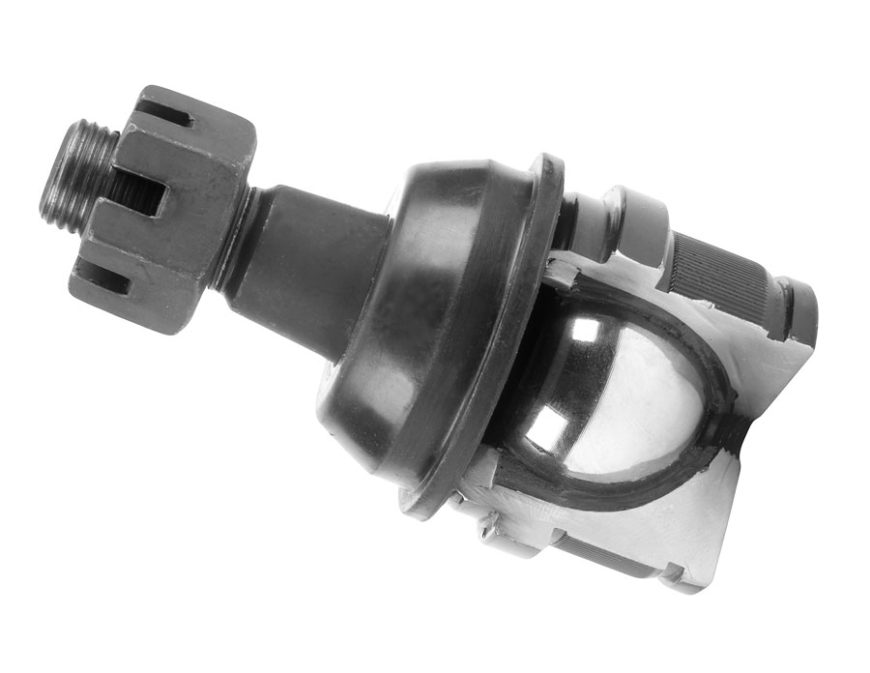
Replacement design can introduce details that are easy to miss. MOOG’s elliptical-joint installation guidance describes orientation aids for the affected products.
That is a specific example of why a press-fit joint is not simply pushed in any convenient direction. Other applications have their own seating, retention and positioning requirements.
Credit: www.autozone.com
The amount of effort required to move a part says nothing about whether it has been aligned correctly.
A careful installer needs time to identify those requirements and inspect the result.
Difficulty includes judgment and verification, not only physical resistance.
Why corrosion, tooling and damaged parts change the schedule
Corrosion can make fasteners difficult to remove and can conceal damage until the assembly is opened. It can also make the original time allowance uncertain. A shop should explain when a quote assumes normal disassembly and how it will handle unexpected conditions.
Additional time should connect to a documented problem rather than appear as an unexplained surcharge. Ask whether the vehicle must remain at the shop while a revised part or tool is obtained. Calendar delay and hands-on labor are related but are not the same measurement.
- A stuck fastener can change the work before the joint is reached. The supported remedy depends on the component and the repair instructions.
-
Do not assume that heat, a longer lever or an impact tool is permitted everywhere. Nearby materials and loaded components can make an improvised escalation inappropriate.
- A damaged fastener may require replacement, while damage to its mounting area may require a larger repair. The difficulty lies partly in recognizing when the original removal plan is no longer suitable.
- Continuing because time is running out is not a substitute for that judgment. Press tooling can be another bottleneck.
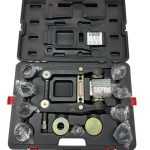
- A general-purpose kit may need an application-specific adapter that is not included. The required receiver must allow the part to move while supporting the correct surface.
-
A mismatched cup can make a serviceable component appear immovable. It can also damage the retained arm or the replacement joint.
- Confirming the tool arrangement before applying force saves more than a few minutes of setup. It prevents a simple-looking job from turning into an avoidable component replacement.
- The retained mounting needs inspection once accessible. MOOG’s K500422 instructions identify damaged or worn mating-knuckle conditions as significant for that particular repair.
- This is not permission to apply its dimensions to another vehicle. It illustrates why removal can reveal work that a quick external quotation could not settle.
-
If the retained component is unsuitable, pressing or fastening a new joint into it does not complete a sound repair. The quote and schedule need to reflect the additional finding.
- Ask for evidence and the revised plan before authorizing that expansion. Spring loads and component weight also influence the work arrangement.
A technician may need specific support equipment while the connection is released. The correct arrangement is determined by the suspension design, not by the size of the joint.
A vehicle that is safely raised is not automatically safe to dismantle at every suspension connection. Establishing controlled support is part of the operation.
Credit: www.autozone.com
If the workspace or equipment cannot provide it, the repair should move to an appropriately equipped setting. Time spent arranging safety is essential work rather than avoidable delay.
Parts availability can dominate elapsed time even after the technical repair is understood. A wrong side, incorrect option or missing retainer can stop reassembly.
Special-order arms and application-specific tools may not be available the same day. Confirm the complete parts list and return arrangements before dismantling.
A shop's promised collection time should account for inspection and the required completion services as well as parts fitting. Ask what will happen if the identified part differs from the installed component.
That conversation is especially useful for vehicles with undocumented suspension modifications. The number of joints being replaced also needs context.
Two joints may share some access work while still requiring separate removal and installation operations. A complete-arm option can change the balance between part cost and labor.
Neither comparison can be reduced to a universal rule that more parts always mean proportionally more time. Ask the repairer to explain the operation being quoted.
Compare complete scopes using our ball-joint replacement cost guide. It is more useful than comparing estimates for different repairs as though they were identical.
Plan completion and recognize an unfinished repair
The job is not finished when the replacement fits into place. Required retainers, fastening specifications and assembly positions must be addressed. Any removed brake, sensor or driveline components need their applicable restoration checks.
The vehicle may need alignment-related work according to its procedure and the disturbance involved. These tasks affect both difficulty and schedule.
- Ask whether they are included before choosing a quote or booking a collection time. A shorter advertised installation time may exclude important finishing work.
-
No generic number of hours is offered here because the application and condition are unknown. Instead, ask for the estimated labor operation, expected elapsed time and main uncertainties.
- A shop may know the normal procedure while still being unable to predict a concealed damaged bore. A home mechanic may understand the procedure but need longer because access and tooling are less convenient.
- Neither circumstance automatically indicates poor work. The useful measure is whether the repair follows the requirements and is verified.
- Speed without that evidence is not a reliable quality signal. An organized plan separates predictable work from contingencies.
-
Predictable work includes the known removal sequence, required parts and scheduled completion checks. Contingencies include corrosion, damaged retained parts and application mismatches.
- Agree how those findings will be documented and authorized. Keep a way to contact the repairer while the vehicle is apart.
- If doing the work yourself, maintain a safe stopping arrangement and recovery plan. An unfinished vehicle should not become a deadline that encourages unsupported shortcuts.
- After replacement, a remaining noise or steering concern needs diagnosis rather than dismissal. It could represent an installation issue, a separate fault or a symptom that was never correctly attributed.
-
Do not assume that new parts prove the suspension is sound. Ask the technician to compare the current condition with the original complaint.
- Keep the inspection report and parts record so the next assessment has a clear starting point. If a safety concern remains, do not use normal driving as a test to see whether it settles.
Can a skilled person complete some applications at home? Yes, when the full procedure, support, tools and verification are within their capability.
Can an apparently simple repair become difficult? Yes, particularly when access, corrosion or retained-component damage differs from the initial expectation.
Credit: www.autozone.com
Does a difficult removal justify unlimited force? No, the tool and vehicle limits still apply.
Does an expensive quote prove the task is technically difficult? No, ask for the itemized scope and local labor basis.
A good difficulty assessment names the actual obstacles and the plan for them. That produces a realistic repair decision without a misleading universal promise about time or effort.


Automotive reference information. Confirm specifications in the manual for your exact vehicle. Original replacement guides link to their research sources. About us