
The number of ball joints in a car depends on its suspension layout and on which joints you are counting. There is no reliable rule that every car has two, four or one at each wheel. A front suspension with one lower joint per side has two of those front joints; a layout with upper and lower joints on both sides has four at that axle. Neither example establishes the total for the entire vehicle.
Rear suspension design, multi-link arrangements and the distinction between a separate joint and an integrated assembly can change the inventory. Steering-linkage joints should also be identified separately rather than added silently to a suspension-joint count. The useful answer is a list of actual positions and part identities, not a number copied from another car. This guide explains how to create that list for maintenance or an estimate.
It does not require dismantling the suspension. Use the vehicle-specific parts diagram and service information, supported by safe identification of the installed components. If you are unsure what the part looks like, begin with our ball-joint identification guide.

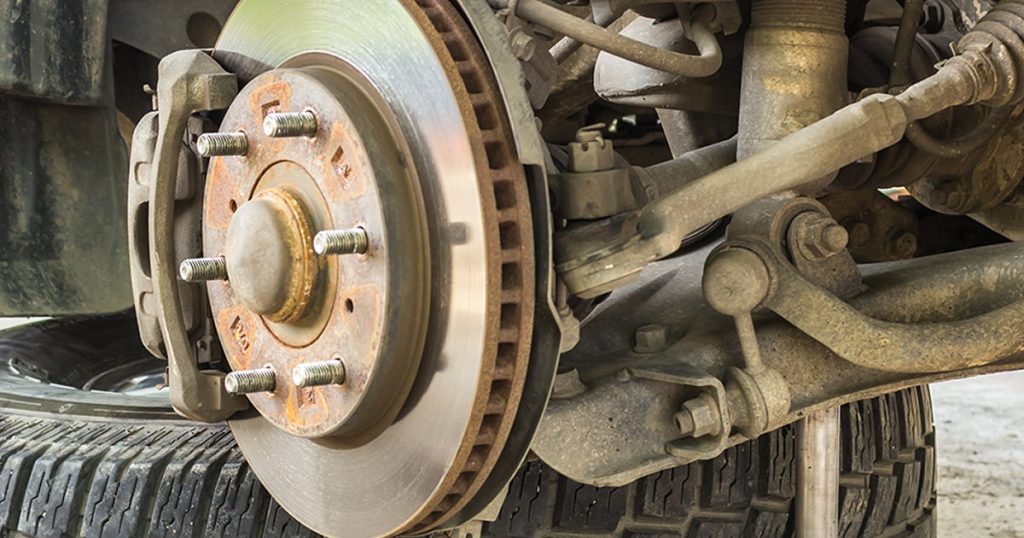
Credit: www.fastlaneeuropean.com
Check the rear axle instead of assuming it matches the front
A car’s rear wheels do not necessarily use the same suspension arrangement as the front. The front may use struts while the rear uses several links, a beam or another axle design. An independent rear layout can contain articulated connections that need their own identification. A rear axle without conventional upper and lower wheel-end ball joints should not be assigned them merely to complete a four-wheel count. Start a separate rear-axle inventory.
Identify the suspension type and the parts shown in its diagram. Distinguish joints, rubber bushings and complete links. Do not assume that every connection drawn at the end of a link is the same kind of serviceable ball joint. The catalogue terminology and the service procedure clarify what is actually fitted.
Define the scope of the count
Ask what the number will be used for. A count of all spherical connections is different from a count of suspension ball joints named on a repair estimate. A count of grease fittings is different again because sealed joints may have no fitting and other components may also have lubrication points. State the scope before comparing answers. For an estimate, list the specific positions the workshop proposes to replace.
For maintenance, list the installed parts with service requirements. For ordering, identify the part numbers and quantities for the exact application. These tasks can produce different totals without any contradiction. A clearly defined list is easier to verify than an isolated number.
Multi-link designs need a diagram, not a guess
- ZF’s multi-link guidance illustrates why several control links can be involved in locating a wheel. Counting arms does not automatically give the number of ball joints. Their connections and service assemblies differ. Some catalogue diagrams show separate joints, while others list the entire link or arm as the replacement unit.
- Read the diagram’s labels and parts notes. Trace each listed joint to its physical position and identify whether a mirrored position exists on the other side. Check whether the quantity field applies to one side, one axle or the whole vehicle. Do not double the number unless the catalogue context supports that calculation.
A photograph of the underside may help orient you but can hide connections behind shields or components. Use it alongside the diagram rather than as the sole inventory. Avoid reaching into tight suspension areas or lifting the vehicle simply to count parts without the proper support arrangement. A workshop can confirm uncertain positions safely.
Modified suspension requires another check. The original catalogue may no longer describe every installed arm or connection. Record the replacement or modification documentation and confirm compatibility. Do not assume that a kit’s marketing name specifies its complete joint count or maintenance requirements.
Common front layouts provide examples, not universal answers
Delphi’s service overview contrasts common strut and double-wishbone arrangements. In a conventional strut example with one lower joint on each side, the front suspension total is two. In a conventional double-wishbone example with one upper and one lower per side, it is four. Those examples are useful for understanding arithmetic after the layout has been identified.
The examples do not establish the rear count or cover every variation within a model family. A vehicle can use a more complex front arrangement that does not match a simple sketch. Treat the layout name as a starting point and confirm the actual diagram. The correct inventory should remain valid when you point to each listed component.
Do not count every boot as a suspension ball joint
- Tie-rod ends, some stabilizer links and other components can use socket-style connections. A drive-shaft joint may also have a prominent rubber boot. Those visual similarities do not make them the same part. Identify what each component connects and how the manufacturer names it.
- If a shop says all the ball joints were checked, ask whether that means the suspension joints or a broader steering-and-suspension inspection. Clear scope is especially important when a later report identifies a worn tie-rod end. The earlier phrase may not have included it. Precise component names avoid a disagreement based only on shorthand.
For your own record, keep steering joints on a separate line from suspension ball joints. Include the corner or linkage position and part identity. This does not imply that steering joints are less important; it makes the inventory readable and the repair scope auditable. A combined total without labels is less useful for either purpose.
A count also does not establish condition. Having four listed joints does not mean four replacements are required. Inspection determines which parts need attention, while the inventory helps ensure that relevant positions are not overlooked. Keep those conclusions separate when reading a quotation.
Upper and lower are positions, not interchangeable parts
Upper and lower joints may differ in dimensions, function, mounting and service procedure. A vehicle that uses both should not be assigned a single generic part number for all positions. ZF’s joint overview distinguishes mounting and functional arrangements, reinforcing the need to identify the application. The position label helps organize the inventory but does not establish interchangeability or a shared inspection limit.
Record upper positions explicitly where they exist
- If the diagram shows an upper joint, write down the side and the assembly containing it. Check whether it is sold separately or within an upper arm. A quotation for an arm may therefore include a joint without listing a second line for it. Counting both the arm and its included joint as two replaced joints would overstate the work.
- If a strut layout has no conventional upper control-arm joint, do not invent one to match a four-joint rule. The upper strut mounting is a different assembly. Ask the repairer to explain the layout on the diagram if the terms are unfamiliar. Some catalogues show several alternatives for the same apparent position.
- These may be options rather than additional joints fitted simultaneously. Confirm production details and application notes before adding them to the total. A long search-results list is not a parts inventory.
Record lower positions and their supplied assemblies
- For each lower position, confirm the exact component and how it is retained. A separate replacement joint and a control arm supplied with its joint can represent alternative repair products for the same physical location. They should not automatically be added together. The service method and catalogue determine which option applies.
- Check left and right quantities independently. Some parts are shared across sides; others have side-specific assemblies. One part number appearing twice may mean two identical units are required, while two different part numbers may represent one per side. The quantity field must be read in context.
- If the estimate includes both lower joints, ask whether both failed inspection or whether one is a preventive recommendation. The count itself does not answer that question. Record the findings separately so the scope of necessary and optional work remains clear.
Do not infer lower-joint service requirements from an upper replacement installed earlier. Maintenance provisions can differ within the same suspension. The completed inventory should identify the installed parts, not merely the components the vehicle originally left the factory with.
A practical inventory for cars and trucks
Begin with the vehicle identification number and the axle or suspension options requested by the parts source. Select the front diagram and identify each suspension-joint location. Record the side and position for every actual joint.
Note whether it is separate or integrated into an assembly. Then repeat the process for the rear suspension.
Keep steering-linkage joints separately labelled. Exclude catalogue alternatives that are not fitted together.
Check whether quantities refer to one side or the complete vehicle. Compare the list with any previous repair or modification records.
Ask a qualified workshop to resolve unclear positions. Finally, reconcile the inventory with the proposed repair rather than assuming every listed part needs replacement.
- A truck badge or four-wheel-drive label does not provide a universal answer. Trucks can use different front axle and suspension architectures, including layouts that do not match a passenger-car example.
- Rear arrangements vary as well. Use the actual application instead of a rule that every truck has four ball joints.
The result should read like a small location list that another person can verify. For example, two identified front positions plus separately established rear positions is clearer than a claimed whole-vehicle total without evidence.
Keep part identity and replacement quantity beside each location. Update the record when a complete arm or a different serviceable replacement is installed.
This approach also improves communication with the workshop. You can ask which listed positions were inspected, which failed and which remain in service.
It prevents an estimate for one assembly from being mistaken for work on an entire axle. Most importantly, it replaces a generic number with an accurate description of your vehicle’s actual suspension.


Automotive reference information. Confirm specifications in the manual for your exact vehicle. Original replacement guides link to their research sources. About us