Worn ball joints can contribute to a severe steering or front-end wobble, but the phrase death wobble does not identify a single failed part. Tire and wheel condition, steering connections, axle location, suspension components and application-specific geometry can all require investigation. Finding one worn joint does not establish that replacing it alone will resolve every oscillation.
A responsible diagnosis identifies the vehicle, the event and the actual defects. If the vehicle develops violent shaking or becomes difficult to control, focus on slowing and reaching a safe stopping place as circumstances permit. Do not deliberately recreate the event or accelerate to see whether it clears.
Arrange professional assessment and suitable recovery when control is affected. A symptom disappearing after slowing down is not proof that the underlying condition is safe. This guide explains how to evaluate the diagnosis and repair plan.
It is not a road-test procedure or a universal list of parts to replace. The term death wobble is used loosely online, so describe what actually happened rather than relying on the label. The workshop needs the vehicle’s configuration and a factual event history before it can choose an appropriate inspection.
Start with a precise description of the event
Record the conditions you remember from normal driving without repeating them. Did the steering wheel oscillate rapidly, did the whole vehicle shake, or was there a vibration felt mainly through the seat? Did the event follow a bump, braking or a change in direction? Did it stop when speed fell? Those details help distinguish a severe oscillation from other vibration complaints, but none proves a particular component failed.
Include recent tire, wheel, alignment, steering and suspension work. List modifications such as a lift or changed wheel specifications, using actual part details when available. Do not assume that an unmodified vehicle cannot have the problem or that a modification automatically caused it. Configuration is evidence for selecting the correct checks. The technician must determine its relevance.
A clear account might state that a strong steering shake began after a road disturbance and stopped only after slowing. That is more useful than saying the truck has bad ball joints because a forum describes the same name. If a passenger safely recorded the event, the video can help communicate its character. It cannot measure joint clearance, fastener condition or alignment by itself. Tell the workshop if the vehicle has already been repaired for the same complaint.
Provide the earlier findings and the parts replaced. A recurrence after one part was changed is important information, but it does not automatically prove that replacement part is defective. The original diagnosis, installation and remaining components all need consideration. Keep a sequence of what changed after each intervention.
What the technical evidence says about ball joints
A Pro Comp technical bulletin hosted by NHTSA addresses lifted 2005–2016 Ford F-250 and F-350 four-wheel-drive applications and identifies several worn steering and suspension components, including ball joints, as contributors to shimmy. It is a manufacturer’s bulletin for that stated application, not a universal diagnosis for every vehicle and not an NHTSA finding that one part causes all wobble. The useful lesson is the breadth of the assessment. A ball joint is part of a connected system, and abnormal movement can interact with other conditions. The bulletin does not justify skipping tire, steering or axle-location checks on an affected vehicle. Nor should its application-specific instructions be copied to a different model.
Locate the service information that actually covers the vehicle being inspected. MOOG’s track-bar ball-joint discussion provides another application-specific example involving front-end shimmy. A track-bar joint and a wheel-end suspension ball joint should not be confused simply because both use a ball-and-socket connection. Ask the workshop to name the exact component and position. A vague statement that the ball joint was replaced can conceal which part of the system was actually addressed.
Inspect the connected system before selecting parts
The inspection should begin with whether the vehicle is safe to test. Visible damage, a loose connection or a serious tire condition needs attention before any road verification. A workshop should not need the owner to reproduce a dangerous event as a prerequisite for examining the vehicle. Describe the history and let a qualified technician determine the controlled diagnostic plan. Tires and wheels need assessment appropriate to the complaint. Their condition, fitment and relevant measurements can affect vibration, but a balance result alone does not clear every steering and suspension component.
Likewise, replacing a worn joint does not establish that a tire or wheel issue was absent. Keep the findings separate so the repair plan addresses confirmed conditions rather than a single favored explanation. Steering connections and suspension attachments should be checked under the correct loading conditions. Track-bar arrangements, bushings, mounts and wheel-end components vary by vehicle. A component can appear secure in one position while a prescribed test reveals a problem.
Do not import a universal pry-bar test or allowable-play figure from another layout. MOOG’s joint inspection guidance itself distinguishes different joint roles and test arrangements. Alignment and geometry should be assessed in the context of component condition and configuration. An alignment printout does not repair looseness or prove that every moving connection is serviceable. Conversely, an out-of-range value needs interpretation against the correct vehicle or approved modification requirements.
Ask whether worn or damaged parts must be corrected before the final alignment assessment is meaningful. A steering damper or stabilizer should not be treated as an automatic cure for every complaint. Its condition may be relevant to a defined diagnostic procedure, but changing it does not certify the rest of the system. Ask what evidence supports its replacement and how the underlying inspection was completed. A temporarily reduced symptom is useful information, not a substitute for explaining why the event occurred.
Avoid maintenance shortcuts that hide the problem
Do not tighten random fasteners, add grease or change tire pressure outside the vehicle’s requirements as an informal cure. Each action can change a symptom without establishing a cause. If a connection is loose, it needs inspection for damage and the correct repair, not simply more force. If a joint has excessive wear, lubricant cannot restore the missing material.
Do not continue driving because the wobble only appears occasionally. Intermittent behavior can depend on operating conditions, and the absence of an event on a short trip does not establish serviceability. The repairer should determine which checks can be performed safely and what evidence is sufficient before returning the vehicle to use. Be cautious about a parts package marketed as fixing every case.
It may include components relevant to some vehicles, but the actual application and findings still matter. Replacing many parts without documenting their condition can obscure the original cause and make a recurrence harder to investigate. A broad repair can be justified, but the justification should explain each necessary item. The same standard applies to a single inexpensive recommendation.
A low-cost part is not automatically the most logical first step merely because it is easy to install. Ask what test supports it and what result would confirm or reject the proposed explanation. This keeps diagnosis from becoming an open-ended series of purchases.
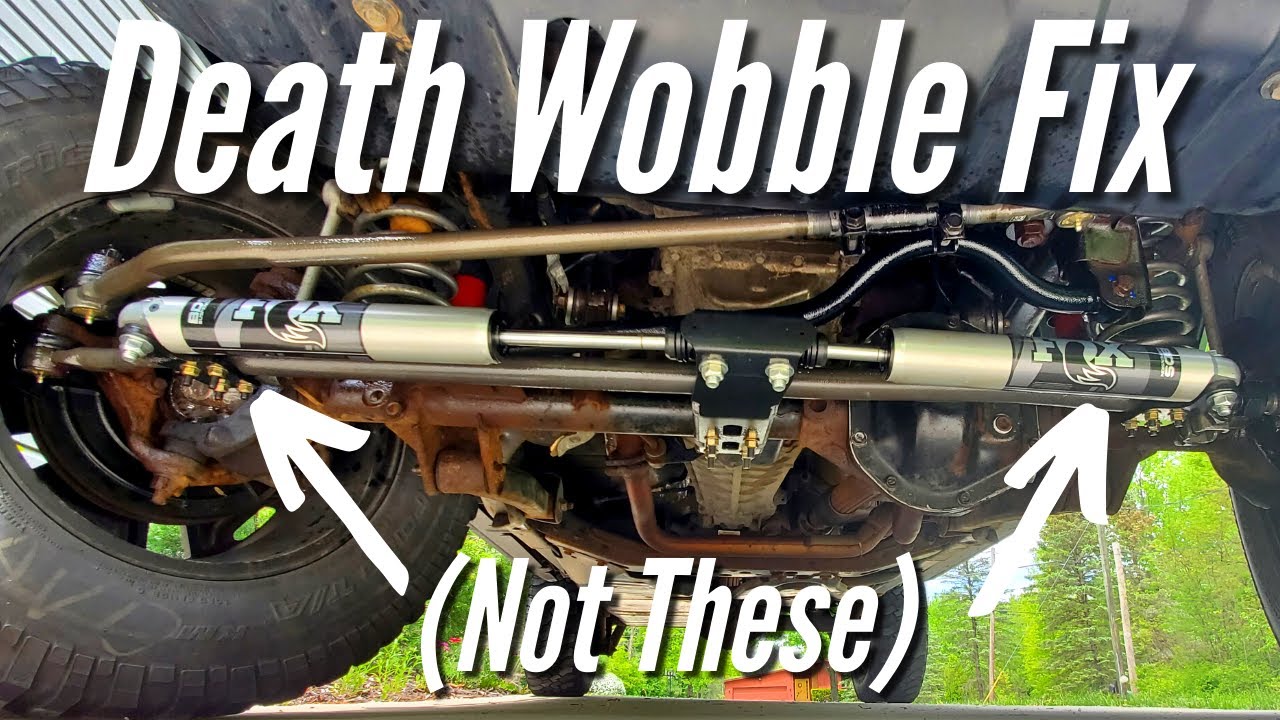
Credit: m.youtube.com
What a convincing repair and verification record includes
Request a report naming the vehicle configuration, observed complaint, relevant inspection results and confirmed defects. Ask which parts were measured or assessed and which procedures applied. Distinguish a failed component from a component replaced as a precaution. Where a bulletin is used, confirm that the vehicle and installed equipment fall within its scope.
These details make the repair reviewable rather than dependent on a confident verbal diagnosis. The estimate should account for required hardware, any damaged mounting surfaces and the checks needed after installation. A new joint fitted into an unacceptable receiving component may not address the problem. Likewise, a modified suspension may require application-specific correction beyond replacing a worn item.
Do not assume that restoring one connection restores the entire geometry. Before functional verification, the workshop should complete the required stationary and installation checks. Any controlled road assessment belongs to a safe professional process, not a request for the owner to hit the same bump again. Ask what was done to address the original complaint and what remains uncertain if it could not be reproduced.
Honest limits are more useful than an unsupported promise that the vehicle can never wobble again. If the complaint returns, stop treating previous replacement as proof that those areas cannot be involved. Recheck installation, the remaining system and the original assumptions.
Provide the earlier records so the next technician can build on actual findings. A repeated event should prompt a coherent review, not automatic repetition of the last parts order. For questions specifically about ball-joint noises and wear evidence, use our diagnostic guide.
For how a valid joint test is selected, see inspection methods and evidence. Those checks support the broader investigation but do not replace it. The answer to whether bad ball joints can contribute is yes; the answer to which repair this vehicle needs must come from its own complete assessment.


Automotive reference information. Confirm specifications in the manual for your exact vehicle. Original replacement guides link to their research sources. About us