
A worn ball joint can contribute to clunking, imprecise steering and uneven tire wear, but none of those symptoms identifies it on its own. Confirmation requires inspecting the correct joint using the support position, measurement direction and wear limit specified for that suspension.
Ball joints let connected suspension parts change angle as the wheel steers and moves over bumps. They are safety-critical connections. If a wheel appears displaced, steering suddenly becomes difficult to control, or a joint is visibly separating, stop using the vehicle and arrange recovery. Do not test it by driving farther.
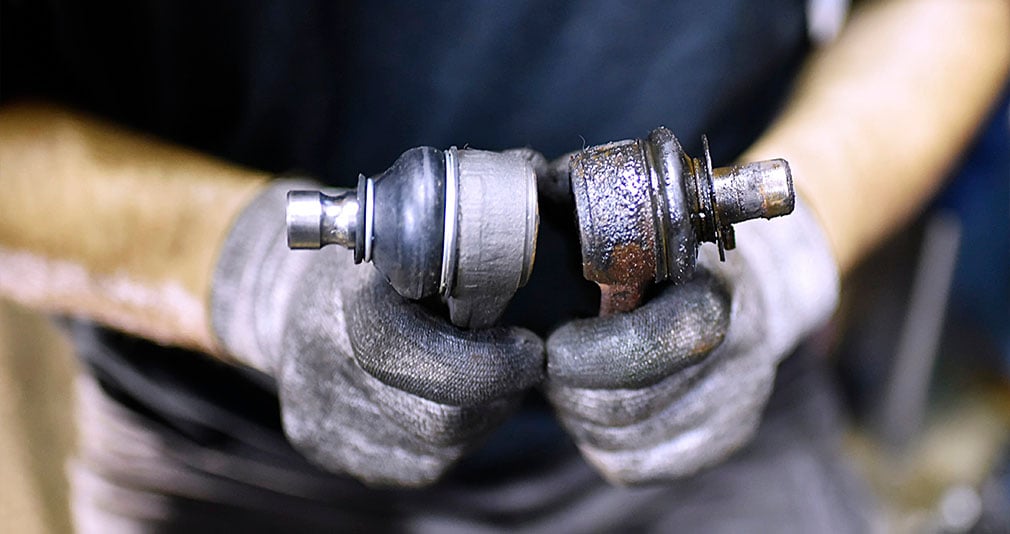
Credit: blog.rainbowmuffler.net
Symptoms that justify a suspension inspection
A clunk when a wheel crosses a bump may lead the technician toward a loose joint, but links, bushings and other attachments can also make noise. Note whether it comes from one side, occurs over single-wheel bumps, or began after an impact. MOOG: symptoms of bad ball joints describes common warning patterns; use them to organize observations rather than order a part from a symptom list.
Wandering or uneven tread wear also needs a broader check. Record tire pressures, the location of the wear and any recent alignment or tire work. An alignment reading shows wheel geometry at the time of measurement; it does not prove that a particular joint is responsible for a change. Compare this with tie rod end symptoms, which concern the steering linkage rather than the same suspension connection.
A vibration has even less diagnostic value without its conditions. Does it track road speed, braking or bumps? A technician may need to evaluate tires, wheel bearings and other joints alongside the ball joint. Describe the pattern without assuming every front-end noise has the same cause. A useful booking note is: “left-front clunk on slow uneven surfaces; no conclusion yet about the part.”
How the suspected joint is checked
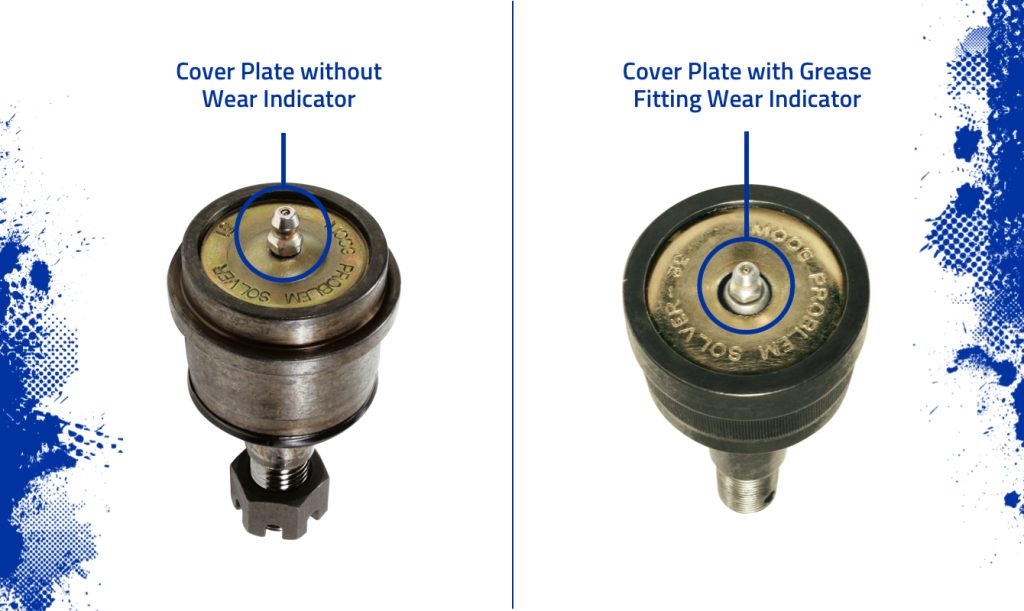
A damaged protective boot is a reason to inspect the joint and follow the applicable service criteria. It is not a measurement of internal play. Likewise, grease around a fitting does not prove good condition, and adding grease cannot restore worn mating surfaces. Identify the exact upper or lower joint and whether it is separately serviceable or part of a control-arm assembly before comparing quotations.
The support position matters because suspension load can hide or reveal movement. MOOG: inspecting ball joints for looseness distinguishes inspection approaches for different arrangements. A universal instruction to jack up the vehicle and pry at the tire can mislead and create a lifting hazard. Have the joint assessed with suitable equipment, the manufacturer's procedure and the applicable movement limit; do not import a clearance number from another vehicle.
Ask the shop to state which joint failed, how it was loaded or unloaded during inspection, what movement was measured and the specification used. If binding rather than looseness is suspected, ask what test supports that finding. A short video may illustrate movement, but it should identify where the movement occurs; wheel movement could originate at another connection. Request the condition of related boots and fasteners as part of the same inspection.
Deciding what to repair
An estimate should separate the diagnosed joint from optional preventive work and explain any control-arm assembly requirement. It should include applicable fastener renewal, installation requirements and an alignment check when the vehicle's procedure calls for it. There is no universal rule here that both sides must be replaced or that a specific mileage proves failure. Keep the measurements and repair record so a later noise can be investigated against evidence rather than the assumption that every new symptom is the same joint.


Automotive reference information. Confirm specifications in the manual for your exact vehicle. Original replacement guides link to their research sources. About us