
There is no reliable number of miles or days you can safely drive with a bad ball joint. Its remaining strength cannot be predicted from a noise, a photograph or how far the car travelled yesterday. If a technician has confirmed an unsafe joint, do not continue driving while waiting for it to become louder. Arrange repair and suitable transport.
If you only suspect a problem, the next step is an assessment of the actual suspension rather than a mileage estimate from the internet. A sudden steering change, visible wheel displacement, severe clunking accompanied by instability or a known loose or separating suspension connection calls for stopping safely and arranging recovery. Do not deliberately drive over bumps to test it. If the car is already parked, leave it parked until qualified advice establishes the appropriate next action.
This article addresses that transport decision. Our ball-joint symptoms and diagnosis guide explains how a workshop distinguishes a joint fault from other causes. The phrase bad ball joint is often used imprecisely. It might mean a damaged protective boot, measured wear outside specification, a loose mounting connection or a component that is already close to separating.
Those findings have different meanings, and an online answer cannot establish which one applies. Ask for the actual finding and the service limit used. That information is more useful than a prediction that the part will last another week.
Warning signs change the next action, not the mileage limit
Treat a change in control differently from an unexplained noise with no diagnosis. If the vehicle suddenly becomes difficult to steer or a wheel appears out of position, do not attempt a journey to the workshop. Reduce exposure to traffic as safely as circumstances allow and contact assistance. Do not crawl beneath the vehicle or try to reposition a displaced wheel at the roadside.
-
A recovery operator needs to know that a suspension connection may be compromised so the vehicle can be loaded appropriately. A clunk, squeak or vibration is a reason to investigate, but it does not identify the ball joint by itself. Tire, bearing, steering and other suspension problems can overlap. Report what happened during normal use without recreating it.
- Note whether the sound occurred while turning, crossing a bump or braking. Record recent impact damage or suspension work. Mention any new steering effort or tendency to wander.
- Give those details to a qualified repairer and ask whether the vehicle should be recovered rather than driven for inspection. Do not assume that quieter means safer. A joint can change its sound with temperature, load or movement, and temporary silence does not establish its structural condition.
-
Similarly, the absence of a dashboard warning does not certify that a mechanical suspension connection is sound. A warning light is not required before a worn joint needs attention. The decision must rest on inspection and the vehicle’s behavior, not on whether the dashboard has recognized a problem.
- Visible damage also requires interpretation. A torn boot can allow contamination and deserves inspection, but a photograph of the boot cannot quantify internal wear. Conversely, a boot that looks intact cannot prove the joint is within its limits.
- Tell the shop exactly what has been observed. If someone has described visible free movement, ask where it occurred and how it was checked. Movement at a wheel can come from more than one component, so naming the location matters.
-
An old advisory is not a current clearance. If an inspection previously recorded wear or a damaged boot, use the report as context for a new assessment when symptoms change. Do not turn a recommendation to monitor a condition into an unlimited permission to drive.
- Ask the original repairer what the finding meant, whether a replacement was recommended and what would require immediate action. A vehicle that has since hit a pothole or developed instability needs its present condition considered. There is also no useful rule that highway travel is safe while city driving is not, or that slow speed guarantees the joint will remain intact.
Road loads and failure consequences are not controlled simply by choosing a lower speed. Avoiding a particular route cannot repair the component. If the condition has been judged unsafe, the practical alternative is recovery or repair at a safe location, not a revised driving technique.
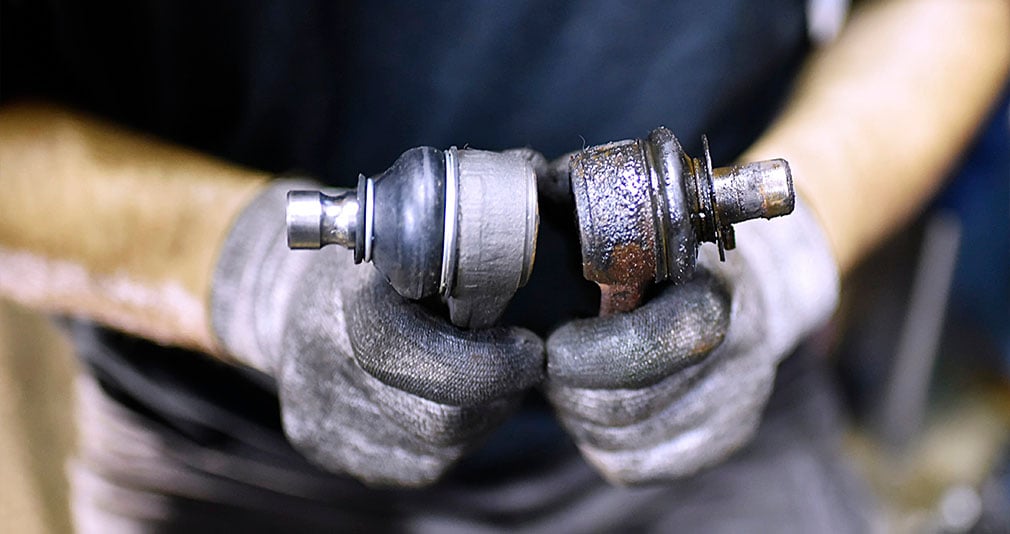
Credit: blog.rainbowmuffler.net
Why the risk cannot be converted into a countdown
MOOG’s ball-joint guidance warns that severe wear can allow the stud to separate from its housing and lead to loss of vehicle control. The important point for a driver is the potential consequence, not an assumption that every noisy joint is already at that stage. Without identifying and inspecting the actual component, there is no credible way to assign a remaining distance. Anecdotes about somebody else driving for months cannot establish the condition of yours. A ball joint is part of a system that locates and articulates the wheel. Its design, loading, wear and installation condition all matter. Two vehicles with similar noises may have different faults. Two examples of the same model can also have very different damage histories. A general lifespan estimate for a healthy component is not a safe-use allowance after a defect has been found.
The odometer may help describe service history, but it does not measure the amount of usable material remaining in a worn connection. Delphi’s service guidance emphasizes checking joints for damage and excessive free play using the approach appropriate to the suspension. That is a condition assessment, not a prediction of the day a part will fail. A workshop can decide whether a measured condition meets its criteria and whether repair is necessary. It generally cannot guarantee that an unsafe part will survive a particular trip. Ask for a serviceability decision rather than pressuring the technician to supply a mileage number that the evidence cannot support. The potential bill also extends beyond the original joint. A failure can involve the wheel and surrounding suspension or steering parts, and recovery may become more complicated once the vehicle cannot roll normally. That does not justify inventing a national repair cost or assuming every adjacent part is damaged.
It does explain why postponing a confirmed necessary repair is a poor way to control costs. Request an itemized estimate while the actual condition can still be assessed and planned for. Do not confuse maintenance with restoration. Adding grease to a serviceable joint that is designed for lubrication is different from repairing excessive internal wear. Tightening the mounting nut does not automatically remove play inside the ball-and-socket assembly. Spraying a product until a squeak stops does not establish safe operation either. Those actions can change a symptom without correcting the defect. Our ball-joint tightening explanation separates securing the connection from addressing a worn joint.
Plan inspection, transport and repair without guessing
Start by calling the workshop or roadside provider with the vehicle identity, current location and observed symptoms. State whether the car is parked, whether a wheel is visibly displaced and whether a professional has already identified a failed component. Provide the inspection wording if available. Ask what transport method is appropriate for the suspected suspension condition and the vehicle’s towing requirements. Do not assume it can simply be driven onto a recovery truck or towed with every wheel rolling.
If the vehicle is on a hazardous roadside, prioritize personal safety and follow local roadside guidance. Keep people clear of traffic and do not attempt a suspension inspection where the car cannot be secured safely. Tell the operator about any instability before loading starts. The recovery method is their professional decision using the vehicle requirements and observed damage. This is particularly important when the ordinary wheel position or rolling ability has changed.
At the inspection stage, ask which joint or connection failed and how that finding was confirmed. Request the measured movement and applicable limit when measurement is part of the procedure. Find out whether the proposed work involves an individual joint or a control-arm assembly and why. Ask whether the opposite side and related components were inspected, rather than assuming that all joints must be replaced together or that the other side is automatically sound. A clear estimate separates necessary repair from optional preventive work.
If cost is delaying the decision, request a written estimate and discuss repair scheduling or a second qualified opinion while the vehicle remains out of use if unsafe. Do not ask a friend to drive it as an informal test. Comparing estimates is useful when they describe equivalent findings, parts and verification; a lower price for a different scope is not a like-for-like comparison. Include transport and any required alignment assessment when planning the total job. Before collecting the vehicle, ask what verified the repair.
The answer should cover correct installation and fastening, any required alignment work and appropriate functional checks. A replaced joint does not automatically explain an unresolved vibration or steering complaint. Tell the repairer if the original symptom remains and have it reassessed. Keep the report and part details so future diagnosis starts with an accurate history.
Can you drive just to the nearest garage? Distance alone cannot answer that question. A confirmed unsafe joint should be transported, and an uncertain condition with serious symptoms warrants recovery and assessment. Can it wait until payday?
A calendar does not change the defect; arrange alternatives while the car is parked. Does a recent inspection guarantee it is safe now? It documents a past assessment, not protection against subsequent damage or wear. The responsible decision is to establish present serviceability and act on it, without converting uncertainty into an invented safe distance.


Automotive reference information. Confirm specifications in the manual for your exact vehicle. Original replacement guides link to their research sources. About us