
The usual count—and why it can be wrong
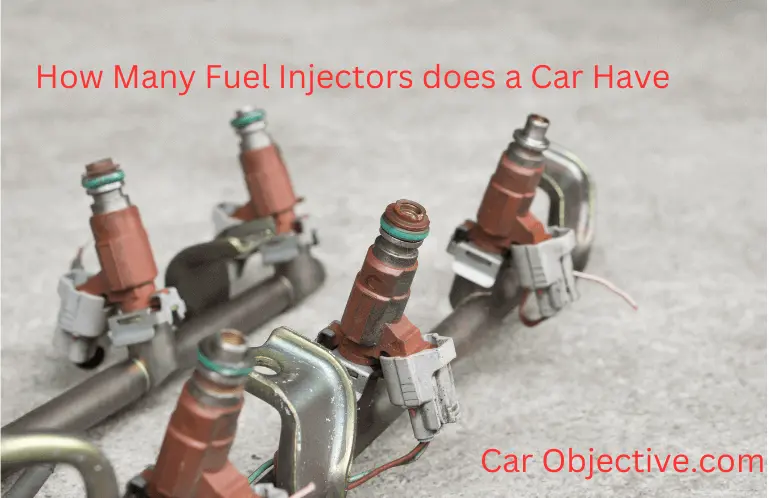
Many fuel-injected engines have one injector for each cylinder: four on a four-cylinder, six on a six-cylinder and eight on a V8. That is a useful starting point, not a universal rule. Some engines have two injectors per cylinder, while older central-injection systems can feed several cylinders from fewer injectors.
The reliable answer comes from the engine’s injection system, not just the badge on the trunk. Identify the engine code, model year and fuel-system layout before ordering a set. A catalog showing several compatible injector listings may be offering alternatives rather than describing the number fitted to the car.
Count the hardware, not the injection events
An injector is the component that meters and sprays fuel. A single injector can deliver several separately controlled injections during an engine cycle. Those pulses do not mean the engine has several physical injectors at that cylinder. Likewise, multiple spray holes in one nozzle still belong to one injector.
Location matters. Port injection delivers fuel into the intake path; direct injection delivers it into the cylinder. Bosch’s port-injection overview also describes a twin-injector arrangement, showing why even the term “port injection” is not sufficient by itself to establish the count.
How many injectors does a V6 have?
A V6 with one injector per cylinder has six. A V6 with one port injector and one direct injector per cylinder has twelve. The first-generation Lexus GS 450h technical press pack documents that two-injector-per-cylinder D-4S arrangement. Use that as a documented example, not a specification for every Lexus or Toyota V6.
A shared fuel rail does not change that arithmetic
A rail distributes fuel to connected injectors; it does not turn those injectors into one component. Conversely, seeing two rails does not automatically mean two injectors per cylinder: a V engine can distribute one set across its two cylinder banks. The parts diagram must show what each rail actually supplies.
Do not confuse fuel pumps with injectors either. The number of pumps, pressure stages or hoses is not an injector count. A parts estimate that includes a pump and four injectors contains five purchased components, but only four injectors.
For a combined port-and-direct system, record the quantity of each type separately. The two types do different jobs and are not interchangeable simply because they serve the same cylinder. Ask which set a quoted repair concerns.
Four-cylinder and V8 examples
The arithmetic is straightforward once the arrangement is known: four cylinders multiplied by one injector gives four; four multiplied by two gives eight. Eight cylinders multiplied by one gives eight; eight multiplied by two gives sixteen. These are configuration examples, not claims about a particular engine family.
What about throttle-body injection?
In a central or throttle-body system, fuel can be introduced upstream for distribution to multiple cylinders. Holley’s technical reference explains these layouts. Do not apply the one-per-cylinder shortcut to an older or converted car without identifying the installed system. An aftermarket conversion can differ from the original factory parts diagram.
What about a named engine such as the 5.7 Hemi?
Use the exact year, vehicle and engine application to check its parts catalog instead of applying a general V8 answer. Engine displacement is not a unique parts identifier. Also keep spark plugs separate from injectors: the number of ignition components does not establish how many fuel-delivery components are fitted.
How to verify your car’s count before buying
Start with the VIN and engine identification from the vehicle or its service information. Record the market and model year, because similarly named vehicles can have different engines. For a modified car, document the installed engine and injection kit as well; the VIN lookup describes the original build.
Open the manufacturer’s applicable fuel-system diagram or ask the parts department for the injector quantity per vehicle. Look for separate entries for port injectors, direct injectors, seals and complete rail assemblies. A drawing may illustrate one representative part while its quantity field specifies several.
Check what the seller’s quantity means. “One required,” “one per cylinder,” “set of four,” and “sold individually” answer different questions. Save the reference number and package contents before comparing totals. A photograph of four views of an injector does not mean four injectors are supplied.
A useful record for a parts inquiry
Give the supplier a short identification record rather than asking only for “injectors for a V6.” That lets them distinguish the engine application, the injection circuit and the amount you need. The following fields make an order or quotation easier to check.
Record these details without dismantling the fuel system:
- Vehicle: Record the VIN, model year and selling market.
- Engine: Include the engine code and fuel type, not only displacement.
- Configuration: Identify port, direct, combined or central injection.
- Changes: Note an engine swap or aftermarket injection conversion.
- Diagram: Save its application and injector quantity field.
- Reference: Copy the complete injector part number.
- Package: Confirm whether the listing is for one piece or a set.
- Purpose: Distinguish counting installed hardware from planning a diagnosed repair.
If a diagram and a retailer’s fitment listing disagree, resolve the disagreement before buying. Ask whether a part number has been superseded or whether the listing covers only one injection circuit. Do not loosen a fuel line merely to count parts hidden under an intake manifold.
Installed quantity is not replacement quantity
Knowing that an engine has eight injectors does not establish that all eight need replacing. The repair quantity depends on the identified defect, other test results and the applicable manufacturer procedure. A shared rail alone is not a reason to condemn every connected injector.
When comparing a one-injector quote with a complete-set quote, separate these questions:
- Which injector or circuit has a confirmed defect?
- What evidence supports replacing additional injectors?
- Are seals or installation parts supplied separately?
- Does the price include the labor required for this application?
- Are any calibration or coding operations specified?
- What parts and work does the written warranty cover?
- How will the workshop verify the repair before returning the car?
An itemized explanation makes the decision clearer than a claim that replacing everything will automatically improve performance. If the suspected issue is leakage, begin with the separate injector leak diagnostic guide; the count cannot diagnose which component is faulty.
Keep counting and maintenance questions separate
The number fitted does not set a cleaning interval. Follow the maintenance information for the vehicle and investigate actual symptoms rather than assigning every engine the same mileage for injector cleaning. Our injector-cleaner and spark-plug guide explains why different components should not be treated as one cleaning target.
Before placing an order, you should be able to state the exact application, injector type, installed quantity and package quantity. If one of those remains unknown, the useful next step is to resolve that detail—not to buy the number suggested by cylinder count alone.


Automotive reference information. Confirm specifications in the manual for your exact vehicle. Original replacement guides link to their research sources. About us