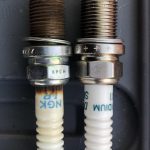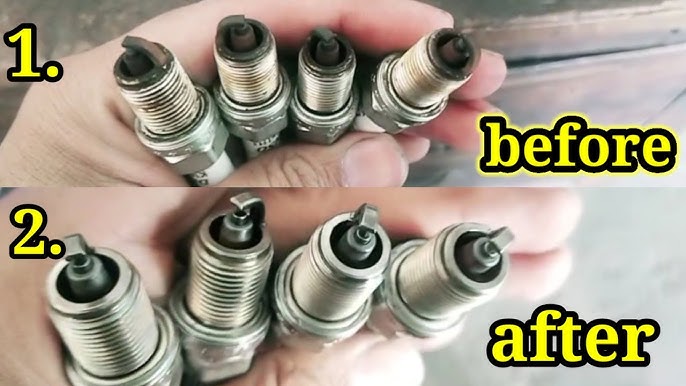

A fuel injector cleaner may claim to remove deposits from spark plugs, but that depends on the particular product. The label matters: some manufacturers expressly include plugs in their cleaning claims. An additive cannot replace missing electrode metal, mend a cracked insulator or establish why an engine is misfiring.
The practical decision is whether there is a deposit problem that the proposed treatment addresses. Buying a bottle because an engine hesitates skips that step. Hesitation can involve ignition, fuel delivery or other faults, and a temporarily smoother engine does not identify which component changed.
Use this guide to separate a manufacturer's cleaning claim from evidence that your plugs need attention. It covers gasoline spark-ignition engines and tank additives; it does not turn a gasoline product into a treatment for diesel glow plugs or authorize a different application method.

Credit: www.turbopacs.com
Read the actual product claim first
For example, LIQUI MOLY's Australian Injection Cleaner P000052 listing explicitly names spark plugs among the components whose deposits it claims to remove. That is a manufacturer statement for this product, not an independent test of the bottle in your engine or a guarantee that every fouled plug will recover.
Check the exact name and market version, rather than assuming every bottle from the same brand contains the same treatment. A label for a tank additive should state the intended fuel and the quantity it treats. Save that information with the service record so the proposed use can be checked against the vehicle's instructions.A fuel-system claim is not a plug inspection
A claim about cleaning fuel injectors concerns a different component from a claim about cleaning a spark plug. Even the phrase combustion-chamber cleaning does not identify the type or severity of deposits on a particular plug. Look for what the manufacturer actually promises, and keep that separate from the condition a mechanic has established on the vehicle.Do not invent a universal treatment interval
There is no sound basis for assigning all injector cleaners one mileage interval or one bottle-to-tank ratio. Tank capacity, product concentration and vehicle guidance differ. More frequent treatment is not proof of better ignition maintenance, and a larger dose is not a method for repairing an electrical or mechanical fault. Follow the applicable instructions rather than a generic schedule.What cleaning can and cannot change
Separate contamination from physical deterioration. Deposits can interfere with a plug that otherwise has the correct dimensions and intact electrodes. Wear changes the electrode geometry itself. A cleaning claim concerns material on a component; it does not mean the component's original shape or remaining service life will be restored.
Electrode wear still needs a service decision
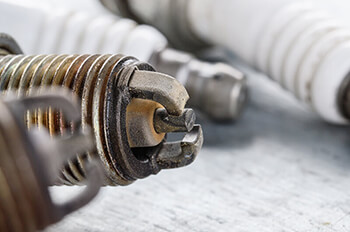
DENSO explains plug wear in terms of electrode erosion and increasing voltage demand as the gap grows. Removing some deposits cannot reverse that lost metal. If the fitted plugs have reached the vehicle's replacement requirement, an additive is not evidence that their scheduled replacement can be postponed.
Different deposits imply different questions
The Champion condition chart distinguishes dry carbon, oil fouling, ash and other damage patterns. Those categories matter more than calling every discolored plug dirty. A fuel additive's carbon-cleaning claim does not establish effectiveness against every deposit in the chart, and appearance alone cannot settle the underlying engine diagnosis.
If oil keeps reaching the firing end, even a temporary improvement leaves the oil-entry problem unresolved. A plug with a fractured ceramic or damaged electrode is a different case again. Do not group these conditions together simply because they can all accompany rough running; the appropriate repair can be very different.
Why an improvement can be indirect
An injector and a spark plug perform different jobs. The injector meters fuel; the plug provides an ignition discharge. If deposits are disrupting fuel delivery and an appropriate treatment improves that delivery, combustion may improve without anyone proving that the plug itself became cleaner. This distinction matters when judging an apparent success.
Separate the cleaning target from the result
Red Line's SI-1 listing, for instance, describes injector, carburetor, valve and combustion-chamber cleaning. Its listed targets are useful information, but they are not a measured before-and-after assessment of your plugs. Likewise, the absence of plugs from that particular list would not prove that no plug deposit could be affected.
Do not infer effectiveness from one smoother journey
Suppose the roughness disappears after an additive and a refill. You have observed a change after two interventions, possibly with different temperature, traffic or engine operating time as well. You have not isolated the additive, established what deposit was present or ruled out an intermittent electrical connection. That uncertainty should influence the next decision.
Record the product's full name, the fuel quantity, when the symptom began and whether it returned. Keep any diagnostic report obtained before treatment. This gives a technician a useful timeline if the problem persists, rather than an account that several unspecified cleaners were tried over several weeks.
An unchanged symptom is useful information too. It is a reason to reassess the assumed cause, not automatically to increase the concentration or stack another brand on top. Different products can have different approved fuels, quantities and application routes; their names alone do not establish that mixing them is suitable.
For the deposit mechanism itself, see why dry carbon forms on spark plugs. That explanation helps frame a cleaning proposal, but it does not convert a photograph of soot into proof that a particular additive will solve the condition producing it.

Credit: www.youtube.com
When diagnosis should come before a bottle
A new warning light, a pronounced misfire, repeated stalling or a major loss of power changes the priority. Establish whether continued operation is appropriate and obtain a fault assessment. A tank treatment needs operating time, and asking a damaged or severely misfiring engine to keep running just to finish a treatment is not a sound diagnostic plan.
Treat warning behavior as information
Follow the instructions for your vehicle's warning display. For example, Mazda's warning-light guidance treats a flashing check-engine light as requiring a safe stop and assistance. Do not override such guidance because an additive label mentions rough running; a product benefit statement is not permission to continue a journey under an engine warning.
Ask what was actually found on the plugs
If a workshop reports fouled plugs, ask whether the evidence was dry soot, wet fuel, oil, deposits of another kind or damage. Ask whether one cylinder differed from the others and whether the plug part numbers were correct. These details make a repair proposal assessable without assuming that every dark mark means the same failure.
Tank treatment is different from other cleaning methods
A bottle intended for the fuel tank, a product applied through an intake and a method used on a removed plug are separate procedures. Approval for one does not establish approval for the others. Never pour a tank additive into plug wells or combustion chambers by improvising from its general cleaning description.
Protect the plug's delicate working surfaces
Do not use an internet cleaning recipe as a substitute for instructions covering the exact plug. NGK's handling cautions emphasize the vulnerability of fine-wire electrodes. Scraping, abrasive treatment or forcing tools against the center electrode can change a serviceable component into a damaged one; cleaning is not automatically preferable to correctly specified replacement.
Intake service has its own application limits
Sea Foam describes its Spray product as an intake-applied treatment that reaches areas tank cleaners may not reach, including intake-valve areas on gasoline direct-injection engines. This illustrates why the application route matters. It does not mean its spray instructions apply to an injector-cleaner bottle or to every engine configuration.
Use the vehicle's maintenance guidance to decide
Before purchasing treatment, identify the vehicle, engine and fuel specification, then read its current owner and service guidance. A generic label's broad compatibility statement does not cancel a vehicle-specific restriction. Conversely, a restriction for one model should not be represented as a ban for every gasoline engine.
Routine service and an additive are separate choices
GM's June 2024 bulletin 04-06-04-051I, covering the listed 2025-and-prior passenger cars and trucks, distinguishes diagnostic injector-cleaning procedures from approved tank additives. It rejects injector cleaning as a blanket preventive service while discussing specified detergent products and owner-manual directions. That distinction prevents a service recommendation from being oversimplified into either always clean or never use additives.
Questions that make a treatment proposal specific
Ask which product is proposed, which deposits it is meant to address, what evidence points to those deposits and how success will be checked. Also ask whether plugs need replacement independently of the cleaning service. A clear answer should relate to the actual vehicle and observed condition, not merely to a mileage-based sales package.
Credit: www.ngk.com
Choose the next step from the evidence
If the engine has no symptoms and its maintenance is current, follow the fuel and additive policy for that vehicle rather than buying cleaner to extend plug life indefinitely. If a compatible deposit treatment is justified, follow the exact product and vehicle directions and keep a record of the result.
If plug fouling returns, the more useful question is what keeps creating the contamination. Our guide to repeated spark-plug fouling examines that recurring pattern. Repeatedly purchasing cleaner without revisiting the cause can obscure the history while leaving the engine fault untouched.
The meaningful answer is therefore product-specific: some cleaners claim plug-deposit removal, but no cleaning claim by itself establishes that a worn, damaged or repeatedly contaminated plug is ready for further service.


Automotive reference information. Confirm specifications in the manual for your exact vehicle. Original replacement guides link to their research sources. About us