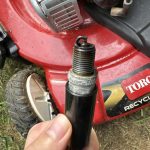
A spark plug that repeatedly fouls usually needs more than another cleaning or replacement. Deposits can return because the operating conditions, fuel mixture, oil entry, ignition problem or incorrect specification remain unchanged. First establish what is actually on the firing end and whether the same cylinder is affected each time. “Black,” “wet” and “dirty” describe observations; they do not identify a single repair.
This guide concerns recurring fouling in gasoline vehicle engines. It separates deposits that interfere with firing from normal external staining and from melted or broken parts. A newly installed plug that soon becomes contaminated is evidence worth preserving, especially when a previous replacement made the engine run better only briefly.
If the vehicle is shaking heavily, losing power unsafely or showing a flashing engine warning while running, arrange a safe stop and assistance under its handbook. Do not try to burn the deposits away with hard driving. Diagnosis starts after the immediate running problem has been made safe.
Credit: www.autosuccessonline.com
Why a deposit can interrupt normal firing
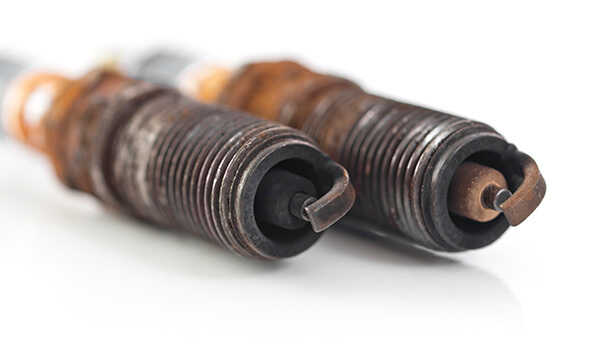
Niterra explains carbon fouling as contamination around the insulator at the firing end that can provide an unwanted electrical path. Energy that should produce the intended spark can leak elsewhere. This explains why removing deposits may change how the engine runs without explaining why those deposits formed.
Oil contamination calls for an oil-entry investigation
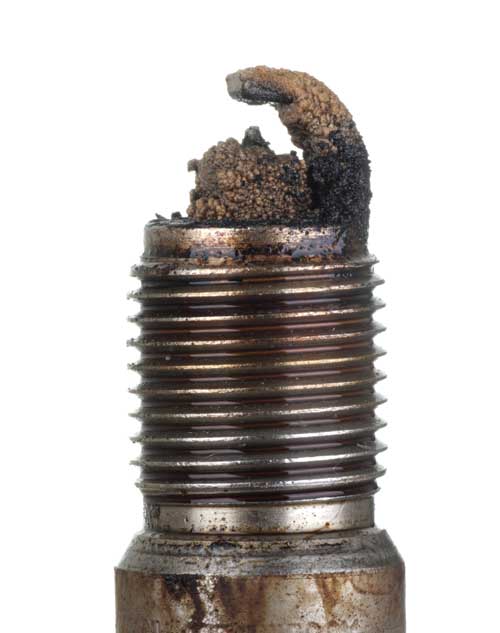
DENSO distinguishes oil fouling from dry carbon and fuel wetting. Oil at the combustion end raises questions about oil entering that area; it does not by itself locate the defective seal, ring or other component. Record the actual location before assuming that oil found around the outside of a plug came from inside the cylinder.
Dry carbon is a pattern with several possible causes
DENSO lists cool, short-distance operation, an overly rich mixture and an unsuitable heat range among carbon-fouling considerations. A dark deposit therefore cannot select a repair on its own. The service history and engine checks determine which explanation is credible in the particular case.
Ash-like deposits need a product and engine history
Champion’s trouble chart associates ash deposits with excessive oil or fuel additives while also recognizing engine wear as a possible contributor. Tell the workshop what products were used and in what amounts. Do not identify an additive chemically from its color or add another product simply to counter the first.
Heat range belongs to the complete application
Champion’s heat-range explanation describes the balance between shedding heat and retaining enough firing-end temperature to resist carbon accumulation. A plug that is too cold for the application can foul, while an excessively hot selection creates a different risk. The answer is the specified part, not automatically the next hotter number.
Credit: www.autosuccessonline.com
Describe how the fouling comes back
The word “keeps” is the most useful part of the question. It implies a sequence that can be reconstructed: what was fitted, how the engine behaved afterward, when the complaint returned and what the removed part looked like. A sequence is more informative than several unlabelled photographs of dirty plugs.
Does it return to the same cylinder?
Ask whether the same identified cylinder has been involved at successive visits. Keep cylinder labels attached to the observations, using the engine’s actual numbering convention. “The plug on the left” can be ambiguous when different people view the engine from different positions.
A repeated location helps direct the investigation, but it does not prove a particular injector, ring or coil failed. Conversely, similar deposits across several plugs do not identify one shared cause automatically. Compare the findings before deciding what scope of repair they justify.
How long was the apparent improvement?
Record the distance, operating hours where relevant, and approximate use between replacement and recurrence. “A few weeks” means something different on a daily commuter than on a rarely used vehicle. Include whether the engine ever ran normally after the last work.
If the complaint returned before ordinary driving resumed, say so. That may change the first checks compared with an engine that completed many normal journeys before deteriorating again. Do not describe every new episode as identical unless the warning, symptoms and inspected condition actually match.
Did starting attempts precede the wet plug?
Fuel wetting found after repeated unsuccessful starting needs that context. DENSO notes that a fuel-wet plug can dry soon after removal. A later photograph may not capture what the technician first observed. Record the sequence rather than assuming the photograph contains the whole story.
Avoid repeated extended cranking or improvised drying methods. Follow the vehicle’s starting guidance and seek diagnosis when it will not start normally. A no-start complaint can involve systems beyond the plugs; repeated attempts are not a controlled test of why the firing end became wet.
What kind of use preceded the recurrence?
Niterra identifies repeated short trips and sustained low-speed use as conditions that can favor carbon fouling. Record whether this is how the car is used, including repeated starts simply to move it a short distance. That history is a possible contributor, not proof that the owner’s driving is the only problem.
A car with a continuing mixture, ignition or mechanical fault should not be prescribed a vigorous drive as a cure. Ask whether the operating pattern explains the observed deposits after the engine’s condition and installed parts have been checked. Do not use the temperature gauge alone to certify the firing end’s condition.
Keep recent changes in the same timeline: repairs, a replacement engine, a tuning change or an unfamiliar fuel/additive purchase. These are leads to investigate. Their timing does not establish causation without supporting evidence, but omitting them can make the recurring pattern harder to understand.
Separate the deposit from the surrounding evidence
NGK’s plug-reading guidance connects deposits with several fuel, oil and operating influences. Use appearance to ask better questions, not to skip verification. A sensible record includes the firing end, the outside insulator, the plug well and the part identification as separate observations. Niterra’s pressure-chamber testing discussion also shows why a simple exposed-spark check does not recreate engine conditions.
Before another removal, ask the workshop to preserve the useful evidence from the previous event. The old parts, invoice, cylinder labels and photographs can show whether the same condition has recurred. Do not clean every plug first and then expect the original deposit distribution to remain available for assessment.Preserve condition and cylinder identity
Photograph the as-found condition where safe and practical, without removing components contrary to the service procedure. Distinguish deposits on the firing end from material introduced during removal through a dirty or oily well. Ask the technician to document that distinction; contamination picked up on the way out can confuse the story.Use a test that answers the actual question
A spark observed outside an engine does not reproduce its working environment. A basic spark demonstration cannot establish every aspect of a plug’s suitability. Avoid handling live ignition components or creating exposed sparks near fuel; use the specified diagnostic equipment and trained assistance. The test must address the complaint under appropriate conditions.Treat the scan as supporting information
A code reader may help locate a detected problem, but it cannot identify the chemical makeup of a deposit or prove why a plug fouled. Retain the report alongside the inspection results. Ask which finding was recorded and how it relates to the contamination, rather than treating the code as a chemical or mechanical diagnosis.Prevent the recurrence by addressing its source
Once a cause is supported, the repair should explain why the next set will face different conditions. That may involve correcting an engine fault, restoring the proper specification or following the applicable service guidance. Buying a more expensive plug without that explanation is not a diagnosis. DENSO’s application FAQ explains selecting the specified part and following the vehicle’s replacement schedule.
Prevention begins with the supported cause rather than a generic tune-up list. Ask which finding the repair will change and which observation will be used to check the result. A service plan should also separate any unrelated maintenance that is due from work specifically intended to stop the recurring fouling.Distinguish scheduled replacement from corrective work
Use the vehicle’s maintenance schedule for routine service. Repeated contamination far earlier than expected should prompt investigation rather than an invented shorter interval that hides the problem. Keep records of the actual parts and work, so a future inspection can distinguish progressive wear from newly recurring deposits.Confirm the complete part reference
Preserve all letters and suffixes when checking the installed reference against the application information. Do not assume that equal thread size, a similar box or the same electrode material means the specification is correct for this engine. Record any documented supersession instead of silently treating a different reference as identical.Record oil level and consumption accurately
Follow the vehicle’s level-check method and note measured top-ups, dates and distance. A single low reading does not identify where oil went; an overfilled engine also deserves correction under its procedure. Give the workshop the observations instead of diagnosing worn rings from plug appearance alone.Discuss low-use operation without inventing a cure
Explain the real use pattern, including cold starts, short moves and long periods without ordinary journeys. Ask whether the manufacturer has guidance for that use. Do not compensate by prolonged idling, unnecessary high speed or a guessed hotter plug. Those changes do not establish that the cause of fouling has been repaired.Decide what to do with the fouled plug
The condition of the plug and the cause of contamination are separate decisions. A replacement may be justified, while the engine still needs further work. Equally, a visually marked plug is not automatically fouled. Identify what failed before choosing cleaning, replacement or another investigation. NGK explains normal external corona staining; for melted or broken firing ends, see recurring spark-plug damage.
Cleaning should follow product-specific guidance
Do not assume a wire brush, abrasive blast or flame is safe for every electrode and insulator design. Use the plug maker’s guidance for the exact product and reject damaged parts appropriately. Cleaning that restores an appearance does not show that the insulation, gap or structural condition now meets its requirements.Mixture correction requires a supported diagnosis
A suspected rich mixture is a reason for the appropriate fuel-control and engine checks, not a direction to turn an unidentified adjustment. Carbureted and electronically controlled engines require different procedures. The workshop should establish the fault and correct it according to the relevant service information before attributing the recurrence to fueling.A heat-range change is not a universal repair
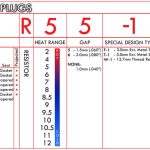
Start by verifying that the installed heat range matches the supported application. Numbers are not universal across manufacturers, and a higher or lower number alone cannot select a replacement. If the engine is modified, obtain a documented recommendation for its configuration rather than transferring another owner’s remedy.Define what the proposed service will accomplish
Ask what “tune-up” means in the estimate: inspection, scheduled parts, a demonstrated fault repair or some combination. Each item should have a reason. Replacing unrelated components can add cost without answering why contamination returns. A useful job record ties the corrective work to the evidence and retains any remaining uncertainty.When the pattern needs professional assessment
Repeated fouling after a verified correct replacement warrants a systematic investigation. So does contamination accompanied by unusual fluid consumption, a new mechanical noise or severe running problems. The objective is to explain the recurrence, not to collect progressively shorter intervals between plug replacements.
Ask for the finding that connects cause and repair
A useful explanation distinguishes observations from conclusions: which plug was contaminated, what tests were relevant, what those results showed and which correction follows. If the recommendation is another set only, ask why the underlying conditions are now expected to be different.
Keep warning response separate from the diagnosis
Mazda’s warning-light guidance emphasizes the need for prompt action when warning behavior indicates a serious problem. You need not decide whether oil, fuel or ignition caused the fouling before responding to unsafe engine behavior. Have the vehicle assessed rather than recreating a severe symptom for confirmation.
Verify the original complaint after corrective work
Agree how the repairer will confirm the result using the appropriate procedure and available diagnostic evidence. The relevant question is whether the original concern is resolved under suitable conditions, with no unresolved urgent warning. It is not merely whether a freshly cleaned plug looks better on the bench. The engine-warning interpretation guide explains how diagnostic code status fits into that assessment.
For an intermittent recurrence, keep later observations tied to the original repair record. Record any return of the same behavior and contact the workshop rather than starting another unrelated cycle of cleaning and parts purchases. Avoid a fixed promise that a particular repair prevents fouling forever.

Credit: www.youtube.com
Make the next replacement an informed decision
Recurring fouling is a reason to connect deposit type, location, operating history and the actual engine checks. Oil contamination, dry carbon, fuel wetting and external staining should not be combined under one vague description. Preserve the evidence before changing it and use the correct application information.
Once the cause is understood, the part decision becomes much clearer. Follow the relevant repair and maintenance requirements, retain the findings and verify the original complaint. This guide synthesizes manufacturer publications; it does not claim a laboratory identification of your deposits or a remote diagnosis of your engine.


Automotive reference information. Confirm specifications in the manual for your exact vehicle. Original replacement guides link to their research sources. About us