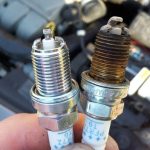

Spark-plug numbers identify a particular product; some characters describe its design, while other numbers are stock identifiers. The meaning depends on the manufacturer and product family. There is no universal digit-by-digit decoder for every plug. Use the complete marking to find the correct catalog entry, then confirm that entry against the vehicle or engine application before ordering a replacement.
A useful reading separates three questions: which product is this, what does its code describe, and is it approved for this engine? A successful answer to the first two does not settle the third. Two plugs can share a heat-rating number or look nearly identical while differing in a detail the engine requires.
Keep the box, photograph the full marking and record the manufacturer name. Include letters, hyphens and final digits rather than shortening the code to its most memorable number. If a character is illegible, mark it as uncertain. An honest incomplete transcription is more useful to a parts specialist than a confident guess that finds a different product.
Credit: www.ngk.com
Identify which number you are reading
Start with the source of the number: the plug itself, its individual box, a vehicle service document or a retailer listing. Those locations may show different identifiers for the same item. Comparing an inventory reference directly with a technical designation can make a correct delivery appear wrong, or hide a real substitution.
An NGK plug number is different from its stock number
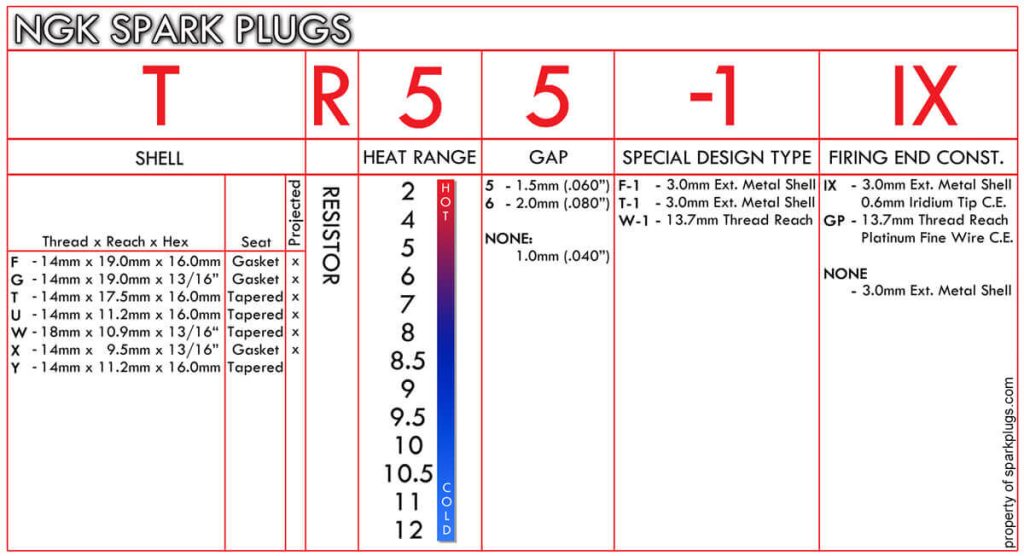
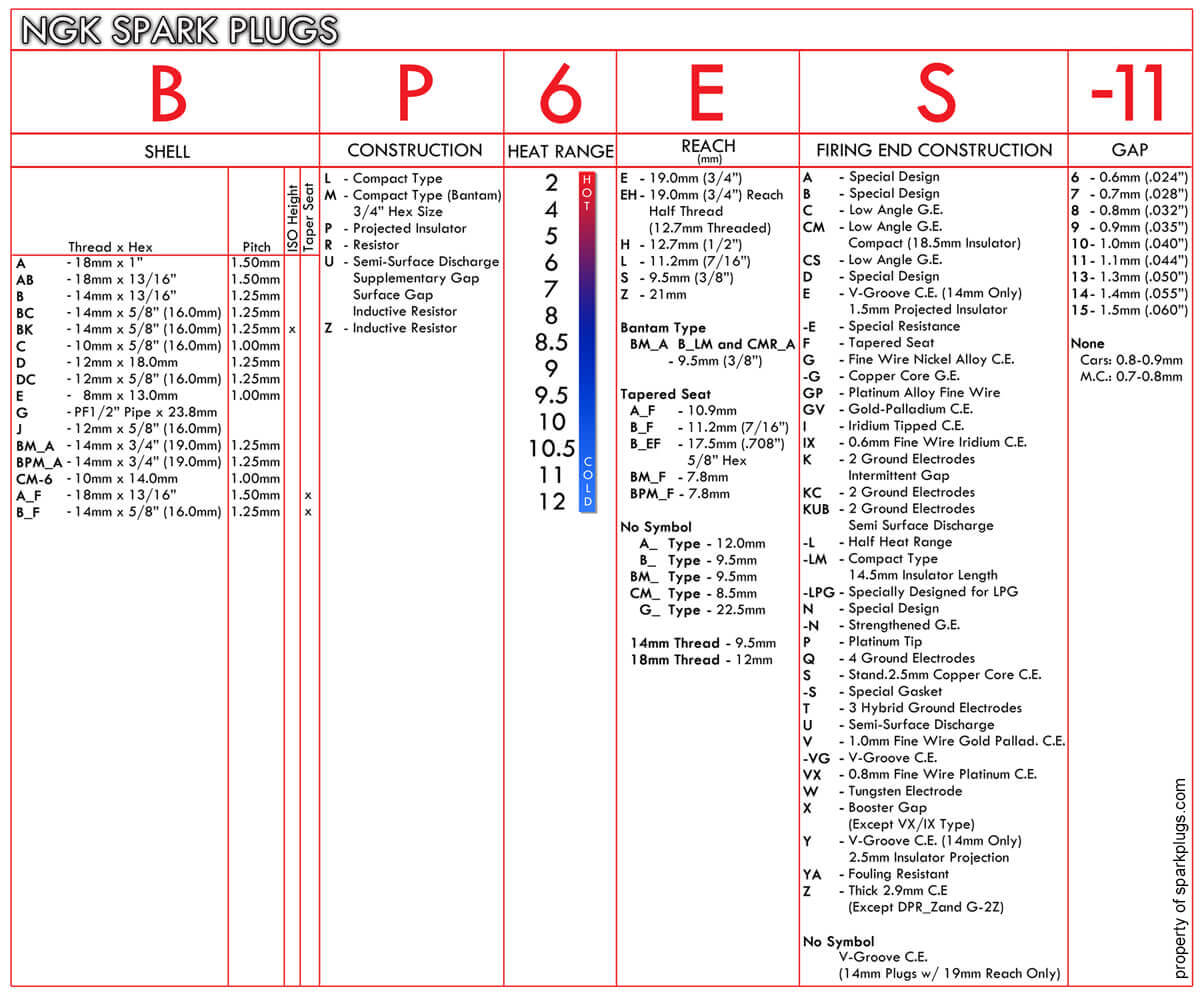
NGK explains its two-number system using DPR5EA-9 and 2887: the former identifies the plug design; the latter is its stock number. NGK describes its three-, four- or five-digit stock references as inventory aids, with no heat-range or plug-type meaning. Do not read 2887 as a temperature, gap or engine size.
That example is useful when a receipt and ceramic marking appear not to match. Look up the relationship between the two complete references rather than comparing their digits. It illustrates NGK’s system, not a rule that every all-numeric automotive part number is meaningless. Another manufacturer or vehicle maker may organize its identifiers differently.
Keep the complete technical designation
A suffix is part of the identity until the manufacturer says otherwise. If a catalog lists a longer code than the one on an invoice, ask for the complete supplied reference. Do not assume that a seller omitted only an optional packaging detail. The unresolved characters may distinguish the actual design being ordered.
A sensible comparison note has separate spaces for the vehicle maker’s reference, the plug manufacturer’s designation and the seller’s stock code. Add the source of each entry. This prevents a later search from treating three numbering systems as competing recommendations, and gives a supplier a clear discrepancy to investigate.
A heat number describes thermal behavior
NGK’s heat-rating guidance distinguishes heat dissipation from electrical spark energy. In its numbering convention, a larger heat number indicates a colder type; a smaller one indicates a hotter type. The classification concerns how the firing end manages heat, not a setting that commands a hotter spark from the ignition coil.
Do not compare those numbers with temperature units. A rating of 6 is not six degrees, and changing to 7 is not a measured one-degree adjustment. Nor does a higher number automatically mean a newer or more powerful product. Decode the label first and leave the engine’s required rating to its application information.
Dimensions are separate from the heat rating
A plug must match more than the diameter that lets it enter a threaded hole. Reach, seating arrangement and projection also matter. NGK’s power-equipment guidance expressly identifies these as separate specifications and warns that excessive projection can interfere with a piston. Its example concerns power equipment, but it demonstrates why “long” or “short” is inadequate identification.
For a car, obtain the dimensions from the exact automotive catalog entry. A socket size tells you about the tool engagement, not the thread diameter or how far the plug extends into the cylinder head. Avoid using a familiar socket or a quick side-by-side photograph as proof that two applications are interchangeable.
Material descriptions do not replace the part number
NGK’s explanation of plug materials notes that the familiar term “copper plug” normally refers to a conventional nickel-alloy electrode design with a copper core. Copper cores can also exist in precious-metal plugs. A label describing one internal material therefore does not identify the full electrode arrangement or establish vehicle compatibility.
Treat an iridium or platinum description as a prompt to read the product specification, not an automatic upgrade approval. The useful question is which exact version is cataloged for the engine. A material category alone does not provide reach, seat, thermal rating, replacement interval or installation instructions.
This guide reads product identity rather than diagnosing deposits or choosing a performance modification. If the concern is a particular fault after fitting a different part, the separate guide to using the wrong spark plug addresses that question. Retain both old and new complete references when seeking help.
Credit: www.championautoparts.com
Read examples within their manufacturer and family
The same position in two codes can carry different information. Use the manufacturer’s own key for the product family in front of you, and check its exceptions. The following examples show how to avoid common reading errors; none is a recommendation to install the example plug in an unspecified vehicle.
Champion and NGK do not share one heat-number direction
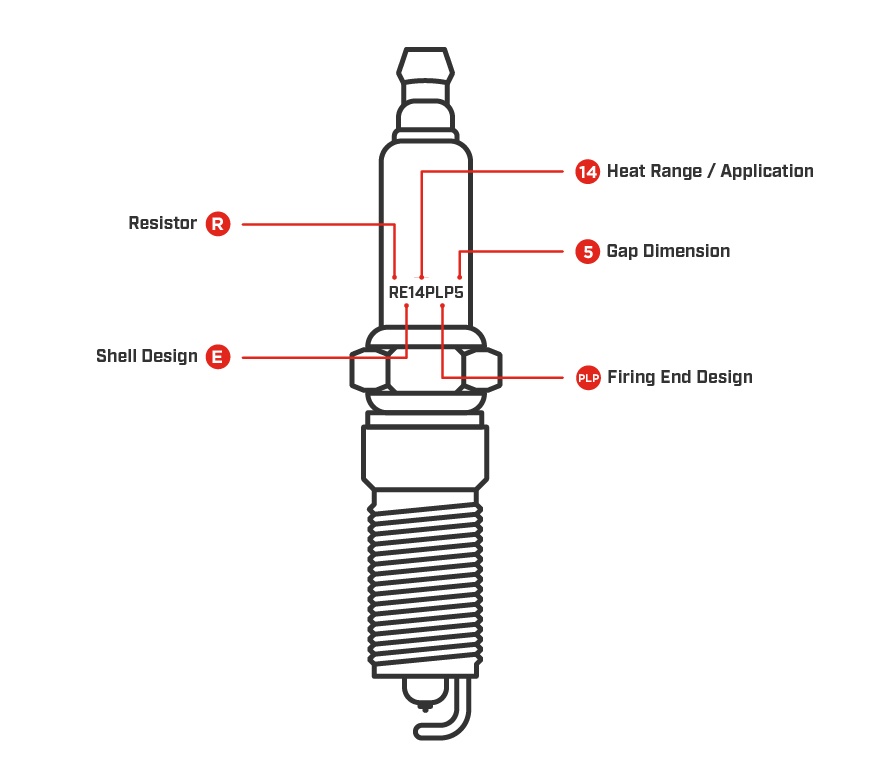
Champion’s decoding guide says its plugs run hotter as the number increases within a given family. It also cautions that its racing and industrial families cannot be ranked against automotive plugs simply by their larger numbers. That qualification matters as much as the basic direction, and differs from the NGK convention described above.
An R needs the right key and position
Champion uses R to identify a resistor type in its illustrated code. The resistor helps suppress radio-frequency interference. This does not make every R in every manufacturer’s identifier an interchangeable instruction, or justify replacing a specified resistor design with another type. The full product entry remains the reference.
DENSO separates the fields in its own identification guide
DENSO’s identification page divides its conventional, platinum and iridium examples into material, physical dimensions, heat range, reach, design and gap fields. Its gap column includes 11 for 1.1 mm. A reader can therefore identify a gap designation in that scheme without assuming that all manufacturers place gap information at the end.
An NGK racing suffix demonstrates the exception
The NGK numbers guide gives R5671A-11 as a racing example: R5671A describes the type, while the final 11 is its heat range. Here, interpreting the suffix as a 1.1 mm gap would be wrong. A code that looks familiar still needs the key for the correct series.
Missing fields are not permission to guess
Not every designation prints every specification in an obvious position. If the key does not settle a measurement, use the manufacturer’s detailed listing or ask its technical support. An absent gap suffix does not mean zero clearance. An unfamiliar letter does not mean it can be ignored when ordering.
Use heat information without choosing a new rating by guesswork
Understanding hot and cold labels helps explain a specification; it does not supply a diagnosis. Champion’s heat-range selection guidance connects an unsuitable range with fouling or overheating and directs ordinary vehicle selection back to the recommended plug. The appropriate response to a mismatch is to verify the specified part, not choose whichever number sounds safer.
Code reading is not plug-condition reading
A legible marking identifies the design that was installed. Deposits, electrode erosion and damage concern what happened during use. One does not replace the other: a correctly cataloged plug can still develop a problem, while a clean-looking removed plug can still be the wrong application. Keep identity and condition as separate observations.
Modified engines need application advice beyond a decoder
NGK’s discussion of modified engines explains that changes affecting combustion conditions can change plug requirements. It does not turn a general code explanation into a specification for your tune. Document the engine hardware and calibration, and obtain the complete recommended designation from the responsible builder or tuner rather than changing a heat digit independently.
Check physical fit with the application record
After locating the product, compare its listed dimensions with the engine requirement. Record units explicitly. Thread diameter, thread pitch, reach and hex size describe different measurements; a match on one line does not settle the rest. If the listing is incomplete, obtain the missing information before installation.
A parts diagram can help distinguish the hex, sealing surface, threaded section and firing end. Use it to name the measurement you need before comparing products. Photographs taken from different angles can make two reaches look similar or different for the wrong reason; the application data is the better comparison.Thread dimensions and seat must agree
Thread size includes the diameter and pitch, while the seat describes how the plug seals against the head. Identify a gasket or tapered-seat design from the specification rather than adding or removing a washer to make a different part appear to fit. There is no code-reading shortcut that makes an incompatible seat acceptable.Reach and projection need separate attention
Reach concerns the threaded length entering the head; projection describes how the firing-end arrangement extends beyond the shell. They are related to placement but are not the same measurement. Preserve both fields when comparing a proposed alternative. A matching reach alone cannot settle the clearance of a different electrode or insulator arrangement.Use the code to compare a proposed replacement
A part substitution should be traceable. Ask which exact reference is proposed and which manufacturer listing supports it for the vehicle. “Same size,” “same heat number” and “premium version” are incomplete explanations. A documented application is more useful than a verbal promise that the plugs are all essentially alike.
Start with vehicle identification
DENSO’s selection FAQ recommends its application catalog and identifies dimensions, projection and heat range as relevant factors. Begin with the correct make, model and engine information, including production differences where the catalog asks for them. Do not assume that every engine sold under one model badge takes the same plug.
Treat an old plug as evidence of what was fitted, rather than proof of what should be fitted. Previous work may have introduced a substitute. If its reference disagrees with the current application listing, investigate the disagreement instead of automatically repeating the installed choice.
For an imported vehicle, check that the lookup describes the actual market and engine specification. A familiar model name on a different regional catalog can conceal different equipment. Provide the supplier with the vehicle identification details it requests; do not try to resolve the uncertainty by choosing the closest-looking suffix.
Separate a cross-reference from your final fitment check
A manufacturer cross-reference can help locate a candidate when changing brands. Complete the check against the vehicle application and any listed restrictions. Do not invent a conversion by adding or subtracting heat numbers: their scales and families do not form one universal arithmetic system.
If the proposed replacement has a different marking, retain the catalog result or written explanation alongside the invoice. That creates a clear record for the next service. If the recommendation changes later, the record shows what was supplied and why, without relying on memory of a shortened code.
A shop can make this process straightforward by recording both the installed manufacturer reference and any original-equipment reference used for selection. Ask whether a quoted part is the specified replacement or an optional alternative, and which application evidence supports the difference.
Do not confuse catalog verification with a guarantee of authenticity or condition. A plausible printed number cannot prove the origin of the physical item. Retain the packaging and purchase documentation, and raise mismatched labels, damaged packaging or unexplained product differences with the supplier before fitting.
Resolve mismatches before installation
Compare the individual plug marking with its own box, then compare that result with the order. Work one package at a time so a loose plug from a different box does not become the reference for the set. If any character differs, identify the difference before treating it as harmless.
A changed suffix needs an explanation
The replacement may be a supported revision or a different product entirely; appearance cannot decide which. Request a current application listing or manufacturer confirmation for the proposed item. A retailer’s search result containing similar words is not the same evidence as a documented replacement relationship.
The correct identifier does not finish the installation check
Once the part is verified, use the applicable inspection and installation instructions. Our guide to whether new plugs need gap adjustment separates checking from bending an electrode. The code-reading process should not end with an improvised gap change simply because a final digit resembles a measurement.
Build a short record that someone else can verify
Keep four items together: vehicle identification, complete plug designation, supporting application entry and any unresolved discrepancy. That record helps a parts counter or workshop answer a precise question. It also prevents a future owner from inheriting an undocumented substitute solely because its number was easy to remember.
A useful support request includes clear images of the marking and box label, the vehicle details used for the lookup, and the complete reference being proposed. Explain whether you are identifying an installed plug or evaluating an uninstalled replacement; those are different starting points for the person helping you.When the marking cannot be read
Do not invent a missing character from a search autocomplete suggestion. Record the visible characters, indicate the uncertain position and ask for confirmation using the vehicle application. If the old marking is unreadable, selection can still begin from the engine information; reading the old plug is not the only route.When the catalog and installed plug disagree
Keep the disagreement visible rather than choosing the most convenient answer. Ask whether the old installation was incorrect, whether the new lookup uses different vehicle details, or whether there is a documented replacement reference. Once resolved, record the explanation. Until then, a partial match is a question to answer rather than a basis for fitting.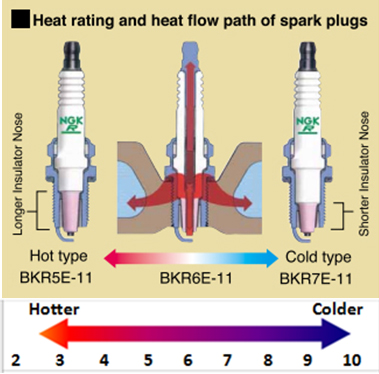
Credit: www.ngkntk.in
What the numbers can tell you
A spark-plug code is a route to product information. It can identify important design features when read through the correct manufacturer’s key, but it is not a universal performance score. Stock references, thermal classifications and gap designations serve different purposes, even when each appears as a short group of digits.
The practical test is whether another person could reproduce your selection from the information you recorded. A full part reference plus the matching vehicle application makes that possible. An isolated number, a material label or a photograph of a similar plug does not.
If identification remains uncertain, pause the purchase or fitting decision and ask the manufacturer or supplier to resolve the exact reference. This article explains published numbering systems; it does not claim hands-on testing of the examples or recommend a replacement for an unidentified engine.


Automotive reference information. Confirm specifications in the manual for your exact vehicle. Original replacement guides link to their research sources. About us