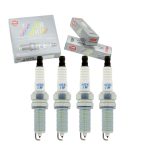

New spark plugs do not automatically need their gaps adjusted. The correct decision depends on the exact plug, its manufacturer’s handling instructions and the engine application. Some plugs require a careful check against the specified gap; some fine-electrode products are intended to retain their factory setting. Confirm the part, inspect its condition and follow its instructions before putting a tool between the electrodes. Checking a dimension and bending an electrode are different actions.
The phrase “pre-gapped” means a setting was established during manufacture. It does not, by itself, answer every installation question. A part can serve several applications, a package can contain the wrong item, or the supplied design can specifically prohibit adjustment. The aim is to identify the appropriate action for this replacement, rather than perform the same gap ritual on every new plug.
This is a preinstallation decision guide, not a universal gapping procedure. It explains how to use the vehicle specification and plug-maker guidance together, when a measurement is useful, and when an apparent mismatch should go back to the supplier. It does not specify a gap for an unidentified engine or recommend changing fine electrodes merely to make them look uniform.
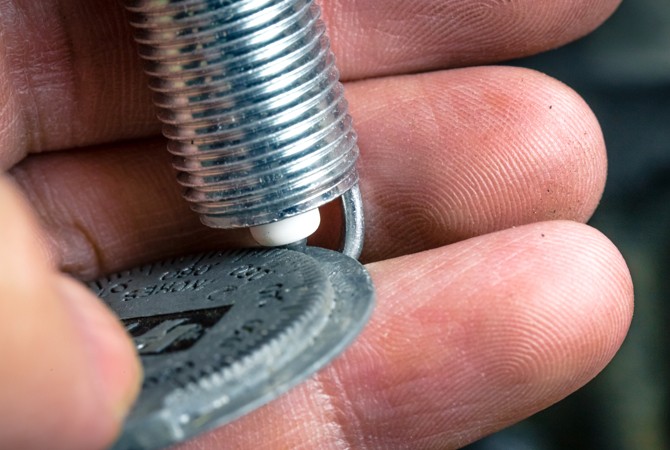
Credit: race-1.com
Start with the exact replacement and its application
NGK’s answer about new plug gaps explains that one reference may cover many engines and that the factory-selected opening may not be correct for every application. Its advice is to compare against the manufacturer’s specification. This is a reason to verify the application information, not evidence that every newly opened plug needs bending or that every factory setting is inaccurate.
Look up the complete plug reference for the actual engine before comparing measurements. If a marking or suffix is unclear, our spark-plug number guide explains identification separately. A correct gap cannot make an otherwise incorrect plug suitable: physical dimensions, seat, projection and thermal specification remain part of selection. Resolve a part-number disagreement first.
Collect the information that determines the next step
Put the application record and product instructions beside the unopened replacement. A retailer’s general “fits your car” banner is less precise than the manufacturer’s entry for the relevant engine and production details. Record the following information before handling the firing end; it gives a workshop or supplier enough context to answer a specific question if the documents disagree.
- Vehicle and engine: Use the identification details requested by the application catalog, including a production or engine-code distinction where relevant. A model badge alone may not resolve the specified replacement. Note any engine modifications instead of silently applying a standard-engine listing.
- Complete plug reference: Compare the marking with the box and order, retaining every suffix. Identify the actual product family rather than relying only on “iridium,” “platinum” or a brand name. Those broad categories do not settle how this part should be handled.
- Gap information: Keep the application requirement distinct from a catalog’s factory-preset value. Copy the units and any tolerance exactly as given; do not invent a permissible variation or confuse an inch value with a millimeter value.
- Handling instruction: Establish whether this design calls for measuring, permits adjusting, or should retain its factory setting. If the vehicle information and replacement instructions appear incompatible, ask the manufacturer or supplier to reconcile them before installation.
Keep the old plug’s measured opening separate from the new-part specification. NGK’s condition-reading guidance explains that electrode erosion can enlarge the gap during use. Copying that worn dimension onto the replacement would carry a service condition forward as though it were the intended setting. A removed plug is useful evidence, but it is not automatically the measuring standard for its successor.
DENSO and NGK guidance must stay product-specific
DENSO’s spark-plug FAQ says its plugs are supplied with a preset gap. It allows that nickel plugs may need adjustment, particularly in motorcycle applications, but instructs users not to alter its platinum, iridium or twin-tip gaps because the delicate electrodes can be damaged. That is DENSO’s stated distinction; do not replace it with a generic instruction to adjust all precious-metal plugs.
There is also a more recent product-specific clarification. In its March 2026 discussion of electrode designs, DENSO says the routine gap check is no longer necessary for modern iridium products such as its Iridium TT example and again advises against adjustment. Apply that statement to the correctly selected product in its intended use. It is not permission to ignore a visibly damaged part or a contradictory application listing.
NGK describes conditional fine-wire measurement and adjustment
NGK’s fine-wire guidance recommends a round-wire or pin-type gauge for measuring a gap. Where adjustment is required and allowed, it directs movement of the ground electrode only, with no prying against the center electrode or insulator; it also publishes limits on how far the factory setting should be changed. These are bounded NGK instructions, not authority to overrule another manufacturer’s no-adjustment direction.
- Read the scope: A procedure for one conventional plug does not become a procedure for every fine-wire or multi-electrode design. Look for the named product or applicable family, and use the current instructions supplied for your replacement.
- Do not average conflicting advice: If one document forbids adjustment and another appears to require it, a small compromise bend is not a solution. Verify the application and reference with the supplier; an unresolved mismatch calls for clarification or a correct replacement.
- Keep tuning separate: A forum recommendation for a modified engine does not override the standard application requirement. Conversely, a standard catalog setting may not answer a builder’s modified-engine specification. The responsible technical source must identify the intended combination.
Separate identification, inspection and measurement
These tasks are easily collapsed into the single word “check,” which creates confusion. You can confirm a label and examine a part without pushing a gauge through its firing end. Decide which task the applicable instructions actually require. That distinction lets you follow a no-routine-measurement recommendation while still refusing a wrong or visibly damaged product.
- Identification checks that the item belongs in the engine. You compare the full reference with the supported application. This step happens before deciding whether any gap measurement or alteration is appropriate, because an incorrect part is not corrected by reshaping it.
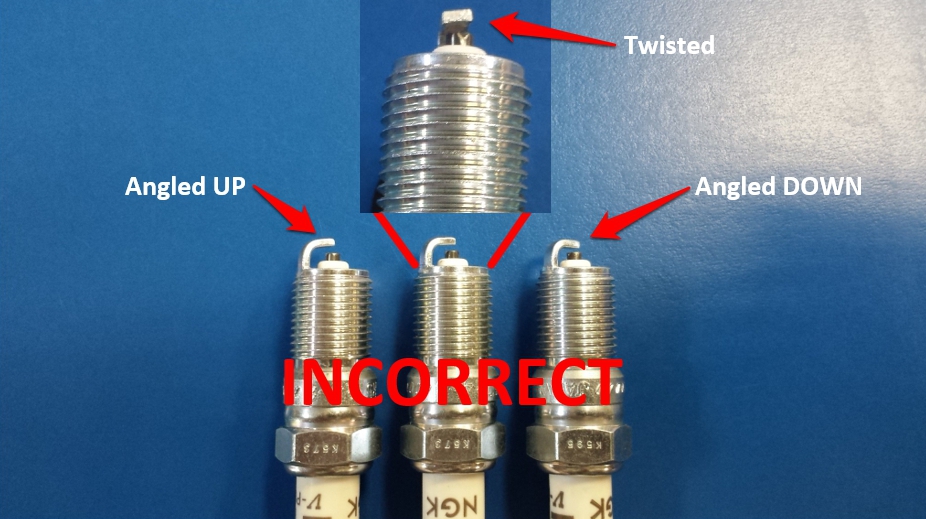
- Condition inspection looks for an obvious problem with the supplied item, such as cracked ceramic, an electrode knocked out of position or damaged threads. If it has been dropped or struck, tell the supplier what happened rather than treating a plausible-looking gap as clearance to install it.
- Gap measurement checks a dimension where the instructions call for it. It is not the same as a visual inspection, and it does not prove that the ceramic, welds or internal construction are undamaged. A reading within specification answers only the dimensional question.
When the instructions call for measurement
Use the specified gauge method and read its units before approaching the electrodes. A visual estimate from a photograph is not a dimensional check. Neither is forcing a measuring tool through until it fits: that can turn an inspection into an unintended adjustment. If you cannot measure in the manner allowed for that design, ask a competent installer to check it rather than improvise with an unsuitable object.
- Confirm the reference before interpreting the reading. Use the specified nominal value or acceptance range for that exact application. A gauge with unclear markings or a result recorded without units cannot resolve a discrepancy, even if the tool physically fits.
- Keep measurement from becoming force. Follow the permitted contact method and avoid loading a delicate tip or ceramic. Stop if the gauge cannot be used without pressure or if you cannot identify the intended measuring surfaces for an unfamiliar electrode arrangement.
- Recheck only after an authorized adjustment. If the maker permits a change, use its tool and limits, then verify the result. Repeated bending to chase an uncertain reading is a reason to stop and obtain help, not a substitute for a clear specification.
Choose a response to the evidence
A measurement has value only when compared with the correct requirement. Record the stated value or permitted range, the units and how you checked it. Do not reject a part merely because its opening differs slightly from another plug in the tray, or accept it solely because the other plugs look the same. The applicable specification and the part’s condition determine the next action.
- Correct application, acceptable condition and specified gap: Proceed with the remaining installation instructions. Do not make a token adjustment merely to say the plugs were gapped. Preserve the satisfactory setting while handling the part and moving it to the engine.
- Unexpected gap or unclear documentation: Reconfirm the reference, specification and measurement method. If adjustment is prohibited, do not bend the electrode to conceal the difference. Contact the supplier with the part number and observed result, and request the appropriate resolution.
- Visible damage or a questionable impact: Set the item aside for assessment or replacement. A bent ground strap is not the only possible consequence of a drop. A gap tool cannot certify that the remainder of a damaged plug is safe to use.
Gap is only one part of a correct installation
Once the gap decision is settled, use the complete fitting procedure. NGK’s installation guidance explains that seating and torque affect heat transfer and that both insufficient and excessive tightening can damage the installation. This guide intentionally supplies no universal torque or turning angle. A satisfactory opening between the electrodes does not excuse incorrect seating, thread damage or a disturbed ignition connection.
Credit: www.piloteers.org
Keep the factory setting when that is the specified choice
Leaving a correctly selected, undamaged, nonadjustable plug alone is a deliberate service decision. Record its reference and the instruction that supports that choice. If someone later asks whether you “gapped the plugs,” you can distinguish verified application and inspection from a physical alteration. There is no benefit in claiming to have adjusted a component when its maker specifically tells you not to.
For a modified engine, obtain the gap requirement from the responsible tuner or engine builder and reconcile it with the selected plug’s limits. NGK’s gapping explanation links required firing voltage with gap size and notes the relevance of cylinder conditions. It does not establish one best gap for every turbocharged car. A larger opening is not automatically an improvement; an ignition system unable to fire across it can misfire. Our separate guide explains the effects of an excessive plug gap.
Before starting the engine, finish the vehicle’s installation checks and account for the tools and packaging used. If the engine develops a new running problem after replacement, do not assume the only possible cause is gap. Keep the part references and inspection notes available for diagnosis. The sound decision is to adjust only where required and permitted, retain the factory setting where instructed, and stop for clarification when fitment or condition remains unresolved.


Automotive reference information. Confirm specifications in the manual for your exact vehicle. Original replacement guides link to their research sources. About us