
A wrong spark plug can cause unreliable ignition, an unsuitable firing-end temperature or a physical fitting problem. Some mismatches can damage the plug or engine; others may produce little obvious change at first. The result depends on which specification is wrong, how the part was installed and whether the engine has run. A plug that screws into the cylinder head is not necessarily an approved replacement. If you discover a mismatch, establish what differs before starting or continuing to operate the engine.
Three problems deserve separate names: an incorrect part, a correct part installed incorrectly, and a damaged part. They can produce overlapping symptoms, but they require different checks. Replacing a plug with the same incorrect reference repeats the selection error; buying a different brand does not resolve damaged threads or a loose connection. Keep the packaging and installation details so the problem can be traced to its actual cause.
This guide focuses on preventing and responding to a parts mismatch. It does not identify the cause of a misfire from a symptom alone, and it does not supply a substitute part number for an unspecified car. Use the vehicle’s service information and the plug maker’s application data for the exact engine.
Compatibility is a combination of specifications
DENSO’s application FAQ identifies dimensions, projection and heat range as selection factors and points installers to its application catalog. Those characteristics work together. Matching just the thread diameter, the socket size or the word “iridium” on a package leaves other requirements unresolved. Start with the engine application, then verify the complete replacement reference.
Use the engine identity, not only the model badge
A vehicle name may cover several engine versions or production changes. Supply the information requested by the catalog, such as engine code, production date or identification number. If an engine has been replaced, the body’s identity may not describe the installed power unit. Mention that before accepting a catalog result.
Confirm the operating configuration as well. A standard petrol application and an engine converted to another fuel do not automatically share the same recommendation. For a modified engine, obtain the required specification from the responsible builder or tuner instead of assuming the standard listing settles every detail.
Treat an approved alternative as a documented application, not a visual resemblance. A supplier should be able to explain why the particular reference is suitable. The absence of an obvious dimensional difference on a workbench is useful information, but it is weaker evidence than the correct manufacturer listing.
Do not confuse an apparent fit with a complete match
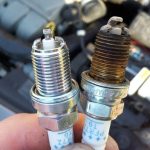
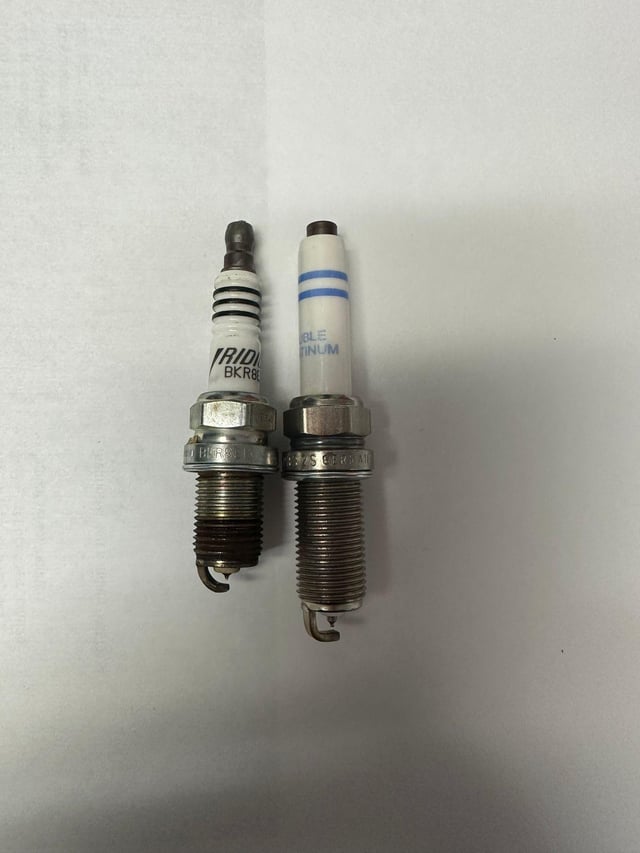
A replacement can seat in the head yet differ at the firing end or terminal. Equally, a plug with the right electrode material can have the wrong reach or seat design. Examine the whole reference and the application notes before removing packaging labels or mixing the new parts with old ones.
Use an ordered comparison: vehicle application first, full part identity second, published dimensions and construction third. This avoids starting with one attractive feature and trying to justify the rest afterward. If a retailer substitutes a different number, request the supporting application information while the part is still uninstalled.
The engine starting normally is not a compatibility test. A short idle cannot establish clearance under all conditions, long-term thermal suitability or service durability. Once a mismatch is known, a lack of symptoms should not be used as permission to ignore the application requirement.
The practical decision is whether you have enough evidence to install that exact part. If a key detail remains unexplained, pause the job and ask the parts supplier or workshop to resolve it. That is usually easier than reconstructing the selection after the engine develops a problem.

Credit: www.youtube.com
The specifications most likely to be confused
Read the complete specification instead of reducing compatibility to one measurement. The following distinctions explain why near-identical plugs can serve different engines. They are comparison categories, not instructions to alter a plug until it fits.
Part number, stock number and supersession
NGK distinguishes a descriptive part number from a stock number. Neither should be shortened when ordering. A missing suffix or transposed character can identify a different item. Keep both numbers if the packaging provides them, and compare the actual plug marking with the box.
A manufacturer may replace an older reference with a newer one, so different markings are not automatically evidence of an error. Ask for the documented supersession or application confirmation. Our guide to spark-plug numbers explains identification without assuming that every maker uses the same code.
Heat range controls the plug’s thermal behavior
NGK’s technical explanation distinguishes heat range from the electrical energy of the spark. A plug that retains too much heat for its application can overheat; one that runs too cool can accumulate fouling. “Hotter” is not a promise of stronger ignition, and “colder” is not automatically a safer upgrade.
Champion’s heat-range guidance also warns against choosing a thermal range without regard to the application. The numerical scales are manufacturer-specific. Do not transfer a number directly between brands, or choose a different range to hide a mixture or oil-consumption problem that needs diagnosis.
Thread dimensions, reach and seating
Diameter and pitch describe the thread fit; reach describes how far the threaded shell extends into the head. The seating arrangement is another requirement. Do not force a reluctant plug, add improvised washers or remove sealing parts to make an incompatible design appear to seat correctly.
DENSO’s troubleshooting information lists excessive thread reach as one possible cause of physical damage at the firing end. That is a specific mechanical risk, not proof that every wrong plug will strike a piston. If excessive reach or contact is suspected, obtain an inspection before cranking the engine again.
Possible consequences depend on the mismatch
There is no single timeline from incorrect plug to engine damage. Separate electrical operation, heat control and physical interference when deciding what evidence to collect. A workshop needs to know what changed, whether the engine ran and what happened afterward; a generic description such as “wrong plugs” is not enough.
Unreliable combustion and loss of smooth running
An unsuitable plug or gap may fail to support reliable ignition under the engine’s operating conditions. The driver may notice hesitation or uneven running. Those observations justify investigation, but similar behavior can come from other ignition parts, fuel delivery or mechanical faults.
Do not keep repeating hard acceleration to demonstrate the symptom. Record the conditions already observed and let the workshop reproduce the concern using the appropriate procedure. A newly installed part should be checked as part of the repair history, without assuming it is the only possible cause.
Poor operation does not identify the exact error
If fuel use rises after a plug change, note the timing and any accompanying warning or drivability change. A fuel-economy reading alone cannot tell you whether the reference, installation or another system is responsible. Avoid calculating a promised fuel saving from fitting the correct part.
Likewise, an engine that feels different immediately after service may have a disturbed connector or another installation issue. Verification should cover the work performed as well as the part numbers. The comparison is between the required setup and the actual setup, not simply between two electrode materials.
Overheating or physical damage needs a different response
A firing end that becomes an unwanted hot spot can contribute to pre-ignition, combustion that begins before the intended spark event. This differs from merely failing to fire. The thermal mismatch deserves attention even if the plug still produces a spark or the engine initially appears to run.
If a plug comes out with a bent electrode, broken ceramic or a missing portion, retain it and seek an assessment of the engine and the cause. Installing another plug does not establish where missing material went or whether the original mismatch has been corrected.

Credit: www.reddit.com
Respond according to when the mistake was found
The most helpful first question is whether the suspect part is still in its box, has been fitted without running, or has already been used. That changes the information a technician needs and the checks that may be appropriate. It does not change the need to establish the correct application.
Found before installation
Keep the components separated and return to the catalog entry. Record the ordered number, supplied number and vehicle details. Request the correct replacement or a written explanation of the substitution. Do not modify threads, terminals or electrodes to avoid the inconvenience of an exchange.
If several boxes arrived together, check each item rather than treating the first correct box as proof of the entire set. Packaging identity and the marking on the actual part should agree. Keep the receipt and correspondence until installation and verification are complete.
An uninstalled discrepancy is a parts-resolution task. There is no reason to invent an engine-damage estimate when the engine has never seen the part. Equally, a supplier’s reassurance should address the exact reference and application, rather than only saying the brand is reputable.
Fitted, but the engine has not run
Leave the engine off while obtaining advice. Explain how the plug was installed and whether there was resistance, an unusual seating position or any handling damage. If removal is needed, follow the vehicle procedure rather than treating an uncertain thread engagement as a routine quick swap.
Do not tighten an incorrectly seated part further to make it look normal. DENSO’s torque guidance describes how excessive tightening can damage the shell or insulator and how incorrect seating can compromise heat transfer. Installation damage can exist even when the ordered reference was correct.
If you do not know whether the engine was cranked, say so. Uncertainty is useful information, not something to fill with a guess. A repair decision based on a clear history is more defensible than declaring the engine unharmed because it has not yet made a noise.
Keep any removed suspect parts identified by cylinder when the service procedure allows that record. Do not clean away marks before they have been assessed. The pattern across the set may help distinguish a shared selection error from a problem affecting one location.
If the engine has already been driven
Stop using a known mismatched setup until the required checks have been established. The workshop should compare installed references with the application and examine the relevant consequences. Do not assume that a new set of correct plugs automatically proves there was no resulting damage.
A warning or rough-running event after replacement belongs in the service history. Note whether it started immediately, at a particular load or after several journeys. These details help decide what to inspect, but they do not identify the exact mismatch by themselves.Record warnings without treating them as a parts verdict
Record whether the check-engine light stayed on or flashed and whether other warnings appeared. If the engine runs severely unevenly, loses substantial power or the warning flashes while running, move out of danger and arrange prompt assessment under the vehicle’s instructions. A code scan can guide investigation; it does not certify that the plug reference is correct.Treat new harsh running or abnormal noise as a reason to stop
Do not reproduce a new metallic sound by revving the engine while deciding whether a plug is too long. Stop safely and describe the sound and recent work to the workshop. Clearance concerns require verification of the parts and engine, not a listening test with another start.
Credit: www.youtube.com
Prevent the same error on the next replacement
Save a simple service record with the verified reference, vehicle identification, installation date and supporting catalog or service information. Keep notes on any superseded number. This gives the next owner or technician a reliable starting point rather than requiring them to copy whichever plug happens to be installed.
Check connection details as well as the firing end
DENSO’s precautions include terminal-nut security and different terminal arrangements. A connection detail must suit the specified ignition lead or coil assembly. Do not improvise an adapter or assume a detachable terminal should be removed simply because a previous plug looked different.
Ask a precise compatibility question
Give the supplier the complete current and proposed references, engine identification and any modification history. Ask whether the replacement is explicitly listed and whether installation instructions differ. A specific question is easier to resolve than asking whether one material is generally “better.”
Correct selection still requires correct handling
Once the reference is confirmed, inspect the new part and use the supplied fitting instructions. Avoid contamination, dropped parts and sideways socket loading. None of these checks changes the required application; they protect a correct part from becoming a damaged one during installation.
Keep gap decisions within the product instructions
Do not bend an electrode just to match the removed plug. Its opening may have changed through wear, and some fine-electrode products prohibit adjustment. Follow the specific instructions, as explained in the guide to checking new-plug gaps.
Respect coatings and tightening instructions
NGK’s handling guidance warns against adding anti-seize to its plated plugs and stresses correct torque. Keep that maker-specific direction attached to the product; use the applicable service specification instead of a generic torque figure or an improvised lubricant.
A verified replacement is the starting point
The useful question is not whether a wrong plug always destroys an engine. It is which requirement was missed and what must be checked before the vehicle returns to service. Match the application, preserve the evidence and resolve physical or thermal concerns without experimenting on the running engine.
This approach avoids both extremes: assuming every mismatch caused catastrophic damage and assuming an apparently normal idle proves compatibility. The actual reference, installation history and inspection results should determine the next step.
Keep the corrected part record with the vehicle’s maintenance information.


Automotive reference information. Confirm specifications in the manual for your exact vehicle. Original replacement guides link to their research sources. About us