
Spark plugs can affect fuel economy when wear, deposits or another ignition problem prevents the engine from firing properly. Replacing faulty or overdue plugs may recover lost efficiency. Replacing a healthy, correctly specified set with a more expensive set does not come with a guaranteed MPG improvement.
A falling fuel-economy display is a reason to investigate, not a spark-plug diagnosis. Driving conditions, the measurement period and other vehicle faults can also change consumption. Begin by establishing whether fuel use has actually increased and whether the engine shows a problem that needs immediate attention.
The useful decision is whether the vehicle needs scheduled service, fault diagnosis or simply a better comparison of its operating conditions. This guide separates those paths and provides calculation examples. The examples illustrate the arithmetic; they are not results from a vehicle tested by this publication.
How plug condition can become a fuel-use problem
The ignition system must initiate combustion reliably. A plug that remains correct for the application can still deteriorate during use. Its condition therefore belongs in a maintenance investigation, but it should be assessed alongside the rest of the engine rather than blamed solely because the fuel bill rose.
Wear changes the electrical demand
DENSO’s service-life explanation links electrode wear and a widening gap to greater voltage demand. When ignition becomes unreliable, performance and economy can suffer. The page also distinguishes electrical spark failure from a mixture failing to ignite despite a discharge; these are not all the same fault.
That distinction prevents a misleading calculation. Do not assume that each misfire wastes one fixed volume of fuel, or estimate a percentage loss merely by counting cylinders. Actual consumption and engine-management behavior need evidence from the vehicle. The plug’s appearance alone does not provide those measurements.
NGK describes the benefit of replacing worn plugs as restoring ignition efficiency. This supports timely maintenance. It does not establish that a fresh premium set must outperform a fresh approved standard replacement by a specific amount in every car.
Deposits can be evidence of another problem
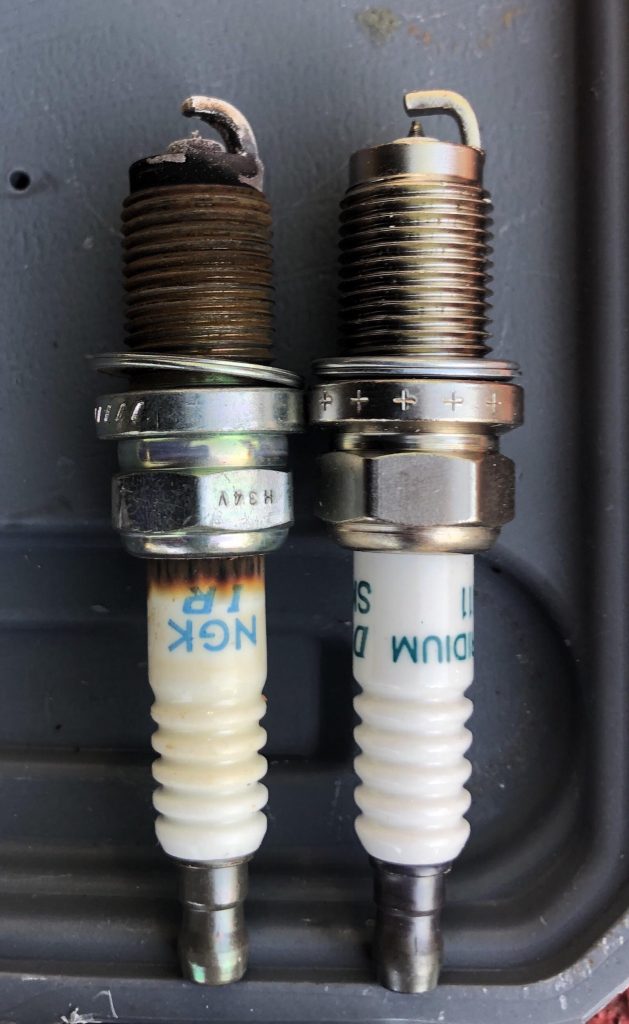
A fouled firing end may need replacement, but the deposit source also matters. If contamination or an engine fault remains, changing plugs can leave the underlying cause unresolved. Keep the removed parts identified by cylinder when a workshop requests them, rather than treating one photograph as a complete diagnosis.
Ask what the inspection established: wear, contamination, damage, an incorrect reference or no abnormality. Those findings imply different next steps. “Fuel economy is poor” explains the complaint; it does not explain why a particular component was condemned.
If the plugs are due under the vehicle’s schedule, service can be appropriate even without a noticeable MPG change. Preventive maintenance should not require driving until misfires become obvious. Conversely, a low odometer reading is not proof that a running fault can be ignored.
Where replacement is recommended because of a fault, ask whether additional checks are needed to explain it. That question is particularly useful when new plugs have already been fitted recently. Repeating the same replacement without reviewing the cause is a weak plan for persistent consumption problems.
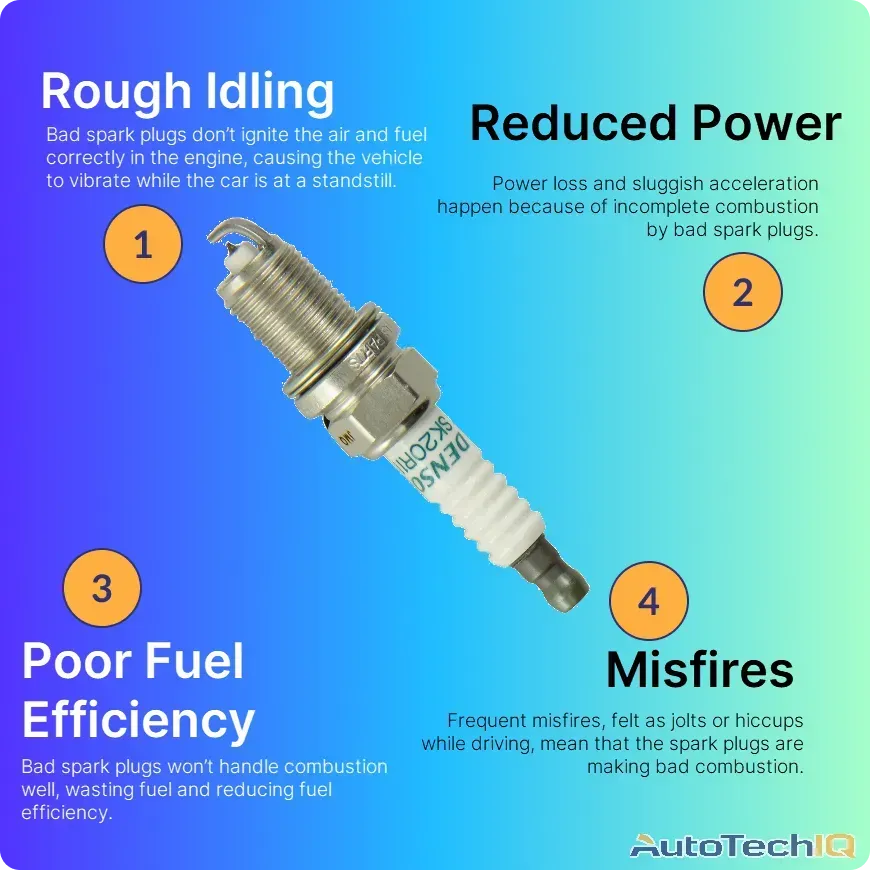
Credit: www.autotechiq.com
Measure the change before attributing it
A range-to-empty estimate, the time between visits to a station and money spent are different quantities from fuel economy. Fuel prices can change while consumption stays constant. A changed commute can shorten the time between fill-ups without changing the engine’s condition. Record distance and fuel volume for a meaningful comparison.
Use actual distance and refill volume
DOE/EPA’s MPG method divides distance travelled between comparable full refills by the fuel added at the later refill. Follow the vehicle’s normal safe refuelling instructions; do not overfill or deliberately run the tank empty for a measurement. Retain the readings and receipts so an unusual result can be checked.
Keep units and the direction of improvement clear
For a hypothetical trip of 360 miles using 12 US gallons, economy is 30 miles per US gallon. For 600 km using 48 litres, consumption is 8 litres per 100 km. Higher MPG indicates less fuel used per distance; lower litres per 100 km indicates the same improvement. Label gallons as US or Imperial rather than mixing them.
Compare similar use, not just consecutive dates
DOE/EPA identifies numerous influences on consumption, including driving style, idling, roof loads, maintenance condition and fuel differences. These create competing explanations when a plug change occurs between two fuel records. Keep a short note of material changes instead of pretending that the component was the only variable.
Short journeys and cold weather deserve their own note
Cold-weather guidance explains that several vehicle effects can reduce economy, especially on short trips. A winter commuting tank and a summer holiday tank are a poor pair for judging a small maintenance benefit. Record journey length and temperature context before crediting new plugs with the difference.
A fuel log should not postpone a needed repair
If consumption changes together with rough running, severe shaking or a warning, arrange appropriate diagnosis. Mazda’s warning-light guidance treats flashing warnings seriously. Follow your vehicle’s instructions, stop safely when required and seek help rather than continuing a tank-long economy experiment.
DOE/EPA also notes that a vehicle may appear to run normally while an engine warning needs inspection. A smooth idle is therefore not permission to ignore the lamp. The separate spark-plug and check-engine-light guide explains why the warning does not identify the failed part by itself.

Credit: fueleconomy.blogspot.com
Choose the maintenance path that matches the evidence
An overdue service record, confirmed plug damage and a seller’s fuel-saving claim are three different reasons for considering a purchase. Ask which applies to your car. Have the proposed part identified against the exact engine application, including any relevant modifications, before comparing brand names or prices. The DENSO product page provides one example whose test scope needs to remain attached to its percentage.
Ask whether the quoted benefit compares a new product with worn plugs or with a suitable new alternative. Those comparisons address different questions. Also ask whether the tested engine resembles the one in your car. A product-family name does not carry test results unchanged across every engine, fuel and driving pattern.Assess a premium product claim against its tested application
DENSO publishes an Iridium Power fuel-consumption example involving a two-cycle 50 cc engine and named comparison plugs. Its approximately five-percent result belongs to that manufacturer test, not to every passenger car using iridium. A direct link and the application context are more informative than repeating the percentage as a general expectation.Keep the replacement decision tied to documented fitment
Once the application is confirmed, retain the complete reference and prescribed service information. Do not select an unapproved heat range, wider gap or different terminal design in the hope of improving mileage. A dimensional fit alone cannot establish that the part meets all the ignition requirements of the engine.Read the log after service without overstating the result
Note the installation date, mileage, complete part reference and all work performed at the visit. If tyre pressures, engine faults or other maintenance were corrected too, record those actions. A later improvement is evidence about the completed service package unless the individual effects were separated.
Use totals when combining several refill periods
For an overall MPG figure, add the recorded miles and divide by the recorded gallons for the same completed periods. Do not simply average each period’s MPG when the fuel quantities differ. For example, 300 miles on 10 gallons and 400 miles on 20 gallons combine to 700 divided by 30, or about 23.3 MPG, not 25 MPG.
Treat incomplete refill records as incomplete evidence
A partial refill cannot by itself define the fuel consumed since the previous full tank. Keep all intermediate fuel quantities and calculate across properly bounded full-refill periods. If a receipt is missing or a trip reading was reset unexpectedly, mark that interval uncertain rather than inventing a value to complete the chart.

Credit: www.youtube.com
What a fuel-saving promise would need to show
A credible claim identifies the vehicle or engine, comparison parts, their condition and the operating test. It should distinguish laboratory fuel consumption from normal ownership results. An impressive percentage without that context is insufficient for predicting your costs, even when the product itself is a suitable replacement.
Convert an assumed improvement into a transparent example
Consider a hypothetical change from 30 to 32 MPG over 10,000 miles. Fuel use would fall from about 333.3 to 312.5 gallons, a difference of about 20.8 gallons. At an assumed $4 per gallon, that is about $83.33. These invented inputs explain the calculation; they are not a plug-performance forecast or current fuel-price quote.
Do not let the calculation create its own assumption
The difficult part is proving that the improvement will occur and persist. A price comparison cannot supply that missing evidence. If replacing plugs is already scheduled, compare any premium with the suitable service alternative. If the plugs are healthy, include the full additional work being proposed rather than assuming the purchase is free maintenance.
Use fuel economy as evidence, not a parts selector
When the engine has a confirmed plug problem, correct it under the applicable service procedure. When consumption remains high afterward, return to the recorded symptoms and operating conditions instead of buying progressively more expensive plugs. An unresolved problem needs an explanation, not a succession of marketing categories.
For claims specifically about output, see how to evaluate spark-plug horsepower claims. Fuel consumption and peak power are different measurements, and evidence for one should not silently become a promise about the other.
The practical result is a verified maintenance decision supported by a usable fuel record. Keep measured changes separate from assumptions, and never delay fault diagnosis just to finish a comparison.


Automotive reference information. Confirm specifications in the manual for your exact vehicle. Original replacement guides link to their research sources. About us