
For a small motor-oil spill on car carpet, stop the leak, lift away any pooled oil and blot with clean white absorbent cloths before applying a cleaner. Work on the stain only with a product and method compatible with your vehicle's carpet. Do not flood the area, attack it with brake cleaner or assume a household carpet machine can safely collect petroleum. If a bottle has emptied into the padding, the affected area remains oily beneath the surface, or liquid has reached electrical equipment, arrange professional assessment. The goal is to remove the contamination without turning a limited stain into damaged carpet, wet insulation or a problem hidden under a floor mat.
Start by finding out what spilled and roughly how much. A few drops of known fresh engine oil on a removable mat are a different job from a large quantity of used oil in fixed carpeting. Keep the bottle or photograph its label for the cleaner, and note anything already applied to the stain. If the liquid might include fuel or solvent, or its identity is unknown, stop using electrical cleaning equipment and seek appropriate help. Do not identify an unknown mixture by smelling it closely. Take a photograph of the affected area before cleaning and check nearby luggage, shoes and trim for transferred oil. That first inspection helps prevent a clean cloth or a passenger's shoes from spreading the same contamination elsewhere.
If the affected mat is designed to be removable, lift it carefully onto a protected work surface without tipping collected liquid into the car. Inspect the carpet underneath instead of assuming the mat contained everything. With fixed carpet, remove loose objects and keep foot traffic off the area. Avoid pulling seats or trim merely to follow a generic cleaning tip; the correct procedure may involve electrical connectors, restraint systems or model-specific fasteners. A spill that has crossed into those areas deserves professional attention. Gather several white absorbent cloths, suitable protective gloves, the cleaner's instructions and a container for contaminated cleanup materials before starting. Work where you have suitable ventilation and enough time for the area to dry, rather than beginning an aggressive wet cleaning immediately before driving.

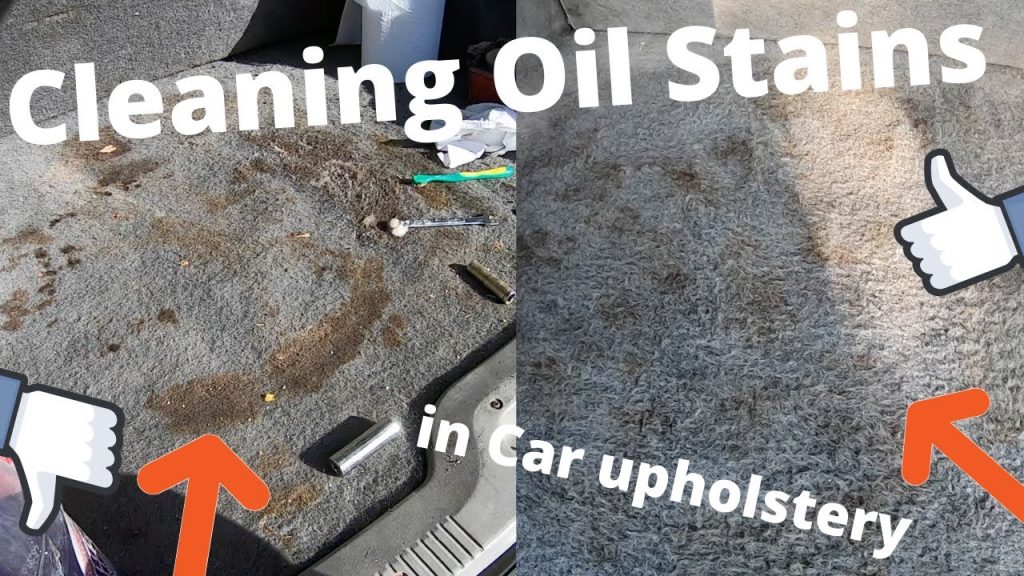
Credit: www.youtube.com
Clean a small surface stain without soaking the carpet
Lift pooled liquid with absorbent material and replace saturated cloths promptly. Do not scrub the pool into a larger patch. The Carpet and Rug Institute's lubricating-oil guidance recommends prompt blotting, testing cleaning solutions on a hidden area and working from the outer edge toward the middle. These general textile principles are useful, but its broader stain-remover list is not an approval for every vehicle interior. Follow the car manufacturer's restrictions first. Use clean sections of cloth so you can see whether oil is still transferring. Keep dirty cloths off seats and painted trim. Once the easily lifted oil is removed, reassess the area before adding any liquid; a dark mark and a saturated backing are different problems and should not receive the same treatment.
Find the interior-care section of your owner's manual and any care label on the mat. As an example, Ford's carpet-cleaning instructions use a soft damp cloth with mild soap and water and warn against oversaturation when treating heavy stains. They also say to dry removable floor mats fully before putting them back. This is a starting point for the relevant Ford manual, not a universal formula for every carpet material or oil spill. If your vehicle specifies a particular cleaner or excludes a chemical, honor that instruction. A product that works on a garage floor may damage a carpet dye or backing. When the manual does not cover the severity of the spill, ask the manufacturer or an automotive upholstery professional instead of assuming a stronger chemical will be better.
Choose a carpet or upholstery cleaner labelled for the material and intended application, then read the actual directions for dilution, dwell time and removal. For example, Meguiar's identifies its G191419 product as an automotive carpet and upholstery cleaner; that identifies its intended surface, but does not guarantee removal of every oil stain or establish approval for your vehicle. Test your chosen product in a concealed area and allow the test to dry. Check for color transfer, a pale patch, stiffness or a change in texture. If any appears, stop. Keep the product name and dilution written down so a professional can evaluate later treatment if needed. Do not mix two cleaners or increase the concentration beyond the label because the first application looks slow.
Apply the compatible cleaner in a controlled amount according to its directions, treating a manageable area rather than wetting an entire footwell. For a hand-applied spot treatment, use a clean cloth or other applicator allowed by the product so you can control where it goes. Protect adjacent trim and keep cleaner away from seat mechanisms and electrical connectors. Let the labelled contact time do its work, then remove the released contamination using the prescribed method. A towel becoming dirty is useful feedback; it shows material leaving the carpet. Repeatedly pushing the same dirty face back into the stain does the opposite. Keep the treatment bounded, change cloths and evaluate after each cycle instead of treating more foam as evidence that more oil is being removed.
BISSELL's stain-removal advice emphasizes blotting and removing excess dampness after treatment. That is a helpful way to evaluate a small cleaning attempt: the stain should become less transferable while the carpet is left with less liquid, not more. Follow the cleaner's rinse or wipe-off instructions with minimal moisture. Do not pour water through fixed carpet to flush out soap. If the product calls for extraction, first verify that your equipment, cleaning chemical and type of contamination are an approved combination. If you cannot meet those conditions, stop at containment and get help. Leaving a small remaining mark for assessment can be preferable to creating a wide wet area whose backing cannot be inspected or dried adequately.
Do not use a household vacuum or carpet extractor to pick up a pool of engine oil. BISSELL safety instructions for the cited cleaner warn against collecting flammable or combustible liquids such as petroleum. Your own machine's manual controls what it can handle; a wet-pickup feature is not approval for every liquid. Motor-oil contamination also differs from a food-oil spot used in a demonstration. If a professional proposes extraction, explain the original spill, how much entered the carpet and every cleaning product already used. That allows them to choose suitable equipment and manage the recovered liquid. Never pour a solvent on the carpet and immediately vacuum it up with an ordinary appliance. For a large spill, professional removal or replacement of affected layers may be the more appropriate route.
Skip improvised treatment sequences involving gasoline, brake cleaner, paint thinner, bleach or strong household detergents. Tesla's Model 3 cleaning instructions warn that solvents and several other chemical types can damage interior components, and specifically caution against overwetting carpet. This illustrates why a general carpet tip must be checked against the actual vehicle. Baking soda, vinegar or fragrance also cannot demonstrate that oil has been removed from the backing. Adding successive products makes it harder to know what remains and to select the next treatment. If you have already tried something, write down the product and approximate amount and stop before escalating to another chemical. Preserve that information even if the area initially appears improved; it may explain residue or discoloration that becomes visible after drying.
Allow the cleaned area to dry completely with appropriate ventilation, following the vehicle and cleaner instructions. Keep mats and luggage off it while drying. Do not use a heat gun or an open flame, and do not run the vehicle in a closed garage to accelerate drying. There is no dependable universal drying time for every spill, carpet construction and climate. Assess the result once it is dry: look for renewed oily transfer onto a clean cloth, a sticky feel, a spreading mark or persistent contamination beneath a removable mat. A remaining dark stain can be cosmetic, while oil still transferring to a cloth indicates material remains. Neither an air freshener nor a clean-looking top layer establishes that hidden padding is clean. If you cannot inspect the affected layers safely, ask a professional to do so.
Escalate when the spill volume is large, oil reappears after a careful surface treatment, the backing feels contaminated, or cleaning would require dismantling the interior. Ask an automotive detailer or upholstery specialist to distinguish the carpet pile, backing, underlay and nearby equipment in the estimate. A useful assessment explains which layers can be cleaned, whether any need replacement and how the area will be dried before reassembly. Tell them if the spill involved used oil or an unknown mixture. Our recommendation to inspect hidden layers follows from the spill's path; it is not a claim that every stained carpet must be replaced. For a small mat spot, successful gentle cleaning may be sufficient. For a bottle emptied beneath a seat, repeatedly cleaning only the visible patch may leave the actual contamination untouched.

Credit: the-rugs.com
Finish with waste handling and a safe refit
Keep recovered oil separate from cleaner and rinse liquid. EPA describes used motor oil as persistent contamination that needs appropriate collection; washing it into a street or storm drain is not a cleanup solution. Ask your local waste program how it wants oily cloths, absorbents, damaged mats and mixed cleaning liquid handled. EPA's household hazardous waste guidance advises following labels and local disposal arrangements, including for residues left in containers. An oil collection tank may not accept water or cleaning chemicals, so describe the mixture accurately rather than pouring it into a used-oil jug. Our oil disposal guide covers collection of the oil itself. Bag or contain cleanup items as directed by the receiving program and keep them from contaminating the vehicle again while awaiting disposal.
Before driving, refit only clean, dry mats in their intended positions and secure their retainers. Check that nothing can interfere with the pedals; do not cover the stain by stacking another mat on top. Remove cleaning equipment and inspect shoes and control surfaces for transferred oil. Then correct the cause: a damaged bottle should not go back into the same loose storage arrangement. Our guide to carrying motor oil in a trunk explains upright containment and restraint. Keep a short record of the spill and treatment if further assessment is needed. A sensible outcome is a clean, dry and usable interior with the contamination accounted for, rather than a promise that every old oil mark can be made invisible at home.


Automotive reference information. Confirm specifications in the manual for your exact vehicle. Original replacement guides link to their research sources. About us