
Take used motor oil to a collection service that has confirmed it accepts your oil, quantity, and household source. Keep it in a closed, leakproof container, separate from other automotive fluids. Do not pour it onto soil, into a drain, or into ordinary household recycling. The useful first step is to identify the liquid and call the receiving site before loading your vehicle.
This guide concerns household engine-oil disposal in the United States. The practical sequence is identify, confirm, contain, transport, and hand over. Your city or county determines the available route; examples from named locations illustrate questions to ask, rather than rules that apply everywhere. Business-generated oil, unknown chemicals, and unusually large quantities require a more specific conversation with the responsible waste authority.
Start with an inventory instead of combining everything in the garage. Note how many containers you have, their approximate contents, and whether the oil came directly from an engine or was found in storage. Record any coolant, fuel, cleaning solvent, or water that may have entered it. This information is more useful to a collection operator than the oil's brand, color, or the vehicle's mileage.
Identify the oil before choosing its destination
Used engine oil and an unwanted bottle of unused oil are different descriptions. EPA's used-oil guidance defines used oil by both previous use and resulting contamination. Tell a collector if your bottle is unopened, partly used for top-ups, or filled with drained engine oil. Do not label all three as used oil simply because they have been in your garage for a long time.
Separate known oil from unidentified liquids
A container marked motor oil may have been reused for something else. If you inherited it, ask whoever handled it and check any maintenance notes. When its history remains uncertain, describe it as an unknown automotive liquid in an oil container. Do not guess from smell, taste, or color, and do not add it to a known clean waste stream while trying to decide what it is.
Explain contamination instead of hiding it
California's certified collection center guidance says those centers do not accept oil contaminated with substances such as gasoline, antifreeze, solvents, or water. It directs people to ask about another disposal route. That is a useful distinction: rejection from a routine oil tank does not mean there is no legitimate disposal option. Describe the problem to the local hazardous-waste program before transporting the container.
Credit: www.reddit.com
Prepare a container that matches the receiving program
Make the destination call before buying equipment or transferring the liquid. Ask whether the site empties and returns containers or keeps them, and which container sizes it permits. A container that works for a staffed retailer may not satisfy a scheduled household collection service. Write the answer beside the facility name so that another person in your household can follow the same instructions.
Use a suitable container and a clear label
The EPA's used-oil collection guidance warns against containers previously used for bleach, gasoline, paint, solvents, or other household chemicals. Choose a sound oil-compatible container with a secure closure that the receiver accepts. A clean funnel and stable work surface help you transfer oil without losing track of the destination. Label known contents clearly, including a mixture or uncertainty when applicable.
Keep household chemicals out of the collection oil
Keep the container closed and protected from accidental knocks while you arrange collection. Do not leave an open drain pan where rainwater, debris, children, or animals can reach it. EPA household hazardous-waste advice emphasizes preserving labels, avoiding food containers, and not mixing household chemical leftovers. For a corroded or damaged container, ask the local waste or hazardous-materials service how to handle it rather than improvising a transfer.
Find a collection point you are eligible to use
Search your city or county's official waste website for used motor oil, automotive fluids, and household hazardous waste. Check that the page applies to your address and the type of waste you generated. A map result can identify a possible location, but an official acceptance page and a direct confirmation are better evidence that you can complete the trip that day.
Municipal facilities and scheduled household events
For example, Nashville's household program lists motor oil among accepted items while restricting residency, amounts, and business-generated material. The lesson is to read both the accepted and excluded lists. Ask whether you need an appointment, proof of residence, or a particular vehicle arrangement. Do not assume a household service will accept workshop waste because the liquid itself appears on its list.
Retailers and automotive service businesses
A retailer can be convenient when your oil meets its collection requirements. O'Reilly advertises free oil and oil-filter recycling; contact the actual branch about your load before leaving. Our O'Reilly recycling guide focuses on that store visit. For other businesses, ask directly rather than assuming that selling oil means they can receive every quantity or contaminated mixture.
Credit: www.reddit.com
Plan the drop-off as part of the oil change
Think through the whole job before draining the engine. Confirm the replacement lubricant, service procedure, drain-pan capacity, temporary container, and disposal appointment separately. If you have already completed the oil change, prioritize secure containment and a confirmed destination. A reusable drain pan is useful equipment, but its spout, seals, and carrying position must suit the trip; an open pan balanced on a passenger seat is not a transport plan.
A collection plan should name a receiver, not a home treatment method. If your task involves only moving already-drained oil into an accepted container, organize that transfer on a stable surface with the container within easy reach. If the contents or packaging are unsafe to handle, stop and obtain local instructions before attempting the transfer.Check closure, container condition, and transport limits
Check the drain pan and its closure before relying on it as a carrying container. Some equipment is designed to catch oil while lying flat but needs a different position for storage or pouring. Follow the equipment instructions and the receiving program's packaging requirements. Do not fill a damaged pan merely because it was adequate during the previous oil change.Keep containers upright and restrained for the journey
Plan a direct journey that fits the receiving window. Secure each container so ordinary braking or cornering cannot roll it across the vehicle. Keep the load separate from food, pets, and loose tools. If the route or the facility requires unloading assistance, establish that arrangement before departure instead of trying to hold unstable containers together at the gate.Follow local instructions without inventing universal rules
The City of Elk Grove's transport instructions specify sturdy, nonleaking containers, upright restraint, and separation from passengers for its household service. Follow your own receiver's directions for packaging and any limits on a load. Before departure, check every cap, carry the facility's contact information, and leave enough time to arrive during receiving hours rather than simply before the property closes.
Confirm eligibility and quantity before you drive
A useful call has five parts: identify yourself as a household resident, describe the oil, state the total volume, describe the containers, and ask when the site can receive them. For example: I have two sealed containers holding roughly one household oil change, with no added fluids; can you accept these today? This is an example question, not a promise that an unspecified facility accepts that amount or packaging.
Treat local legal guidance as local
New York's environmental department describes specific acceptance duties for qualifying service and retail establishments, including quantity limits and arrangements when tanks are full. Those requirements should not be generalized to every state. Conversely, a generic national article cannot override obligations where they do exist. Use the responsible state or local agency for the rule that applies to your situation.
Handle the filter and other leftovers deliberately
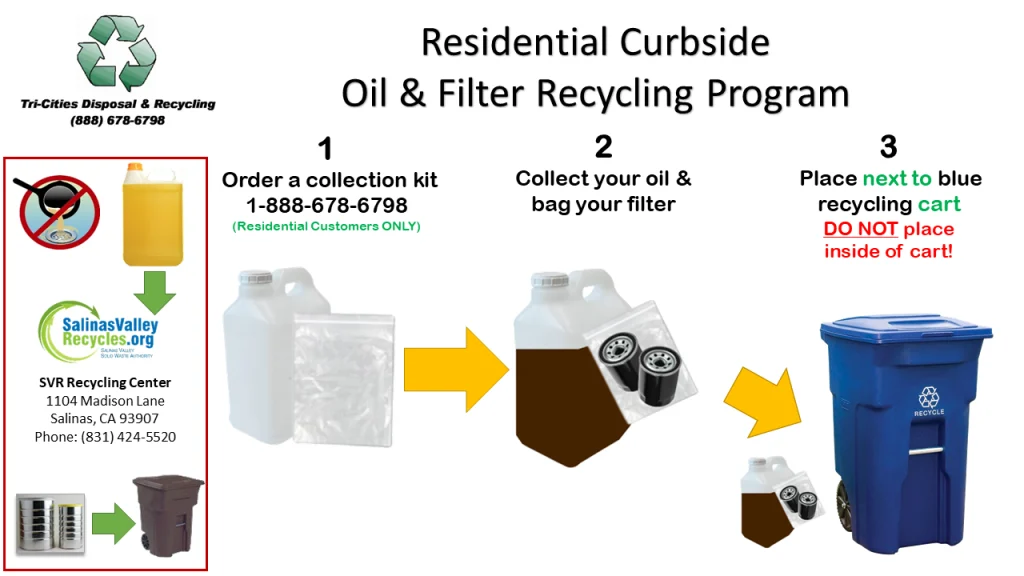
A successful oil drop-off does not automatically resolve the filter, oil-stained packaging, absorbent material, or another fluid you changed at the same time. Name each item when contacting the program. If the filter must be drained or packaged separately, obtain the site's instructions before the trip. Keep its collected oil within the identified oil stream and avoid creating another unlabelled container on the workbench.
A filter and a bottle of liquid may belong to the same maintenance job, yet require different handling at the collection site. An itemized list makes that visible: engine oil, used filter, and any other leftover material. Ask about every item while arranging the visit so you do not complete one handoff and return home with an unresolved leaking component.Ask about filters as a separate accepted item
Do not assume that a recycling symbol on a filter box tells you where the oily filter itself belongs. Describe the actual used component to the receiving program. Likewise, packaging accepted in normal household recycling does not make its oil-covered contents acceptable there. Keep the clean outer packaging and the used maintenance materials distinguishable until you know their destinations.Keep coolant, solvents, and other fluids separate
Treat an automotive service as several separate collection tasks when necessary. For example, an engine-oil change and coolant service may produce two identified liquids and multiple used parts. Keeping each stream separate lets a facility accept the items it handles without receiving everything else by accident. Preserve labels and tell each receiving service what remains unresolved.What if the oil is mixed or the collection point refuses it?
A refusal is a reason to clarify the next route. Ask whether the issue is temporary capacity, an excessive amount, container condition, household eligibility, or the composition of the liquid. Each answer points to a different next action. Do not leave containers outside a closed site, pour into an unattended tank, or describe a mixture as pure engine oil to obtain acceptance.
Use a different route for an already mixed liquid
If transmission fluid is already mixed into the oil, disclose it explicitly. Our guide to mixed motor oil and transmission fluid collection explains why separate acceptance of two fluids does not establish approval for a mixture. For an unknown or contaminated batch, contact the local hazardous-waste service with the known contents and approximate volume. Do not try to make it acceptable by diluting it with more oil.
Do not confuse recycling with home treatment
The EPA describes several industrial uses for collected oil, including re-refining and processing into other feedstocks. None is a household instruction to strain drained oil and put it back in an engine. The recycling destination and your vehicle's lubricant specification are separate decisions. Re-refined finished oil still needs to meet the requirements of the equipment where it will be used.
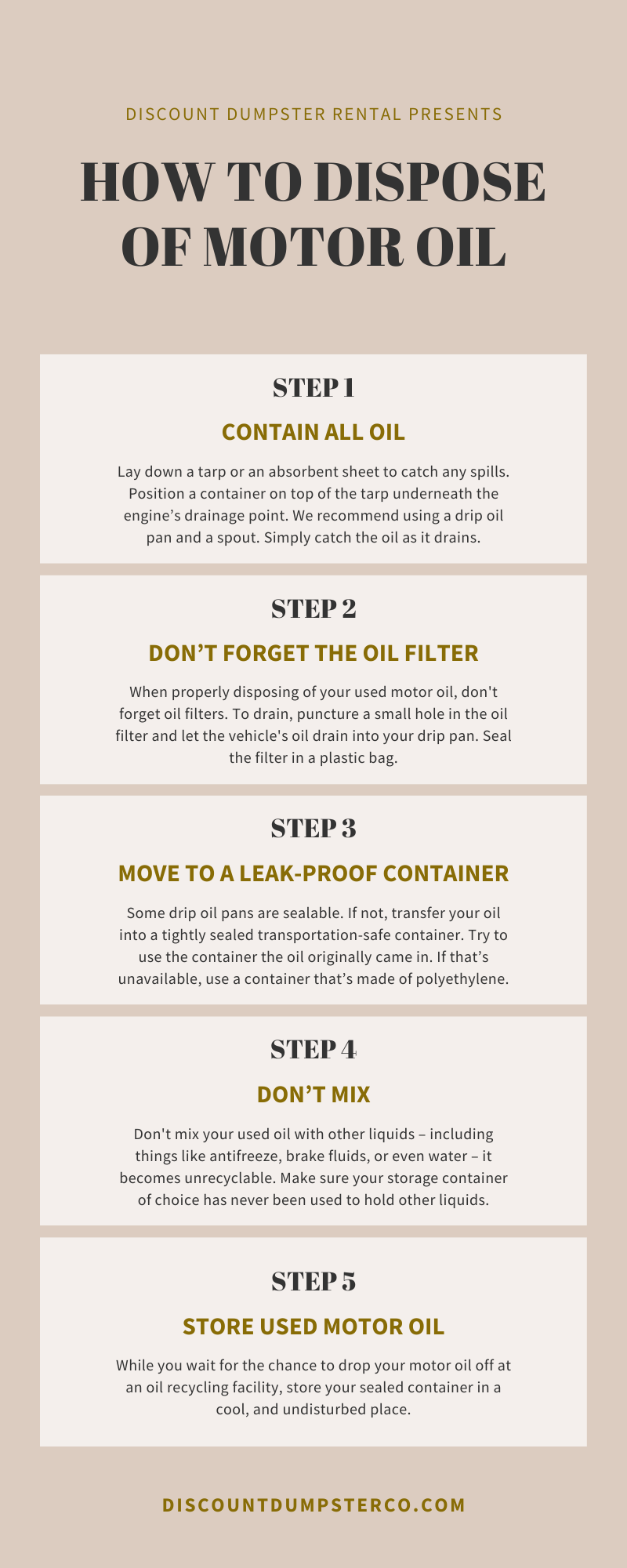
Credit: discountdumpsterco.com
A practical record for the next service
After the handoff, keep a short note of the facility, date, accepted fluids, container rules, and anything staff asked you to change next time. This is an organizational aid, not a claim that every household needs a formal disposal record. Reconfirm current requirements before the next visit, particularly if your volume, vehicle, business status, or collection location changes. A previous successful visit is useful experience but not permanent approval.
Reduce avoidable leftovers by checking the required service fill and specification before purchasing oil, and keep new stock identifiable. Old unopened oil requires a different assessment from oil drained after use; see how motor-oil shelf-life guidance works. Do not shorten or extend the vehicle's service interval merely to manage garage inventory. Plan purchasing, maintenance, and collection around the correct instructions for each task.
Before loading the car, confirm four answers: what is in every container, who agreed to receive it, how it must be packed, and when it can be handed over. If one answer is missing, make that call first. A specific, truthful description of the waste gives a local collection service the best chance of directing it into the appropriate recycling or disposal process.


Automotive reference information. Confirm specifications in the manual for your exact vehicle. Original replacement guides link to their research sources. About us