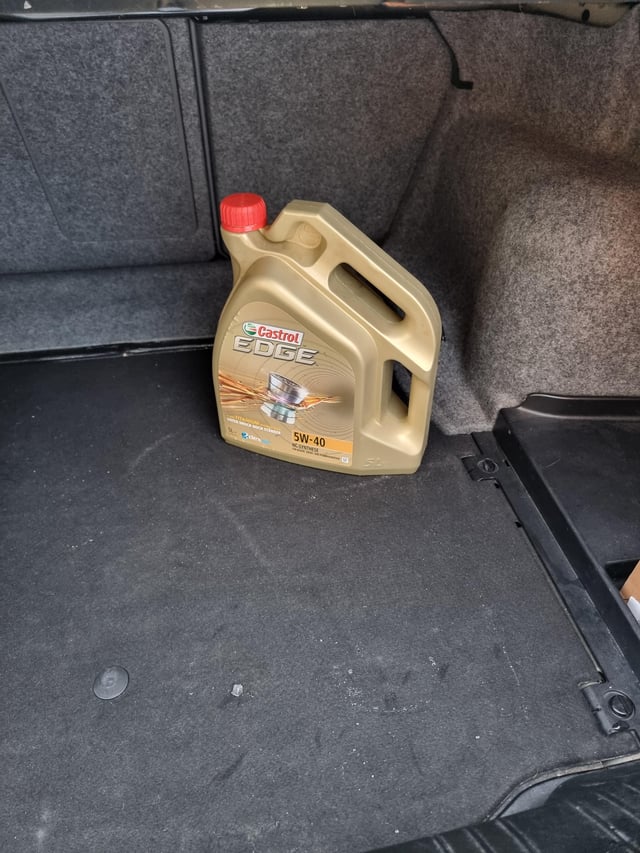

Keeping a small supply of the correct motor oil in your trunk can be practical for a trip, provided the bottle is sound, tightly closed, kept upright and secured inside suitable secondary containment. A loose bottle rolling among luggage is a poor arrangement. Long-term storage is a different question: a car parked through changing seasons is not the same controlled environment as the storage conditions specified by an oil manufacturer. There is no universal number of days that makes every bottle safe or unsuitable in every trunk. Start with the product's instructions, the condition of its container and the reason you need to carry it. If you only bought oil for a planned change at home, unload it when you arrive. If the vehicle needs a spare for top-ups, make the bottle part of an inspected travel kit rather than something forgotten under the luggage floor. A spare also does not make it safe to continue driving with an oil-pressure warning.
Decide what job the spare is meant to do before choosing its size. A bottle for a possible measured top-up is different from several containers for a complete oil change or a jug being taken to recycling. Confirm the viscosity and required approvals in the exact vehicle's manual, and keep that information with the kit. Our guide to choosing the correct engine oil explains why a familiar brand name alone is not enough. Then choose a quantity you can store securely without blocking the spare wheel, emergency equipment or the trunk's normal operation. If you are taking a borrowed or rental vehicle, do not assume your own car's spare oil is suitable. A simple label on the outside of the carrier can identify the intended vehicle, while the original bottle label preserves the full product information. This is a preparation step, not a recommendation to add oil unless a correct level check shows that it is needed.
Chevron's lubricant-storage bulletin recommends dry indoor storage, original opaque packaging and an ideal temperature range of 32–77°F for its general storage guidance. Those are storage recommendations, not a claim that a bottle instantly fails just beyond either temperature. The bulletin also discusses how temperature and contamination affect stored lubricants. The useful distinction is between carrying oil to a destination and treating a vehicle as a permanent stockroom. If your trunk regularly gets very hot, unusually cold or wet, move reserve stock to a suitable storage area rather than assuming an engine oil's operating-temperature capability describes its packaged shelf life. Engine operation and bottle storage expose the product in different ways. Do not invent a precise trunk temperature from an outside-weather reading or use a product's flash point as a shelf-life limit. Check the actual product documentation if the bottle has spent a long period in conditions outside the manufacturer's recommendations.
Credit: www.reddit.com
Pack and inspect the bottle before relying on it
Inspect the entire container while it is out of the car. Look for a cracked seam, damaged cap, distorted neck, unreadable label or oil on the outside. Tighten the cap as intended; tape over a broken closure does not restore the original seal. Keep fresh oil in its original package and do not transfer it into a drink bottle or an unlabelled container for convenience. A factory-sealed bottle is easier to identify as unopened, but it still needs protection against crushing. An opened bottle needs particular attention to its closure and history. If dirt or water entered it, setting the bottle upright later does not establish that the contents are suitable for an engine. Wipe the outside so a later wet patch is easy to notice, then place it in a stable, oil-compatible tray or carrier able to retain a leak. A fabric organizer can keep objects together but should not be assumed to provide liquid containment.
Secure the carrier using the luggage arrangements your vehicle provides. Ford's load-carrying guidance warns owners to secure objects in the luggage compartment and to keep objects off the luggage cover. The practical application to an oil bottle is straightforward: it should not be able to slide, tip or become loose when the vehicle brakes or turns. A snug carrier still needs restraint if the whole carrier can move. Keep the cap uppermost and avoid packing heavy tools directly against the bottle. Do not obstruct seat latches, cargo-floor closures or access to equipment you may need urgently. If your car has an open cargo area shared with passengers, pay particular attention to securing the entire kit and keeping it away from children. Recheck the arrangement after rearranging bags; a bottle that was supported by a suitcase on the outward trip may have nothing holding it on the return journey. Use designated attachment points according to the manual rather than improvising around electrical wiring or seat mechanisms.
Check the bottle whenever you inspect your travel kit and after an incident that could damage it. Record when it was purchased and first opened, and retain the batch code so the supplier can answer a storage question. ExxonMobil distinguishes lubricant shelf life in storage from service life inside equipment; its general storage discussion assumes original sealed packaging and suitable ambient conditions. That distinction prevents two common errors: treating a manufacturer's general shelf-life figure as a guarantee for an opened bottle in a hot car, and discarding sound oil solely because one short journey was warm. Neither conclusion follows without knowing the product and its history. If the seal or contents are questionable, use a known suitable bottle and ask the manufacturer about the suspect one. Our motor-oil shelf-life guide covers date codes and storage questions in more detail. There is no reliable appearance-only check that proves a forgotten bottle still meets every required performance specification.
Motor oil should not be described as fireproof. The Chevron Supreme 5W-20, 5W-30 and 10W-30 safety data sheet says that this material can burn, although it is not easily ignited. That product-specific statement supports sensible separation from heat and ignition sources; it does not establish a universal safe temperature for all brands or packages. Read the safety information for the oil you actually have and keep it out of children's reach. Do not store the spare under the hood, beside an aftermarket heat source, or with a leaking fuel or solvent container. If you find liquid in the trunk, identify the source before assuming it is harmless engine oil. A container that also holds gasoline or an unknown mixture presents a different problem from a sealed bottle of new lubricant. Do not deliberately sniff it closely or start an improvised cleanup with a household vacuum. An active fire or an immediate hazardous spill calls for emergency assistance, not a storage checklist.
Carry the tools and instructions needed to use the spare correctly: a clean suitable funnel if required, protective gloves, a wiping cloth and access to the vehicle's level-check procedure. Store the funnel so it cannot collect grit, and keep the cloth from contaminating its opening. Before a top-up, park safely and follow the manual's requirements for engine temperature and waiting time. Add only the measured amount needed and recheck as instructed. Chevrolet's engine-oil support page treats a low-pressure stop-engine message as a reason to stop safely and not restart, then check the level and obtain service. A bottle in the trunk is not proof that low pressure is caused only by a low level. Our oil-warning guide explains the distinction. If the vehicle repeatedly needs additions, record the amount and distance and arrange diagnosis rather than simply buying a larger emergency supply. A useful kit supports maintenance; it does not explain the reason oil is disappearing.

Credit: www.reddit.com
Treat used-oil delivery as a separate trip
A used-oil jug belongs in a planned collection trip, not in the same category as a ready-to-use spare. Label the contents clearly, confirm the receiver's container and quantity rules, and unload it promptly at the agreed destination. EPA recommends collecting used oil in a leak-proof container and checking with local facilities about recycling. Kalamazoo County's collection guidance also emphasizes secure lids during transport and placing a leaking container inside a larger container. Those handling principles help contain an accident, but you still need the rules for your own receiving site. Keep waste oil separate from clean stock so nobody can top up an engine from the wrong jug. Never mix a spill-cleaning liquid with collected oil unless the receiving program has specifically told you how to manage it. If oil escapes onto the carpet, remove the leaking container safely and keep the liquid from spreading to other luggage. Our carpet spill guide helps distinguish a small surface stain from contamination that needs professional assessment.
Before the next journey, make five decisions explicit: which vehicle the oil fits, how much you actually need, whether the bottle is sound, how both the bottle and its carrier are restrained, and when the kit will be inspected or unloaded. If any answer is missing, correct that part before relying on the spare. For a short trip with an intact original bottle, careful packaging and restraint are the main practical tasks. For a car parked for months, move oil to storage that meets the product maker's guidance. For a suspect old bottle, ask about its batch and exposure history rather than guessing from color. For a recycling delivery, confirm acceptance and keep the waste identified. These distinctions avoid both unnecessary alarm about an ordinary purchase journey and misplaced confidence in an unattended trunk bottle. Carrying oil works best as a deliberate maintenance plan with a known product and a clear purpose.


Automotive reference information. Confirm specifications in the manual for your exact vehicle. Original replacement guides link to their research sources. About us