
The right engine oil matches four things: your exact engine, its permitted viscosity grade, the required performance standard, and any manufacturer approval. Find those requirements in the correct owner manual before comparing brands. The largest number on the bottle is only one part of the answer, and synthetic on its own is not a vehicle specification.
Make a short shopping note before entering a store: model year, model, engine or engine code, sales market, required viscosity, performance category, and OEM specification if listed. Include any manual footnote that changes the choice for your use. This turns a wall of product claims into a small set of checkable requirements.
This is a method for choosing oil, not a recommendation of one product for every car. The manufacturer examples below show how requirements are written; they must not be copied to an unrelated engine. Our analysis draws on published specifications and documentation, without claiming laboratory comparisons or first-hand testing of the products.
Start with the engine and the correct manual
Confirm the model year rather than relying only on the first registration date. Identify the engine, fuel type, and market where the vehicle was sold. If the engine has been replaced, the original vehicle handbook may no longer settle the question. Ask the manufacturer or repairer to identify the installed engine and applicable service documentation.
Find the requirement, then compare formulations
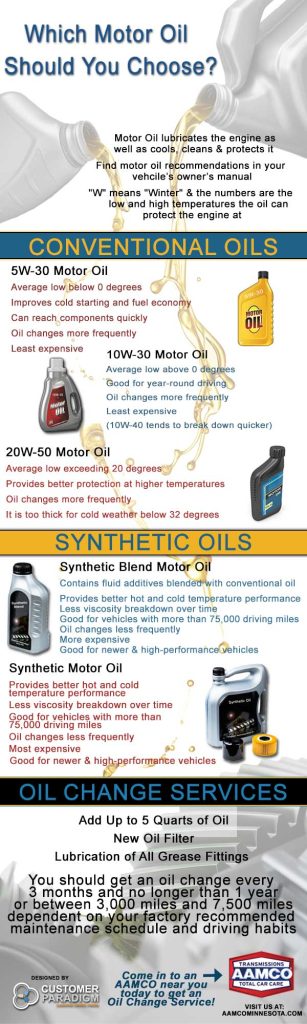
Synthetic, synthetic blend, and conventional describe broad product categories. First establish whether the manual requires a particular formulation and then verify the detailed performance requirements. Paying more for a synthetic product does not fix an incompatible approval or viscosity. Likewise, an oil is not unsuitable merely because a competing brand uses more ambitious advertising.
High mileage is a product choice, not an automatic instruction
Castrol markets GTX High Mileage for vehicles above 75,000 miles and lists separate claims for each grade. That is product guidance, not a rule that every engine must change oil type at that distance. An older engine still needs the relevant specification; oil loss or leaks deserve investigation rather than an assumed thicker-oil solution.
Diesel specifications need their own check
Do not apply a gasoline-category upgrade rule to every diesel oil. API specifically distinguishes FA-4 from CK-4 and older diesel categories; FA-4 is not generally interchangeable with them. Identify the engine and its permitted category. Diesel on a label does not mean suitable for every light-duty car, pickup, or commercial engine.
Read viscosity without treating it as the whole answer
A multigrade label such as 5W-30 contains two viscosity classifications. It is not a recommended outside-temperature range, an oil quantity, or a quality score. Write it exactly as specified so that 0W-20 does not become 5W-20 in a hurried purchase. Similar-looking labels can refer to different products even when they sit beside each other.
What the two parts of the grade describe
Mobil explains the cold and operating-temperature parts of viscosity labeling. The W relates to winter performance; the second grade addresses viscosity at higher test temperatures. Do not read the numbers as oil becoming thicker when the engine warms. For a focused comparison, see 5W-20 versus 5W-30, while retaining your manual as the selection authority.
Use temperature exceptions only when documented
Hot weather does not automatically authorize a higher grade, and a winter forecast does not automatically authorize a lower one. Check whether the manual supplies an ambient-temperature chart or an explicit alternative. If it does, copy its conditions into the shopping note. Otherwise, ask for an applicable manufacturer recommendation instead of importing a seasonal rule from another vehicle.
Read standards and approvals alongside the grade
The performance category and manufacturer specification answer a different question from viscosity. They help identify what the finished oil is intended to meet. A purchasing decision can therefore fail even when the grade matches: the bottle may omit a required approval, carry the wrong category, or belong to a product family for a different application.
Use the current category guide, not an old chart
As reviewed on September 22, 2026, API’s current Motor Oil Guide includes API SQ and ILSAC GF-7A/GF-7B, introduced in March 2025. GF-7B applies to SAE 0W-16. A newer category does not authorize changing the engine’s specified viscosity. Older online charts may omit newer categories, so check the current guide and its application notes.
API’s guide also identifies the familiar certification marks. Use them to check the claimed performance level alongside the required grade. Do not treat every mark as identical or assume that a modern specification removes a manufacturer-specific requirement. When a handbook references an older category, confirm the applicable replacement relationship rather than choosing by the newest lettering alone.
Two manuals show why exact wording matters
The 2024 Accord Hybrid engine-oil page references API SN or higher fuel-efficient oil, the Starburst mark, and its viscosity information. It allows synthetic oil when the stated certification and viscosity conditions are met. The example illustrates that formulation, category, and grade are considered together; read the actual chart for the vehicle rather than guessing a grade from this summary.
The cited 2024 E-Series specification page pairs SAE 5W-30 with WSS-M2C961-A1. It separately identifies SAE 0W-30 meeting WSS-M2C963-A1 for its stated extreme-cold conditions, including an altitude-related note. These are application-specific instructions, not a general Ford oil rule or permission to swap grades in other models.
If the oil cap and the manual appear to disagree, stop the selection process and verify the engine and document edition. A replacement cap, an engine swap, or the wrong handbook may explain the discrepancy. Ask for the exact document that supports any revised recommendation and retain it with the vehicle records.

Credit: www.blauparts.com
Let operating conditions inform the right question
Describe your normal use when seeking advice: repeated short trips, towing, extended idling, storage, and temperature extremes. Then ask which of those conditions the maintenance schedule actually addresses. Do not let an informal label such as hard driving silently replace the manufacturer’s definition or become an unsupported instruction to select a different viscosity.
A useful maintenance record has separate spaces for the required oil and the required service timing. That prevents a demanding driving pattern from being translated automatically into a new grade. It also makes it easier to compare a workshop recommendation with the actual schedule and ask which documented condition justifies a change.Separate the oil choice from the service schedule
For repeated short journeys or extended idling, look for the relevant schedule definitions and explain your actual pattern. For long highway journeys, do the same rather than assuming that steady cruising grants permission to extend an interval. Your notes should describe the use, while the applicable maintenance instructions determine the response.Preserve the limits of an approved alternative
If a manufacturer allows an alternative for particular conditions, retain the conditions as part of the recommendation. An approved extreme-cold option is not necessarily an all-season replacement, and advice for a racing application is not automatically a street-service instruction. When several documents differ, obtain clarification using the vehicle identification and the precise passages that conflict.Check the real product before purchasing
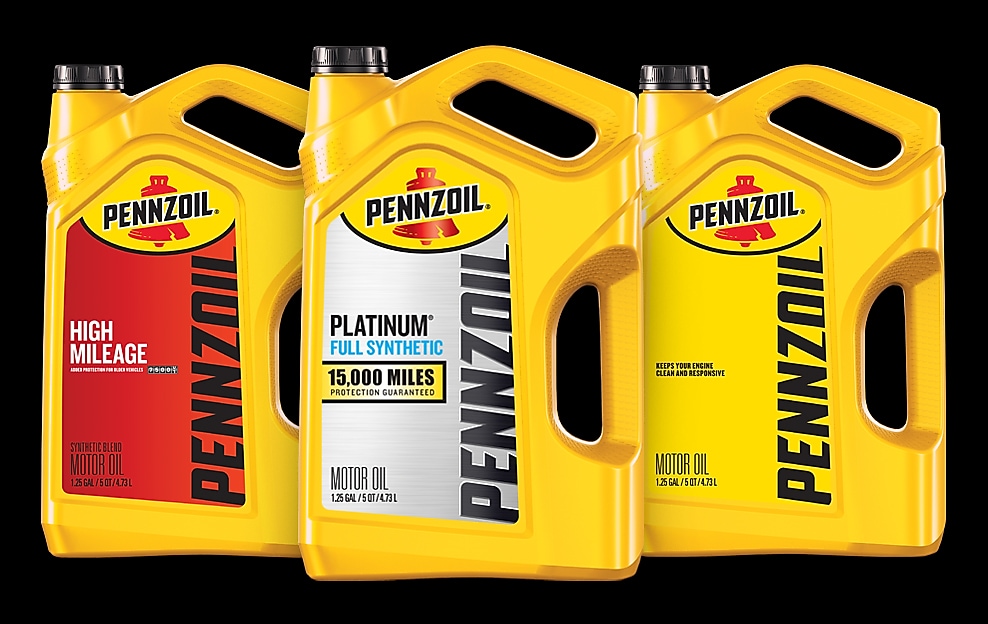
Compare the full product name and grade on the container with its current product sheet for your country. Similar branding can cover several viscosities and different approvals. If shopping online, make sure the selected variant, listing description, and bottle image agree. A photo of another size or regional formulation is a reason to verify, not a reliable substitute for the actual label.
Distinguish approval from a supplier recommendation
Mobil’s Advanced Fuel Economy product table separates approvals, recommended applications, and requirements the product meets or exceeds. Read those headings, then the column for the exact grade. Do not turn a supplier recommendation into an OEM license claim. For GM-specific checking, use our dexos identification guide and the relevant license directory.
Verify certification and retain the evidence
API’s active licensee directory lets you investigate licensed products. Search the exact marketer, brand, and grade rather than assuming that one certified product covers everything the company sells. Save the label or product details with your receipt. A legible record makes the next top-up and any service query much easier.
Avoid selection shortcuts that hide missing information
Price, brand loyalty, online ratings, and a friend’s experience can influence preferences among suitable products. They cannot establish the missing specification for your engine. Compare cost only after narrowing the choice to compatible oils. This keeps an appealing discount from becoming the reason you rationalize an uncertain product.
A mileage promise is not your maintenance schedule
Do not replace the vehicle’s time, distance, or oil-life-monitor instructions with the longest interval printed in an advertisement. Buying the right oil and changing it at the right time are separate decisions. Record the installed product and follow the applicable service instructions. A top-up does not, by itself, document that an oil-and-filter change has occurred.
An additive is not a missing approval
Do not try to create a required specification by adding a supplement to an unrelated oil. The Honda and Ford instructions cited above caution against supplemental engine-oil additives. If the product in hand does not satisfy the documented requirement, obtain an appropriate oil. If there is an engine symptom, diagnose it rather than using a bottle claim as evidence of a repair.
Resolve uncertainty before the oil enters the engine
When information is incomplete, a useful request to a dealer or qualified workshop includes the vehicle identification, engine details, handbook reference, and photographs of the proposed oil. Ask one precise question: does this exact product meet every oil requirement for this exact engine and use? A written answer is easier to review than a general statement that the brand is good.
When the engine is modified or its history is unclear
An altered engine, replacement engine, or undocumented rebuild may need guidance beyond the original owner manual. Gather the installation or build records and ask the responsible specialist to identify the applicable requirements. Do not assume that a performance modification automatically requires racing oil, a thicker grade, or a shorter interval.
If the engine loses oil, makes unusual sounds, or shows a pressure warning, product shopping is only part of the situation. Follow the vehicle’s warning instructions and obtain diagnosis. Do not use a new viscosity as a way to conceal a symptom before someone can inspect it, and do not assume a low-level warning and a pressure warning mean the same thing.
What to ask a service provider
Before authorizing an oil change, ask which exact product will be installed and which specification it satisfies. Ask whether the quoted service includes the correct filter and whether the service reminder will be reset after the work. Request a record that identifies the grade and specification instead of a vague invoice entry reading only oil service.
Bulk oil can be appropriate, but it should still be identifiable. API describes certification, marketplace testing, and checks involving packaged and bulk oils. Ask the provider for its product identification rather than assuming that a drum has the same contents as a nearby retail bottle. The goal is traceability, not a preference for one package size.
After service, retain the date, odometer reading, product, and relevant specification. Keep the next-service instruction with the same record. If you later need to top up, you can start from actual information instead of reconstructing a purchase from bottle color. Check the level using the vehicle-specific method and avoid treating the sump capacity as an instruction to pour in that amount during a top-up.
If you handle drained oil yourself, contain it and verify a receiving facility. EPA guidance supports proper collection and recycling; our used-oil disposal guide covers the separate collection decision. Recycling acceptance does not make a used or contaminated lubricant suitable for refilling an engine.

Credit: www.toyotaoforlando.com
Credit: www.pennzoil.com
Your final check at the shelf or service counter
Read your shopping note against the actual product: exact vehicle and engine, allowed grade, required performance standard, manufacturer requirement, and any applicable exception. If one item is unknown, resolve that item. Do not compensate for missing evidence by choosing a more expensive bottle or copying a recommendation for a similar-looking car.
Once those requirements match, choose among suitable products on availability, price, and trustworthy supply. Keep the documentation so the next decision is simpler. Engine oil belongs to an engine-specific maintenance plan; it does not become a general-purpose vehicle fluid. If your question concerns another reservoir, start again with that system’s separate specification.


Automotive reference information. Confirm specifications in the manual for your exact vehicle. Original replacement guides link to their research sources. About us